
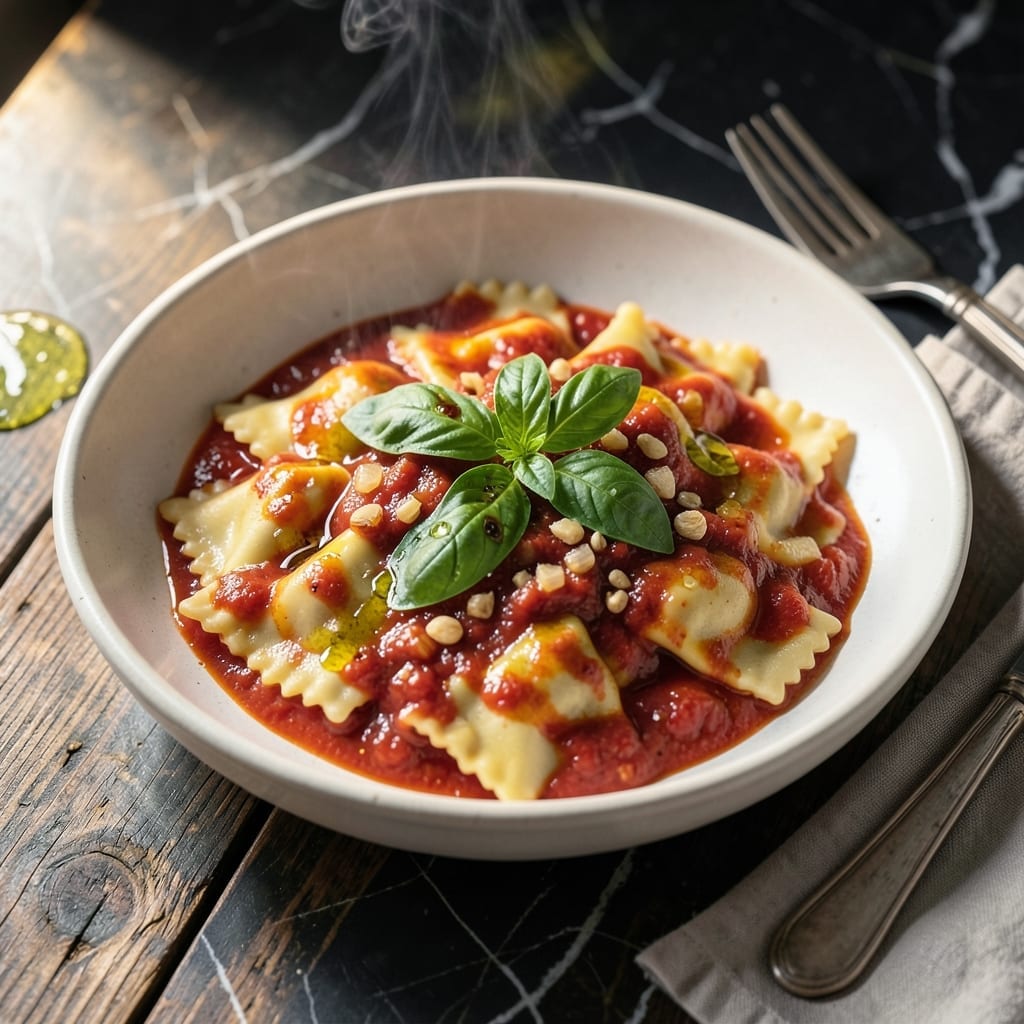
This rich tomato and herb sauce transforms store-bought ravioli into a restaurant-quality dish with minimal effort. The combination of slow-simpered tomatoes, fresh basil, and aromatic garlic creates depth that elevates every bite.
What makes this sauce special is its versatility. It clings perfectly to cheese-filled ravioli but also pairs beautifully with other pastas or as a base for lasagna. The herbs infuse during cooking, ensuring every spoonful bursts with flavor.
The sauce comes together in under 30 minutes using simple pantry staples. No fancy techniques required—just fresh ingredients and patience as the flavors meld into a smooth, velvety consistency.
Store leftovers in an airtight container for up to 5 days, or freeze for longer storage. This sauce proves that homemade can be both simple and extraordinary.
Ingredients for Ravioli Recipe Sauce
Ten simple ingredients elevate store-bought ravioli to restaurant-quality with minimal effort required.
| Ingredient | Amount | Notes |
|---|---|---|
| San Marzano Canned Tomatoes 🍅 | 28 oz | Whole, peeled, undrained |
| Extra-Virgin Olive Oil 🫒 | ¼ cup | High-quality, fruity profile |
| Yellow Onion 🧅 | 1 whole | Finely diced for base |
| Garlic Cloves 🧄 | 6 cloves | Minced for aromatic depth |
| Fresh Basil Leaves 🌿 | ½ cup | Loosely packed, torn |
| Tomato Paste 🍅 | 2 tbsp | For concentrated richness |
| Dry Red Wine 🍷 | ½ cup | Bold and dry preferred |
| Granulated Sugar 🧂 | 1 tsp | Balances acidity if needed |
| Kosher Salt 🧂 | 1 ½ tsp | Diamond Crystal preferred |
| Freshly Ground Black Pepper 🌶️ | ½ tsp | Coarse grind for texture |
The tomatoes are non-negotiable—San Marzano DOP from a can offer the perfect balance of sweetness and acidity. Find them at Italian specialty stores or well-stocked supermarkets. The olive oil should be something you’d happily drizzle on bread; California Olive Ranch or Colavita are reliable choices. Fresh basil makes a noticeable difference, so avoid the pre-packaged kind if possible.
No red wine? Substitute beef or vegetable broth with a splash of balsamic vinegar. Dried basil at one-third the amount works if fresh isn’t available. For a smoother texture, blend the sauce briefly with an immersion blender. If the sauce tastes too acidic, a pinch more sugar or a splash of cream can balance it—though the latter isn’t traditional.
This sauce keeps beautifully in the fridge for up to 5 days and freezes for 3 months. Store in airtight containers, and if freezing, leave a little headspace for expansion. The flavors actually deepen after a day, making leftovers even better.
Why You’ll Love This Recipe
- One Pot Wonder: I dump everything in a single pan—San Marzano tomatoes, garlic, basil—and let it simmer while I boil the ravioli.
- Ridiculously Good: The sweetness of the tomatoes with that fresh basil finish? It’s the kind of sauce I could drink straight from the pan.
- Freezer Friendly: I double the batch and freeze half for those nights when even boiling water feels like too much.
- Budget Savior: Five ingredients, most of which I already have in my pantry, and it tastes like a fancy restaurant dish.
Step-by-Step Instructions for Rich Tomato and Herb Sauce
This method builds deep, layered flavors through careful timing and technique.
Step 1: Sauté Aromatics in Olive Oil
Heat the 0.25 cup Extra-Virgin Olive Oil in a heavy-bottomed saucepan over medium-low heat. Add the finely diced Yellow Onion and cook for 8-10 minutes, stirring occasionally, until it becomes translucent and just begins to caramelize at the edges.
The onion should soften without taking on color too quickly—this slow cooking develops its natural sweetness. Watch for the edges to turn golden but not brown. This foundation layer sets the stage for the entire sauce.
Step 2: Build Flavor Base with Garlic and Tomato Paste
Add the 6 minced Garlic Cloves to the pan and cook for 1-2 minutes until fragrant but not browned. Immediately stir in the 2 tbsp Tomato Paste and cook for another 2-3 minutes, allowing it to darken slightly and develop its natural sweetness.
This step creates the flavor backbone of your sauce. The tomato paste should turn from bright red to a deeper brick color, which indicates the raw flavor has cooked out. Be careful not to let the garlic burn—it becomes bitter quickly.
Step 3: Deglaze with Wine and Add Tomatoes
Pour in the 0.5 cup Dry Red Wine and increase heat to medium-high. Scrape up any browned bits from the bottom of the pan with a wooden spoon. Let the wine reduce by half, which takes about 3-4 minutes.
Add the 28 oz San Marzano Canned Tomatoes, breaking them up with your spoon as they go in. Include all the juice from the can—this liquid contributes to the sauce’s body. Stir in the 1 tsp Granulated Sugar, 1.5 tsp Kosher Salt, and 0.5 tsp Freshly Ground Black Pepper.
Step 4: Simmer and Finish with Basil
Reduce heat to low and let the sauce simmer uncovered for 30-45 minutes, stirring occasionally. The sauce should thicken slightly and develop a rich, concentrated flavor. You’ll notice the liquid reducing and the color deepening to a vibrant red.
During the last 5 minutes of cooking, stir in the 0.5 cup Fresh Basil Leaves, tearing them as you add them. This preserves their bright, fresh flavor. The basil should wilt into the sauce but remain visible as flecks of green.
Taste and adjust seasoning if needed, though the initial measurements should provide perfect balance. The finished sauce should coat the back of a spoon with a velvety texture.
Pro Tips For Making Ravioli Recipe Sauce
- Crush the Tomatoes: Hand-crush the San Marzano tomatoes instead of blending—the uneven texture makes the sauce cling better to ravioli.
- Sauté Onions Slow: Cook the yellow onions on medium-low for 10-12 minutes until translucent; rushing this step leaves a harsh raw bite.
- Add Basil Late: Stir in fresh basil leaves only in the last 2 minutes of cooking—adding them earlier turns the sauce bitter.
- Reserve Pasta Water: Save 1/2 cup of the ravioli cooking water to loosen the sauce if it thickens too much; it binds better than plain water.
Troubleshooting This Dish
Sauce Too Thin
If your sauce is watery after simmering, continue cooking uncovered on low heat for another 10-15 minutes. The tomatoes need time to release their pectin and thicken naturally. I often add a pasta water splash later if it becomes too thick. 💡
Acidic Taste
San Marzano tomatoes can sometimes taste too bright. Stir in the 1 tsp Granulated Sugar first, then a pinch of baking soda if needed. A splash of cream can balance acidity too, though it changes the texture slightly.
Garlic Bitterness
Burnt garlic ruins the sauce. If you notice bitterness, immediately add the 0.5 cup Dry Red Wine to deglaze and mellow the flavors. Next time, lower the heat when cooking garlic—it should sizzle gently, not brown quickly.
Herb Overload
Fresh basil can overpower if added too early. Always add the 0.5 cup Fresh Basil Leaves in the final 5 minutes of cooking. If using dried basil, reduce to 1 tbsp and add with the tomatoes.
Sauce Separating
If oil pools on top, whisk vigorously to reincorporate. This happens when the 0.25 cup Extra-Virgin Olive Oil isn’t properly emulsified. For prevention, ensure your heat stays at a gentle simmer, not a boil.
Bland Flavor
Boost with 0.5 tsp more Kosher Salt first, then the 2 tbsp Tomato Paste. If still flat, a splash of balsamic vinegar adds depth. Remember, flavors concentrate as the sauce reduces. 🔥
Nutrition Facts
Frequently Asked Questions
Can I use fresh tomatoes instead of canned?
Yes, but you’ll need about 3 lbs of ripe tomatoes. Blanch, peel, and seed them first. Canned tomatoes are preferred for consistent texture and flavor year-round.
How do I make the sauce creamier?
Stir in 0.5 cup heavy cream or 0.25 cup mascarpone at the end. For a lighter option, blend in 0.5 cup cooked white beans for natural creaminess without dairy.
Can I make this sauce ahead of time?
It keeps in the fridge for up to 5 days. The flavors actually improve overnight. Reheat gently on the stove, adding a splash of water if it thickens too much.
What if I don’t have red wine?
Substitute with 0.5 cup beef broth plus 1 tbsp balsamic vinegar. The acidity mimics wine’s role in balancing the tomatoes’ sweetness.

- 6 Egg Cake Recipe with Oil: Light as Air With Buttery Moisture - October 4, 2026
- 4 Bean Casserole Recipe: One-Pan Heartiness With Smoky Paprika Depth - October 4, 2026
- 3-Ingredient Keto Mug Cake Recipe: Microwave Magic in 2 Minutes - October 4, 2026