
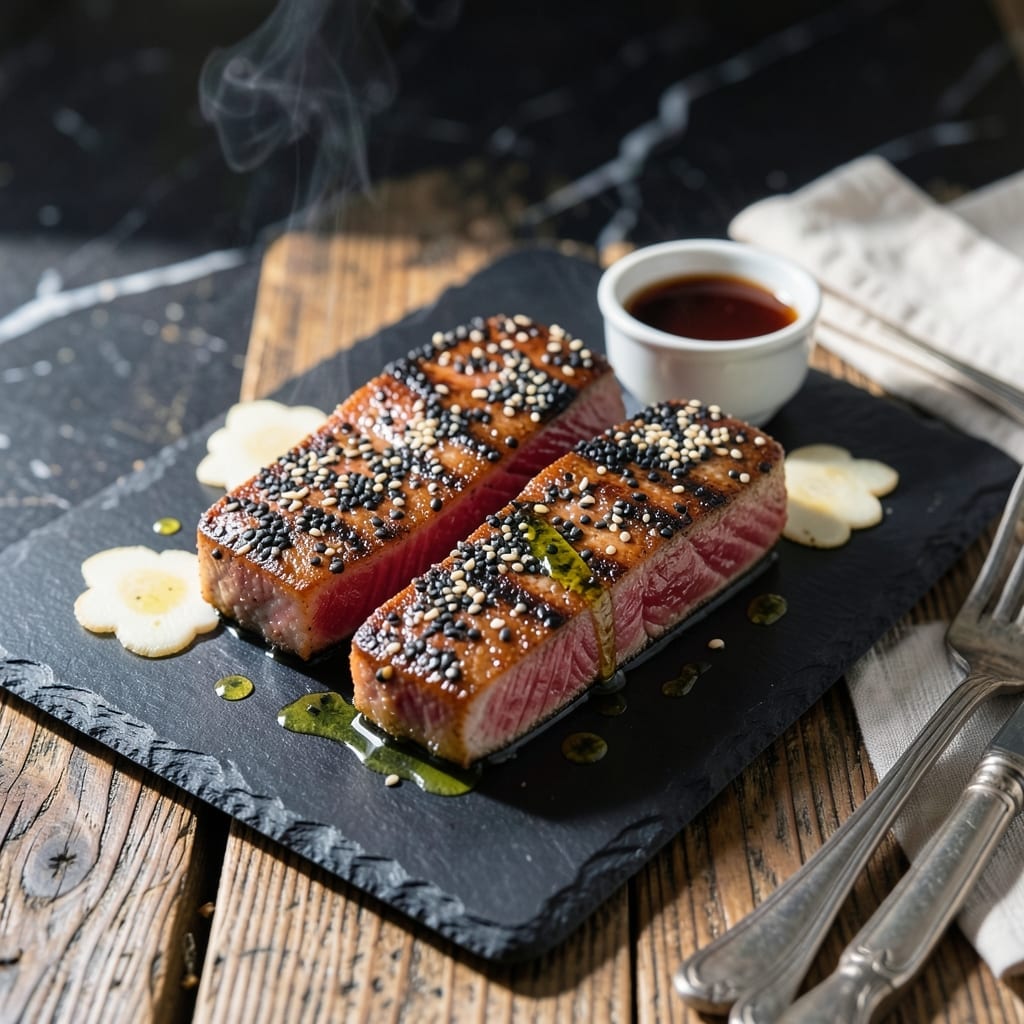
This seared ahi tuna with sesame crust delivers perfectly pink centers and a crisp, golden exterior every time. The technique is simple but precise, ensuring restaurant-quality results at home.
I’ve refined this method to balance speed and control—searing the tuna just long enough to develop a flavorful crust while keeping the inside tender and cool. The sesame seeds add a nutty crunch that contrasts beautifully with the buttery fish.
What you’ll achieve is a dish that looks as impressive as it tastes, with a texture that melts in your mouth. The sesame crust adds depth, while the pink center stays silky and fresh.
Serve it sliced over a bed of greens or with a side of soy-ginger sauce. Here’s how to nail it.
Ingredients for Recipe Ahi Tuna
Sushi-grade tuna and a handful of pantry staples create this impressive dish.
| Ingredient | Amount | Notes |
|---|---|---|
| Ahi Tuna Steaks 🐟 | 1 ½ lb | Sushi-grade, 1-inch thick |
| Black Sesame Seeds 🌰 | ¼ cup | Toasted for crust |
| White Sesame Seeds 🌰 | ¼ cup | Toasted for crust |
| Soy Sauce 🥄 | 3 tbsp | Low-sodium preferred |
| Sesame Oil 🫒 | 1 tbsp | Toasted for depth |
| Fresh Ginger 🌿 | 1 tbsp | Grated for sauce |
| Garlic Cloves 🧄 | 2 cloves | Minced for sauce |
| Rice Vinegar 🍚 | 1 tbsp | For acidity in sauce |
| Honey 🍯 | 1 tsp | For soy-ginger sauce |
| Scallions 🧅 | 3 whole | Thinly sliced for garnish |
| Vegetable Oil 🫒 | 2 tbsp | High smoke point for searing |
| Kosher Salt 🧂 | 1 tsp | For seasoning tuna |
| Black Pepper 🌶️ | ½ tsp | Freshly ground preferred |
| Mixed Greens 🥗 | 4 cups | For serving base |
The tuna has to be sushi-grade—look for the label at Whole Foods or a trusted fishmonger. Don’t even think about using grocery store tuna that’s been sitting in the case for days. Freshness is everything here, and the color should be a vibrant red (or pinkish-red). I grab mine from Trader Joe’s when I’m in a pinch (their frozen ahi is actually solid). For the sesame seeds, toast them yourself—pre-toasted can taste stale.
No black sesame seeds? All white seeds work fine—just won’t look as dramatic. Out of fresh ginger? Ground ginger at half the amount in a pinch, but fresh is way better. Honey can be swapped for agave if you’re avoiding bee products. The soy sauce? Tamari for gluten-free, coconut aminos for a lighter taste. And if you can’t find rice vinegar, apple cider vinegar works too.
Sear the tuna right before serving—it’s best hot out of the pan. Leftovers? Wrap tightly and eat within 24 hours (texture changes fast). The sesame seeds keep in the pantry for 6 months, but toast them fresh each time for maximum crunch.
Why You’ll Love This Recipe
- 10-Minute Meal: I can sear the tuna and toast the sesame seeds faster than it takes to order takeout.
- Umami Bomb: That first bite of soy-marinated ahi with nutty sesame oil? Ridiculously good.
- Date Night Ready: Honestly, it looks fancy but requires zero fancy skills—just a hot pan and fresh fish.
- Next-Day Lunch: Leftovers make a killer salad topping, and the flavors only get better overnight.
Step-by-Step Instructions for Seared Ahi Tuna With Sesame Crust
Here’s the method I use to get that restaurant-quality sear with a crispy crust every time.
Step 1: Prepare the Sesame Crust
Combine the 0.25 cup Black Sesame Seeds and 0.25 cup White Sesame Seeds on a flat plate. I like to spread them in an even layer so the tuna gets fully coated. Press the 1.5 lb Ahi Tuna Steaks into the seeds, turning to coat all sides gently but firmly.
The seeds should stick to the surface without falling off. If they don’t adhere well, pat the tuna steaks dry first with a paper towel—any moisture prevents the crust from forming properly. This step creates that signature nutty, crunchy exterior we’re after.
Step 2: Season and Sear the Tuna
Season both sides of the crust-coated tuna with the 1 tsp Kosher Salt and 0.5 tsp Black Pepper. Heat the 2 tbsp Vegetable Oil in a large skillet over high heat until it shimmers but doesn’t smoke. The oil needs to be screaming hot to achieve that perfect sear without overcooking the center.
Carefully place the tuna in the hot oil. Sear for 1-2 minutes per side until the sesame crust is deep golden brown and crispy. Don’t move the steaks around—let them develop that beautiful crust. The center should remain pink and slightly cool to the touch.
Step 3: Make the Soy-Ginger Dipping Sauce
While the tuna sears, whisk together the 3 tbsp Soy Sauce, 1 tbsp Sesame Oil, 1 tbsp Fresh Ginger, 2 cloves Garlic Cloves (minced), 1 tbsp Rice Vinegar, and 1 tsp Honey in a small bowl. The ginger and garlic add a bright, aromatic kick that balances the richness of the tuna.
Taste and adjust the flavor if needed. If it’s too sharp, add a touch more honey. If it needs more depth, drizzle in a bit more sesame oil. This sauce should be tangy, slightly sweet, and packed with umami.
Step 4: Slice and Serve Immediately
Transfer the seared tuna to a cutting board and let it rest for 2 minutes—this allows the juices to redistribute slightly without overcooking. Slice the tuna against the grain into ½-inch thick pieces. The inside should be bright pink and glistening.
Arrange the slices over the 4 cups Mixed Greens and drizzle with some of the soy-ginger sauce. Garnish with the 3 whole Scallions (thinly sliced) for a fresh, crisp finish. Serve the remaining sauce on the side for dipping. The contrast of the cool, rare center with the crispy sesame crust and tangy sauce is what makes this dish unforgettable.
Pro Tips For Making Recipe Ahi Tuna
- Sear Fast, Rest Longer: Use the hottest pan you can for just 60-90 seconds per side—any longer and you’ll overcook the ahi. Then let it rest 5 minutes before slicing to keep it juicy.
- Pat Dry First: Blot the tuna steaks with paper towels before searing. I learned this the hard way—wet fish steams instead of crusting, and you’ll lose that perfect sesame seed adhesion.
- Toast the Seeds: Lightly toast the black and white sesame seeds in a dry pan for 1-2 minutes until fragrant. Sounds like a small step, but it actually changes the outcome by adding depth to the crust.
- Use Room-Temp Fish: Take the ahi out of the fridge 15-20 minutes before cooking. After ruining a few steaks with cold centers, I finally figured out this guarantees even cooking from edge to edge.
Essential Equipment for Perfect Results
High-Heat Skillet
A heavy-bottomed stainless steel or cast iron skillet is non-negotiable for achieving that perfect sear. I swear by my 12-inch Lodge cast iron—it retains heat beautifully and develops an even crust. Avoid nonstick pans; they can’t handle the high heat needed for searing ahi tuna properly. 🔥
Tongs for Flipping
Use long-handled locking tongs (I prefer OXO brand) to flip the tuna without piercing it. This preserves the sesame crust and prevents juices from escaping. Look for tongs with silicone tips if you’re worried about scratching your pan.
Instant-Read Thermometer
While you can judge doneness by touch, an instant-read thermometer gives peace of mind. The center should stay below 110°F for perfect rare. I use a ThermoWorks ThermoPop—it’s fast, accurate, and affordable.
Sharp Chef’s Knife
A 8-inch chef’s knife is ideal for slicing the tuna cleanly against the grain. I recommend Wüsthof or Shun brands for their sharpness and durability. A dull knife will tear the fish and ruin your presentation.
Mixing Bowls
Have a few medium mixing bowls ready for the sesame seeds and sauce. I like stainless steel bowls from Winco—they’re lightweight, nest for storage, and won’t absorb odors. One for crust, one for sauce keeps everything organized.
Paper Towels
Keep paper towels nearby to pat the tuna dry before crusting and to blot any excess oil after searing. This small step makes a huge difference in getting that crispy, golden sesame crust we’re after. 💪
Nutrition Facts
Frequently Asked Questions
Can I use regular tuna instead of sushi-grade?
No, always use sushi-grade ahi for this recipe. Regular tuna isn’t handled for raw consumption and can pose health risks. Sushi-grade is specifically prepared to be eaten rare or raw.
How do I know when it’s done?
The center should stay cool to the touch and bright pink. Use an instant-read thermometer—pull it off heat at 110°F internal temperature. It will continue cooking slightly off the heat.
What if my sesame crust falls off?
Pat the tuna completely dry before pressing into seeds. Any moisture prevents adhesion. Also, press firmly but gently to ensure the seeds stick to all sides.
Can I make this ahead of time?
Best served immediately after searing for optimal texture. If you must prep ahead, store uncooked tuna (crusted) in the fridge for up to 2 hours before cooking.

- 6 Egg Cake Recipe with Oil: Light as Air With Buttery Moisture - October 4, 2026
- 4 Bean Casserole Recipe: One-Pan Heartiness With Smoky Paprika Depth - October 4, 2026
- 3-Ingredient Keto Mug Cake Recipe: Microwave Magic in 2 Minutes - October 4, 2026