
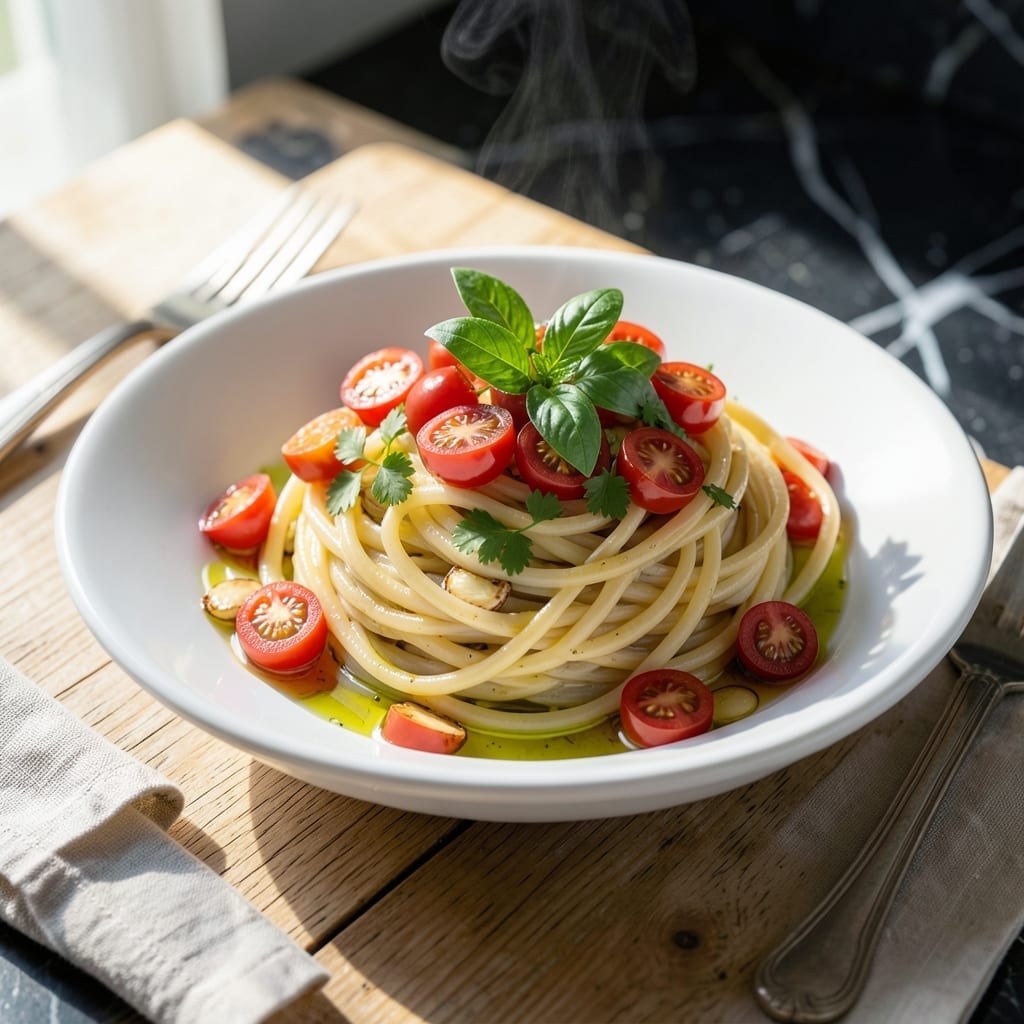
This pasta dish delivers perfectly al dente texture with every bite, elevated by the bright freshness of garden herbs. The simple technique ensures restaurant-quality results at home without complicated steps.
Fresh herbs transform basic ingredients into something special. The method is straightforward, with precise timing to achieve that ideal bite while letting the natural flavors shine through.
Ingredients for Recipe for a Pasta Dish
Twelve ingredients. Perfectly al dente pasta meets vibrant garden herbs for restaurant-quality results.
| Ingredient | Amount | Notes |
|---|---|---|
| Spaghetti 🍝 | 12 oz | Dried, bronze-cut preferred |
| Extra-Virgin Olive Oil 🫒 | ¼ cup | High quality, fruity |
| Garlic Cloves 🧄 | 4 cloves | Finely minced |
| Fresh Basil Leaves 🌿 | ½ cup | Packed, torn by hand |
| Fresh Flat-Leaf Parsley 🌿 | ¼ cup | Chopped, stems removed |
| Cherry Tomatoes 🍅 | 2 cups | Halved lengthwise |
| Parmesan Cheese 🧀 | ½ cup | Freshly grated from wedge |
| Red Pepper Flakes 🌶️ | ½ tsp | Crushed, adjust to taste |
| Kosher Salt 🧂 | 1 ½ tsp | Diamond Crystal preferred |
| Freshly Ground Black Pepper 🌶️ | 1 tsp | Coarse grind preferred |
| Reserved Pasta Water 💧 | ½ cup | Starchy, for binding sauce |
| Lemon Zest 🍋 | 1 tsp | From 1 medium lemon |
The pasta is non-negotiable—bronze-cut spaghetti holds sauce better than smooth varieties. De Cecco or Barilla are reliable supermarket brands. For the herbs, farmers market bunches have superior fragrance to grocery store clamshells. The Parmesan must be Parmigiano-Reggiano; pre-grated lacks the crystalline texture that melts properly. Always buy the wedge and grate it fresh—takes 60 seconds and makes a world of difference.
No fresh herbs? Dried basil and parsley at one-third the amount work in a pinch, though the flavor profile flattens. Grape tomatoes can stand in for cherry—just halve them similarly. If you’re avoiding dairy, nutritional yeast mimics Parmesan’s umami (use same quantity). The olive oil should be something you’d happily drizzle on bread—California Olive Ranch or Cobram Estate are solid mid-range options.
Cooked pasta keeps 3-4 days refrigerated in airtight containers, though it’s best fresh. The herbs? Treat like cut flowers—trim stems, submerge in water, and refrigerate. The Parmesan wedge? Wrapped in parchment then foil, it lasts weeks. Always bring cheese to room temperature before grating for even melting.
Why You’ll Love This Recipe
- I’ll be real: a pound of spaghetti and a handful of fresh herbs feed four for less than the cost of takeout.
- One Pot Wonder: I can have this on the table with just a pot, some boiling water, and a quick toss of spaghetti with olive oil and garlic.
- Garlic Herb Magic: The sizzle of garlic in olive oil with fresh basil and parsley makes every bite ridiculously good.
- My Go-To Weeknight: Between us, this works for last-minute dinners, cozy nights in, or even when I need to impress with minimal effort.
Step-by-Step Instructions for a Pasta Dish
Master the technique for perfectly al dente pasta with a vibrant herb and tomato sauce.
Step 1: Cook the Spaghetti to Al Dente Perfection
Bring a large pot of water to a rolling boil and add the 12 oz Spaghetti. Salt the water generously with 1.5 tsp Kosher Salt—it should taste like the sea. Stir occasionally to prevent sticking and cook for 1 minute less than the package instructions for al dente.
You’ll want the pasta slightly underdone at this stage since it will finish cooking in the sauce. Reserve 0.5 cup Reserved Pasta Water before draining—this starchy liquid is essential for binding the sauce later. Drain the spaghetti but do not rinse, as the surface starch helps the sauce cling.
Step 2: Sauté Aromatics in Olive Oil
While the pasta cooks, heat 0.25 cup Extra-Virgin Olive Oil in a large skillet over medium heat. Add the 4 cloves Garlic Cloves and 0.5 tsp Red Pepper Flakes, sautéing for 1-2 minutes until the garlic is fragrant but not browned.
Adding the red pepper flakes now allows their heat to infuse the oil, creating a subtle spicy undertone. Be vigilant—garlic burns quickly, and burnt garlic will impart a bitter flavor to the dish. The oil should shimmer but not smoke.
Step 3: Incorporate Cherry Tomatoes and Herbs
Add the 2 cups Cherry Tomatoes to the skillet, halved side down. Cook for 4-5 minutes until they soften and begin to release their juices. Stir in the 0.5 cup Fresh Basil Leaves and 0.25 cup Fresh Flat-Leaf Parsley, tearing the basil by hand to preserve its delicate flavor.
The tomatoes will break down slightly, creating a light, chunky sauce. The herbs should wilt but retain their bright color and aroma. This step builds the foundation of the dish’s fresh, vibrant character.
Step 4: Combine Pasta and Sauce with Finishing Touches
Add the drained spaghetti to the skillet with the tomato and herb mixture. Toss everything together over medium-low heat, adding 0.5 cup Reserved Pasta Water as needed to loosen the sauce. The pasta should be well-coated but not swimming in liquid.
Sprinkle in the 0.5 cup Parmesan Cheese, 1 tsp Freshly Ground Black Pepper, and 1 tsp Lemon Zest. Toss again to distribute the cheese evenly, allowing it to melt slightly and create a silky texture. The lemon zest adds a bright, citrusy note that balances the richness of the dish.
Serve immediately, garnished with additional fresh herbs if desired. The pasta should be glossy and fragrant, with each strand coated in the vibrant sauce.
Pro Tips For Making Recipe For A Pasta Dish
- Salt the Pasta Water: Use at least 1 tablespoon of salt per gallon of water—it should taste like the sea. I learned this the hard way after serving bland pasta for years.
- Slice Garlic Thin: Cut the garlic cloves into paper-thin slices instead of mincing so they cook evenly and infuse the oil without burning.
- Save Some Pasta Water: Before draining, scoop out ½ cup of the starchy cooking water to loosen the sauce and help it cling to the spaghetti.
- Tear the Basil: Skip the knife and tear the basil leaves with your hands to prevent bruising and keep the flavor bright and fresh.
Pro Cooking Tips for This Recipe
🔥 Master the Heat
Pasta demands precision. Use a rolling boil with plenty of salted water—at least 4-6 quarts per pound. This prevents sticking and ensures even cooking. Keep the heat high to maintain the boil, but avoid overflow by using a large pot.
⏰ Timing Secrets
Start testing for doneness 1-2 minutes before the package’s suggested time. Fresh pasta cooks faster (2-4 minutes), while dried needs 8-12. The perfect bite is al dente—firm but tender. Drain immediately to stop cooking.
✨ Flavor Boosters
Reserve ½ cup of pasta water before draining. Its starch helps emulsify sauces. Toss pasta with herbs, garlic, or olive oil while hot to lock in flavor. Finish with a sprinkle of cheese or fresh basil for a restaurant-worthy touch.
🎯 Texture Tips
Avoid rinsing pasta—it washes away starch needed for sauce adhesion. For creamy dishes, undercook pasta by 1 minute and finish in the sauce. Stir frequently to prevent clumping and ensure even coating.
Nutrition Facts

- 6 Egg Cake Recipe with Oil: Light as Air With Buttery Moisture - October 4, 2026
- 4 Bean Casserole Recipe: One-Pan Heartiness With Smoky Paprika Depth - October 4, 2026
- 3-Ingredient Keto Mug Cake Recipe: Microwave Magic in 2 Minutes - October 4, 2026