
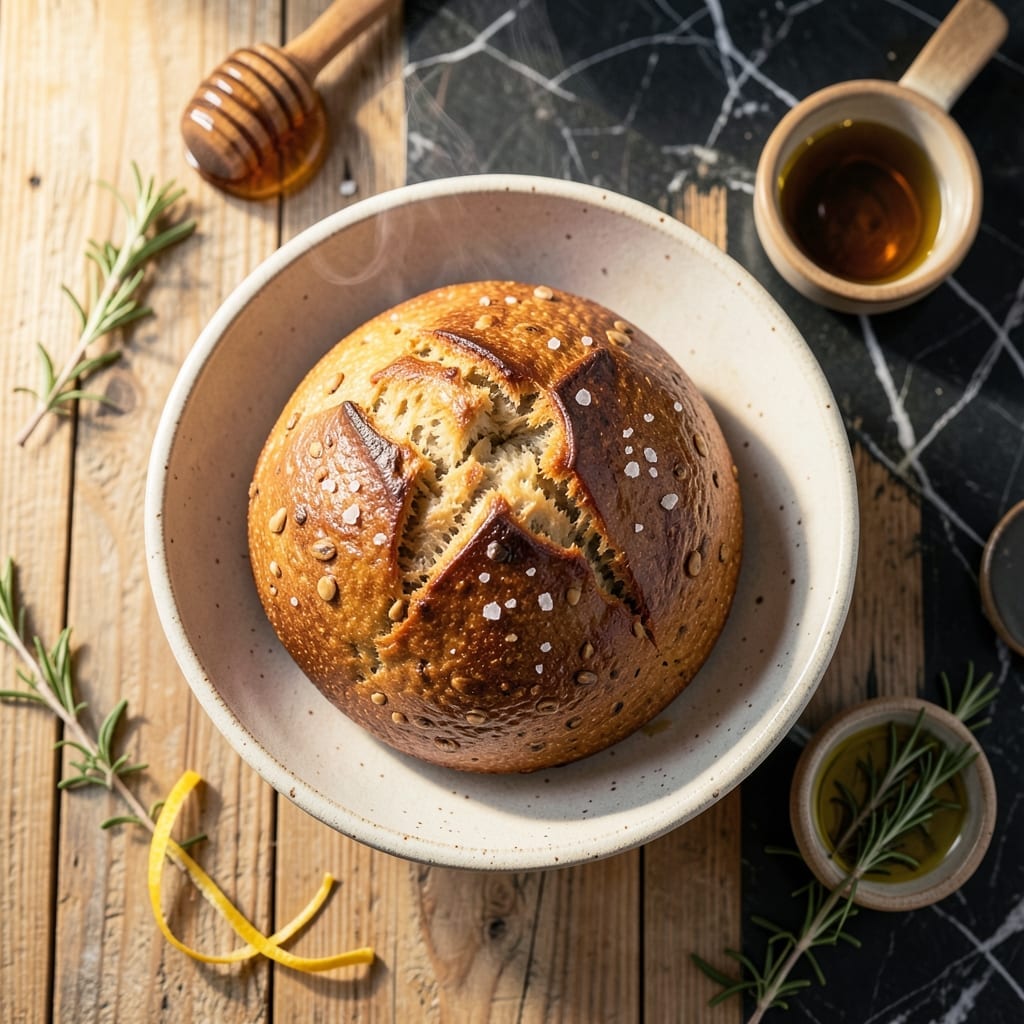
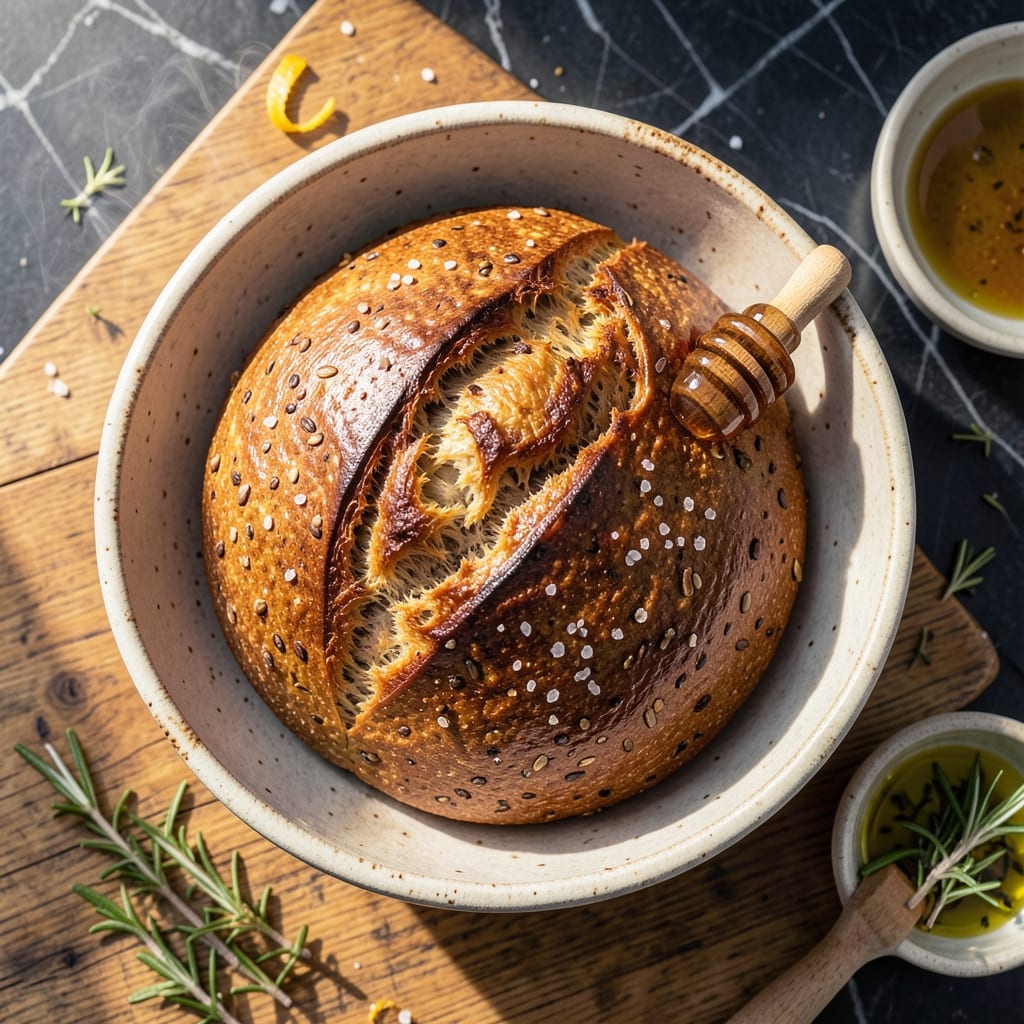
This ancient grain flatbread connects modern kitchens to centuries-old traditions through its simple, time-tested preparation. I’ve refined the method to preserve authenticity while ensuring consistent results for today’s home bakers.
The dough comes together with just a few basic ingredients, resting briefly before baking into a thin, slightly chewy bread perfect for tearing and sharing. It’s a taste of history with practical, everyday appeal.
Ingredients for Recipe for Bible Bread
A handful of ancient staples combine to recreate this time-honored flatbread with ease.
| Ingredient | Amount | Notes |
|---|---|---|
| Whole Wheat Flour 🌾 | 3 cups | Stone-ground preferred for authenticity |
| Ancient Grain Flour Blend 🌾 | 1 cup | Einkorn, spelt, or farro |
| Olive Oil 🫒 | ¼ cup | Extra-virgin for richness |
| Honey 🍯 | 2 tbsp | Raw or unfiltered ideal |
| Active Dry Yeast 🍞 | 1 tsp | Or 1 packet for reliability |
| Sea Salt 🧂 | 1 ½ tsp | Fine grain for even distribution |
| Warm Water 💧 | 1 ¼ cups | 110°F to activate yeast |
| Plain Yogurt 🥛 | ½ cup | Full-fat for tenderness |
| Sesame Seeds 🌰 | 2 tbsp | Toasted for garnish |
| Cumin Seeds 🌿 | 1 tsp | Lightly crushed for aroma |
| Flaky Sea Salt 🧂 | ½ tsp | For finishing touch |
[recipeingredientscaler]
The flour base defines authenticity here. Bob’s Red Mill offers excellent stone-ground whole wheat, while King Arthur carries reliable ancient grain blends (einkorn, spelt, or farro work best). For yeast, SAF instant or Fleischmann’s active dry both deliver consistent results. The honey should be raw—local farmers markets often have the best selection with the most robust flavor profile for historical accuracy.
No ancient grains? Plain whole wheat works at a 1:1 ratio. Out of honey? Maple syrup or agave can substitute, though the flavor shifts slightly. The yogurt tenderizes the dough—Greek yogurt at full-fat or even sour cream in a pinch. For the olive oil, any high-quality extra-virgin will do, but avoid refined versions. The sesame seeds add crunch, but sunflower or poppy seeds work too.
Dough rests best covered at room temperature for 1 hour. Baked bread keeps wrapped for 2-3 days, though it’s best fresh. Freeze portions for up to 1 month—reheat in a dry skillet to restore texture.
Why You’ll Love This Recipe
- One Bowl Wonder: Honestly, mixing the whole wheat and ancient grain flours with yeast and honey takes five minutes max—no fancy equipment, just a bowl and a spoon.
- Warm Honey Sweetness: That first bite with the honey’s gentle sweetness and the nutty depth from the ancient grains? I make it just to smell it baking.
- Breakfast or Brunch: I slice it thick for toast in the morning or serve warm with dinner—even my picky nephew asks for seconds.
- Stays Fresh: Bakes up so moist from the olive oil that it lasts four days on the counter, though it never makes it that long in my house.
Step-by-Step Instructions for Bible Bread
Here’s the method. Straightforward, tested, works every time.
Step 1: Activate the Yeast and Combine Wet Ingredients
In a small bowl, dissolve the 1 tsp Active Dry Yeast in the 1.25 cups Warm Water at 110°F. Let it sit for 5-7 minutes until frothy—this confirms the yeast is active and ready to leaven your dough.
In a separate large mixing bowl, whisk together the 0.25 cup Olive Oil, 2 tbsp Honey, and 0.5 cup Plain Yogurt until smooth. I always use full-fat yogurt for its tenderizing properties and rich mouthfeel. The mixture should be slightly thick but pourable.
Step 2: Incorporate Dry Ingredients to Form the Dough
In a medium bowl, combine the 3 cups Whole Wheat Flour, 1 cup Ancient Grain Flour Blend, and 1.5 tsp Sea Salt. I prefer stone-ground whole wheat flour for its authentic texture and nutty depth.
Gradually add the dry mixture to the wet ingredients, stirring with a wooden spoon until a shaggy dough forms. The dough will be slightly sticky but should pull away from the sides of the bowl. If it feels too dry, add a splash of water; if too wet, sprinkle in a bit more flour.
Step 3: Knead and Rest the Dough
Turn the dough out onto a lightly floured surface and knead for 8-10 minutes until smooth and elastic. The dough should spring back slowly when pressed with a finger. This develops the gluten structure, which gives the bread its chewy texture.
Place the dough in a lightly oiled bowl, cover with a damp towel, and let it rise in a warm, draft-free area for 1-2 hours or until doubled in volume. The warm water and yogurt will keep the dough soft and pliable during this first rise.
Step 4: Shape, Proof, and Add Seeds
Punch down the risen dough to release excess air, then divide it into 4 equal portions. Roll each portion into a smooth ball, then flatten into a ¼-inch thick oval or round shape on a parchment-lined baking sheet.
Lightly press the 2 tbsp Sesame Seeds and 1 tsp Cumin Seeds into the surface of each flatbread. I like to lightly crush the cumin seeds to release their aromatic oils. Cover the shaped dough with a damp towel and let it proof for 30-45 minutes until slightly puffed.
Step 5: Bake to Golden Perfection
Preheat your oven to 400°F. Once fully preheated, bake the flatbreads for 15-18 minutes or until the edges are golden brown and the tops are lightly blistered. Rotate the baking sheet halfway through for even browning.
Remove from the oven and immediately sprinkle each flatbread with a pinch of 0.5 tsp Flaky Sea Salt for a finishing touch. Let them cool on a wire rack for 5 minutes before serving. The bread should be tender yet sturdy, with a subtle sweetness from the honey and a nutty depth from the ancient grains.
Pro Tips For Making Recipe For Bible Bread
- Proof the Yeast: I learned this the hard way—always bloom your active dry yeast in warm water (about 110°F) with a pinch of honey for 5-10 minutes before mixing. If it doesn’t foam, your bread won’t rise.
- Warm the Honey: Sounds weird, but it works: gently warm the honey for 10-15 seconds in the microwave so it blends smoothly into the dough instead of clumping.
- Don’t Over-Knead: After burning three batches, I finally figured out that whole wheat and ancient grain flours need just 8-10 minutes of kneading—any longer and the bread turns dense.
- Use Room-Temp Oil: My grandmother swore by this, and she was right: let the olive oil sit at room temperature for 30 minutes before mixing—it incorporates better and keeps the dough tender.
Storing and Reheating This recipe for bible bread
🍞 Refrigerator Storage
To keep your recipe for bible bread fresh for short-term use, store it in an airtight container or tightly wrapped in plastic wrap. It will stay soft and flavorful in the refrigerator for 3-4 days. For best results, let it cool completely before sealing to prevent condensation, which can make the bread soggy.
❄️ Freezer Storage
For longer storage, wrap the bread tightly in aluminum foil or plastic wrap, then place it in a freezer-safe bag. Squeeze out excess air to prevent freezer burn. Your bread can be stored this way for up to 2-3 months. Slicing before freezing makes it easier to thaw only what you need.
🔥 Reheating Methods
To revive your bread, reheat it in the oven at 350°F (175°C) for 5-10 minutes for a crispy texture. For a quick option, microwave it for 15-20 seconds, though this may soften it. For a smoky touch, warm it in a smoker at 200°F (93°C) for 10 minutes.
💡 Quality Preservation
To maintain moisture, wrap cooled bread in a damp paper towel before storing. When thawing frozen bread, do so at room temperature or in the fridge overnight. Avoid refreezing after thawing to preserve texture and flavor. A light brush of water or olive oil before reheating can restore freshness. ✨
Nutrition Facts

- 6 Egg Cake Recipe with Oil: Light as Air With Buttery Moisture - October 4, 2026
- 4 Bean Casserole Recipe: One-Pan Heartiness With Smoky Paprika Depth - October 4, 2026
- 3-Ingredient Keto Mug Cake Recipe: Microwave Magic in 2 Minutes - October 4, 2026