
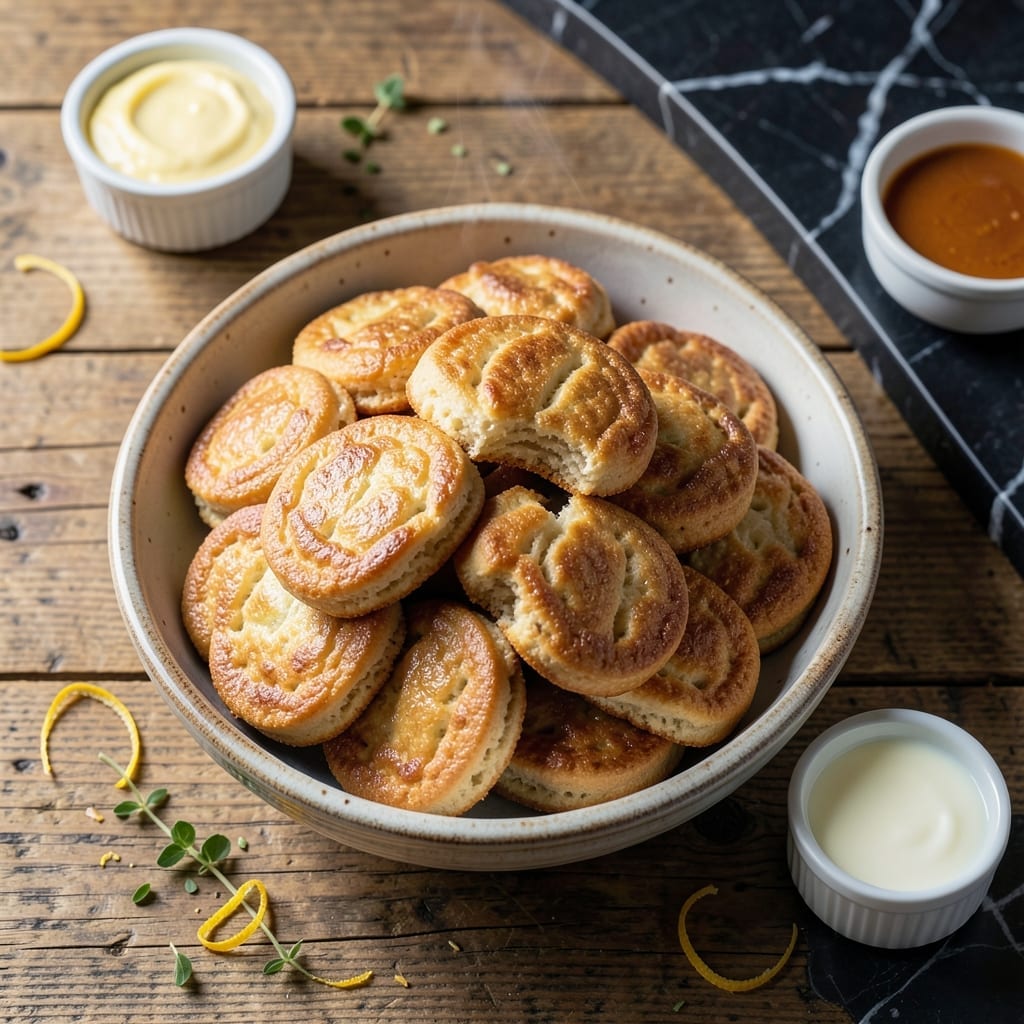
Achieving flaky, golden biscuits at home doesn’t require hours of effort or complex techniques. This method delivers restaurant-quality results with minimal work, using a simple yet effective approach to layering.
The key is handling the dough just enough to create those signature flaky layers without overworking it. A hot oven and cold butter work together to produce biscuits that rise high and stay tender inside.
You’ll end up with perfectly golden tops, a soft crumb, and that buttery richness that makes these impossible to resist. The entire process takes less than 20 minutes from start to finish.
Ideal for breakfast, brunch, or alongside any meal. Here’s how to make them.
Ingredients for Recipe for Bisquick Biscuits
Simple, high-quality ingredients create flaky, golden biscuits with buttery richness in no time.
| Ingredient | Amount | Notes |
|---|---|---|
| Bisquick Baking Mix 🌾 | 2 ½ cups | Original or buttermilk variety |
| Cold Unsalted Butter 🧈 | ½ cup | Cut into small cubes |
| Whole Milk 🥛 | ¾ cup | Cold, for flaky texture |
| All-Purpose Flour 🌾 | ¼ cup | For dusting work surface |
| Baking Powder 🧂 | 1 tsp | Ensures proper rise |
| Granulated Sugar 🍚 | 1 tbsp | Optional, for subtle sweetness |
| Salt 🧂 | ½ tsp | Fine grain for even distribution |
| Buttermilk 🥛 | ¼ cup | For extra tang and tenderness |
| Melted Butter 🧈 | 2 tbsp | For brushing tops |
| Fresh Parsley 🌿 | 1 tbsp | Chopped, for garnish |
The Bisquick is non-negotiable here—original or buttermilk variety both work. I grab mine from Target or Walmart in the baking aisle. The butter must be cold (straight from the fridge) and unsalted, so you control the seasoning. Kerrigold or Land O’Lakes are reliable brands for consistent results. For the milk, whole milk gives the richest texture, but 2% works in a pinch.
No Bisquick? Homemade baking mix (flour, baking powder, salt, shortening) can substitute, but the texture won’t be identical. Skip the sugar if you prefer savory biscuits. No buttermilk? Milk with 1 tsp lemon juice or vinegar works as a stand-in. The melted butter for brushing can be swapped with heavy cream for extra richness. Fresh parsley is optional but adds a nice pop of color.
Biscuits are best fresh but can be stored in an airtight container for 2 days. Reheat in a 350°F oven for 5-10 minutes to restore flakiness. Freeze unbaked biscuits on a tray first, then transfer to a bag for up to 3 months.
Why You’ll Love This Recipe
- Five-Minute Mix: I dump the Bisquick, a quick rub of cold butter, and milk—no fancy steps, just stir and shape.
- Buttery Layers: Cold butter and Bisquick create those flaky, melt-in-your-mouth edges I crave every time.
- Breakfast to Dinner: I serve these with jam at dawn and sop up gravy with the same batch at supper.
- Pocket Change Feast: A box of Bisquick, a stick of butter, and milk I already have—feeds four for less than a fiver.
Step-by-Step Instructions for Bisquick Biscuits
This method ensures flaky layers and golden tops with minimal effort and time.
Step 1: Cut Cold Butter into the Bisquick Mix
In a large mixing bowl, combine the 2.5 cups Bisquick Baking Mix, 1 tsp Baking Powder, 1 tbsp Granulated Sugar, and 0.5 tsp Salt. Whisk briefly to distribute the leavening agents evenly throughout the dry mixture.
Add the 0.5 cup Cold Unsalted Butter cut into small cubes. Using a pastry cutter or your fingertips, work the butter into the Bisquick mix until the mixture resembles coarse crumbs with pea-sized butter pieces visible. This creates the flaky layers you want.
Keep the butter cold—this is critical. If it starts to melt, chill the bowl for 5 minutes before proceeding. The cold butter creates steam during baking, which separates the layers for that perfect flaky texture.
Step 2: Incorporate the Wet Ingredients
Make a well in the center of the flour-butter mixture. Pour in the 0.75 cup Whole Milk and 0.25 cup Buttermilk. Using a wooden spoon or silicone spatula, gently stir until the dough just comes together—it should be slightly shaggy and moist but not sticky.
Do not overmix. Overworking the dough develops gluten, which makes the biscuits tough instead of tender. The dough will look slightly uneven, and that’s perfectly fine. The buttermilk adds a subtle tang that enhances the buttery richness.
Step 3: Turn Out and Fold the Dough
Lightly dust a clean work surface with the 0.25 cup All-Purpose Flour. Turn the dough out onto the floured surface and gently pat it into a 1-inch thick rectangle. Fold the rectangle in half like a book, then pat it back down to 1-inch thickness.
Repeat this folding and patting process 2-3 times. Each fold creates additional layers in the biscuits, amplifying the flaky texture. The flour prevents sticking while adding just enough structure to support the rise.
If the dough becomes too sticky during this process, dust with a bit more All-Purpose Flour, but use sparingly—too much will make the biscuits dense.
Step 4: Cut and Bake Until Golden
Pat the dough to a final 1-inch thickness and use a 2.5-inch biscuit cutter to cut out biscuits. Press straight down without twisting—twisting seals the edges and prevents the biscuits from rising properly. Place the biscuits on a parchment-lined baking sheet so they touch slightly.
Preheat your oven to 450°F. Bake the biscuits for 10-12 minutes until they’re golden brown on top and the layers are visibly separated. The high heat ensures a quick rise and golden color while maintaining the flaky interior.
Step 5: Finish with Melted Butter and Parsley
As soon as the biscuits come out of the oven, brush the tops with the 2 tbsp Melted Butter. This adds a rich, buttery sheen and enhances the flavor. Sprinkle with the 1 tbsp Fresh Parsley for a touch of color and freshness.
Let the biscuits cool for 2-3 minutes on the baking sheet before serving. This brief rest allows the structure to set, making them easier to handle. Serve warm for the ultimate flaky, buttery experience.
Pro Tips For Making Recipe For Bisquick Biscuits
- Chill the Butter: Keep your butter ice cold and cut it into the Bisquick mix with a pastry cutter or fork—this creates flaky layers instead of dense biscuits.
- Don’t Overmix: Stir the dough just until it comes together. Overworking it develops gluten, and suddenly you’ve got hockey pucks instead of tender biscuits.
- Use Cold Milk: Like the butter, cold whole milk keeps the fat firm during mixing, which helps create that perfect rise and crumb.
- Bake Immediately: Once the dough is shaped, get it in a hot oven (450°F) right away—letting it sit too long melts the butter and flattens your biscuits.
Regional Styles of This Dish
Southern Buttermilk Style
In the South, we use extra buttermilk for tang and tenderness. Replace all milk with 1 cup buttermilk and add ¼ tsp baking soda to balance acidity. The result is taller, fluffier biscuits with that classic Southern bite. I grew up eating these at my grandma’s table.
Texas Cheddar Drop
For a hearty Texas twist, stir 1 cup shredded sharp cheddar and ¼ cup chopped jalapeños into the dough. Drop spoonfuls onto the sheet—no cutting needed. Bake at 450°F until golden. These disappear fast at potlucks.
Appalachian Sweet
Mountain cooks add sweetness with ¼ cup honey mixed into the milk. Brush tops with honey butter (melted butter + 1 tbsp honey) after baking. Perfect with jam or sorghum syrup for a true Appalachian breakfast treat.
Midwest Sour Cream
Midwestern bakers swear by ½ cup sour cream in place of ¼ cup milk for extra richness. The dough will be stickier, so use extra flour when handling. These stay tender for days—if they last that long.
New England Cinnamon
Northern bakeries add 1 tsp cinnamon and 2 tbsp brown sugar to the dry mix. After brushing with butter, sprinkle with cinnamon sugar. Serve warm with apple butter for a cozy New England breakfast.
Nutrition Facts
Frequently Asked Questions
What’s the secret to flaky layers?
Cold butter is key! Keep it chilled until baking. The butter creates steam in the oven, separating the dough into those perfect flaky layers.
Can I use a different milk?
Yes, but whole milk works best for richness. For extra tang, try all buttermilk and add ¼ tsp baking soda to balance the acidity.
Why did my biscuits turn out dense?
Overmixing develops gluten, making them tough. Stir just until the dough comes together, and handle it gently when folding.
How do I store leftovers?
Keep in an airtight container for up to 2 days. Reheat in a 350°F oven for 5-10 minutes to restore flakiness.

- 6 Egg Cake Recipe with Oil: Light as Air With Buttery Moisture - October 4, 2026
- 4 Bean Casserole Recipe: One-Pan Heartiness With Smoky Paprika Depth - October 4, 2026
- 3-Ingredient Keto Mug Cake Recipe: Microwave Magic in 2 Minutes - October 4, 2026