
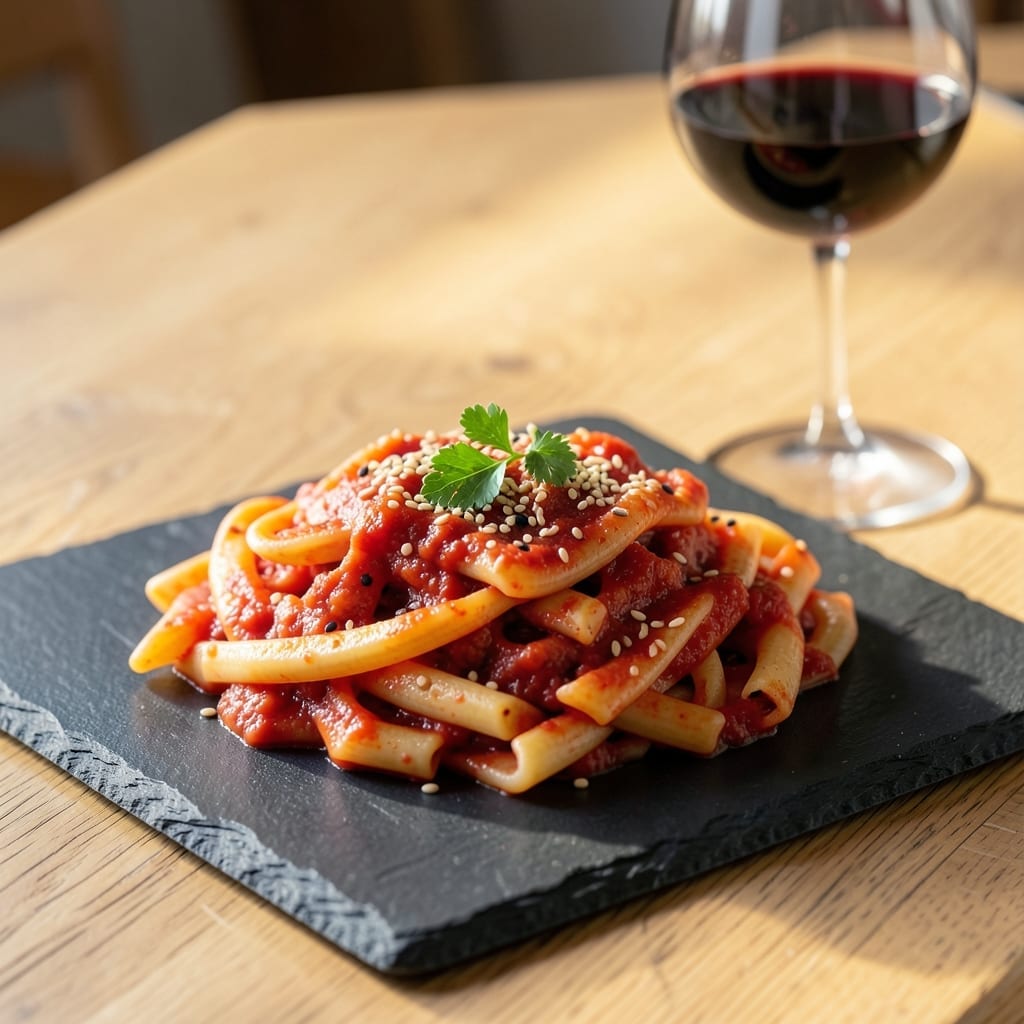
This Roman classic brings bold tradition to your table with its signature combination of guanciale, tomato, and pecorino.
I’ve refined this method to honor its authentic roots while making it approachable for home cooks. The result is a dish that’s rich, savory, and undeniably satisfying.
Ingredients for Recipe for Bucatini All’amatriciana
Bold Roman flavors start with these authentic Italian ingredients. Nothing fancy, just the good stuff.
| Ingredient | Amount | Notes |
|---|---|---|
| Bucatini Pasta 🍝 | 1 lb | Dried, thick spaghetti-like tubes |
| Guanciale 🥓 | 6 oz | Italian cured pork cheek, diced |
| San Marzano Tomatoes 🍅 | 1 can | 28 oz, whole peeled preferred |
| Pecorino Romano Cheese 🧀 | 1 cup | Freshly grated from block |
| Yellow Onion 🧅 | 1 whole | Medium, finely diced |
| Red Pepper Flakes 🌶️ | 1 tsp | Adjust for heat preference |
| White Wine 🍷 | ½ cup | Dry variety for deglazing |
| Extra-Virgin Olive Oil 🫒 | 2 tbsp | High quality for finishing |
| Kosher Salt 🧂 | 1 tsp | Diamond Crystal preferred |
| Freshly Ground Black Pepper 🌶️ | ½ tsp | To taste |
| Fresh Parsley 🌿 | ¼ cup | Chopped, for garnish |
| Garlic Cloves 🧄 | 2 cloves | Minced |
The guanciale is non-negotiable for authenticity—Eataly or a good Italian deli will have it. If you’re stuck, pancetta is the closest backup (but don’t tell a Roman). Look for San Marzano tomatoes in tall cans—they’re sweeter and less acidic. For pecorino, Pecorino Romano is the traditional choice; avoid the pre-grated stuff (it’s dusty and doesn’t melt right). The bucatini shape matters—its hollow center grabs the sauce beautifully.
No guanciale? Thick-cut bacon (not smoked) in a pinch, but render it first. Out of white wine? Substitute chicken stock with a splash of lemon juice. Dried red pepper flakes work if you’re missing fresh, but use half the amount. The pasta water is liquid gold here—don’t drain it all away. For a richer sauce, some cooks stir in a pat of butter at the end (I won’t judge).
This tastes even better the next day once flavors meld. Keeps 3-4 days in the fridge—reheat with a splash of water to loosen the sauce. Freezes well for 2-3 months (undercook the pasta slightly before freezing). Always save extra pecorino for topping.
Why You’ll Love This Recipe
- One Pot Wonder: I love that this comes together in a single skillet—bucatini soaks up the guanciale fat while the tomatoes simmer, no colander needed.
- Rich and Smoky: The guanciale fries up crisp, then melts into the San Marzano sauce, and that Pecorino Romano finish? Ridiculously good.
- Crowd Pleaser: Honestly, it’s my go-to for dinner parties—the thick bucatini twirls hold the sauce, and everyone always asks for seconds.
- Leftovers Win: The flavors deepen overnight, so I make double. Between us, it’s even better the next day straight from the fridge.
Step-by-Step Instructions for Bucatini All’Amatriciana
This is the traditional method that delivers authentic Roman flavor with rich, tangy tomato sauce.
Step 1: Render the Guanciale Until Crisp
Heat a large, heavy skillet over medium-low heat and add the 6 oz Guanciale. Cook slowly for 8-10 minutes, stirring occasionally, until the fat renders out and the meat turns golden brown and crispy.
This step is crucial—don’t rush it. The rendered fat from the guanciale forms the flavor base for the entire dish. You’ll know it’s ready when the bits are crisp and the fat has turned translucent. Remove the crispy guanciale with a slotted spoon and set aside, but leave all that precious fat in the pan.
Step 2: Build the Flavor Base with Aromatics
In the same skillet with the rendered guanciale fat, add the 1 whole Yellow Onion, finely diced. Cook over medium heat for 5-6 minutes until the onion becomes soft and translucent but not browned.
Add the 2 cloves Garlic Cloves, minced, and the 1 tsp Red Pepper Flakes. Stir constantly for 30 seconds just until the garlic becomes fragrant—don’t let it burn. This combination of onion, garlic, and chili creates the authentic Amatriciana foundation.
Step 3: Deglaze and Simmer the Tomato Sauce
Pour in the 0.5 cup White Wine and scrape up all the browned bits from the bottom of the pan with a wooden spoon. Let the wine reduce by half, about 3-4 minutes.
Add the 1 can San Marzano Tomatoes, crushing them by hand as they go into the pan. Stir in the 1 tsp Kosher Salt and 0.5 tsp Freshly Ground Black Pepper. Reduce heat to low and let the sauce simmer for 15-20 minutes until it thickens slightly and the tomatoes break down completely.
Step 4: Cook the Bucatini and Combine
While the sauce simmers, bring a large pot of heavily salted water to a rolling boil. Add the 1 lb Bucatini Pasta and cook until al dente according to package instructions, usually 1 minute less than the suggested time.
Reserve 1 cup of pasta water before draining. Transfer the cooked bucatini directly to the skillet with the tomato sauce. Add ¼ cup of the reserved pasta water and toss everything together over medium heat for 1-2 minutes. The pasta should be well coated and the sauce should cling beautifully to each strand.
Step 5: Finish with Pecorino and Guanciale
Remove the skillet from heat. Stir in ½ cup of the 1 cup Pecorino Romano Cheese, reserving the rest for serving. Add back the crispy guanciale you set aside earlier. Toss everything together until the cheese melts into the sauce.
Divide the bucatini among plates and top with the remaining ½ cup Pecorino Romano Cheese. Garnish with the 0.25 cup Fresh Parsley, chopped, and a drizzle of the 2 tbsp Extra-Virgin Olive Oil. Serve immediately while the pasta is hot and the sauce is glossy.
Pro Tips For Making Recipe For Bucatini All’Amatriciana
- Render guanciale low: Cook the guanciale on medium-low heat until crisp—rushing it with high heat burns the fat before it renders, leaving you with chewy bits instead of golden, melty goodness.
- Crush tomatoes by hand: I learned this the hard way—pulsing San Marzano tomatoes in a blender makes the sauce too smooth; squishing them with your hands gives it the right rustic texture.
- Skip the onion: Traditional Amatriciana doesn’t use onion, and adding it muddles the bright tomato and salty guanciale flavors. Leave it out for the real deal.
- Toss pasta twice: After draining the bucatini, toss it with the sauce, then add a splash of pasta water and toss again—this second turn coats every strand perfectly.
Essential Equipment for Great recipe for bucatini allamatriciana
Must-Have Tools
To nail this classic Roman dish, you’ll need a few kitchen essentials. A large, heavy-bottomed skillet (like All-Clad or Le Creuset) ensures even heat distribution for crisping the guanciale. A sharp chef’s knife (try Wüsthof or Victorinox) makes quick work of dicing the pork. Don’t skip a microplane for finely grating the Pecorino Romano—it melts beautifully into the sauce.
Nice-to-Have
A pasta cooker insert (like OXO’s) keeps bucatini perfectly al dente while you finish the sauce. For authenticity, a wooden spoon helps toss the pasta with the sauce without damaging the strands. A scale (e.g., Escali) ensures precise measurements for the guanciale and cheese.
Budget Alternatives
No fancy gear? No problem. A nonstick pan works for cooking guanciale, and a box grater substitutes for the microplane. For pasta, any large pot with a lid will do—just monitor the cook time closely. The key is technique, not tools!
Nutrition Facts

- 6 Egg Cake Recipe with Oil: Light as Air With Buttery Moisture - October 4, 2026
- 4 Bean Casserole Recipe: One-Pan Heartiness With Smoky Paprika Depth - October 4, 2026
- 3-Ingredient Keto Mug Cake Recipe: Microwave Magic in 2 Minutes - October 4, 2026