
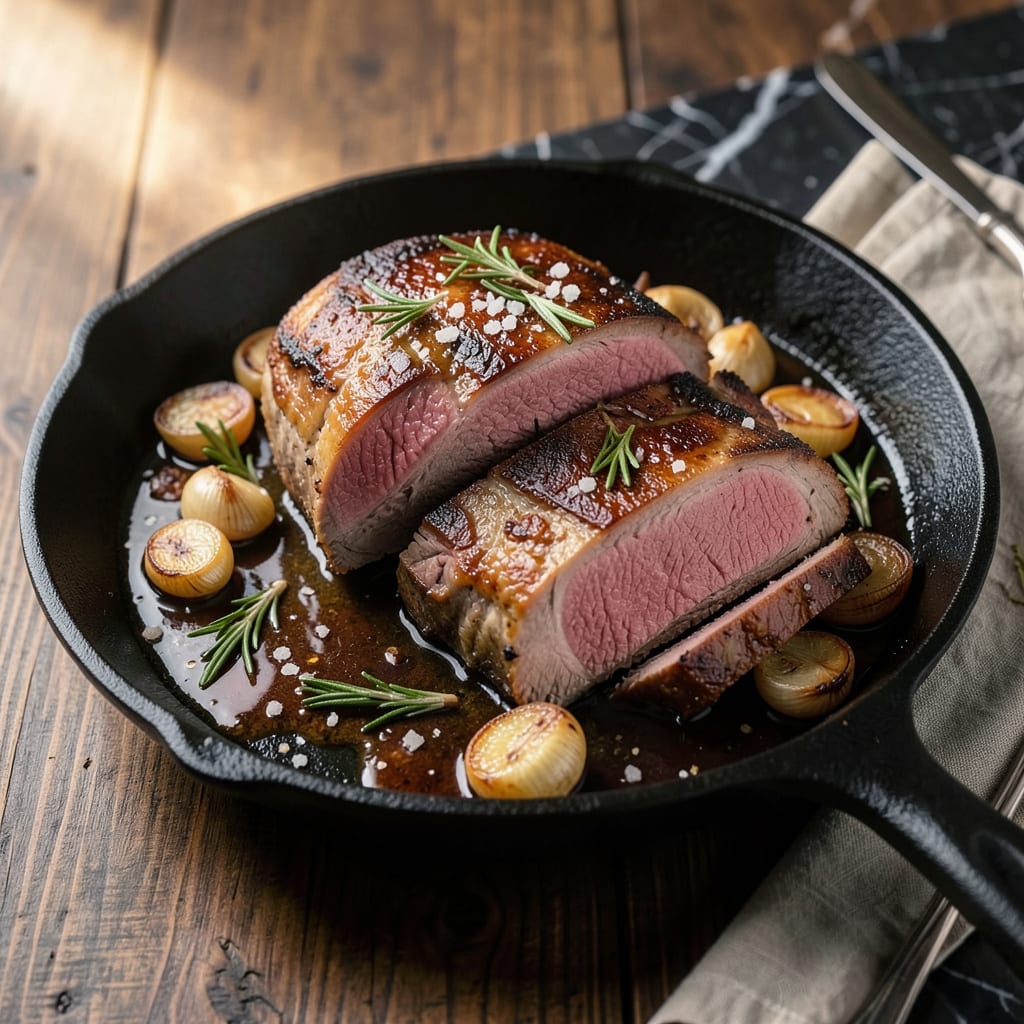
Eye round roast doesn’t have to be tough or dry—this simple method transforms this lean cut into fork-tender perfection every time. By focusing on proper seasoning and precise cooking techniques, you’ll achieve results that rival expensive cuts without the extra cost.
The key lies in balancing time and temperature, allowing the roast to cook evenly while retaining moisture. With minimal prep and a hands-off approach, this recipe delivers perfect results whether you’re feeding a crowd or meal prepping for the week. Let’s master this underrated cut together.
Ingredients for Recipe for Eye Round Roast
This lean cut transforms with proper seasoning and technique—here’s everything needed for fork-tender results every time.
| Ingredient | Amount | Notes |
|---|---|---|
| Eye Round Roast 🥩 | 3 lb | Trimmed of excess fat |
| Kosher Salt 🧂 | 1 ½ tbsp | Diamond Crystal preferred |
| Freshly Ground Black Pepper 🌶️ | 1 tbsp | Coarse grind recommended |
| Garlic Powder 🧄 | 1 tbsp | Not garlic salt substitute |
| Onion Powder 🧅 | 1 tbsp | Freshly purchased for potency |
| Dried Rosemary 🌿 | 1 tsp | Crushed between fingers |
| Dried Thyme 🌿 | 1 tsp | Rubbed to release oils |
| Olive Oil 🫒 | 2 tbsp | Extra-virgin for searing |
| Beef Broth 💧 | 1 cup | Low-sodium preferred |
| Red Wine Vinegar 🍷 | 2 tbsp | For acidity balance |
| Worcestershire Sauce 💧 | 1 tbsp | Anchovy-free if preferred |
| Unsalted Butter 🧈 | 2 tbsp | For finishing baste |
| Fresh Parsley 🌿 | ¼ cup | Chopped for garnish |
Optimal quality requires selecting an eye round roast with vibrant red color and minimal visible fat. Whole Foods or local butchers typically offer superior cuts compared to standard supermarket options. The Diamond Crystal kosher salt specification is critical—its larger flakes distribute more evenly during the dry-brine process. For the dried herbs, Penzeys or freshly purchased grocery store brands ensure maximum potency. The beef broth should be low-sodium to control seasoning precision during cooking.
Substitutions must maintain moisture balance. Garlic salt cannot replace the garlic powder (salt ratios will be compromised). If avoiding anchovies, coconut aminos provides umami without fish products. For wine vinegar alternatives, apple cider vinegar works at equal volume. The butter baste is essential for surface texture—vegan butter may be substituted but monitor browning closely. Fresh thyme or rosemary can replace dried at three times the quantity, though texture will differ slightly.
Store the raw roast in its original packaging on the bottom fridge shelf for 3-5 days maximum. Post-cooking, sliced roast maintains quality for 4 days refrigerated or 3 months vacuum-sealed and frozen. The dried herb blend remains potent for 6-12 months in airtight containers away from light. Always bring refrigerated roast to room temperature (about 1 hour) before cooking for even doneness. The finishing butter baste should be prepared immediately before serving to prevent separation.
Why You’ll Love This Recipe
- No-Fuss Seasoning: I love that this only needs five ingredients—salt, pepper, garlic powder, onion powder, and the roast itself. No marinating, no fancy rubs, just a quick pat-down and into the oven it goes.
- That Crust, Though: The high-heat sear with kosher salt and black pepper creates this insane crispy crust, while the inside stays juicy. Honestly, I’d eat the whole thing just for that first bite.
- Meal Prep MVP: Slice it thin for sandwiches, chunk it for salads, or serve it whole for Sunday dinner. Between us, I make this every weekend and repurpose it three ways.
- Budget Hero: Eye round is one of the most affordable cuts, but with this method, it tastes like a pricier roast. I’ll be real: it’s my go-to when I need to feed six without breaking the bank.
Step-by-Step Instructions for Eye Round Roast
This method transforms a lean cut into fork-tender perfection through precise seasoning and controlled cooking.
Step 1: Prepare and Season the Roast
Begin by patting the 3 lb Eye Round Roast completely dry with paper towels. This step is crucial for achieving a proper sear later. Trim any remaining excess fat from the surface, leaving only a thin layer to enhance flavor during cooking.
In a small bowl, combine the 1.5 tbsp Kosher Salt, 1 tbsp Freshly Ground Black Pepper, 1 tbsp Garlic Powder, 1 tbsp Onion Powder, 1 tsp Dried Rosemary, and 1 tsp Dried Thyme. Rub this mixture evenly over all surfaces of the roast, pressing gently to ensure it adheres. Let the seasoned roast sit at room temperature for 30 minutes before cooking—this allows the salt to begin penetrating the meat and ensures more even cooking.
Step 2: Sear for Maximum Flavor Development
Heat a heavy oven-safe skillet or Dutch oven over medium-high heat. Add the 2 tbsp Olive Oil and allow it to become shimmering hot but not smoking. Carefully place the roast in the pan and sear undisturbed for 3-4 minutes until a deep golden crust forms on the bottom.
Using tongs, rotate the roast to sear all sides, including the ends, for approximately 2 minutes per side. The goal is to develop a rich brown crust over the entire surface—this creates the foundation for your sauce later. Don’t rush this process; proper browning develops complex flavors through the Maillard reaction.
Step 3: Deglaze and Begin Braising
Once the roast is evenly browned, transfer it to a plate temporarily. Reduce the heat to medium and add the 1 cup Beef Broth, 2 tbsp Red Wine Vinegar, and 1 tbsp Worcestershire Sauce to the hot pan. Use a wooden spoon to scrape up all the browned bits from the bottom—these contain concentrated flavor.
Return the roast to the pan along with any accumulated juices. The liquid should come about one-third up the sides of the meat. Bring to a gentle simmer, then immediately reduce the heat to low, cover the pan, and maintain a very gentle simmer. This controlled environment prevents the lean meat from becoming tough.
Step 4: Slow Cook to Perfect Tenderness
Allow the roast to cook covered for 2 to 2.5 hours, turning it every 30 minutes to ensure even cooking and prevent drying. The roast is done when it reaches an internal temperature of 145°F for medium-rare or 160°F for medium when measured in the thickest part with an instant-read thermometer.
During the final 30 minutes of cooking, add the 2 tbsp Unsalted Butter to the braising liquid and baste the roast occasionally with the pan juices. This enriches the sauce and adds a silky texture to the finished dish. The meat should be fork-tender but still hold its shape when done.
Step 5: Rest and Serve
Transfer the roast to a cutting board and tent loosely with foil. Let it rest for 15 minutes before slicing—this critical step allows the juices to redistribute throughout the meat rather than running out when cut. The internal temperature will continue to rise by about 5-10°F during this time.
While the meat rests, skim any excess fat from the surface of the braising liquid. Slice the roast against the grain into ¼-inch thick pieces and arrange on a serving platter. Spoon the reduced pan juices over the top and garnish with the 0.25 cup Fresh Parsley. Serve immediately while the sauce is still glossy and the meat retains its perfect tenderness.
Creative Variations of These Flavors
Herb-Crusted Variation
For a more aromatic experience, create a fresh herb crust by blending ¼ cup fresh parsley, 2 tbsp fresh rosemary, and 2 tbsp fresh thyme with the dry rub. Pulse in a food processor with 1 tbsp olive oil until it forms a paste. Rub this mixture over the roast before searing—it creates an incredibly fragrant crust that infuses every bite. 🌿
Coffee-Rubbed Boldness
Add 1 tbsp finely ground coffee and 1 tbsp smoked paprika to your dry rub for a deep, complex flavor profile. The coffee enhances the beef’s natural richness without tasting like a morning brew. I discovered this trick at a Texas BBQ joint—it’s perfect when you want something unexpected but still approachable.
Asian-Inspired Twist
Replace the traditional seasonings with a mix of 2 tbsp soy sauce, 1 tbsp grated ginger, 1 tbsp sesame oil, and 1 tsp five-spice powder. Marinate the roast for 4 hours before cooking. During the last 30 minutes of braising, add ½ cup orange juice and 1 tbsp honey for a sweet-savory glaze.
Mediterranean Style
After searing, add 1 cup chopped Kalamata olives, ½ cup sun-dried tomatoes, and 4 minced garlic cloves to the braising liquid. Use white wine instead of beef broth for a brighter flavor. Finish with crumbled feta cheese and fresh oregano. This variation transports me back to my trip through Greece.
Spicy Cajun Kick
Boost your dry rub with 1 tbsp Cajun seasoning and ½ tsp cayenne pepper. During braising, add 1 diced bell pepper, 1 diced celery stalk, and ½ diced onion to create a holy trinity base. Serve with rice to soak up the bold, spicy pan juices. I use Tony Chachere’s for that authentic Louisiana heat. 🌶️
Slow Cooker Adaptation
After searing, transfer everything to your slow cooker. Add ½ cup extra beef broth and cook on low for 6-8 hours or high for 4-5 hours. The longer cook time breaks down the connective tissue beautifully. I love this method for busy days—just set it and forget it until dinner time.
Nutrition Facts

- 6 Egg Cake Recipe with Oil: Light as Air With Buttery Moisture - October 4, 2026
- 4 Bean Casserole Recipe: One-Pan Heartiness With Smoky Paprika Depth - October 4, 2026
- 3-Ingredient Keto Mug Cake Recipe: Microwave Magic in 2 Minutes - October 4, 2026