
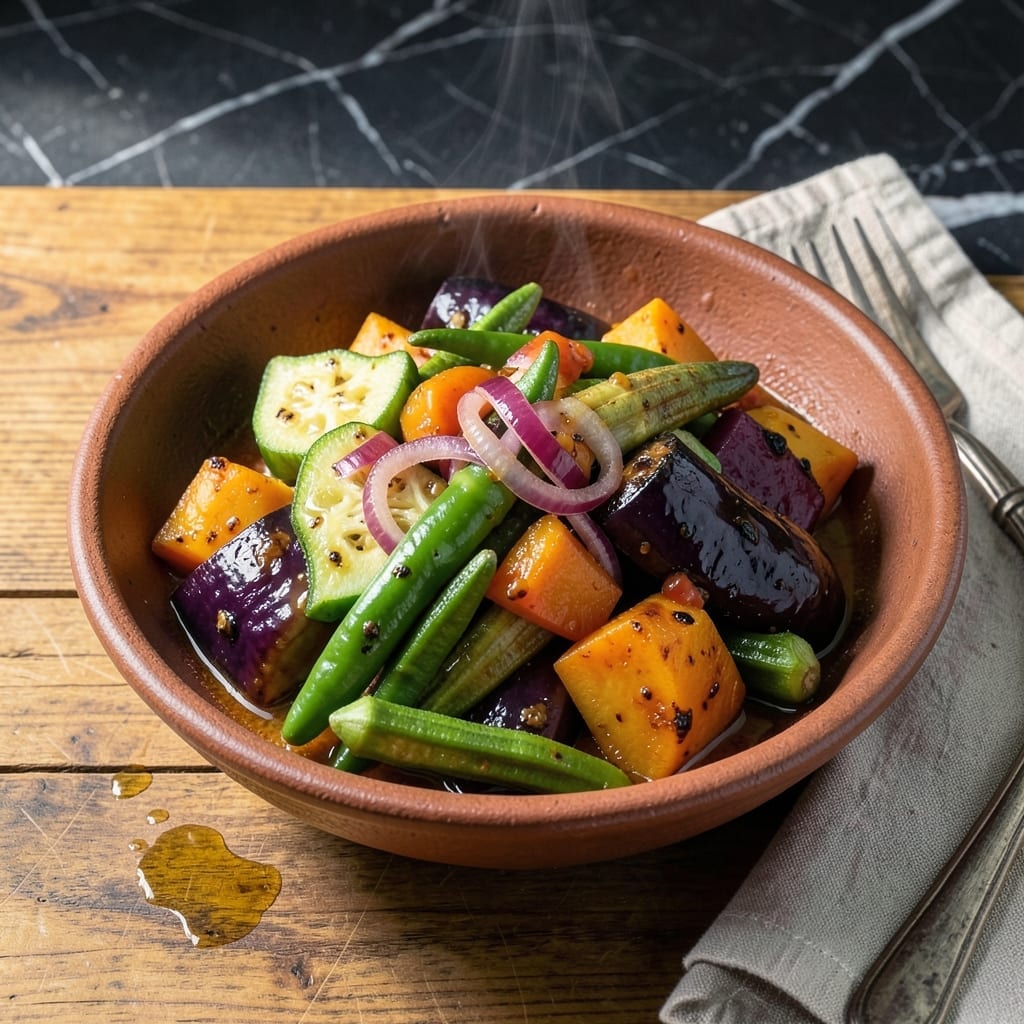
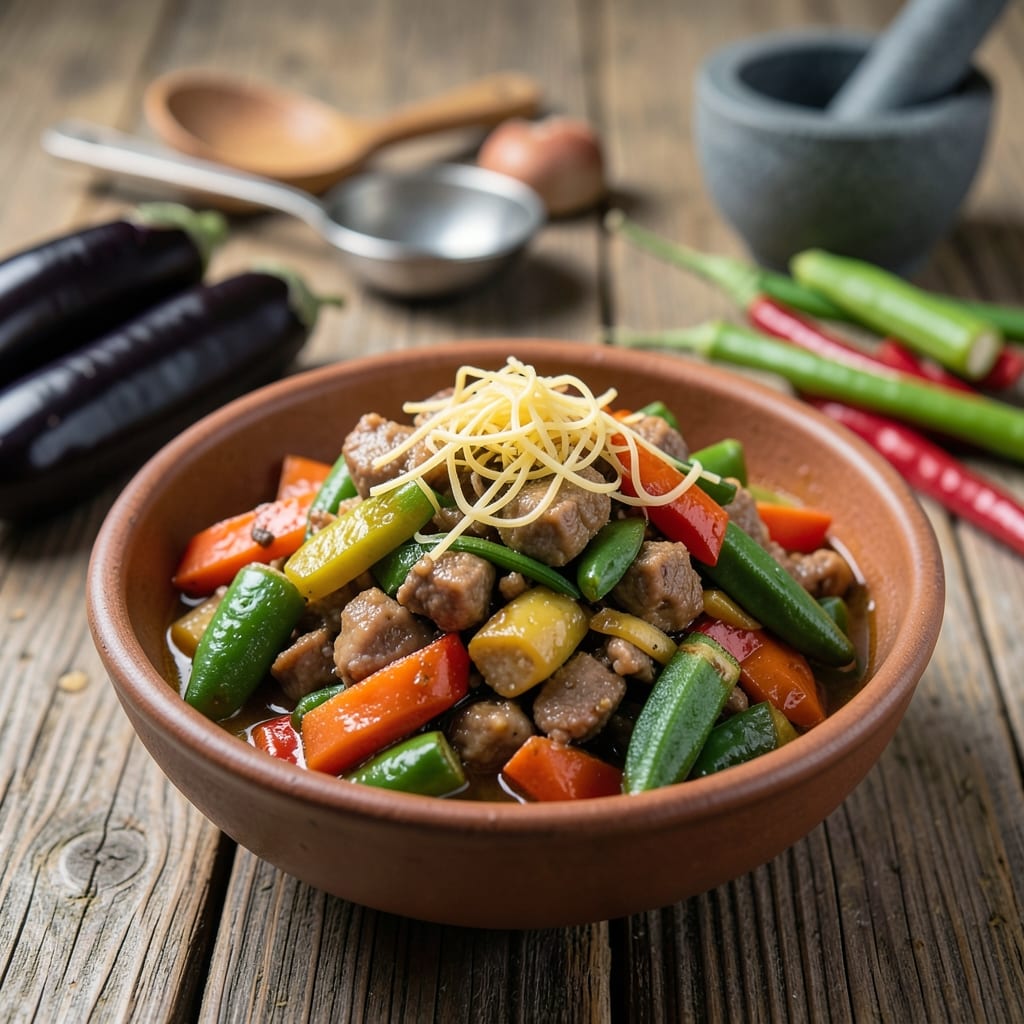
This traditional Filipino dish brings together bitter melon, eggplant, and squash in a rich, savory stew. The secret lies in the shrimp paste that adds depth to every bite.
With simple ingredients and a one-pot method, this recipe creates a comforting meal that’s both nourishing and full of authentic flavor. It’s a staple that showcases the best of Filipino home cooking.
Ingredients for Recipe for Filipino Pinakbet
Fresh vegetables and bold flavors create this authentic stew with rich umami depth.
| Ingredient | Amount | Notes |
|---|---|---|
| Bitter Melon 🥒 | 1 whole | Thinly sliced, seeds removed |
| Japanese Eggplant 🍆 | 1 whole | Cut into rounds |
| Kabocha Squash 🎃 | 1 lb | Peeled, cubed |
| Okra 🌿 | ½ lb | Trimmed, whole or halved |
| Long Green Chili Peppers 🌶️ | 2 whole | Sliced on diagonal |
| Red Onion 🧅 | 1 whole | Thinly sliced |
| Garlic Cloves 🧄 | 4 cloves | Minced finely |
| Tomatoes 🍅 | 2 whole | Quartered |
| Vegan Shrimp Paste 🍤 | 2 tbsp | Or miso paste for depth |
| Vegetable Broth 🥣 | 2 cups | Low-sodium preferred |
| Extra-Virgin Olive Oil 🫒 | 2 tbsp | For sautéing vegetables |
| Sea Salt 🧂 | 1 tsp | Adjust to taste |
| Ground Black Pepper 🌶️ | ½ tsp | Freshly ground |
The bitter melon is non-negotiable for authenticity. Asian markets carry it fresh—look for firm, bright green pods with minimal blemishes. Kabocha squash can be swapped for butternut in a pinch, but the texture won’t be as dense. Vegan shrimp paste is available at specialty stores or online—Ocean’s Halo makes a reliable version. For the best results, prep all veggies before starting to cook.
No vegan shrimp paste? Miso paste plus a dash of soy sauce mimics the savory depth (use 1 tbsp miso + 1 tbsp soy sauce per tablespoon shrimp paste). Okra haters can skip it—add green beans instead. Eggplant varieties work, but Japanese eggplant’s thin skin means no peeling. San Marzano tomatoes add sweetness if you’re using canned instead of fresh.
Leftovers taste even better the next day as flavors meld. Store in an airtight container in the fridge for up to 4 days, or freeze for 3 months. Reheat gently to preserve the vegetables’ texture—microwave in 30-second bursts, stirring between each.
Why You’ll Love This Recipe
- I’ll be real: it’s my go-to for family dinners because everyone gets their fill of veggies without complaint.
- One Pot Wonder: All the veggies—bitter melon, eggplant, kabocha—cook together in a single pan. Honestly, cleanup takes less time than the cooking itself.
- Umami Bomb: The shrimp paste and bitter melon create this deep, salty-savory flavor that’s completely addictive.
- Feeds a Crowd: I’ll be real: it’s my go-to for family dinners because everyone gets their fill of veggies without complaint.
Step-by-Step Instructions for Filipino Pinakbet
Master this traditional technique for a dish where each vegetable retains its character while absorbing rich, savory depth.
Step 1: Prepare and Sauté the Aromatic Base
Heat the 2 tbsp extra-virgin olive oil in a large, deep skillet or Dutch oven over medium heat. Add the thinly sliced red onion and sauté for 3-4 minutes until softened and translucent, stirring occasionally to prevent burning.
Add the minced 4 cloves garlic cloves and cook for 30 seconds until fragrant but not browned. Stir in the 2 tbsp vegan shrimp paste, breaking it up with the back of a wooden spoon to distribute it evenly. This step builds the foundational umami layer that defines the dish.
Step 2: Build Flavor with Tomatoes and Chili Peppers
Incorporate the quartered 2 whole tomatoes and sliced 2 whole long green chili peppers into the skillet. Cook for 4-5 minutes, stirring frequently, until the tomatoes begin to soften and release their juices, creating a light, tangy base.
The chili peppers should retain some bite but mellow slightly as they cook. If the mixture starts to stick, add a splash of the 2 cups vegetable broth to deglaze the pan. This ensures all the browned bits—packed with flavor—are incorporated into the stew.
Season with the 1 tsp sea salt and 0.5 tsp ground black pepper, stirring to combine. Taste and adjust seasoning if needed, keeping in mind the vegan shrimp paste is already salty.
Step 3: Layer in the Hearty Vegetables
Add the peeled, cubed 1 lb kabocha squash to the skillet, stirring to coat it in the aromatic mixture. Pour in the remaining vegetable broth and bring to a gentle simmer. Cover and cook for 8-10 minutes until the squash begins to soften but still holds its shape.
Next, add the cut 1 whole Japanese eggplant rounds, ensuring they are submerged in the liquid. The eggplant will absorb the flavors of the broth and shrimp paste, becoming tender and rich. Cook for an additional 5 minutes with the lid on.
Step 4: Incorporate the Delicate Vegetables
Add the trimmed 0.5 lb okra and thinly sliced 1 whole bitter melon to the skillet. Stir gently to combine, ensuring the okra and bitter melon are evenly distributed. Cover and cook for 5-7 minutes until all the vegetables are tender but still vibrant.
Watch closely during this step—the bitter melon should soften slightly but retain a faint crispness, while the okra should be cooked through without becoming mushy. The bitter melon’s sharpness will mellow as it absorbs the savory broth, balancing its natural astringency.
The stew is ready when all the vegetables are tender and the liquid has reduced slightly, coating the ingredients in a light, flavorful sauce. Serve hot, allowing the flavors to meld further as it rests briefly off the heat.
Pro Tips For Making Recipe For Filipino Pinakbet
- Salt the Bitter Melon: Sprinkle sliced bitter melon with salt and let sit for 10 minutes before rinsing—I learned this the hard way after making a face while eating my first batch. It mellows the bitterness without losing that signature flavor.
- Sear the Pork First: Brown your pork belly or lechon kawali in the pot first, then remove it before adding veggies. This builds a rich, meaty base for the sauce that makes a real difference in the final dish.
- Skip Overcooking Okra: Add okra last, just 3-4 minutes before serving, or you’ll end up with mushy, slimy pods. My grandmother swore by this, and she was right.
- Use Shrimp Paste Sparingly: Start with 1 tablespoon of bagoong and adjust to taste—it’s potent stuff. After burning my tongue on an over-salted batch, I finally figured out that less is more.
Make-Ahead Tips for This recipe for filipino pinakbet
🔪 Week Before
Start by picking up non-perishables like bagoong (shrimp paste) and canned goods if your recipe calls for them. Check your pantry for staples like garlic, onions, and spices. If you’re marinating proteins (like pork or shrimp for a twist), prep the marinade 3–4 days ahead and store it in the fridge. Pro tip: 💡 Label everything to avoid mix-ups!
🥘 Day Before
Chop and store hardy veggies like eggplant, bitter melon (ampalaya), and squash in airtight containers in the fridge. Soak the bitter melon in salted water for 30 minutes to mellow its bitterness, then drain and refrigerate. Pre-measure dry ingredients like spices or cornstarch for thickening. If using meat, pre-cook it 12 hours ahead and refrigerate to deepen flavors.
⏰ Day Of
Assemble the dish by combining prepped veggies, proteins, and bagoong in the cooking pot. Let it sit at room temperature for 20–30 minutes before cooking to enhance flavors. If making a large batch, use a slow cooker and set it on low for 4–6 hours to let the flavors meld beautifully.
🍳 Last-Minute Tasks
Just before serving, give your pinakbet a final stir and adjust seasoning with salt or bagoong. Garnish with fresh okra or string beans for a pop of color and texture. Pro tip: 🌡️ Reheat gently to preserve the veggies’ texture—overcooking can make them mushy!
Nutrition Facts

- 6 Egg Cake Recipe with Oil: Light as Air With Buttery Moisture - October 4, 2026
- 4 Bean Casserole Recipe: One-Pan Heartiness With Smoky Paprika Depth - October 4, 2026
- 3-Ingredient Keto Mug Cake Recipe: Microwave Magic in 2 Minutes - October 4, 2026