
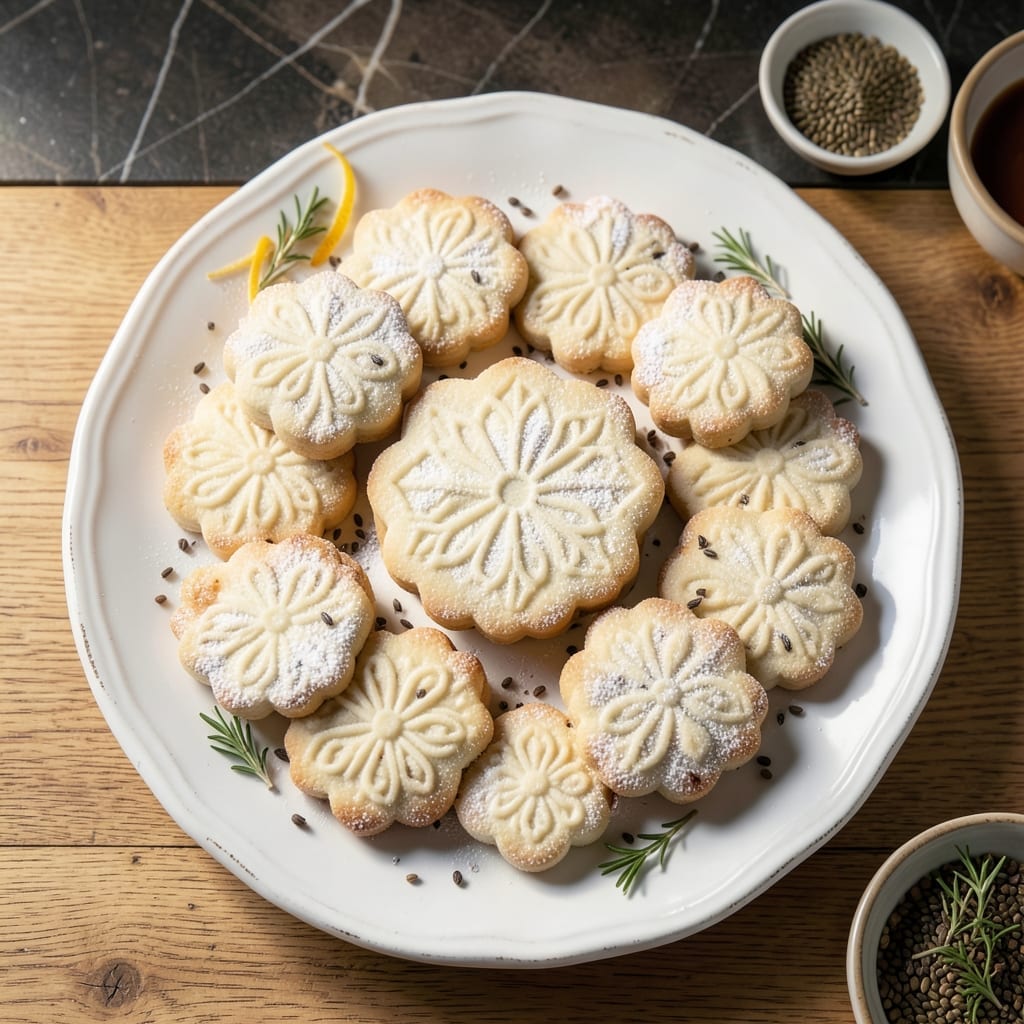
These traditional German cookies feature intricate embossed designs and a distinctive anise flavor that’s been cherished for centuries. The process transforms simple ingredients into elegant, crisp treats perfect for holidays.
Using a springerle mold creates the signature raised patterns, while anise seeds infuse each bite with aromatic warmth. The dough must rest overnight to develop its characteristic texture and flavor.
Ingredients for Recipe for German Springerle Cookies
Simple ingredients transform into elegant, aromatic cookies with traditional embossed designs.
| Ingredient | Amount | Notes |
|---|---|---|
| All-Purpose Flour 🌾 | 4 cups | Sifted for best texture |
| Granulated Sugar 🍚 | 2 cups | Fine white sugar preferred |
| Large Eggs 🥚 | 6 whole | Room temperature for even mixing |
| Anise Seeds 🌿 | 2 tbsp | Whole seeds for authentic flavor |
| Unsalted Butter 🧈 | 1 cup | Softened but not melted |
| Baking Powder 🧂 | 1 tsp | Fresh for optimal rise |
| Salt 🧂 | ½ tsp | Fine sea salt preferred |
| Vanilla Extract 🌿 | 1 tsp | Pure vanilla for depth |
| Lemon Zest 🍋 | 1 tbsp | Finely grated for brightness |
| Powdered Sugar 🍚 | ½ cup | For dusting finished cookies |
The anise seeds are non-negotiable for authenticity. Penzeys carries high-quality options, but most Whole Foods locations stock them too. Look for seeds with strong aroma—old ones lose their punch. The flour should be all-purpose; King Arthur is a reliable brand. Room temperature eggs incorporate more smoothly into the dough, so plan ahead (or use the warm water bath trick).
No anise seeds? One teaspoon anise extract can substitute, but use sparingly—it’s potent. Swap baking powder for one-fourth teaspoon baking soda plus half teaspoon cream of tartar if needed. For a citrus variation, orange zest can replace lemon. The butter must be unsalted to control sodium levels precisely.
The dough rests overnight—don’t rush it. Store finished cookies in an airtight container at room temperature for up to 2 weeks. Powdered sugar can clump, so sift it before dusting for a smooth finish.
Why You’ll Love This Recipe
- One Bowl Wonder: I mix everything in a single bowl—no fancy equipment, just flour, sugar, eggs, and butter coming together effortlessly.
- Anise Magic: The warm, aromatic punch of anise seeds makes these cookies taste like a cozy bakery in December.
- Holiday Staple: Between us, these are my go-to for Christmas cookie swaps and gift boxes—they keep beautifully for weeks.
- Budget Friendly: Honestly, the ingredients are pantry basics, so I can bake a big batch without breaking the bank.
Step-by-Step Instructions for German Springerle Cookies
This traditional method ensures crisp, embossed cookies with authentic anise flavor and perfect texture.
Step 1: Prepare the Dough Base
In a stand mixer fitted with the paddle attachment, beat the 1 cup Unsalted Butter and 2 cups Granulated Sugar on medium speed for 4-5 minutes until light and fluffy. The mixture should appear pale and nearly double in volume.
Add the 6 whole Large Eggs one at a time, mixing for 30 seconds after each addition until fully incorporated. Then add the 1 tsp Vanilla Extract, 1 tbsp Lemon Zest, and 2 tbsp Anise Seeds, mixing for another 30 seconds until evenly distributed. The lemon zest brightens the anise flavor beautifully.
Step 2: Incorporate Dry Ingredients
In a separate bowl, whisk together the 4 cups All-Purpose Flour, 1 tsp Baking Powder, and 0.5 tsp Salt. Gradually add this dry mixture to the wet ingredients on low speed, mixing just until combined—about 1-2 minutes.
The dough will be thick and slightly sticky. Avoid overmixing, as this develops gluten and can make the cookies tough. The dough should pull away from the sides of the bowl cleanly when ready.
Step 3: Chill and Press the Dough
Cover the dough and refrigerate for at least 4 hours or overnight. Chilling firms the dough, making it easier to handle and press into the traditional springerle molds. The flavors also meld and deepen during this rest period.
When ready to shape, roll out portions of dough on a lightly floured surface to about ½-inch thickness. Press firmly into your springerle mold to create the characteristic embossed design. Use a sharp knife or dough scraper to cut along the mold’s edges for clean lines.
Step 4: Dry and Bake the Cookies
Place the embossed dough pieces on a parchment-lined baking sheet. Let them dry at room temperature for 1-2 hours until the surface feels slightly firm to the touch. This drying step is crucial—it helps the cookies hold their intricate designs during baking.
Preheat your oven to 325°F. Bake the cookies for 12-15 minutes until the edges are just beginning to turn light golden brown. The centers should remain pale to preserve the embossed pattern’s clarity.
Step 5: Cool and Finish with Powdered Sugar
Allow the cookies to cool completely on the baking sheet. Once cooled, dust generously with the 0.5 cup Powdered Sugar using a fine-mesh sieve. The sugar adheres best to the embossed patterns when the cookies are fully cooled.
For an extra touch of authenticity, repeat the dusting process just before serving. The cookies should have a firm texture with a delicate, almost cake-like crumb and a pronounced anise aroma.
Pro Tips For Making Recipe For German Springerle Cookies
- Chill the Dough: After mixing, refrigerate the dough for at least 2 hours—I learned this the hard way when my first batch spread into a single giant cookie. The butter needs to firm up to hold the springerle mold impressions.
- Toast the Anise: Lightly toast the anise seeds in a dry pan for 1-2 minutes before adding to the dough. Sounds weird, but it works: the warmth unlocks their aroma and makes a real difference in flavor depth.
- Press Firmly: When pressing the dough into the springerle mold, use even, strong pressure—about 10-15 seconds per impression. My grandmother swore by this, and she was right: shallow imprints fade during baking.
- Use Room-Temp Eggs: Take the eggs out of the fridge 30 minutes before starting. Cold eggs resist blending with the butter-sugar mix, and you’ll end up with a lumpy dough that’s harder to work with.
Creative Variations of This Dish
🔥 Spicy Texas Style
Give your springerle a bold twist by adding a hint of warmth! Replace the traditional anise with 1 teaspoon of ground cinnamon and ½ teaspoon of cayenne pepper. For extra depth, swap 2 tablespoons of flour with 2 tablespoons of cornmeal. The cookies will have a subtle kick while keeping their signature texture. Press the dough firmly into the mold to ensure crisp embossing.
🍳 Sweet and Savory Fusion
Blend sweet and savory flavors by reducing the sugar to ½ cup and adding 1 teaspoon of finely grated Parmesan cheese and ½ teaspoon of dried rosemary. The anise pairs surprisingly well with these herbs, creating a sophisticated cookie perfect for cheese boards. Chill the dough for 24 hours to let the flavors meld.
💪 Healthy Lighter Version
For a lighter take, replace half the all-purpose flour with 1 cup of almond flour and swap the sugar with ⅔ cup of coconut sugar. Add 1 teaspoon of vanilla extract to enhance sweetness without extra calories. The dough may be slightly stickier, so dust your work surface with almond flour before rolling.
❄️ Seasonal Twist
Embrace the holidays by infusing the dough with 1 teaspoon of orange zest and ½ teaspoon of ground cardamom. Replace the anise with 1 tablespoon of honey for a festive touch. These cookies pair beautifully with mulled wine and make charming gifts. Ensure your molds are well-floured to prevent sticking during pressing.
Nutrition Facts

- 6 Egg Cake Recipe with Oil: Light as Air With Buttery Moisture - October 4, 2026
- 4 Bean Casserole Recipe: One-Pan Heartiness With Smoky Paprika Depth - October 4, 2026
- 3-Ingredient Keto Mug Cake Recipe: Microwave Magic in 2 Minutes - October 4, 2026