
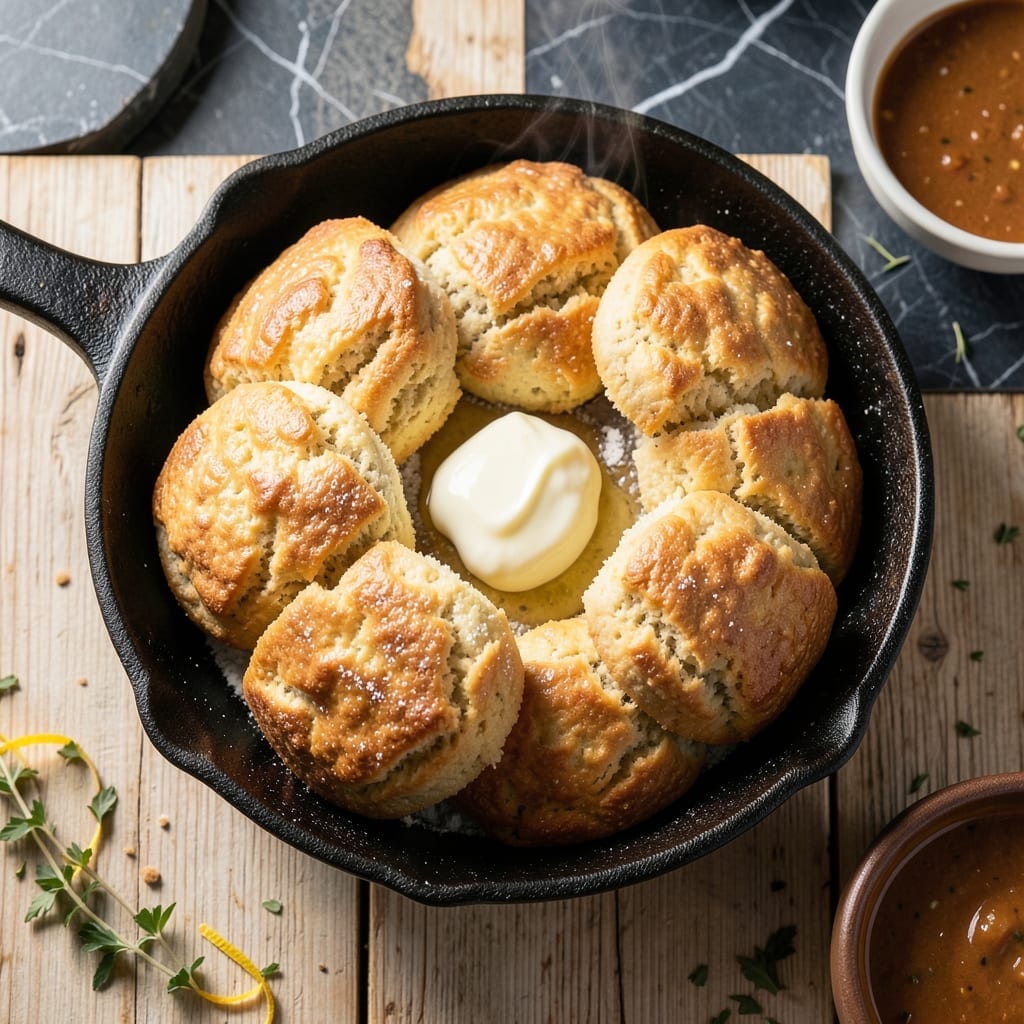
There’s something undeniably satisfying about recreating restaurant-quality biscuits at home. This recipe delivers those buttery layers and flaky texture that made Hardee’s famous, with a homemade touch that makes them even better.
The secret lies in using cold butter and a gentle folding technique to create those distinctive layers. With just a few simple ingredients and about 20 minutes of active prep time, you’ll have warm, golden biscuits ready for the oven.
What emerges is a batch of biscuits with crisp, golden tops and a tender, layered interior that pulls apart effortlessly. The butter creates that signature richness while the folding method ensures each bite is perfectly flaky.
Serve them fresh from the oven with honey, jam, or as the foundation for a hearty breakfast sandwich. Here’s how to make them.
Ingredients for Recipe for Hardee’s Biscuits
Simple ingredients create those legendary buttery layers and flaky texture you remember.
| Ingredient | Amount | Notes |
|---|---|---|
| All-Purpose Flour 🌾 | 2 cups | Plus extra for dusting surface |
| Baking Powder 🧂 | 1 tbsp | Aluminum-free preferred for clean taste |
| Granulated Sugar 🧈 | 1 tbsp | Balances the richness of butter |
| Salt 🧂 | 1 tsp | Fine sea salt recommended |
| Unsalted Butter 🧈 | ¾ cup | Cold, cut into small cubes |
| Whole Milk 🥛 | ¾ cup | Ice cold for flaky layers |
| Buttermilk 🥛 | ¼ cup | Full-fat for best texture |
| Baking Soda 🧂 | ½ tsp | Ensures proper rise |
| Shortening 🧈 | 2 tbsp | Optional, adds extra flakiness |
The butter is non-negotiable here. Use high-quality unsalted butter like Plugrá or Land O’Lakes—their higher fat content creates superior layers. Ensure it stays ice cold until mixed; I freeze my cubes for 10 minutes before starting. For the milk, whole milk is essential—lower fat versions won’t develop the same rich texture that defines Hardee’s style.
No buttermilk? Mix 1 tbsp lemon juice or vinegar with enough whole milk to make 0.25 cup and let sit for 5 minutes. Shortening can be omitted, but it adds that extra flake (I use Crisco all-vegetable). For a tangier biscuit, increase buttermilk to 0.5 cup and reduce whole milk to 0.5 cup. The baking powder must be fresh—test by dropping a spoonful in hot water; it should bubble vigorously.
Dough can be refrigerated for up to 24 hours before baking. Baked biscuits are best served warm but will keep in an airtight container for 2 days. For longer storage, freeze baked biscuits for up to 3 months and reheat in a 350°F oven for 5-10 minutes (worth the extra minute).
Why You’ll Love This Recipe
- One Bowl Wonder: I mix everything right in the same dish—flour, butter, baking powder, and a pinch of sugar—and they’re ready for the oven.
- Buttery Layers: That flaky texture from the cold butter folded in? It melts in your mouth.
- Breakfast or Dinner: I serve them with sausage gravy at dawn or alongside fried chicken at night.
- Pantry Staples: Honestly, I always have flour, butter, and baking powder on hand, so these cost almost nothing to make.
Step-by-Step Instructions for Flaky Buttery Biscuits
Here’s the professional method for achieving those signature layers with minimal effort.
Step 1: Combine Dry Ingredients
In a large mixing bowl, whisk together the 2 cups All-Purpose Flour, 1 tbsp Baking Powder, 1 tbsp Granulated Sugar, 1 tsp Salt, and 0.5 tsp Baking Soda. Ensure the mixture is uniform—this guarantees even distribution of leavening agents for consistent rise.
I always sift these ingredients first if time allows, but a thorough whisking works just as well. The aluminum-free baking powder ensures a clean, neutral flavor that lets the butter shine.
Step 2: Cut in Cold Fats
Add the 0.75 cup Unsalted Butter (cold, cubed) and 2 tbsp Shortening to the dry ingredients. Using a pastry cutter or your fingertips, work the fats into the flour until the mixture resembles coarse crumbs with pea-sized pieces of butter remaining visible.
This step is critical—those visible butter pieces create the flaky layers. If the butter melts or the mixture turns pasty, place the bowl in the freezer for 5 minutes to rechill. The shortening adds an extra layer of flakiness, a trick I learned from professional bakeries.
Step 3: Incorporate the Liquids
Make a well in the center of the flour mixture. Pour in the 0.75 cup Whole Milk (ice cold) and 0.25 cup Buttermilk (full-fat). Using a fork, gently stir the liquid into the dry ingredients until just combined. The dough will look shaggy and slightly sticky—that’s perfect.
Overmixing develops gluten, which toughens the biscuits. Stop stirring as soon as the flour is mostly hydrated. The buttermilk’s acidity reacts with the baking soda for extra lift, while the whole milk adds richness.
Step 4: Laminate and Cut
Turn the dough onto a lightly floured surface and pat it into a 1-inch thick rectangle. Fold the dough in thirds like a letter, then rotate 90 degrees and repeat the folding once more. This laminating technique creates distinct layers.
Pat the dough to 1-inch thickness again and cut into rounds using a 2.5-inch biscuit cutter. Press straight down—don’t twist, as this seals the edges and prevents rising. Gather the scraps, gently re-pat, and cut more biscuits.
Step 5: Bake to Golden Perfection
Place the biscuits on a parchment-lined baking sheet, touching slightly for softer sides or spaced apart for crispier edges. Bake in a preheated 425°F oven for 12-15 minutes until the tops are golden brown.
Rotate the pan halfway through for even browning. The biscuits are done when the layers are visibly separated and the bottoms are golden. Brush the tops with melted butter immediately after removing from the oven for added richness and shine.
Pro Tips For Making Recipe For Hardee’S Biscuits
- Chill the Butter: Cut the unsalted butter into small cubes and freeze for 10 minutes before mixing—I learned this the hard way after my first few batches spread flat.
- Don’t Overwork Dough: Mix just until the flour is incorporated; after burning three batches, I finally figured out that tough biscuits come from over-handling.
- Use Cold Equipment: Place your mixing bowl and pastry cutter in the fridge for 15 minutes beforehand—sounds weird, but it keeps the butter from melting too fast.
- Bake Hot and Fast: Crank the oven to 425°F and bake on the top rack for that golden, flaky rise—my grandmother swore by this, and she was right.
Troubleshooting This Recipe
Dense Biscuits
Overworking the dough is the most common culprit. Stop mixing as soon as the flour is hydrated—those shaggy bits are normal. If your biscuits still turn out dense, try chilling the dough for 15 minutes before cutting to relax the gluten. 💡
Flat Biscuits
Flat biscuits usually mean expired leavening agents. Test your baking powder and baking soda by mixing a spoonful with hot water—it should bubble vigorously. Also, ensure your oven is fully preheated to 425°F before baking.
No Layers
The secret to flaky layers is cold butter and proper folding. Make sure your butter is ice-cold and pea-sized when cutting it into the flour. Fold the dough in thirds like a letter, then rotate 90 degrees and repeat once more.
Dry Biscuits
Dry biscuits often result from overbaking. Start checking at 12 minutes—they’re done when the tops are golden brown. Brush with melted butter immediately after baking to add moisture and shine. Also, avoid over-flouring the surface when rolling.
Tough Edges
Twisting the biscuit cutter seals the edges, preventing rise. Press straight down and lift cleanly. For softer edges, place biscuits touching slightly on the baking sheet. This creates steam, keeping the sides tender.
Uneven Browning
Rotate your baking sheet halfway through the baking time for even exposure. If your oven has hot spots, try baking one sheet at a time on the center rack. An oven thermometer can help verify your oven’s true temperature. 🔥
Nutrition Facts
Frequently Asked Questions
Why is cold butter important for flaky layers?
Cold butter creates steam during baking, which separates the dough into distinct layers. If it melts prematurely, the layers won’t form properly, resulting in dense biscuits. Always keep butter ice-cold until mixed.
Can I use a different type of milk?
Whole milk is essential for richness, but in a pinch, you can substitute 2%. Avoid skim milk as it lacks the fat needed for proper texture. For extra flakiness, stick to whole milk and buttermilk.
How do I prevent tough biscuit edges?
Press the biscuit cutter straight down—never twist. Twisting seals the edges, which prevents rising. For softer sides, place biscuits close together on the baking sheet.
Can I make the dough ahead of time?
Yes! Refrigerate the dough for up to 24 hours before baking. This chills the butter further, enhancing flakiness. Just let it sit at room temperature for 10 minutes before cutting.

- 6 Egg Cake Recipe with Oil: Light as Air With Buttery Moisture - October 4, 2026
- 4 Bean Casserole Recipe: One-Pan Heartiness With Smoky Paprika Depth - October 4, 2026
- 3-Ingredient Keto Mug Cake Recipe: Microwave Magic in 2 Minutes - October 4, 2026