
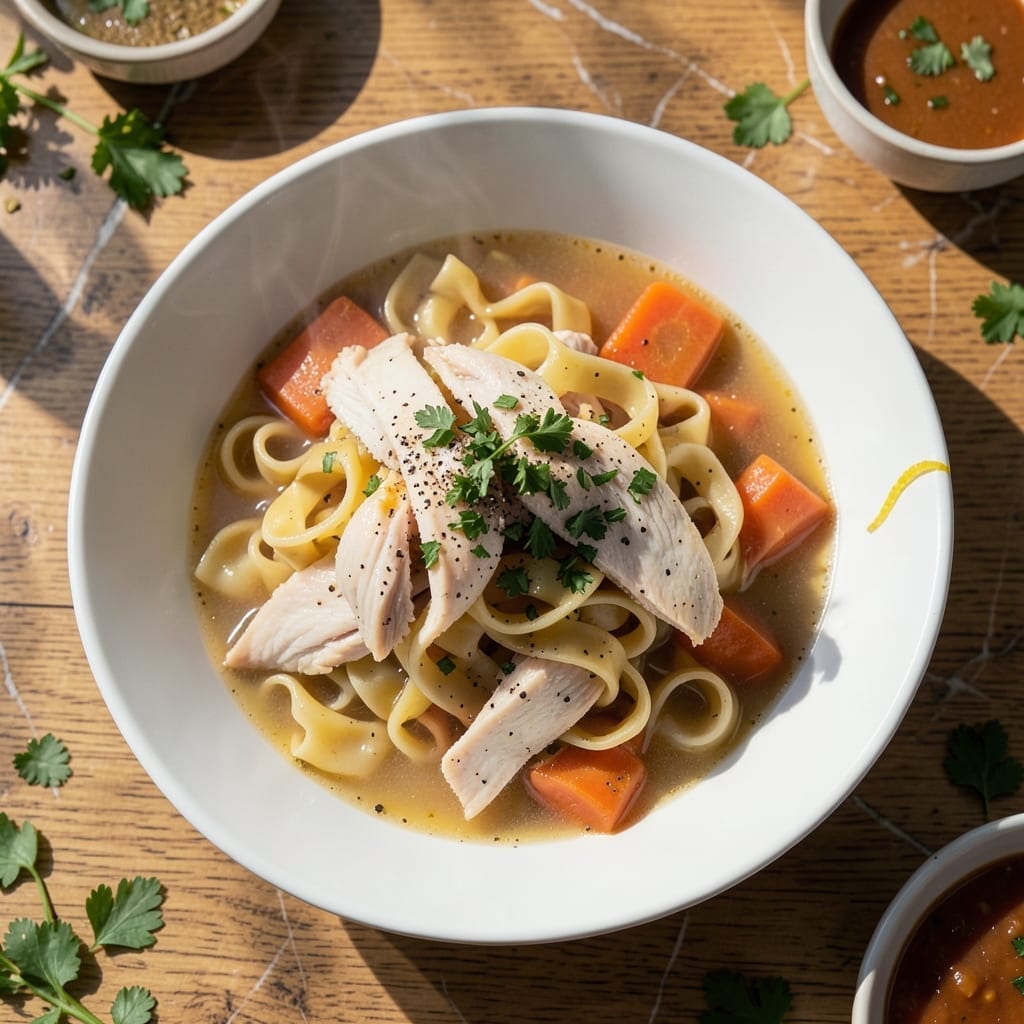
There’s something special about homemade noodles floating in a rich, simmering broth. I developed this egg-enriched ribbon recipe to hold up perfectly in chicken noodle soup, delivering a tender yet sturdy bite.
These fresh noodles absorb the broth’s flavors while maintaining their shape, transforming an ordinary soup into a hearty, comforting meal worth the effort.
Ingredients for Recipe for Homemade Noodles for Chicken Noodle Soup
Egg-enriched flour dough plus fresh vegetables create these hearty soup noodles from scratch.
| Ingredient | Amount | Notes |
|---|---|---|
| All-Purpose Flour 🌾 | 2 cups | Plus extra for dusting work surface |
| Large Eggs 🥚 | 3 whole | Room temperature for smooth dough |
| Egg Yolks 🍳 | 2 whole | For extra richness and color |
| Kosher Salt 🧂 | ½ tsp | Diamond Crystal preferred for consistency |
| Water 💧 | 2 tbsp | Cold, for dough elasticity |
| Olive Oil 🫒 | 1 tsp | For preventing sticking during rolling |
| Chicken Broth 🍲 | 8 cups | Homemade preferred for depth of flavor |
| Chicken Breast 🍗 | 1 lb | Boneless, skinless, poached in broth |
| Carrots 🥕 | 2 whole | Peeled, sliced into rounds |
| Celery Stalks 🌿 | 2 whole | Diced for soup base |
| Yellow Onion 🧅 | 1 whole | Medium, finely diced |
| Garlic Cloves 🧄 | 2 cloves | Minced for aromatic base |
| Fresh Parsley 🌿 | ¼ cup | Chopped, for garnish |
| Bay Leaf 🍃 | 1 whole | For broth infusion |
| Black Pepper 🌶️ | ¼ tsp | Freshly ground for best flavor |
The flour forms the backbone here. King Arthur All-Purpose is ideal for consistent results—higher protein than most grocery brands. The eggs must be fresh; farmers market eggs often have richer yolks, which deepen the noodle color. Room temperature eggs incorporate more smoothly into the dough. For the broth, homemade chicken stock is transformative, but quality store-bought like Better Than Bouillon works well.
No all-purpose flour? Bread flour at a 1:1 ratio adds slight chew but requires extra water. Short on eggs? Two whole eggs plus two yolks maintains richness. The broth can be vegetable-based if preferred (swap chicken for mushroom or vegetable stock). For the vegetables, frozen mirepoix saves time without sacrificing flavor.
Fresh dough rests best covered at room temperature for 30 minutes. Cooked noodles hold in broth for 2-3 days refrigerated, though they’ll absorb more liquid. Freeze uncooked dough sheets for up to 1 month—thaw before cutting.
Why You’ll Love This Recipe
- No Fancy Tools: I just need a rolling pin and a knife—no pasta machine, no fuss.
- Rich Egg Flavor: The extra yolks give these noodles a depth that store-bought just can’t match.
- Soup or Salad: I’ve tossed leftovers cold with herbs or simmered them in broth—both work.
- Pantry Staples: Flour, eggs, salt, water. Honestly, that’s all I ever have to grab.
Instructions
Here is the method for crafting egg-enriched noodles and assembling a classic chicken soup.
Step 1: Form and Rest the Noodle Dough
On a clean work surface, mound the 2 cups all-purpose flour and create a well in the center. Add the 3 whole large eggs, 2 whole egg yolks, 0.5 tsp kosher salt, 2 tbsp water, and 1 tsp olive oil into the well.
Using a fork, gradually incorporate the flour into the wet ingredients until a shaggy dough forms. Knead the dough by hand for 8-10 minutes until it becomes smooth and elastic. The dough should feel firm but pliable. Wrap it tightly in plastic wrap and let it rest at room temperature for 30 minutes to relax the gluten.
Step 2: Roll and Cut the Noodles
After resting, divide the dough into 4 equal portions for easier handling. Lightly dust your work surface with additional all-purpose flour to prevent sticking. Using a rolling pin or pasta machine, roll each portion into a thin sheet, about 1/16-inch thick.
If the dough resists rolling or springs back, let it rest for 5 minutes before continuing. Once rolled, dust the sheets with flour to prevent sticking, then cut into ¼-inch wide ribbons for classic egg noodles. Spread the noodles on a floured surface to dry slightly while you prepare the broth.
Step 3: Poach the Chicken and Prepare the Broth
In a large pot, combine the 8 cups chicken broth, 1 lb chicken breast, 2 whole carrots, 2 whole celery stalks, 1 whole yellow onion, 2 cloves garlic cloves, 1 whole bay leaf, and 0.25 tsp black pepper. Bring to a gentle simmer over medium heat.
Poach the chicken for 15-20 minutes until it reaches an internal temperature of 165°F and is no longer pink inside. Remove the chicken from the broth, let it cool slightly, then shred or dice it. Strain the broth to remove solids, then return it to the pot and bring back to a simmer.
Step 4: Cook the Noodles and Assemble the Soup
Add the fresh noodles to the simmering broth. Cook for 3-4 minutes until the noodles are tender but still have a slight bite. Stir occasionally to prevent sticking. The noodles are done when they float to the surface and appear slightly translucent.
Return the shredded chicken to the pot and stir to combine. Taste and adjust seasoning with additional kosher salt or black pepper if needed. Ladle the soup into bowls and garnish with 0.25 cup fresh parsley for a bright, fresh finish.
Pro Tips For Making Recipe For Homemade Noodles For Chicken Noodle Soup
- Rest the Dough: After kneading, let the dough rest for at least 30 minutes under a damp towel—this relaxes the gluten so it rolls out thin without springing back.
- Use Room-Temp Eggs: Pull your eggs out an hour before mixing; cold eggs tighten the dough, making it harder to roll and cut evenly.
- Skip Over-Flouring: Dust your surface lightly, but resist the urge to add too much flour while rolling—it makes the noodles tough instead of tender.
- Cut Evenly, Dry Quickly: Slice noodles to uniform thickness (about 1/8 inch) and let them dry on a rack for 10 minutes before cooking to prevent clumping in the soup.
Pro Cooking Tips for Perfect Results
💡 Master the Dough Consistency
Achieving the right dough texture is key for tender, chewy noodles. Use a ratio of 1 egg per cup of flour, and knead until smooth but not overly stiff. If the dough feels too dry, add a teaspoon of water; if sticky, dust with flour. Let it rest for 20-30 minutes to relax the gluten, ensuring easier rolling and a silky finish.
🌡️ Control the Cooking Time
Fresh noodles cook faster than dried ones. For chicken noodle soup, add them to the simmering broth during the last 3-5 minutes of cooking. Overcooking turns them mushy, while undercooking leaves them tough. Test for doneness by tasting—perfect noodles should be tender but slightly springy.
✨ Flavor Boosting Tricks
Elevate your noodles by incorporating chicken stock or a pinch of salt into the dough. This infuses extra depth into every bite. For a richer taste, replace some water with reserved pasta water or broth when cooking. This starchy liquid helps the noodles absorb more of the soup’s savory notes.
🎯 Rolling and Cutting Perfection
Roll the dough as thin as possible (about 1/16-inch thick) for delicate, broth-soaking noodles. Use a pasta machine for even sheets, or roll by hand with a floured rolling pin. Cut into 1/4-inch-wide strips for classic soup noodles, or go wider for heartier bites. Dust with flour to prevent sticking before cooking.
Nutrition Facts

- 6 Egg Cake Recipe with Oil: Light as Air With Buttery Moisture - October 4, 2026
- 4 Bean Casserole Recipe: One-Pan Heartiness With Smoky Paprika Depth - October 4, 2026
- 3-Ingredient Keto Mug Cake Recipe: Microwave Magic in 2 Minutes - October 4, 2026