
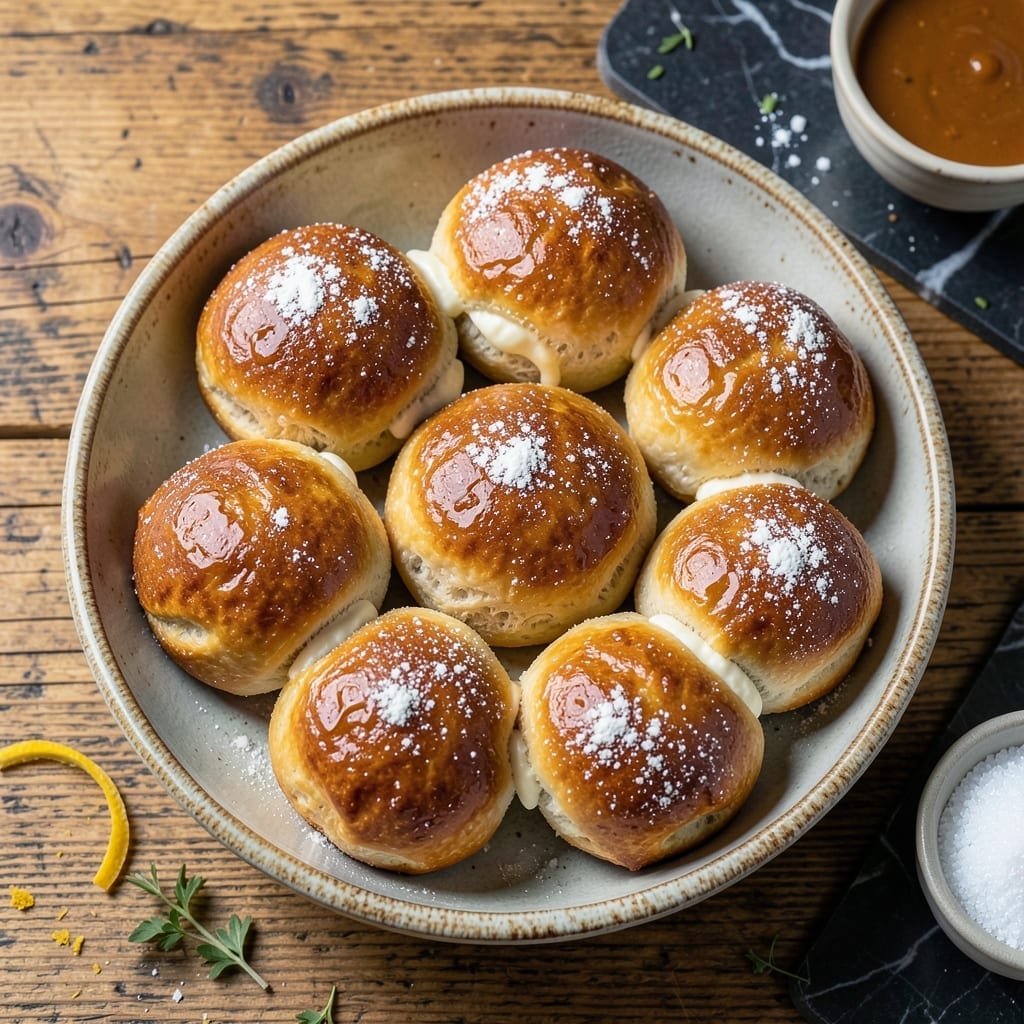
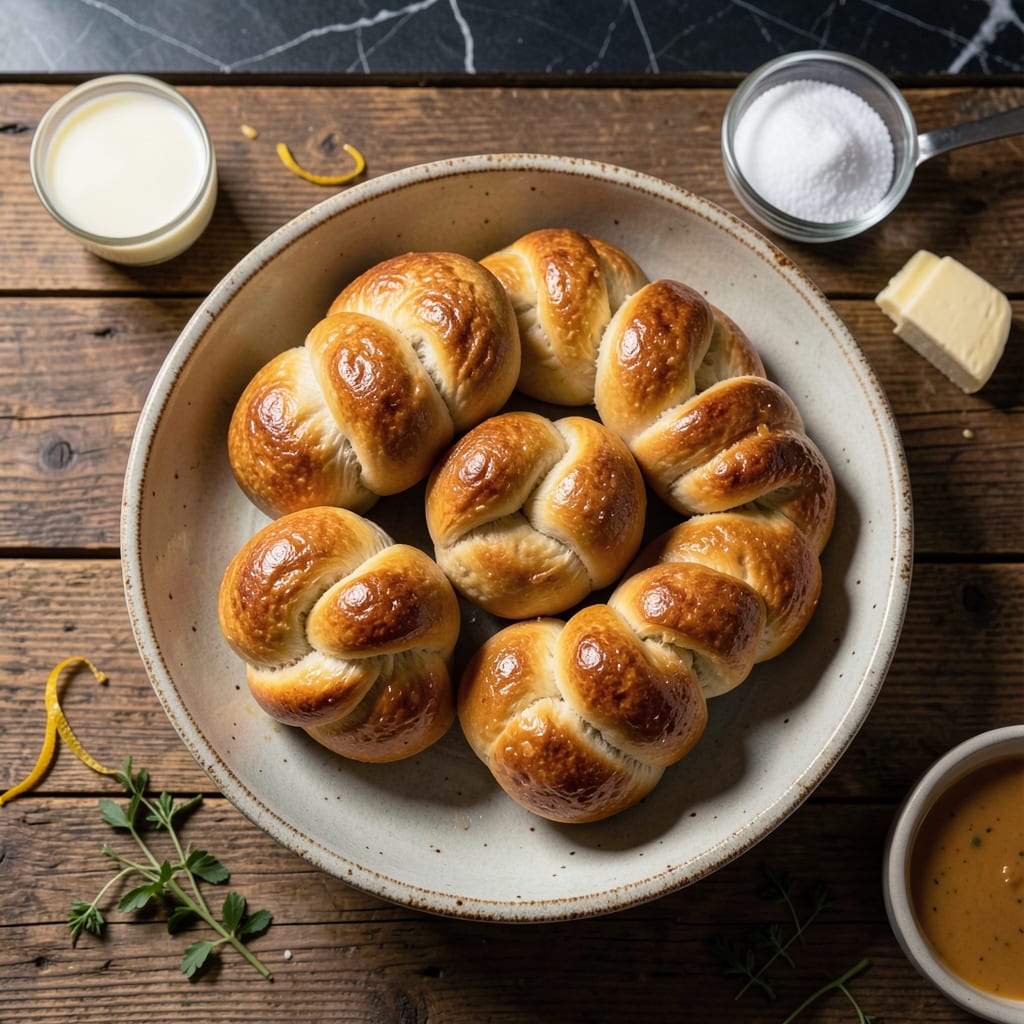
There’s a reason bakeries can’t keep these buns on the shelf—they deliver perfect texture every time. This method guarantees soft, pillowy centers with a golden crust that crackles slightly when fresh.
I’ve refined the process to ensure consistent results, from shaping to baking. The key is patience during proofing and precise oven timing to achieve that signature look and feel.
Ingredients for Recipe for Kaiser Buns
Simple pantry staples plus a few fresh items create bakery-quality results every time.
| Ingredient | Amount | Notes |
|---|---|---|
| Bread Flour 🌾 | 4 cups | High protein content essential |
| Active Dry Yeast 🍞 | 2 ¼ tsp | Or one 0.25 oz packet |
| Granulated Sugar 🍚 | 2 tbsp | Feeds the yeast activation |
| Warm Water 💧 | 1 ¼ cups | 110-115°F ideal temperature |
| Whole Milk 🥛 | ¼ cup | Warmed to 110°F |
| Unsalted Butter 🧈 | 2 tbsp | Melted and cooled |
| Large Egg 🥚 | 1 whole | Room temperature preferred |
| Salt 🧂 | 2 tsp | Fine sea salt recommended |
| Cornmeal 🌽 | ¼ cup | For dusting work surface |
| Egg Yolk 🥚 | 1 whole | For egg wash finish |
| Sesame Seeds 🌿 | 2 tbsp | Optional topping for crust |
The flour is critical here. King Arthur Bread Flour is my go-to for its consistent protein content (12.7%)—this ensures the structure needed for those pillowy centers. Yeast should be fresh and active; test it in the warm water with sugar first. If it doesn’t foam within 5 minutes, start over. The milk adds richness—whole milk gives the best texture, but 2% works in a pinch. Butter should be unsalted so you control the sodium content.
No bread flour? All-purpose flour plus 1 tbsp vital wheat gluten per cup gets you close. Out of yeast? This isn’t the recipe to experiment with sourdough discard. The egg wash can be substituted with 1 tbsp milk or cream for a dairy-based alternative. For a vegan version, use 1 tbsp plant-based milk. Sesame seeds are traditional but poppy seeds or coarse salt work equally well for topping.
Dough can be refrigerated overnight for slower proofing—this actually enhances flavor. Baked buns keep 2-3 days at room temperature in an airtight container, or freeze for 1 month. Reheat in a 350°F oven for 5-10 minutes to restore that fresh-baked texture. Always bring refrigerated dough to room temperature before shaping.
Why You’ll Love This Recipe
- No-Fuss Dough: I love how the yeast activates in warm water and milk—just mix, knead, and let it rise while I do other things.
- Rich, Soft Bite: The whole milk gives these buns a tender crumb that’s way better than store-bought. Honestly, the slight sweetness from the sugar seals the deal.
- Endless Uses: I use these for burgers, sandwiches, or even as dinner rolls. Between us, they disappear faster than I can bake them.
- Budget-Friendly Batch: Bread flour and basic pantry staples mean I can make a dozen for pennies. Leftovers? They freeze beautifully for busy weeks.
Step-by-Step Instructions for Kaiser Buns
Achieve bakery-quality results with this precise method for soft, golden rolls.
Step 1: Activate the Yeast and Prepare the Dough
In a stand mixer bowl, combine the 1.25 cups warm water, 0.25 cup whole milk, 2 tbsp granulated sugar, and 2.25 tsp active dry yeast. Let sit for 5-7 minutes until the mixture becomes foamy and cloudy—this confirms the yeast is active.
Add the 4 cups bread flour, 2 tsp salt, 1 whole large egg, and 2 tbsp unsalted butter to the yeast mixture. Using the dough hook attachment, mix on low speed for 2 minutes, then increase to medium speed for 6-8 minutes until the dough is smooth and elastic.
Step 2: First Rise and Shaping
Transfer the dough to a lightly greased bowl, cover with a damp towel, and let rise in a warm, draft-free place for 1-1.5 hours or until doubled in volume. The dough should spring back slowly when gently pressed with a finger.
Once risen, punch down the dough to release the air. Turn it out onto a surface dusted with 0.25 cup cornmeal, then divide into 8 equal portions. Roll each portion into a smooth ball, then shape into a traditional kaiser roll by forming a knot with a hole in the center.
Step 3: Second Rise and Preparation
Place the shaped rolls on a parchment-lined baking sheet, spacing them 2-3 inches apart. Cover loosely with greased plastic wrap and let rise again for 45-60 minutes until puffy. Preheat your oven to 375°F during the last 15 minutes of rising.
In a small bowl, whisk the 1 whole egg yolk with 1 tablespoon water to create an egg wash. Gently brush this over the tops of the rolls, then sprinkle with 2 tbsp sesame seeds if desired. This ensures a deep golden crust and adds a subtle nutty flavor.
Step 4: Bake to Golden Perfection
Bake the rolls in the preheated oven for 18-22 minutes, rotating the pan halfway through for even browning. The buns are done when they are deep golden brown and the internal temperature reaches 190-200°F.
Remove from the oven and transfer to a wire rack to cool for at least 15 minutes before serving. This cooling period allows the crumb structure to set, ensuring a soft, pillowy texture. Serve warm for the best experience.
Pro Tips For Making Recipe For Kaiser Buns
- Test Your Yeast: I learned this the hard way—always proof your active dry yeast in the warm water with a pinch of sugar for 5-10 minutes before mixing. If it doesn’t foam, your buns won’t rise, no matter how long you wait.
- Use Bread Flour: Skip the all-purpose and stick with bread flour—its higher protein content gives kaiser buns that chewy, sturdy texture they’re known for.
- Don’t Overbake: Pull them out when they’re golden brown and sound hollow when tapped. Overbaking dries them out, and nobody wants a kaiser bun that crumbles like a cracker.
- Warm the Milk: Sounds simple, but using room-temperature or slightly warmed whole milk (around 110°F) helps the dough come together smoothly and speeds up the rise. Cold milk slows everything down.
Essential Equipment for This Recipe
Must-Have Tools
To achieve those iconic kaiser buns, a few key tools are non-negotiable. A stand mixer like the KitchenAid Artisan makes kneading the dough effortless, ensuring a smooth, elastic texture. A kitchen scale is also essential for precise measurements, as baking is a science!
Don’t forget a baking sheet and parchment paper to prevent sticking while baking. A dough scraper helps divide and shape the dough evenly, and a pastry brush ensures that golden egg wash finish. 🍳
Nice-to-Have Tools
For bakers looking to elevate their game, a dough proofer (like the Broil King Proofing Box) speeds up rising time with consistent warmth. A bench scraper can also help with clean, professional cuts.
An infrared thermometer ensures your water or milk is at the perfect temperature for activating yeast, and a baking stone can mimic a professional bakery’s even heat distribution. 🌡️
Budget Alternatives
No stand mixer? No problem! A sturdy wooden spoon and some elbow grease can knead the dough just fine. Swap parchment paper for a well-greased baking sheet, and use a clean paintbrush for the egg wash if you don’t have a pastry brush.
For proofing, a warm oven (turned off) with a bowl of hot water works wonders. These swaps keep costs low without sacrificing quality. ✨
Nutrition Facts

- 6 Egg Cake Recipe with Oil: Light as Air With Buttery Moisture - October 4, 2026
- 4 Bean Casserole Recipe: One-Pan Heartiness With Smoky Paprika Depth - October 4, 2026
- 3-Ingredient Keto Mug Cake Recipe: Microwave Magic in 2 Minutes - October 4, 2026