
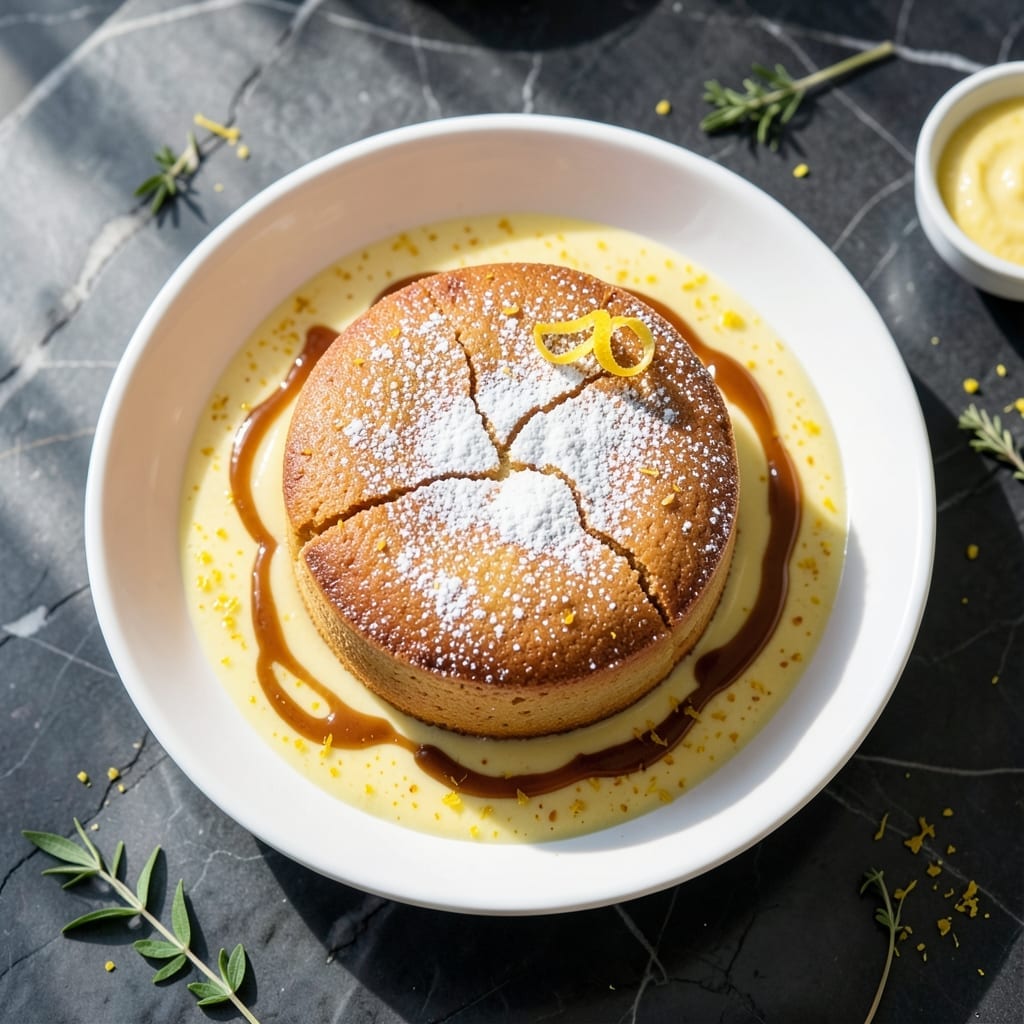
There’s something magical about a cake that balances moist texture with vibrant citrus flavor. This recipe delivers layers of tender crumb infused with bright lemon essence.
I developed this method to ensure the cake stays perfectly moist while highlighting the natural acidity of fresh lemons. The result is a dessert that feels both indulgent and refreshingly light.
Ingredients for Recipe for Lemon Custard Cake
Bright citrus and tender crumb come together in these carefully selected ingredients.
| Ingredient | Amount | Notes |
|---|---|---|
| All-Purpose Flour 🌾 | 1 ½ cups | Sifted for even texture |
| Granulated Sugar 🍚 | 1 ¼ cups | Divided for cake and custard |
| Unsalted Butter 🧈 | ¾ cup | Room temperature, softened |
| Large Eggs 🥚 | 4 whole | Room temperature, separated |
| Fresh Lemon Juice 🍋 | ½ cup | From about 3-4 lemons |
| Lemon Zest 🍋 | 2 tbsp | Finely grated, packed |
| Whole Milk 🥛 | ½ cup | Full-fat for richness |
| Vanilla Extract 💧 | 1 tsp | Pure extract preferred |
| Baking Powder 🧂 | 1 ½ tsp | Ensures proper rise |
| Salt 🧂 | ¼ tsp | Fine sea salt preferred |
| Cornstarch 🌾 | 2 tbsp | For custard thickening |
| Heavy Cream 🥛 | ½ cup | For custard layer |
The lemons are non-negotiable here—organic, unwaxed lemons yield the most fragrant zest and juice. For the butter and dairy, Plugra or European-style butter and organic whole milk from Whole Foods or Trader Joe’s deliver superior moisture and flavor. Room temperature ingredients are essential for proper emulsification in the batter, so plan ahead. The flour should be all-purpose, not cake flour, to maintain structure while keeping the crumb tender.
No fresh lemons? Bottled lemon juice at half the amount works in a pinch (but fresh zest is mandatory). Swap whole milk for buttermilk for extra tang, or use coconut milk for a dairy-free option. For the custard, cornstarch can be replaced with all-purpose flour at double the quantity. The vanilla extract is subtle but important—avoid imitation vanilla for the best flavor profile.
The cake keeps beautifully at room temperature for 2 days under a cake dome, or refrigerated for 5 days. For longer storage, wrap slices tightly and freeze for up to 3 months. Bring to room temperature before serving to restore that signature moist texture.
Why You’ll Love This Recipe
- One-Bowl Wonder: I love that I can mix the flour, sugar, butter, and eggs in a single bowl—no fancy equipment, just a whisk and 5 minutes of effort.
- Zesty Perfection: The fresh lemon juice cuts through the sweetness with that bright, tangy kick I crave in every bite.
- Brunch Star: Honestly, it’s my go-to for weekend brunches, but it’s just as good packed in lunchboxes or served after dinner.
- Keeps Like a Dream: Leftovers taste even better the next day, and it stays moist for days—if it lasts that long.
Step-by-Step Instructions for Lemon Custard Cake
This method ensures a perfectly moist cake with a bright, creamy custard layer every time.
Step 1: Prepare the Cake Batter Base
Preheat your oven to 350°F and grease a 9-inch round cake pan, then line the bottom with parchment paper. In a large bowl, cream the 0.75 cup unsalted butter with 1 cup granulated sugar until light and fluffy, about 3-4 minutes on medium speed.
Add the 4 whole large eggs, one at a time, beating well after each addition. Incorporate the 1 tsp vanilla extract, 2 tbsp lemon zest, and 0.5 cup fresh lemon juice next. The mixture should appear slightly curdled—that’s normal.
In a separate bowl, whisk together the 1.5 cups all-purpose flour, 1.5 tsp baking powder, and 0.25 tsp salt. Alternate adding this dry mixture and the 0.5 cup whole milk to the wet ingredients, beginning and ending with the flour. Mix until just combined to avoid developing gluten.
Step 2: Create the Custard Layer
In another bowl, whisk together the remaining 0.25 cup granulated sugar, 2 tbsp cornstarch, and the 0.5 cup heavy cream until smooth. This mixture will form the luscious custard layer that bakes right into the cake.
Pour the cake batter into the prepared pan and smooth the top with a spatula. Then, carefully spoon the custard mixture evenly over the batter. Don’t stir—this creates distinct but complementary layers.
Step 3: Bake to Golden Perfection
Bake for 45-50 minutes, or until the top is golden brown and a toothpick inserted in the center comes out clean. The custard layer should be set but still slightly jiggly—it will firm up as the cake cools.
Check for doneness a few minutes early if your oven runs hot. The edges should pull away slightly from the pan, and the center should spring back when lightly pressed.
Step 4: Cool and Serve
Allow the cake to cool in the pan for 15 minutes, then run a knife around the edges to loosen it. Invert onto a wire rack, remove the parchment, and flip right-side up onto a serving plate.
Let it cool completely before slicing to ensure clean layers and optimal texture. The custard will become more pronounced as it chills. Serve at room temperature for the best balance of flavors and that promised moist crumb.
Pro Tips For Making Recipe For Lemon Custard Cake
- Room Temp Eggs: Pull your eggs out 30 minutes before mixing—I learned this the hard way after my custard layer separated because the cold eggs seized the butter.
- Zest Before Juicing: Grate your lemon zest first, then juice the same lemons; sounds obvious, but I’ve ruined three cakes by forgetting and ending up with bitter pith in my batter.
- Watch the Jiggle: The custard’s done when the center has just a slight wobble, like gelatin; overbake by even 2 minutes and you’ll get rubbery curd instead of silky.
- Butter the Sides: Grease the pan all the way up the edges—my first cake stuck so badly I had to serve it in chunks, and the custard layer tore right off the bottom.
Serving Suggestions for This recipe for lemon custard cake
🍽️ Plating Styles
For a casual setting, serve slices of lemon custard cake on simple white plates with a dusting of powdered sugar. For a formal presentation, use elegant cake stands or fine china, pairing each slice with a drizzle of berry compote. At a buffet, arrange the whole cake on a decorative platter with a slicing knife for easy self-service.
🎨 Garnishing Techniques
Enhance the cake’s vibrancy with fresh herbs like mint or basil leaves. A light lemon glaze or whipped cream adds moisture and flair. For a pop of color, top with edible flowers or candied lemon slices. A sprinkle of toasted coconut or crushed meringue can add texture.
🍰 Portion Sizes
For individual servings, slice the cake into 8-10 even portions, ideal for dinner parties. For a family-style approach, serve the whole cake at the center of the table with a serving utensil, letting guests help themselves. Smaller, bite-sized pieces work well for dessert buffets or tea pairings.
🌡️ Serving Temperature
Let the cake rest at room temperature for 10-15 minutes after baking to set the custard layer. For the best texture, serve it slightly warm or at room temperature. If refrigerated, bring it to room temperature for 30 minutes before slicing to ensure a smooth, creamy bite.
Nutrition Facts

- 6 Egg Cake Recipe with Oil: Light as Air With Buttery Moisture - October 4, 2026
- 4 Bean Casserole Recipe: One-Pan Heartiness With Smoky Paprika Depth - October 4, 2026
- 3-Ingredient Keto Mug Cake Recipe: Microwave Magic in 2 Minutes - October 4, 2026