
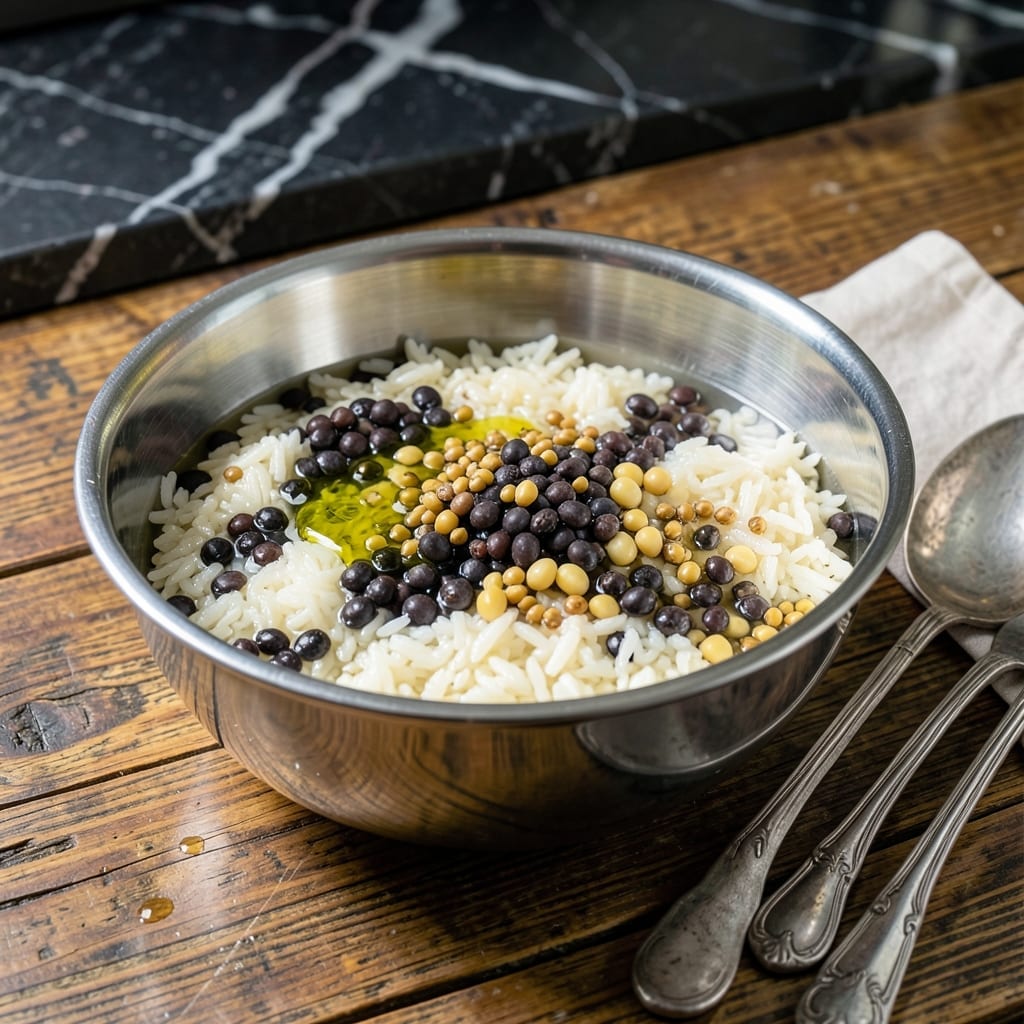
This fermented lentil-rice batter is the foundation of perfect dosa, a South Indian classic with crispy edges and tender centers.
With the right ratio of rice to lentils and proper fermentation, you’ll achieve a smooth, tangy batter that cooks into golden, paper-thin crepes every time.
Ingredients for Recipe for Making Dosa Batter
Simple pantry staples transform into this tangy, fermented South Indian classic.
| Ingredient | Amount | Notes |
|---|---|---|
| Parboiled Rice 🍚 | 2 cups | Rinsed and soaked overnight |
| Urad Dal 🌱 | ½ cup | Split black gram, rinsed |
| Chana Dal 🌱 | 2 tbsp | Split chickpeas, optional |
| Fenugreek Seeds 🌿 | ½ tsp | For fermentation aid |
| Salt 🧂 | 1 tsp | Adjust to taste after fermentation |
| Water 💧 | 4 cups | For soaking and grinding |
| Cooked White Rice 🍚 | ½ cup | For softer texture |
| Poha (Flattened Rice) 🌾 | 2 tbsp | Thick variety preferred |
| Cumin Seeds 🌿 | ½ tsp | Optional for flavor |
| Asafoetida 🌿 | ¼ tsp | Hing, optional for aroma |
The urad dal is non-negotiable for that authentic tang and crisp texture. Indian grocery stores carry it in bulk bins or prepackaged—look for whole split black gram with no added preservatives. Parboiled rice (like Sona Masoori) gives the best results, butbasmati works in a pinch. Soak everything overnight for proper fermentation (skip this and your dosa will be dense).
No urad dal? Mung beans at double the quantity get you close but lack that signature flavor. Chana dal adds crunch—skip if unavailable. Fenugreek seeds are tiny but mighty—half the amount if using powder. For gluten-free, ensure your poha and rice are certified. Water temperature matters too—use room temp or slightly warm for grinding.
Fermented batter keeps 2-3 days in the fridge (it develops more tang over time). Store in a large bowl with lid slightly ajar during fermentation to allow gases to escape. Freeze portions for up to 1 month—thaw overnight before using.
Why You’ll Love This Recipe
- Soak and Forget: I just toss the rice, dals, and fenugreek seeds in water before bed—wake up to perfectly fermented batter with zero morning effort.
- That Fermented Tang: The urad and chana dal blend gives it a slightly sour, nutty depth that makes every dosa irresistibly complex.
- Breakfast or Dinner: Honestly, this batter works for crispy morning dosas or soft evening utthapams—same prep, two totally different meals.
- Stretches for Days: One batch lasts me a full week in the fridge, and the flavor only gets better, so I’m never scrambling for breakfast ideas.
Step-by-Step Instructions for Dosa Batter
Perfect fermentation starts with proper preparation—here’s my proven method for dosa batter.
Step 1: Rinse and Soak the Components
Rinse the 2 cups Parboiled Rice and 0.5 cup Urad Dal separately under cold water until the water runs clear. This removes excess starch and impurities that could inhibit fermentation.
Combine the parboiled rice, urad dal, 2 tbsp Chana Dal, and 0.5 tsp Fenugreek Seeds in a large bowl. Add the 4 cups Water and stir. The water should cover all ingredients by at least 2 inches.
The fenugreek seeds are crucial—they act as a natural fermentation aid. I’ve found soaking for 6-8 hours (or overnight) yields the best results, giving the grains enough time to soften completely.
Step 2: Grind to the Right Consistency
Drain the soaked ingredients and transfer to a wet grinder or high-powered blender. Add the 0.5 cup Cooked White Rice and 2 tbsp Poha—these help create a smoother batter and improve fermentation.
Grind with just enough water (start with ½ cup from the soaked 4 cups Water) to achieve a thick, pancake-like batter. The texture should be coarse but pourable, not watery. I grind in batches to ensure even consistency.
Real talk: under-grinding leads to gritty dosas, while over-grinding makes them dense. Stop when the batter looks slightly grainy but holds its shape when you pour it.
Step 3: Ferment for Optimal Flavor
Transfer the ground batter to a large container—leave at least 2 inches of headspace as it will rise. Cover loosely with a clean kitchen towel (not airtight) to allow airflow while keeping out debris.
Place in a warm spot (I use my oven with the light on) for 8-12 hours or overnight. You’ll know it’s ready when the batter has nearly doubled in volume, developed a tangy aroma, and has tiny bubbles throughout.
Here’s the thing—fermentation time depends on temperature. In cooler climates, it may take up to 24 hours. Don’t rush it; under-fermented batter won’t have that signature dosa tang.
Step 4: Season and Adjust Consistency
Once fermented, add the 1 tsp Salt and stir gently. If using, sprinkle in the 0.5 tsp Cumin Seeds and 0.25 tsp Asafoetida—these add depth but are optional. I fold them in last to preserve their aromatic qualities.
Check the consistency: it should coat the back of a spoon but still be pourable. If too thick, add water 1 tablespoon at a time from the remaining 4 cups Water. Too thin, and your dosas will spread too much on the griddle.
The batter should look slightly frothy with a light, airy texture. At this stage, it’s ready to use or can be refrigerated for up to 3 days, where it will continue developing flavor.
Pro Tips For Making Recipe For Making Dosa Batter
- Soak Overnight: Give the urad dal, chana dal, and fenugreek seeds a full 8-10 hours in water—any less and your dosas won’t ferment properly. I learned this the hard way after a few dense, flat batches.
- Use Warm Water: Rinse the rice and dals with warm water before soaking and grinding. It kickstarts fermentation and makes the batter smoother.
- Skip Cold Grinding: Always grind in room temperature water, not cold—cold water slows fermentation and can leave your batter grainy. After burning three batches, I finally figured out this was the culprit.
- Ferment Longer: Let the batter rise in a warm place for at least 12 hours. Sounds weird, but it works: the longer it ferments, the crispier and lighter your dosas will be.
Serving Suggestions for Leftovers
🥘 Plating Styles
For a casual presentation, serve dosa directly on a banana leaf or a simple plate, folded or rolled with fillings like spiced potatoes or chutney. A formal setting calls for crisp, golden dosas arranged neatly on a platter with small bowls of accompaniments like sambar and coconut chutney on the side. For buffet-style serving, stack dosas on a warmed tray with labeled dipping sauces for easy access.
🎯 Garnishing Techniques
Enhance the visual appeal with fresh cilantro leaves or finely chopped curry leaves sprinkled on top. Drizzle a thin stream of tempered mustard seeds and curry leaves in oil over the dosa for added aroma. For a pop of color, add a side of vibrant tomato-onion chutney or a dollop of mint-coriander chutney.
🍽️ Portion Sizes
For individual servings, prepare mini dosas (about 6 inches in diameter) or offer a single large dosa per person. Family-style servings work well with larger, shareable dosas (10-12 inches) accompanied by communal bowls of fillings and chutneys. Adjust portion sizes based on the meal’s context—lighter for breakfast or more substantial for brunch.
⏰ Serving Temperature
Dosas are best served hot and crisp, straight off the griddle. If preparing ahead, keep the batter at room temperature and cook just before serving. For optimal texture, avoid stacking cooked dosas for too long, as they may lose crispness. If reheating is necessary, warm them briefly on a non-stick pan to restore their crunch.
Nutrition Facts

- 6 Egg Cake Recipe with Oil: Light as Air With Buttery Moisture - October 4, 2026
- 4 Bean Casserole Recipe: One-Pan Heartiness With Smoky Paprika Depth - October 4, 2026
- 3-Ingredient Keto Mug Cake Recipe: Microwave Magic in 2 Minutes - October 4, 2026