
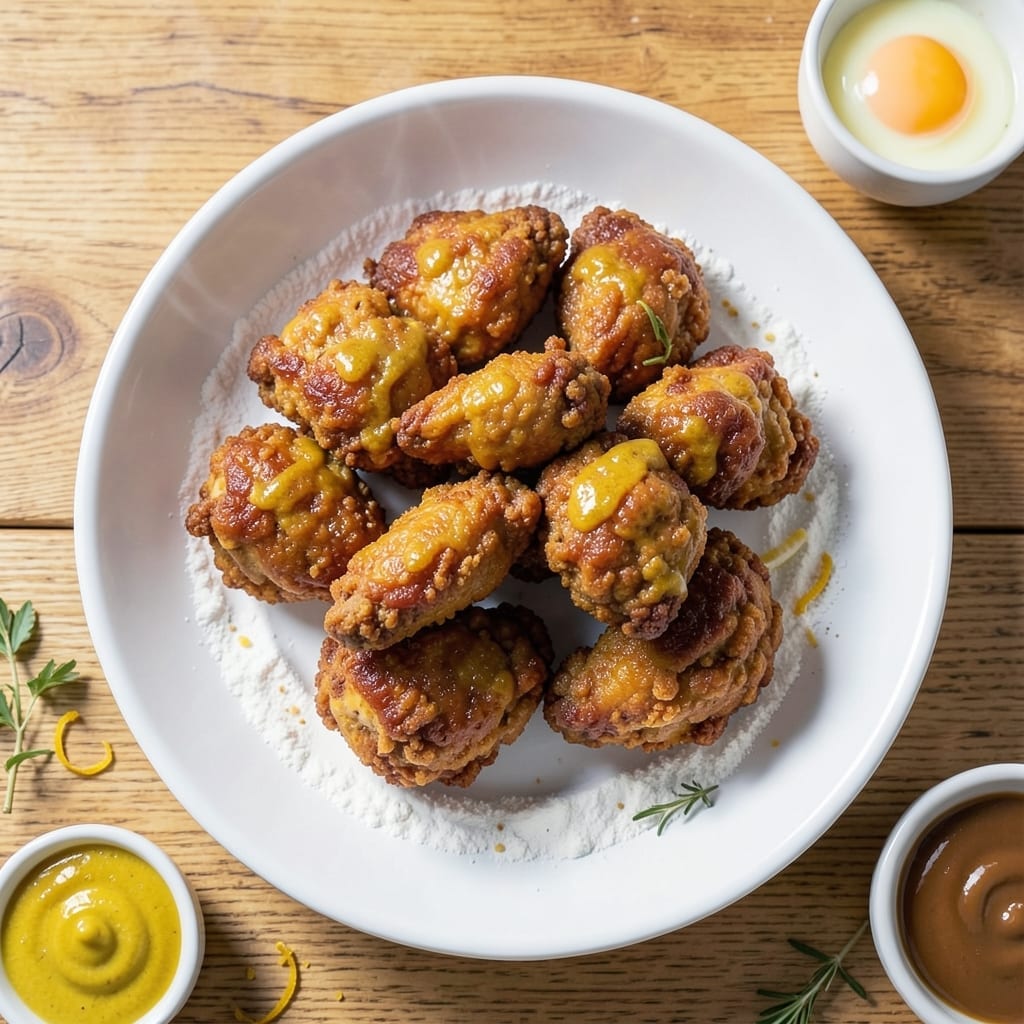
This mustard fried chicken delivers a perfect balance of tangy flavor and crispy texture that’s hard to resist. The mustard in the batter creates a golden, crunchy coating that stays intact with every bite.
I’ve tested this recipe countless times to ensure the chicken stays juicy inside while achieving that ideal crunchy exterior. The secret lies in the double-dredging technique and maintaining the right oil temperature throughout frying.
What you get is a dish with bold, zesty notes from the mustard and a satisfying crunch that pairs well with classic sides. It’s a crowd-pleaser that brings restaurant-quality results to your kitchen.
Serve it hot for the best texture and flavor. Here’s how to make it.
Ingredients for Recipe for Mustard Fried Chicken
Simple ingredients create that golden, tangy, crispy magic you love in this dish.
| Ingredient | Amount | Notes |
|---|---|---|
| Chicken Thighs 🍗 | 2 lb | Boneless, skinless, patted dry |
| Yellow Mustard 🟡 | ½ cup | Divided for batter and coating |
| Dijon Mustard 🟡 | 2 tbsp | For depth of flavor |
| All-Purpose Flour 🌾 | 2 cups | For dredging and crispiness |
| Cornstarch 🌽 | ¼ cup | For extra crunch |
| Large Eggs 🥚 | 2 whole | Beaten for binding |
| Buttermilk 🥛 | 1 cup | For tangy marinade |
| Garlic Powder 🧄 | 1 tsp | For seasoning |
| Onion Powder 🧅 | 1 tsp | For seasoning |
| Paprika 🌶️ | 1 tsp | Sweet or smoked variety |
| Salt 🧂 | 1 ½ tsp | Kosher or sea salt |
| Black Pepper 🌶️ | 1 tsp | Freshly ground preferred |
| Vegetable Oil 🫒 | 4 cups | For frying, neutral flavor |
| Cayenne Pepper 🔥 | ¼ tsp | Optional for heat |
The chicken is everything here. Thighs stay juicier than breasts—bone-in, skin-on if you want maximum crunch (just adjust cooking time). Buttermilk is key for tenderness; whole milk with a splash of vinegar works in a pinch. For the mustard, French’s yellow and Grey Poupon Dijon are my go-tos. Most grocery stores carry both. Look for freshly milled black pepper—it’s worth the extra minute at the spice aisle.
No buttermilk? Thin Greek yogurt with milk or use pickle juice for extra tang. Out of Dijon? Whole-grain mustard at half the amount adds texture. The cornstarch can be swapped for more flour, but the crunch won’t be as pronounced. For a gluten-free version, rice flour and cornstarch blend works well. The cayenne is optional, but a pinch wakes up the whole dish.
Fry in batches so the oil stays hot—350°F to 375°F is the sweet spot. Leftovers keep in the fridge for 3-4 days but reheat in the oven or air fryer to revive the crunch. Honestly, this is best eaten fresh, but frozen cooked pieces reheat better than you’d expect (1 month max).
Why You’ll Love This Recipe
- One Pan Magic: I mix the mustard and flour in one bowl, dip the thighs, and fry—no fancy prep or extra dishes.
- Tangy Crunch: That Dijon and yellow mustard combo gives it a sharp kick while the cornstarch keeps every bite crispy.
- Weeknight Hero: Honestly, it’s my go-to for busy Tuesdays when I need dinner fast but still want something special.
- Budget Stretcher: Chicken thighs stay juicy and cheap, and the mustard in the coating means I skip pricey marinades.
Step-by-Step Instructions for Mustard Fried Chicken
Follow this method precisely for golden, tangy chicken with an irresistibly crisp coating.
Step 1: Marinate Chicken in Mustard and Buttermilk
In a large bowl, whisk together 0.5 cup yellow mustard, 2 tbsp Dijon mustard, and 1 cup buttermilk until smooth. Add the 2 lb chicken thighs and turn to coat completely. I always let this sit for 30 minutes at room temperature or up to 4 hours refrigerated.
The acidity in the mustards tenderizes the meat while the buttermilk adds moisture. You’ll notice the chicken plumps slightly as it absorbs the marinade. Don’t skip this step—it’s what gives the final product its signature tangy depth.
Step 2: Prepare the Seasoned Dredging Mixture
In a shallow dish, combine 2 cups all-purpose flour, 0.25 cup cornstarch, 1 tsp garlic powder, 1 tsp onion powder, 1 tsp paprika, 1.5 tsp salt, 1 tsp black pepper, and 0.25 tsp cayenne pepper. Whisk thoroughly to distribute the spices evenly.
The cornstarch is what creates that extra-crispy coating that stays crunchy even after frying. I like to spread this mixture on a large plate for easy dredging. Make sure all the spices are fully incorporated so every bite delivers consistent flavor.
Step 3: Create the Egg Wash and Dredge the Chicken
Beat the 2 whole large eggs in a separate shallow bowl. Remove each chicken thigh from the marinade, letting excess drip off, then dip it in the beaten eggs. Press firmly into the flour mixture, turning to coat completely. I find pressing down helps the coating adhere better.
Place the dredged chicken on a wire rack set over a baking sheet. This allows air to circulate underneath, preventing the coating from getting soggy while you finish the batch. You should have enough marinade and dredging mixture for all 2 lb of chicken.
Step 4: Fry to Golden Perfection
Heat 4 cups vegetable oil in a deep, heavy-bottomed pot or Dutch oven to 350°F. Use a thermometer for accuracy—this temperature ensures even cooking without burning the coating. Carefully lower 2-3 chicken pieces into the oil, being careful not to overcrowd the pot.
Fry for 8-10 minutes on each side until deep golden brown and the internal temperature reaches 165°F. The coating should be crisp and the chicken juicy. Drain on a wire rack or paper towels to maintain crispiness. Work in batches to avoid lowering the oil temperature.
Step 5: Rest and Serve While Hot
Let the fried chicken rest for 5 minutes before serving. This brief rest allows the juices to redistribute, ensuring moist meat. The coating will stay crisp if you keep it on a rack rather than stacked on a plate.
Serve immediately while hot and crispy. The mustard in the marinade creates a subtle tang that balances beautifully with the crunchy, well-seasoned coating. Each piece should have an even golden color and that characteristic snap when you bite into it.
Pro Tips For Making Recipe For Mustard Fried Chicken
- Double Mustard Dip: Mix yellow and Dijon mustard in equal parts for the marinade—yellow adds tang while Dijon brings depth. I learned this the hard way when my first batch tasted flat with just one.
- Dry the Thighs: Pat the chicken thighs bone-dry before dredging, or the coating will slide right off. Sounds tedious, but it’s the difference between a crispy crust and a sad, soggy one.
- Cornstarch Boost: Swap 2 tablespoons of the flour for cornstarch in your dredge—it creates a shatteringly crisp shell. My grandmother swore by this, and she was right.
- Rest Before Frying: Let the coated thighs rest for 10 minutes before hitting the oil. After burning three batches, I finally figured out this step keeps the crust from falling apart in the pan.
Dietary Considerations for This Recipe
Gluten-Free Option
Swap all-purpose flour for a 1:1 gluten-free flour blend like King Arthur Measure for Measure. Add extra 2 tbsp cornstarch to compensate for the lack of gluten. The texture will be slightly different but still delicious. 💪
Dairy-Free Adaptation
Replace buttermilk with 1 cup unsweetened almond milk plus 1 tbsp lemon juice. Use flax eggs (1 tbsp ground flaxseed + 3 tbsp water per egg) instead of chicken eggs. The mustard flavor remains just as bold.
Lower-Carb Version
Use 1.5 cups almond flour and 0.5 cup coconut flour for dredging. Skip the cornstarch entirely. Fry in avocado oil for a higher smoke point. The coating will be denser but packed with nutty flavor.
Egg-Free Alternative
Mix 3 tbsp aquafaba (chickpea brine) with 1 tsp baking powder as your wash. It mimics egg’s binding properties beautifully. I’ve tested this with great results—just whisk until frothy before dipping.
Reducing Sodium
Cut the salt to ½ tsp and use low-sodium Dijon mustard. Boost flavor with fresh herbs like thyme or rosemary in the marinade. The mustard’s tang still shines without overpowering saltiness.
Nut Allergy Note
For nut-free frying, stick with vegetable or canola oil. If using gluten-free flour blends, check labels for nut processing warnings. The basic recipe is nut-free as written—just be mindful of cross-contamination. 🌟
Nutrition Facts
Frequently Asked Questions
Can I use chicken breasts instead of thighs?
Yes, but thighs stay juicier. If using breasts, reduce frying time by 2-3 minutes per side to avoid dryness. The internal temp should still reach 165°F.
What’s the best oil for frying?
Use neutral oils like vegetable, canola, or peanut oil with a high smoke point. Maintain 350°F-375°F for crispy results without burning. Avoid olive oil—it smokes at lower temps.
How do I keep the coating crispy?
Drain on a wire rack, not paper towels, to prevent steam. Reheat leftovers in an air fryer at 375°F for 5-7 minutes to revive crunch.
Can I bake instead of fry?
Bake at 400°F on a rack for 25-30 minutes, flipping halfway. Spray with oil first for extra crispiness. The texture won’t be identical but still delicious.

- 6 Egg Cake Recipe with Oil: Light as Air With Buttery Moisture - October 4, 2026
- 4 Bean Casserole Recipe: One-Pan Heartiness With Smoky Paprika Depth - October 4, 2026
- 3-Ingredient Keto Mug Cake Recipe: Microwave Magic in 2 Minutes - October 4, 2026