
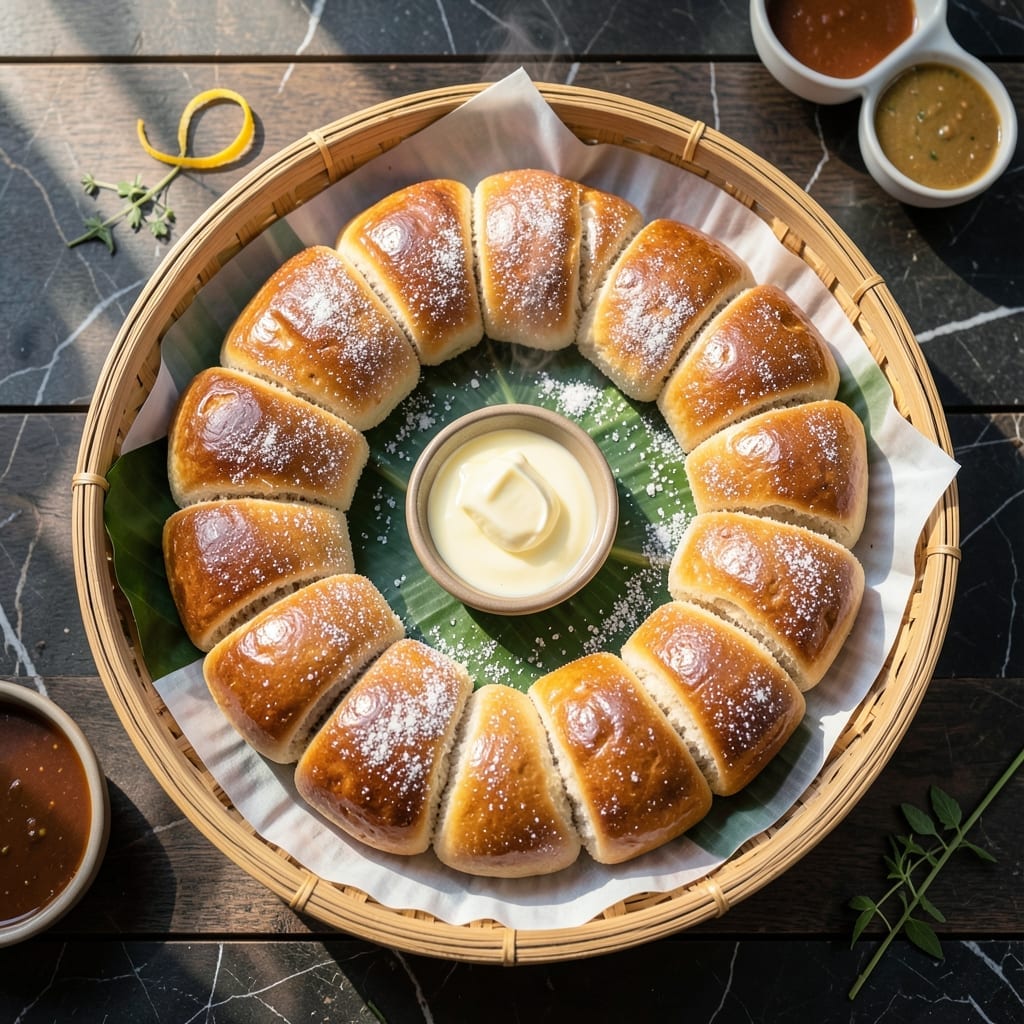
There’s nothing like the smell of freshly baked pandesal in the morning, a beloved Filipino staple that’s soft, fluffy, and slightly sweet. This classic bread roll is a breakfast favorite, perfect for pairing with coffee or filling with your favorite spread.
I’ve perfected this recipe to ensure a light, airy texture with a golden crust. With just a few simple ingredients and traditional techniques, you’ll achieve bakery-quality results right in your own kitchen.
Ingredients for Recipe for Pandesal Filipino
Simple pantry staples create these beloved Filipino breakfast rolls. Nothing complicated here.
| Ingredient | Amount | Notes |
|---|---|---|
| Bread Flour 🌾 | 4 cups | All-purpose works in a pinch |
| Granulated Sugar 🍚 | ¼ cup | For slight sweetness |
| Active Dry Yeast 🍃 | 2 ¼ tsp | One packet plus extra |
| Warm Water 💧 | 1 cup | 110°F, not hotter |
| Whole Milk 🥛 | ½ cup | Warmed slightly |
| Unsalted Butter 🧈 | ¼ cup | Melted and cooled |
| Large Egg 🥚 | 1 whole | Room temperature |
| Salt 🧂 | 1 tsp | Fine sea salt |
| Breadcrumbs 🍞 | ½ cup | For rolling dough |
| All-Purpose Flour 🌾 | ¼ cup | For dusting surface |
The flour is key here. King Arthur Bread Flour gives that perfect chew, but Gold Medal all-purpose works if that’s what’s in your cupboard. Yeast freshness matters—check the expiration date (old yeast won’t rise). I grab mine from Whole Foods bulk section since they turn over stock quickly. Milk and butter add richness—don’t skip the full-fat versions here.
No bread flour? All-purpose plus 1 tbsp vital wheat gluten per cup mimics it. Out of yeast? This isn’t the recipe to try a sourdough starter with. The sugar can be reduced to 3 tbsp if you prefer less sweetness. For dairy-free, oat milk and coconut oil work in a pinch (texture changes slightly). Always use room-temp egg—cold egg can shock the dough.
Dough keeps overnight in the fridge (actually improves flavor). Baked pandesal stays fresh 2-3 days in a sealed bag. Freeze extras for up to 1 month—reheat in oven to crisp the crust. Best served warm, straight from the oven.
Why You’ll Love This Recipe
- One Bowl Magic: Honestly, I just dump the bread flour, sugar, yeast, warm water, and milk in one bowl and let the dough do its thing.
- Warm, Sweet Bite: That soft, slightly sweet pillow with a dusting of breadcrumbs? Pure comfort in every bite.
- Breakfast to Merienda: I make a big batch on Sunday—perfect for morning toast or an afternoon snack with coffee.
Step-by-Step Instructions for Pandesal Filipino
These simple steps will guide you through creating soft, pillowy bread rolls that are perfect for breakfast.
Step 1: Activate the Yeast and Mix Wet Ingredients
In a small bowl, combine the 2.25 tsp Active Dry Yeast with the 1 cup Warm Water and let it sit for 5-10 minutes until it becomes frothy. This confirms the yeast is active and ready to work its magic.
In a large mixing bowl, whisk together the 0.5 cup Whole Milk, 0.25 cup Granulated Sugar, 0.25 cup Unsalted Butter, and 1 whole Large Egg. The milk should be just warm to the touch—too hot and it’ll kill the yeast.
Once the yeast is bubbly, pour it into the wet mixture and stir until everything is well combined. You’ll notice the mixture looks slightly thick, which is exactly what we want.
Step 2: Incorporate the Dry Ingredients
Gradually add the 4 cups Bread Flour and 1 tsp Salt to the wet ingredients. I like to start with 2 cups of bread flour first, mixing it in until no dry spots remain, then add the rest. This prevents overmixing and keeps the dough manageable.
Using a wooden spoon or a dough hook attachment on your mixer, combine until a shaggy dough forms. It should pull away from the sides of the bowl but still be slightly sticky to the touch. If it feels too wet, resist the urge to add more flour—trust the process.
Step 3: Knead the Dough Until Smooth
Turn the dough out onto a surface lightly dusted with the 0.25 cup All-Purpose Flour. Knead for 8-10 minutes by hand, or 5-6 minutes in a stand mixer on low speed, until the dough is smooth and elastic. You’ll know it’s ready when it springs back slowly when poked.
Shape the dough into a ball and place it in a greased bowl, turning once to coat the surface. Cover with a clean kitchen towel and let it rise in a warm, draft-free place for 1-2 hours, or until it has doubled in size.
Step 4: Shape and Roll in Breadcrumbs
Once the dough has risen, punch it down gently to release the air. Divide it into 12 equal portions (about 3-4 oz each) and roll each into a log roughly 4-5 inches long. This traditional shape gives pandesal its signature look.
Pour the 0.5 cup Breadcrumbs onto a shallow plate. Roll each log in the breadcrumbs until fully coated. Arrange them seam-side down on a baking sheet lined with parchment paper, spacing them about 1 inch apart. The breadcrumbs add a subtle crunch and help the rolls keep their shape.
Step 5: Proof and Bake to Golden Perfection
Cover the shaped rolls with a kitchen towel and let them proof for another 30-45 minutes until they’ve puffed up noticeably. Preheat your oven to 350°F during the last 10 minutes of proofing.
Bake for 15-20 minutes until the pandesal are golden brown and sound hollow when tapped on the bottom. If they’re browning too quickly, tent the baking sheet with foil to prevent over-browning.
Let them cool on a wire rack for at least 5 minutes before serving. They’re best enjoyed warm, with butter or your favorite filling. The inside should be soft, fluffy, and slightly sweet—just like a classic Filipino pandesal.
Pro Tips For Making Recipe For Pandesal Filipino
- Test the Yeast: Always bloom your active dry yeast in warm water with a pinch of sugar first—if it doesn’t bubble within 5 minutes, your pandesal won’t rise. I learned this the hard way after wasting a batch of flour.
- Use Bread Flour: Skip all-purpose flour; bread flour’s higher protein content gives pandesal that soft, slightly chewy texture. It actually changes the outcome.
- Avoid Overproofing: Let the dough rise until doubled, but don’t go beyond that—overproofed dough collapses and makes dense pandesal. Watch the clock, not just the size.
- Brush with Milk: Before baking, brush the tops with whole milk for a golden, slightly crisp crust. Sounds weird, but it works.
Wine and Beer Pairings for This Dish
Beer Pairings
The buttery, slightly sweet notes of pandesal pair wonderfully with light, crisp beers. A Pilsner like San Miguel Light offers a clean, refreshing contrast with its subtle hop bitterness, balancing the bread’s richness. For a more robust option, try a Wheat Beer such as Hoegaarden; its citrusy and spicy undertones complement the soft, pillowy texture of pandesal beautifully.
Wine Pairings
If you prefer wine, opt for something with bright acidity to cut through the bread’s slight sweetness. A chilled Moscato d’Asti from Italy brings a fruity, effervescent lift that enhances pandesal’s subtle flavors. For a drier choice, a Sauvignon Blanc like Kim Crawford offers zesty citrus and herbal notes that pair surprisingly well with this Filipino favorite.
Non-Alcoholic Options
For a non-alcoholic pairing, consider a warm cup of Tsokolate Eh (thick Filipino hot chocolate) for a comforting, indulgent match. If you prefer something lighter, Calamansi Juice provides a tangy, citrusy contrast that cleanses the palate between bites of soft, fluffy pandesal. 🍫☕
Nutrition Facts

- 6 Egg Cake Recipe with Oil: Light as Air With Buttery Moisture - October 4, 2026
- 4 Bean Casserole Recipe: One-Pan Heartiness With Smoky Paprika Depth - October 4, 2026
- 3-Ingredient Keto Mug Cake Recipe: Microwave Magic in 2 Minutes - October 4, 2026