
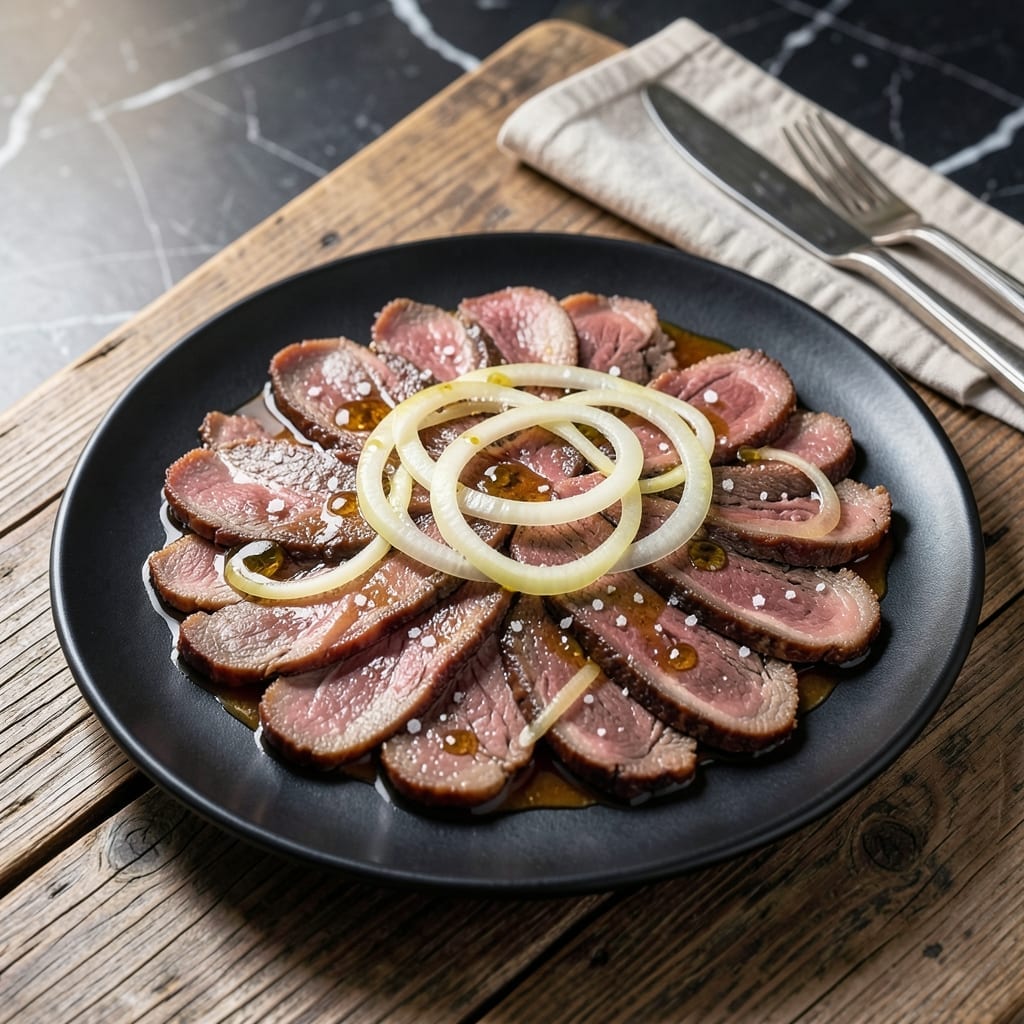
This traditional pickled beef tongue delivers tender results with a bright, tangy brine that transforms the meat completely. The process requires patience, with slow cooking followed by a flavorful pickling stage that ensures every slice stays moist and flavorful.
The key is proper preparation—simmering the tongue until fork-tender before peeling and pickling. A well-balanced brine of vinegar, spices, and aromatics creates the signature zesty flavor that cuts through the richness of the beef.
What emerges is a dish with layers of texture and taste: silky meat contrasted by the sharpness of the brine. The slices hold their shape while absorbing the pickling liquid, making each bite consistently delicious.
Serve chilled as part of a charcuterie board or sliced thin for sandwiches. This method honors tradition while ensuring reliable, restaurant-quality results.
Ingredients for Recipe for Pickled Beef Tongue
Traditional pickling requires beef tongue, vinegars, and a carefully balanced spice brine.
| Ingredient | Amount | Notes |
|---|---|---|
| Beef Tongue 🥩 | 2 lb | Fresh, not cured or smoked |
| White Vinegar 💧 | 3 cups | 5% acidity for proper pickling |
| Apple Cider Vinegar 🍏 | 1 cup | Adds fruity depth to brine |
| Granulated Sugar 🍚 | ½ cup | Balances vinegar acidity |
| Kosher Salt 🧂 | ¼ cup | Diamond Crystal preferred for consistency |
| Yellow Onion 🧅 | 1 whole | Thinly sliced for brine |
| Garlic Cloves 🧄 | 6 cloves | Lightly crushed, peeled |
| Black Peppercorns 🌶️ | 1 tbsp | Whole, for brine infusion |
| Mustard Seeds 🌿 | 1 tbsp | Yellow or brown variety |
| Bay Leaves 🍃 | 4 pieces | Dried, whole leaves |
| Cloves 🌿 | 6 whole | For aromatic depth in brine |
| Allspice Berries 🌿 | 10 pieces | Lightly crushed to release flavor |
| Celery Seeds 🌿 | 1 tsp | Optional but recommended |
The beef tongue must be fresh and high-quality—avoid pre-cured or smoked varieties which alter texture and flavor. Whole Foods or a quality butcher shop will have what you need. Look for tongues that are plump and uniformly colored. The vinegar ratio is critical: three parts white vinegar to one part apple cider vinegar creates the ideal balance of sharpness and depth for proper preservation.
For the brine, Diamond Crystal kosher salt is standard in professional kitchens for its clean flavor and consistent granulation. If you must substitute, use half the volume of table salt due to its finer grain. No allspice berries? Ground allspice at one-eighth the amount works in a pinch. The peppercorns and mustard seeds are non-negotiable for authentic flavor—skip the pre-ground versions which lose potency quickly.
Pickled beef tongue keeps beautifully. Once processed, store in the brine in airtight containers in the refrigerator for up to 1 month. For longer storage, the tongue can be frozen in its brine for 3 months—though texture may soften slightly upon thawing. Always use clean utensils when removing slices to prevent contamination.
Why You’ll Love This Recipe
- Set and Forget: Honestly, once the tongue is prepped, it’s just a matter of simmering and waiting for the vinegar and sugar to work their magic.
- Tangy Perfection: The mix of white vinegar and apple cider vinegar gives it that bright, balanced tang I crave.
- Party Starter: Between us, this is my secret for impressing guests—it’s unexpected but always a hit.
- Budget Stretcher: A single tongue makes multiple jars, and it keeps for weeks. I’ll be real: it’s a thrift cook’s dream.
Step-by-Step Instructions for Pickled Beef Tongue
Master the curing and pickling process for perfectly tender beef tongue with vibrant flavor.
Step 1: Cure the Beef Tongue
Rinse the 2 lb Beef Tongue under cold water and pat dry with paper towels. In a large pot, combine 0.25 cup Kosher Salt and 0.5 cup Granulated Sugar with 4 cups of water, bringing to a boil to dissolve completely.
Let the brine cool to room temperature, then submerge the beef tongue in the solution. Refrigerate for 24 hours, ensuring the meat remains fully covered. This step draws out impurities while beginning the tenderizing process.
Step 2: Simmer Until Tender
After curing, drain and rinse the beef tongue. Place it in a clean pot and cover with fresh water by 2 inches. Add 1 whole Yellow Onion (peeled and quartered) and 6 cloves Garlic Cloves (lightly crushed).
Bring to a boil, then reduce to a gentle simmer. Cook for 2.5 to 3 hours until the tongue is fork-tender. Skim any foam that rises to the surface during cooking. The meat should pierce easily with a knife when done.
Step 3: Prepare the Pickling Brine
In a non-reactive pot, combine 3 cups White Vinegar, 1 cup Apple Cider Vinegar, 0.5 cup Granulated Sugar, and 0.25 cup Kosher Salt. Add 1 tbsp Black Peppercorns, 1 tbsp Mustard Seeds, 4 pieces Bay Leaves, 6 whole Cloves, 10 pieces Allspice Berries, and 1 tsp Celery Seeds.
Bring to a boil, then reduce heat and simmer for 5 minutes to infuse the spices. Remove from heat and let cool completely. The brine should have a balanced aroma of vinegar and warm spices.
Step 4: Slice and Submerge in Brine
Once the beef tongue is cool enough to handle, peel off the outer skin. Slice the tongue into ¼-inch thick pieces. Pack the slices tightly into clean, sterilized jars.
Pour the cooled pickling brine over the meat, ensuring all pieces are fully submerged. Use a fermentation weight or a small plate to keep the slices under the liquid. Seal the jars and refrigerate for at least 48 hours before serving.
Pro Tips For Making Recipe For Pickled Beef Tongue
- Peel the Skin: After simmering the tongue, peel off the tough outer skin while it’s still warm—it comes off way easier then, and skipping this leaves your pickle with a weird texture.
- Balance the Vinegars: Use a 1:1 ratio of white vinegar to apple cider vinegar for brightness and depth. I learned this the hard way when my first batch tasted harsh from too much white vinegar.
- Brine Overnight: Give the tongue at least 12 hours in the pickling liquid before serving. Sounds weird, but it works: the flavors penetrate fully and the meat stays juicy.
- Simmer, Don’t Boil: Keep the tongue at a gentle simmer for 2-3 hours—boiling makes it tough. My grandmother swore by this, and she was right.
Perfect Pairings for This Recipe
Charcuterie Board Star
Thin slices of this make a stunning addition to any charcuterie spread. Pair with sharp cheddar, aged Gouda, and cornichons for contrast. The tangy brine cuts through rich cheeses beautifully.
Sandwich Perfection
Layer on rye bread with spicy mustard and Swiss cheese for a classic deli-style sandwich. I love adding pickled vegetables for extra crunch. Use ¼-inch thick slices for the best texture.
Beer Pairings
A crisp pilsner or wheat beer complements the vinegar notes perfectly. The carbonation cleanses your palate between bites. For darker beers, try a malty Dunkel—its caramel notes balance the acidity. 🍺
Wine Companions
Dry white wines like Sauvignon Blanc or Albariño work wonderfully. Their citrusy profiles match the brine’s brightness. For red lovers, a chillable Lambrusco offers fruity contrast.
Simple Sides
Serve with crusty bread and whole-grain mustard for a traditional approach. Pickled vegetables like red onions or cauliflower create a vibrant plate. The acidity plays well with the dish’s tangy nature.
Breakfast Twist
Try it for breakfast with scrambled eggs and sourdough toast. The vinegar brightness wakes up the palate. Add hot sauce if you like a spicy kick to start your day. 💡
Nutrition Facts
Frequently Asked Questions
How long should I brine the tongue?
Refrigerate the tongue in the pickling brine for at least 48 hours before eating. For deeper flavor, let it sit up to 5 days. The longer it pickles, the more pronounced the tangy taste becomes.
Do I need to peel the skin before pickling?
Yes, always peel the outer skin after simmering while the tongue is still warm. It removes easily at this stage and ensures the brine penetrates the meat properly for the best texture.
Can I reuse the pickling brine?
It’s not recommended. The brine absorbs flavors and bacteria from the meat during pickling. For food safety, always make fresh brine for each batch.
What if my brine is too salty?
Dilute with a bit of water and vinegar to balance. Taste as you adjust. The ideal brine should be tangy with a slight saltiness, not overpowering.

- 6 Egg Cake Recipe with Oil: Light as Air With Buttery Moisture - October 4, 2026
- 4 Bean Casserole Recipe: One-Pan Heartiness With Smoky Paprika Depth - October 4, 2026
- 3-Ingredient Keto Mug Cake Recipe: Microwave Magic in 2 Minutes - October 4, 2026