
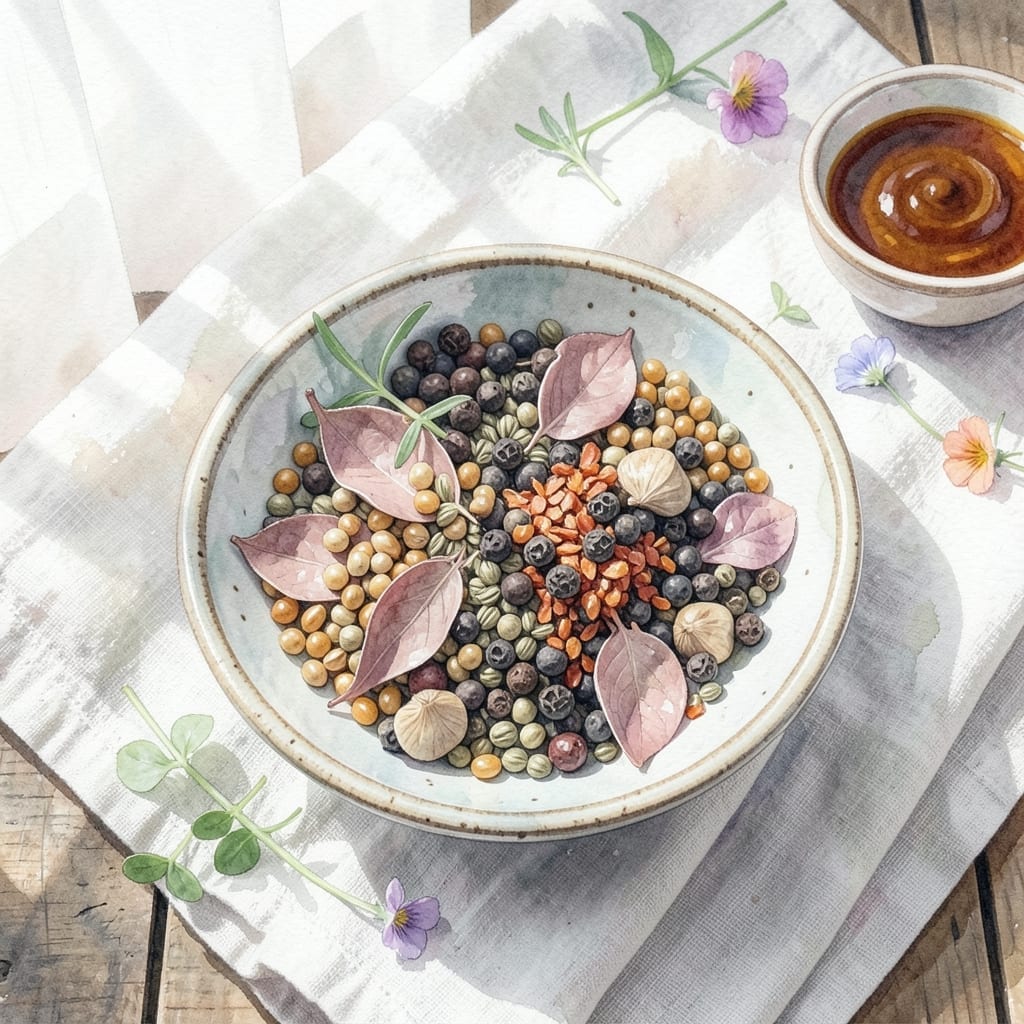
This aromatic blend transforms ordinary vegetables into restaurant-quality pickles with minimal effort. The carefully balanced spices create complex flavor profiles that develop beautifully over time.
I’ve refined this mix through years of testing to ensure every batch delivers consistent results. Mustard seeds, coriander, and bay leaves form the foundation, with complementary spices adding depth and warmth.
The beauty of this blend lies in its versatility—use it for cucumbers, green beans, or even hard-boiled eggs. A 5-minute prep yields enough seasoning for multiple jars.
Store in an airtight container away from light to preserve freshness. This blend keeps for up to 6 months and tastes as vibrant as the day you made it.
Ingredients for Recipe for Pickling Spices
Ten spices. Five minutes. Elevates any pickle to restaurant quality instantly.
| Ingredient | Amount | Notes |
|---|---|---|
| Yellow Mustard Seeds 🌿 | 2 tbsp | Whole, not ground |
| Coriander Seeds 🌿 | 1 ½ tbsp | Whole, lightly crushed |
| Bay Leaves 🍃 | 4 whole | Dried, whole leaves |
| Black Peppercorns 🌶️ | 1 tbsp | Whole, not pre-ground |
| Dill Seeds 🌿 | 1 tbsp | Whole for depth |
| Red Pepper Flakes 🔥 | 1 tsp | Adjust for heat preference |
| Allspice Berries 🌿 | 1 tsp | Whole, optional |
| Celery Seeds 🌿 | 1 tsp | Adds earthy note |
| Cloves 🌿 | ½ tsp | Whole, use sparingly |
| Cinnamon Stick 🌿 | 1 piece | 2-inch piece, optional |
Mustard seeds are non-negotiable—Penzeys or bulk bins have the freshest. Coriander should be whole and lightly crushed (a mortar and pestle works, or just roll your pin over the bag). The bay leaves need to be dried but not dusty—if they crumble to powder in your hand, toss them. I grab mine from Whole Foods bulk section, but any well-stocked grocery store works.
No dill seeds? Dill weed at half the amount works in a pinch. Out of allspice berries? A pinch of ground allspice will do (but whole is better). Red pepper flakes can be swapped for crushed cayenne if you want more heat. The celery seeds add a subtle earthiness—skip if you don’t like the flavor, but they’re worth hunting down.
Glass jar, dark cabinet, done. Stays potent for about 6 months. I make a double batch every time—one for now, one for later. The flavors actually improve after a few weeks, so don’t rush to use it all at once.
Why You’ll Love This Recipe
- Five-Minute Mix: I just dump these seeds and leaves in a jar—yellow mustard, coriander, bay, peppercorns, dill—and shake. No chopping, no fuss.
- Deep, Warm Aroma: The toasted coriander and dill seeds release this cozy, almost nutty scent that makes my kitchen smell like a deli.
- Jars of Possibility: Honestly, I use this blend for pickles, of course, but also in soups, rubs, even a pinch in potato salad for that extra zing.
- Pantry Staple: One batch lasts me months, and it’s way cheaper than buying those tiny spice packets at the store.
Step-by-Step Instructions for Pickling Spices
This method ensures your blend releases maximum flavor with every simmer and brine.
Step 1: Lightly Crush the Whole Spices
Place the 2 tbsp Yellow Mustard Seeds, 1.5 tbsp Coriander Seeds, 1 tbsp Black Peppercorns, and 1 tsp Allspice Berries on a clean cutting board. Use the flat side of a chef’s knife or a mortar and pestle to gently crush them. You want to crack the outer shells just enough to release their essential oils without pulverizing them into powder.
This light crushing increases the surface area, allowing the spices to infuse their flavors more efficiently into your brine. Stop when you see the seeds split but still retain their individual shapes. The 1 tbsp Dill Seeds and 1 tsp Celery Seeds are small enough that they don’t need crushing.
Step 2: Combine All Spices in a Bowl
In a medium bowl, add your crushed seeds along with the remaining whole spices: 4 whole Bay Leaves, 1 tsp Dill Seeds, 1 tsp Celery Seeds, 1 tsp Red Pepper Flakes, 0.5 tsp Cloves, and 1 piece Cinnamon Stick. Stir with a spoon to distribute everything evenly.
This is where the magic happens—the combination of warm, earthy, and slightly pungent spices creates that signature pickling aroma. The bay leaves add a floral depth, while the red pepper flakes bring a subtle heat that balances the tang of your preserves.
Step 3: Toast the Blend Lightly (Optional but Recommended)
For an even more aromatic blend, heat a dry skillet over medium-low heat. Add the entire spice mixture and toast for 2-3 minutes, stirring constantly. You’ll know it’s ready when the kitchen fills with a warm, fragrant scent and the seeds turn slightly darker.
Watch closely—this isn’t about browning the spices but merely awakening their essential oils. Remove from heat immediately if you smell any hint of burning. Toasting deepens the flavors, but skip this step if you prefer a milder profile.
Step 4: Store Properly for Long-Term Use
Let the blend cool completely to room temperature, then transfer it to an airtight container. Glass jars work best for preserving the potency. Store in a cool, dark place like your pantry, where it’ll keep for up to 6 months.
Label the container with the date so you can track its freshness. Over time, the spices will mellow slightly, but their complexity only improves. For the best results, use 1-2 tbsp of this blend per quart of brine in your pickling recipes.
Pro Tips For Making Recipe For Pickling Spices
- Toast the Seeds: Lightly toast mustard, coriander, and dill seeds in a dry pan for 1-2 minutes until fragrant—this wakes up their flavors before blending.
- Crush Just Enough: Use a mortar and pestle or rolling pin to lightly crush peppercorns and coriander, but don’t pulverize them—whole spices keep their punch longer in pickling.
- Skip Old Bay Leaves: Bay leaves lose potency fast; use fresh ones under a year old or replace with Turkish bay for a cleaner, more vibrant taste in your brine.
- Measure by Volume: I learned this the hard way—spices settle differently, so use a measuring spoon and level it off for consistent flavor in every batch.
Flavor Customization for These Flavors
Mild and Sweet
For a gentler profile, reduce the red pepper flakes to ½ tsp and add 1 tsp fennel seeds for natural sweetness. The fennel pairs beautifully with the existing coriander and dill, creating a delicate, aromatic base perfect for pickling cucumbers or cauliflower. 💛
Bold and Spicy
Increase the heat by adding 1 additional tsp red pepper flakes and ½ tsp ground ginger. This version works wonders with heartier vegetables like carrots or green beans. The ginger adds warmth that complements the spicy kick.
Herb-Forward Blend
Add 1 tbsp dried thyme and 1 tsp dried oregano to enhance the earthy notes. This variation shines with mushrooms or asparagus, where the herbs can infuse deeply. The thyme brings a subtle lemony undertone.
Warm and Earthy
Swap the cinnamon stick for 1 tsp ground nutmeg and add 1 tsp cardamom pods. This creates a cozy, warming blend ideal for winter pickling. I love using this with beets or onions.
Citrusy Twist
Add 1 tbsp dried lemon peel and 1 tsp dried orange peel for a bright, zesty profile. This works especially well with lighter vegetables like zucchini or green tomatoes, adding a refreshing contrast to the brine. ✨
Smoky Depth
Include 1 tsp smoked paprika and ½ tsp smoked salt for a subtle barbecue-like essence. This is fantastic for pickling okra or jalapeños, giving them a rich, smoky complexity without overpowering the natural flavors.
Nutrition Facts
Frequently Asked Questions
Can I use ground spices instead of whole?
Ground spices will work but lose potency faster. Whole spices maintain flavor for 6 months and release aromas slowly during pickling. If using ground, reduce quantities by half to avoid overpowering.
How much blend do I need per jar?
Use 1-2 tbsp per quart of brine. For pint jars, 1 tsp is sufficient. Adjust based on vegetable density—harder veggies like carrots can handle more spice.
What if I don’t have allspice berries?
Substitute ¼ tsp ground allspice or omit entirely. A pinch of nutmeg or mace can add similar warmth. The blend remains flavorful without it.
Can I make a smaller batch?
Halve all quantities for a test run. The ratios stay the same, so 1 tbsp mustard seeds, 2 tsp coriander, etc. Store unused portions in an airtight container.

- 6 Egg Cake Recipe with Oil: Light as Air With Buttery Moisture - October 4, 2026
- 4 Bean Casserole Recipe: One-Pan Heartiness With Smoky Paprika Depth - October 4, 2026
- 3-Ingredient Keto Mug Cake Recipe: Microwave Magic in 2 Minutes - October 4, 2026