
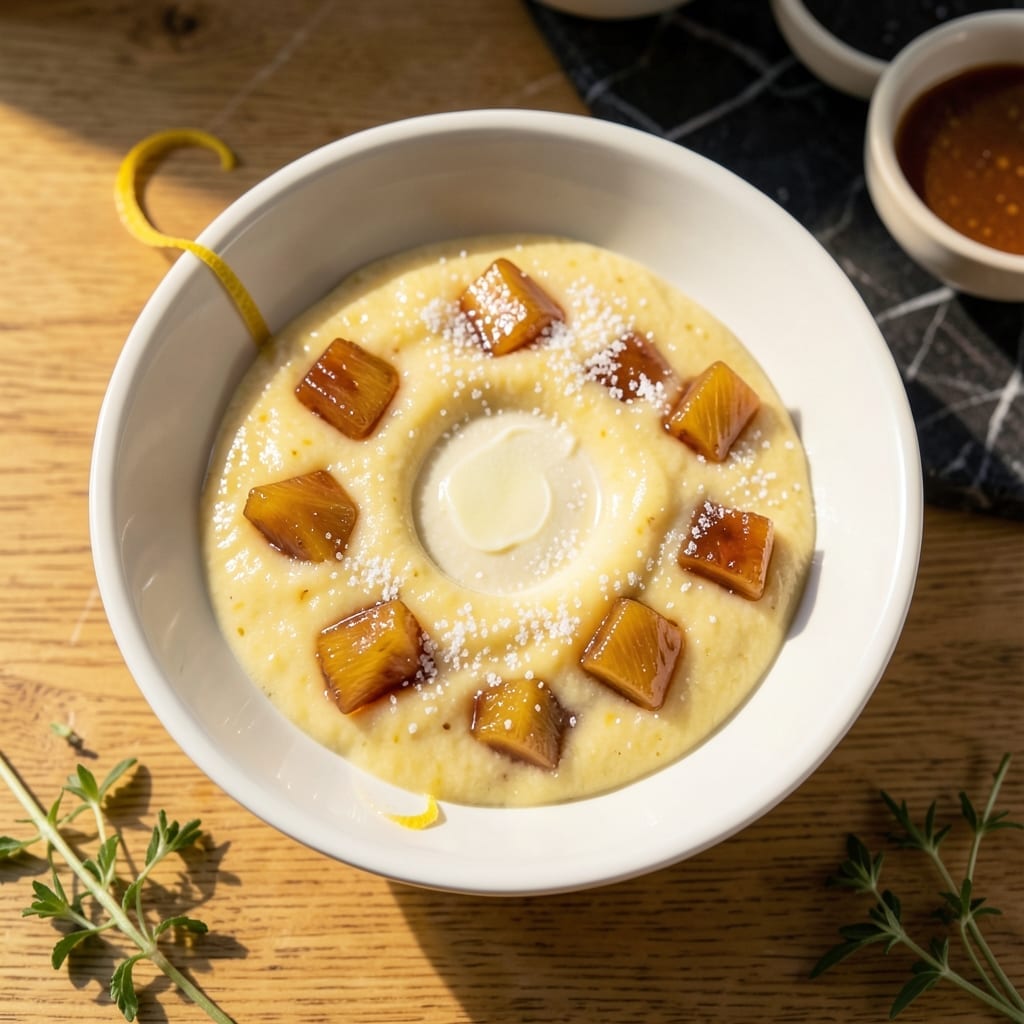
There’s something timeless about a well-made pineapple pudding that brings comfort with every spoonful. This version delivers a perfect balance of tropical sweetness and creamy texture without overwhelming complexity.
The process begins with fresh pineapple, cooked down to intensify its natural flavors before being folded into a custard base. The result is a dessert that’s rich yet light, with the bright acidity of pineapple cutting through the velvety custard.
What makes this pudding special is its simplicity. No exotic ingredients or advanced techniques—just straightforward cooking that produces consistent, restaurant-quality results every time. The aroma alone signals you’re making something special.
Serve it warm or chilled, plain or with a dollop of whipped cream. The versatility makes it ideal for any occasion.
Ingredients for Recipe for Pineapple Pudding
Simple ingredients create this velvety tropical dessert with every bite.
| Ingredient | Amount | Notes |
|---|---|---|
| Fresh Pineapple 🍍 | 4 cups | Diced, core removed |
| Granulated Sugar 🍚 | ¾ cup | Divided for cooking and sweetening |
| Whole Milk 🥛 | 2 cups | Full-fat for creaminess |
| Large Eggs 🥚 | 3 whole | Room temperature preferred |
| All-Purpose Flour 🌾 | 3 tbsp | For thickening custard |
| Unsalted Butter 🧈 | 2 tbsp | For richness in custard |
| Vanilla Extract 🌿 | 1 tsp | Pure extract for best flavor |
| Ground Cinnamon 🌿 | ¼ tsp | Optional, for warmth |
| Salt 🧂 | ¼ tsp | Balances sweetness |
| Heavy Cream 🥛 | ½ cup | Optional, for extra richness |
| Lemon Juice 🍋 | 1 tbsp | Freshly squeezed, for brightness |
The pineapple is key here. Fresh whole pineapple (not pre-cut) has the best texture and flavor—look for one with vibrant green leaves and a sweet aroma at the base. Most grocery stores carry them year-round. If fresh isn’t available, frozen pineapple (thawed and drained) works, but avoid canned (too soft). For the custard, whole milk and heavy cream from local dairies yield the richest results.
No fresh pineapple? Frozen works in a pinch—just drain well to avoid excess liquid. For a lighter version, 2% milk can replace whole, but the texture won’t be as luxurious. Eggs are essential for structure, but if you’re in a bind, cornstarch slurry can thicken the custard (though it won’t be as velvety). The vanilla should be pure extract—imitation lacks depth.
Pudding keeps 4-5 days refrigerated in an airtight container. The flavors deepen overnight, so it’s even better the next day. For longer storage, freeze for up to 3 months—thaw in the fridge before serving. Always stir before reheating to restore the creamy texture.
Why You’ll Love This Recipe
- Minimal Effort: I toss everything in one bowl—no fancy steps, just fresh pineapple and a few pantry staples.
- Tropical Burst: The caramelized pineapple chunks with the creamy custard? Ridiculously good.
- Potluck Hero: Between us, this disappears faster than anything else at family gatherings.
- Budget Friendly: Whole milk and eggs stretch a dollar, and fresh pineapple goes a long way.
Step-by-Step Instructions for Pineapple Pudding
Master this custard-based dessert with precise technique for silky texture and balanced tropical flavor.
Step 1: Prepare and Cook the Pineapple Base
Begin by combining the 4 cups Fresh Pineapple with 0.5 cup Granulated Sugar in a saucepan. Cook over medium heat for 8-10 minutes, stirring frequently, until the pineapple softens and releases its juices.
The mixture should reduce slightly and the pineapple should become translucent at the edges. Stir in the 1 tbsp Lemon Juice and 0.25 tsp Ground Cinnamon during the last minute of cooking. This creates a bright, spiced foundation for your pudding.
Step 2: Create the Custard Mixture
In a separate bowl, whisk together the 3 whole Large Eggs, 0.25 cup Granulated Sugar, 3 tbsp All-Purpose Flour, and 0.25 tsp Salt until smooth. Gradually whisk in the 2 cups Whole Milk to prevent lumps from forming.
The flour-thickened custard base should be completely homogeneous before proceeding. This mixture will transform into a velvety sauce when cooked. Ensure no dry pockets of flour remain in the corners of the bowl.
Step 3: Combine and Thicken the Pudding
Slowly pour the custard mixture into the warm pineapple, whisking constantly to temper the eggs. Return the pan to medium-low heat and cook for 6-8 minutes, stirring continuously with a wooden spoon.
You’ll notice the mixture begin to thicken as it reaches the proper consistency. It should coat the back of a spoon and leave a clear path when you run your finger through it. Add the 2 tbsp Unsalted Butter and 1 tsp Vanilla Extract during the final minute of cooking.
Step 4: Finish with Cream and Chill
Remove from heat and stir in the 0.5 cup Heavy Cream until fully incorporated. This adds luxurious richness to the final texture. The pudding will continue to thicken slightly as it cools.
Transfer to individual serving dishes or a large bowl. Press plastic wrap directly onto the surface to prevent a skin from forming. Refrigerate for at least 4 hours, or until completely chilled and set. The texture should be creamy yet firm enough to hold its shape.
Pro Tips For Making Recipe For Pineapple Pudding
- Pre-cook the Pineapple: I learned this the hard way—raw pineapple can make your pudding curdle. Lightly sauté the fresh pineapple in a pan for 3-4 minutes to soften it and mellow the acidity before mixing it in.
- Temper Those Eggs: After ruining a batch with scrambled egg bits, I now always whisk a ladle of hot milk into the eggs first. Then slowly add the egg mixture back into the pot—no curdling, just smooth custard.
- Skip Canned Pineapple: Fresh pineapple gives a brighter, more vibrant flavor that canned just can’t match. The texture’s better too, as long as you chop it finely so it distributes evenly.
- Strain for Silkiness: Sounds like extra work, but pressing the cooked mixture through a fine-mesh sieve removes any stubborn bits of flour or pineapple fiber. The result is a pudding so smooth it’s worth the 2 extra minutes.
Essential Equipment for Perfect Results
Saucepan Selection
I always use a heavy-bottomed saucepan like All-Clad stainless steel for even heat distribution. A 2-3 quart capacity works perfectly for this recipe. Thin pans can cause hot spots that scorch your custard.
Whisk Matters
A balloon whisk is essential for preventing lumps in your custard mixture. I prefer OXO Good Grips—the silicone handle stays cool. Stainless steel whisks are durable and won’t melt if they touch the pan.
Measuring Tools
Precise measurements ensure consistent results. I use Pyrex glass measuring cups for liquids and stainless steel measuring spoons for dry ingredients. A kitchen scale helps with the pineapple if you want exact 4 cups. 🍍
Wooden Spoon
The final thickening stage requires constant stirring. A wooden spoon won’t scratch your pan and gives you better control. I keep a dedicated bamboo spoon just for custards and puddings.
Serving Dishes
For presentation, I love clear glass ramekins—they show off the pudding’s creamy texture. 6-ounce size is perfect for individual servings. Make sure they’re heat-safe if serving warm.
Chilling Setup
You’ll need plastic wrap to cover the surface during chilling. Press it directly onto the pudding to prevent skin formation. A large mixing bowl works if you’re not using individual dishes. 💡
Nutrition Facts
Frequently Asked Questions
Can I use canned pineapple instead of fresh?
Fresh pineapple works best for texture, but canned (in juice, not syrup) can substitute in a pinch. Drain well and pat dry to remove excess liquid. The flavor will be slightly less bright but still delicious.
Why does my pudding have lumps?
Lumps usually mean the custard mixture wasn’t whisked smoothly before cooking or the eggs curdled from heat. Always temper eggs by slowly adding hot liquid while whisking constantly. A fine-mesh strainer can save a lumpy batch.
How long does it keep in the fridge?
Properly stored in an airtight container, it stays fresh for 4-5 days. The flavors actually deepen overnight. For longer storage, freeze for up to 3 months and thaw in the fridge.

- 6 Egg Cake Recipe with Oil: Light as Air With Buttery Moisture - October 4, 2026
- 4 Bean Casserole Recipe: One-Pan Heartiness With Smoky Paprika Depth - October 4, 2026
- 3-Ingredient Keto Mug Cake Recipe: Microwave Magic in 2 Minutes - October 4, 2026