
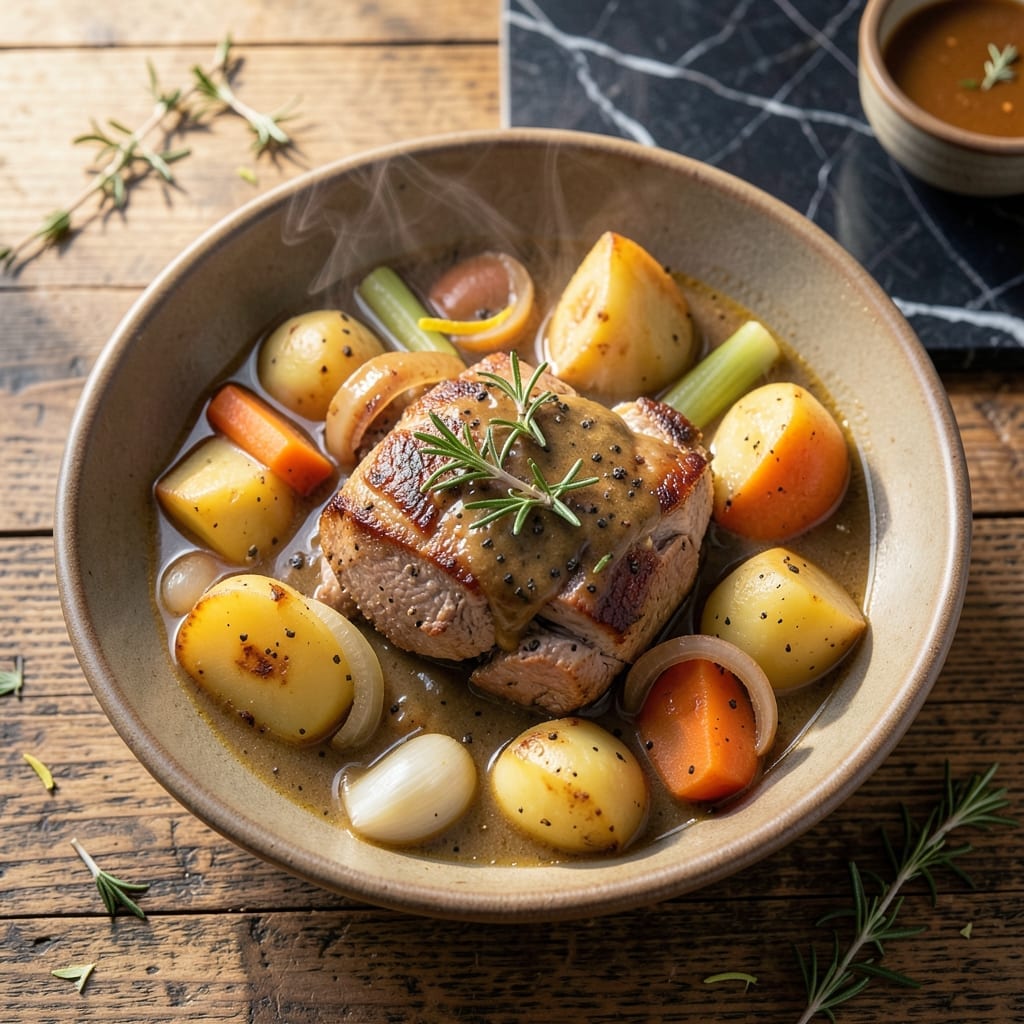
There’s something deeply satisfying about a pot of pork stew simmering on the stove, filling the kitchen with rich, comforting aromas. This recipe transforms humble ingredients into a meal that warms both body and soul.
I’ve perfected this method over years of winter cooking, learning how to coax maximum flavor from pork shoulder and root vegetables. The slow simmer allows the meat to become fall-apart tender while the vegetables absorb the savory broth.
The result is a hearty dish with layers of flavor—tender pork, soft vegetables, and a broth that’s been reduced to a rich, velvety consistency. It’s the kind of meal that tastes even better the next day.
Perfect for cold evenings or whenever you need a bowl of pure comfort. Here’s how to make it.
Ingredients for Recipe for Pork Stew
Hearty pork shoulder meets root vegetables in this slow-simmered comfort dish with deep, rich flavors.
| Ingredient | Amount | Notes |
|---|---|---|
| Pork Shoulder 🥩 | 2 lb | Boneless, cubed, well-marbled |
| Carrots 🥕 | 3 whole | Peeled, cut into chunks |
| Potatoes 🥔 | 1 ½ lb | Yukon Gold, peeled and cubed |
| Onion 🧅 | 1 whole | Yellow, diced medium |
| Garlic Cloves 🧄 | 4 cloves | Minced for depth of flavor |
| Celery Stalks 🌿 | 2 whole | Diced for aromatic base |
| Chicken Broth 🍲 | 4 cups | Low-sodium preferred for control |
| Tomato Paste 🍅 | 2 tbsp | For richness and umami |
| Dried Thyme 🌿 | 1 tsp | Crushed for better infusion |
| Bay Leaf 🍃 | 1 whole | Removed before serving |
| Salt 🧂 | 1 ½ tsp | Kosher or sea, adjust to taste |
| Black Pepper 🌶️ | 1 tsp | Freshly ground preferred |
| Olive Oil 🫒 | 2 tbsp | For searing the pork |
| Fresh Parsley 🌿 | ¼ cup | Chopped, for finishing garnish |
The pork shoulder is non-negotiable here—bone-in or boneless, but well-marbled is key for that fall-apart texture. Most butchers will cube it for you if you ask (saves time and ensures even cooking). I source mine from Whole Foods or local farms when possible—the quality difference in the final dish is noticeable. Look for pieces with good fat distribution; lean cuts won’t deliver the same richness.
No pork shoulder? Pork butt works identically (it’s essentially the same cut). Vegetable broth can replace chicken broth at a 1:1 ratio. If you’re missing thyme, rosemary or sage at half the amount works well. The tomato paste can be swapped for 2 tbsp ketchup in a pinch—unconventional, but it adds the right sweetness and depth.
This stew improves overnight—3-4 days in the fridge lets flavors meld. Freezes beautifully for 3 months (portion before freezing for easy reheating). The parsley garnish? Add just before serving to keep it vibrant.
Why You’ll Love This Recipe
- One Pot Wonder: I toss everything in—pork shoulder, carrots, potatoes—and let the oven do the work. Honestly, cleanup is just one pot and a spoon.
- Rich and Hearty: The pork falls apart, and the garlic cloves melt into the broth. That first bite with crusty bread? Pure comfort.
- Feeds a Crowd: I make a big batch on Sunday and we eat it for days. Between us, it tastes even better reheated.
- Budget Friendly: Pork shoulder is cheap, and a little goes a long way with all those veggies. I’ll be real: it’s my go-to when money’s tight.
Step-by-Step Instructions for Pork Stew
Here is the method. Tested, straightforward, and designed for perfect results every time.
Step 1: Sear the Pork Shoulder
Heat the 2 tbsp olive oil in a large Dutch oven over medium-high heat until it shimmers. Pat the 2 lb pork shoulder dry with paper towels, then season generously with the 1.5 tsp salt and 1 tsp black pepper. This step ensures a deep, flavorful crust.
Add the pork in batches, being careful not to overcrowd the pot. Sear on all sides for 5-6 minutes until deep golden brown. The meat should release easily from the pot when it’s ready to flip. Transfer the seared pork to a plate and set aside.
Step 2: Sauté the Aromatics
In the same pot, add the 1 whole onion, 3 whole carrots, 2 whole celery stalks, and 4 cloves garlic cloves. Cook over medium heat for 5 minutes, stirring occasionally, until the vegetables soften and the onion becomes translucent.
Stir in the 2 tbsp tomato paste and cook for 1-2 minutes until it darkens slightly. This step deepens the umami flavor and creates a rich base for the stew. Add the 1 tsp dried thyme and 1 whole bay leaf, stirring to combine.
Step 3: Deglaze and Simmer
Pour in the 4 cups chicken broth, scraping the bottom of the pot to release any browned bits. These bits, known as fond, add incredible depth to the stew. Return the seared pork and any accumulated juices to the pot.
Bring the mixture to a boil, then reduce the heat to low. Cover and let it simmer for 1.5 hours, stirring occasionally, until the pork is fork-tender. This slow cooking process ensures the meat becomes melt-in-your-mouth tender.
Step 4: Add Potatoes and Finish
Stir in the 1.5 lb potatoes, ensuring they are fully submerged in the liquid. Simmer uncovered for an additional 20-25 minutes until the potatoes are tender and the stew has thickened slightly.
Taste and adjust the seasoning with additional salt or pepper if needed. The stew should have a rich, hearty flavor with tender chunks of pork and vegetables.
Step 5: Garnish and Serve
Remove the 1 whole bay leaf and discard it. Ladle the stew into bowls and garnish with the 0.25 cup fresh parsley. The parsley adds a bright, fresh contrast to the rich, slow-simmered flavors.
Serve hot with crusty bread to soak up the flavorful broth. The stew can be stored in the refrigerator for up to 3 days and tastes even better the next day.
Pro Tips For Making Recipe For Pork Stew
- Brown the Pork Well: I learned this the hard way—sear the pork shoulder in batches over medium-high heat until deeply browned on all sides, about 3-4 minutes per side. It builds the rich flavor base your stew needs.
- Cut Evenly: Keep your potatoes and carrots roughly the same size, about 1-2 inch chunks, so they cook through at the same rate. Uneven pieces mean some turn to mush while others stay undercooked.
- Skip the Boil: Resist the urge to let your stew boil vigorously—keep it at a gentle simmer, just a few bubbles breaking the surface, or the pork will turn tough instead of tender.
- Add Garlic Late: Sounds weird, but it works: toss in the garlic cloves during the last 30 minutes of cooking. This prevents it from turning bitter while still infusing the stew with that deep, aromatic flavor.
Troubleshooting recipe for pork stew
Pork Not Tender
If your pork isn’t falling apart after 1.5 hours, it likely needs more time. Check that your heat is truly at a gentle simmer, not a boil. I find that low heat with the lid slightly ajar works best to maintain steady temperature without drying out the meat. 💡
Thin or Watery Broth
If the stew seems too thin, remove the lid and simmer uncovered for an additional 15-20 minutes. The liquid will reduce and thicken naturally. For a faster fix, mix 1 tbsp cornstarch with 2 tbsp cold water and stir it in during the last 5 minutes of cooking.
Vegetables Too Soft
This usually means they were added too early. Next time, wait until the pork is fork-tender before adding the potatoes. If it happens, try adding 1 cup cubed butternut squash during the last 15 minutes for texture contrast.
Bland Flavor
If your stew tastes dull, it likely needs more salt or acid. Start with ½ tsp kosher salt, then add 1 tbsp lemon juice or 1 tsp apple cider vinegar. I also keep Worcestershire sauce on hand to add 1-2 teaspoons for depth. 🌟
Burnt Bottom
This happens when the heat is too high. Always use a heavy-bottomed pot like Le Creuset or Lodge enamel cast iron. If it occurs, carefully transfer the stew to a clean pot, scraping off any burnt bits. Reduce heat to low for the remainder of cooking.
Greasy Surface
Excess fat rises to the top during cooking. Skim it with a spoon or use a fat separator after cooking. To prevent this, trim visible fat from the pork before searing and blot cooked meat with paper towels before returning to the pot.
Nutrition Facts
Frequently Asked Questions
Can I use a different cut of pork?
Pork butt works just as well as shoulder since they’re similar cuts. Avoid leaner options like tenderloin—they lack the fat needed for rich flavor and tender texture.
How do I store leftovers?
Let it cool, then transfer to airtight containers. It keeps in the fridge for 3-4 days or freezes for 3 months. Reheat gently on the stove.
Why is my broth too thin?
Simmer uncovered for 15-20 minutes to reduce. For a quick fix, mix 1 tbsp cornstarch with 2 tbsp cold water and stir in during the last 5 minutes.
Can I make this in a slow cooker?
Yes! Sear the pork first, then transfer everything to the slow cooker. Cook on low for 6-7 hours for best results.

- 6 Egg Cake Recipe with Oil: Light as Air With Buttery Moisture - October 4, 2026
- 4 Bean Casserole Recipe: One-Pan Heartiness With Smoky Paprika Depth - October 4, 2026
- 3-Ingredient Keto Mug Cake Recipe: Microwave Magic in 2 Minutes - October 4, 2026