
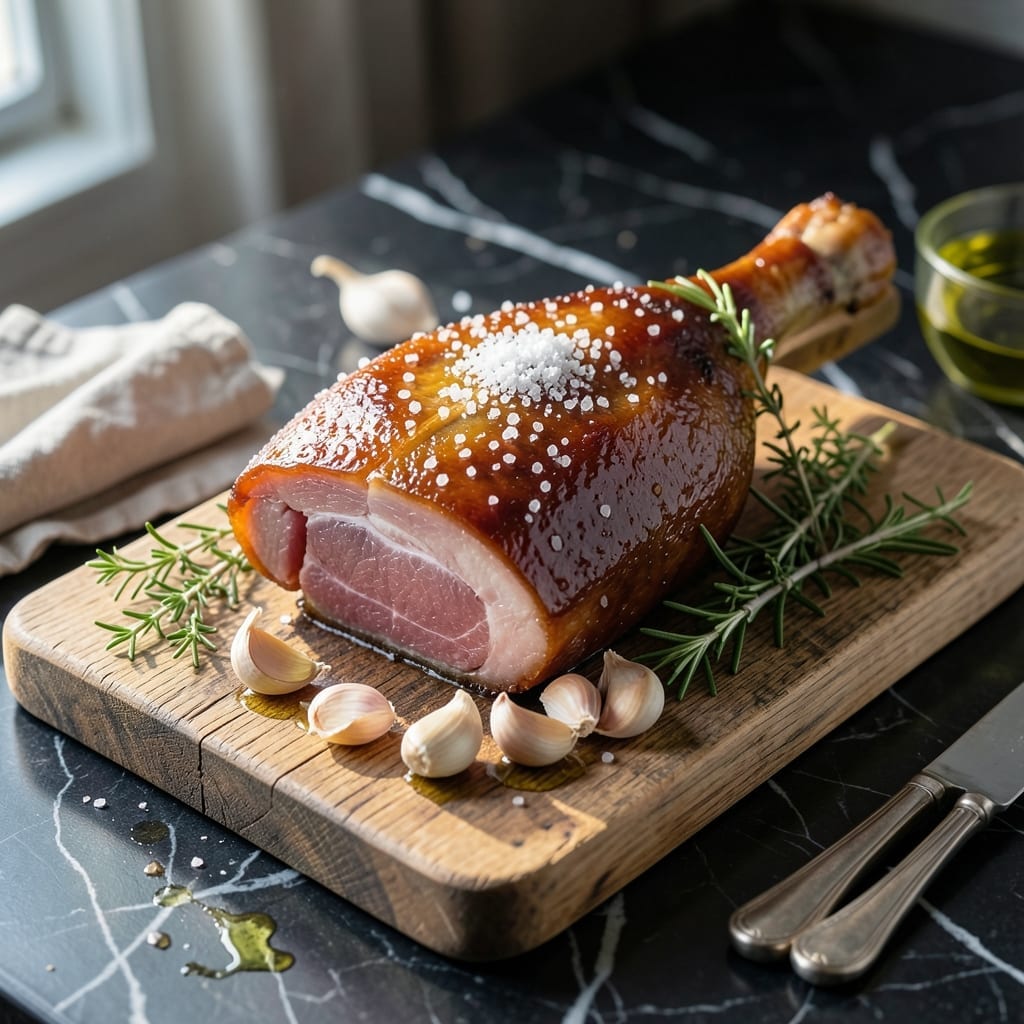
Achieving perfect homemade prosciutto requires patience and precision, but the results are worth the wait. This traditional Italian curing method transforms fresh pork leg into silky, delicately salted meat with complex depth of flavor.
The process begins with selecting a high-quality pork leg and applying a dry cure of sea salt, which draws out moisture while preserving the meat. Time and controlled conditions do the rest, developing that signature texture and taste.
After months of curing, you’ll have thinly sliced prosciutto with a buttery texture and rich, nutty undertones. The salt cure creates a protective barrier while enhancing natural pork flavors.
This method honors centuries-old techniques while delivering restaurant-quality results at home. The wait builds anticipation for that first perfect bite.
Ingredients for Recipe for Prosciutto
A handful of quality ingredients transform pork leg into Italian perfection over time.
| Ingredient | Amount | Notes |
|---|---|---|
| Pork Leg 🍖 | 12 lb | Fresh, skin-on, hind leg preferred |
| Sea Salt 🧂 | 2 lb | Coarse, non-iodized, food-grade |
| Black Pepper 🌶️ | 2 tbsp | Freshly ground, coarse |
| Garlic Cloves 🧄 | 8 cloves | Peeled and lightly crushed |
| Fresh Rosemary 🌿 | 4 sprigs | Stems intact for infusion |
| Fresh Thyme 🍃 | 4 sprigs | Stems intact for infusion |
| Bay Leaves 🌿 | 4 whole | Dried or fresh |
| Juniper Berries 🫒 | 1 tbsp | Lightly crushed for aroma |
| Red Wine 🍷 | 1 cup | Dry variety for curing |
| Olive Oil 🫒 | ¼ cup | Extra-virgin for finishing |
The pork leg is paramount. Source from a reputable butcher—look for a hind leg with consistent fat marbling and intact skin. Heritage breeds like Berkshire or Duroc yield superior texture and flavor. The sea salt must be coarse, non-iodized, and food-grade; Diamond Crystal or Morton are reliable brands. Avoid table salt, as its fine grain and additives can disrupt the curing process.
For the juniper berries, specialty spice shops like Penzeys or Whole Foods bulk sections offer the best quality. No fresh rosemary or thyme? Dried at one-third the quantity works, though fresh provides a more nuanced aroma. The red wine should be dry and bold—Chianti or Cabernet Sauvignon are excellent choices. If avoiding alcohol, substitute with additional salt and water.
Store the pork leg in a cool, dark place during curing—55-60°F is ideal. The finished prosciutto keeps for 6-12 months when stored properly in a dry, temperature-controlled environment. Slice only what you need, leaving the rest whole to preserve freshness and prevent drying.
Why You’ll Love This Recipe
- Set and Forget: I rub the pork leg with salt, pepper, garlic, and rosemary, then let time do the rest—no babysitting required.
- Rich, Salty Bite: The sea salt cures the meat into that perfect balance of savory depth with a hint of rosemary brightness.
- Charcuterie Board MVP: I slice it thin for appetizers or chunk it for sandwiches—this prosciutto steals the show every time.
- Stretches Further: One pork leg yields enough for weeks of meals, and honestly, it just gets better in the fridge.
Step-by-Step Instructions for Prosciutto
This traditional curing method transforms the pork leg into a delicate, flavorful Italian specialty with proper technique.
Step 1: Prepare and Salt the Pork Leg
Begin by thoroughly rinsing the 12 lb Pork Leg under cold water and patting it completely dry with paper towels. This ensures the 2 lb Sea Salt adheres properly and penetrates evenly during the curing process.
Rub the entire surface of the pork leg with the 2 lb Sea Salt, pressing firmly to create an even coating. The salt should completely cover the meat, including any crevices. Place the leg in a non-reactive container, such as a food-grade plastic or glass dish, large enough to hold it comfortably.
Step 2: Add Aromatics and Begin Curing
Lightly crush the 8 cloves Garlic Cloves and scatter them over the salted pork. Add the 4 sprigs Fresh Rosemary, 4 sprigs Fresh Thyme, 4 whole Bay Leaves, and 1 tbsp Juniper Berries around the leg. These aromatics infuse the meat with complex flavors during the curing process.
Drizzle the 1 cup Red Wine over the pork and aromatics. The wine not only enhances the flavor but also helps draw out moisture, aiding in the preservation process. Cover the container loosely with a lid or plastic wrap to allow airflow while protecting the meat from contaminants.
Place the container in a cool, dark place, ideally at a temperature of 50-60°F, for 7 days. Turn the pork leg every 2 days to ensure even curing and salt distribution.
Step 3: Rinse and Rest the Pork
After 7 days, remove the pork leg from the curing mixture and rinse it thoroughly under cold water to remove all the salt and aromatics. Pat it dry with clean paper towels. This step is critical to prevent the finished prosciutto from being overly salty.
Rub the entire surface of the pork leg with the 0.25 cup Olive Oil. This creates a protective barrier and helps the outer layer dry evenly during the next stage. Place the pork on a wire rack set over a tray to catch any drips.
Refrigerate the pork leg uncovered for 24 hours to allow the surface to dry slightly and form a pellicle, a tacky layer that will help the next steps proceed smoothly.
Step 4: Age the Prosciutto to Perfection
Transfer the pork leg to a cool, well-ventilated space, such as a curing chamber, basement, or wine cellar, where the temperature remains between 55-65°F and humidity is around 60-70%. Hang the leg using a sturdy hook or rope, ensuring it doesn’t touch any surfaces.
Aging is where the magic happens. The pork leg will gradually dry and develop its characteristic firm texture and deep, complex flavor. Check the leg regularly for any signs of spoilage, such as off smells or mold (white mold is normal, but discard if you see any other colors).
Allow the prosciutto to age for 12-18 months, depending on the size of the leg and your flavor preference. The longer it ages, the more intense and concentrated the flavor becomes.
Pro Tips For Making Recipe For Prosciutto
- Dry the Leg First: Pat the pork leg completely dry with paper towels before salting—I learned this the hard way after my first batch turned out soggy instead of properly cured.
- Use Coarse Salt: Sea salt should be coarse, not fine, so it draws moisture out slowly without over-penetrating the meat.
- Don’t Rush the Cure: Give it at least 30 days in a cool, dark place; I was skeptical until I tried cutting corners and ended up with uneven texture.
- Add Rosemary Late: Fresh rosemary can overpower if added too early—toss it in during the last week of curing for just the right aroma.
Serving Suggestions for This Recipe
Charcuterie Board Star
Thinly sliced prosciutto is the crown jewel of any charcuterie spread. I arrange 6-8 paper-thin slices in delicate rosettes or folded quarters. Pair with aged Parmigiano-Reggiano chunks, marinated olives, and cornichons for a classic Italian antipasto experience. 💛
Melon Pairing Perfection
The salty-sweet contrast of prosciutto with ripe melon is unforgettable. I love wrapping ½-inch cantaloupe wedges with single prosciutto slices. Honeydew or ripe peaches work beautifully too. A drizzle of aged balsamic glaze elevates this combination to restaurant quality.
Pasta Enhancement
Tear ¼-inch strips of prosciutto and add to hot pasta dishes like carbonara or cacio e pepe. The heat softens the meat while releasing its savory depth. I often finish with a sprinkle of freshly cracked black pepper and Pecorino Romano for an authentic touch.
Salad Topper
Add crispy prosciutto crumbles to arugula salad with shaved Parmigiano-Reggiano and a lemon-olive oil vinaigrette. The saltiness balances the peppery greens perfectly. I use about 2 oz of thinly sliced prosciutto per serving, torn into bite-sized pieces. 🥗
Sandwich Upgrade
Layer prosciutto on crusty ciabatta with fresh mozzarella, tomato slices, and basil for a Caprese sandwich. A brushing of pesto on the bread adds herbaceous depth. Press lightly in a panini maker for a warm, melty version.
Nutrition Facts
Frequently Asked Questions
How long does homemade prosciutto last?
Properly cured and stored, it keeps for 6-12 months in a cool, dry place. Slice only what you need to maintain freshness.
What’s the ideal temperature for curing?
Maintain 55-65°F with 60-70% humidity during aging. A basement or wine cellar works perfectly for this process.
Can I use a different cut of pork?
For best results, stick with a hind pork leg. Other cuts lack the fat marbling and size needed for proper curing and flavor development.
How do I know when it’s ready?
The meat should feel firm to the touch and have a deep red color. The shortest cure is 12 months, but 18 months yields more complex flavor.

- 6 Egg Cake Recipe with Oil: Light as Air With Buttery Moisture - October 4, 2026
- 4 Bean Casserole Recipe: One-Pan Heartiness With Smoky Paprika Depth - October 4, 2026
- 3-Ingredient Keto Mug Cake Recipe: Microwave Magic in 2 Minutes - October 4, 2026