
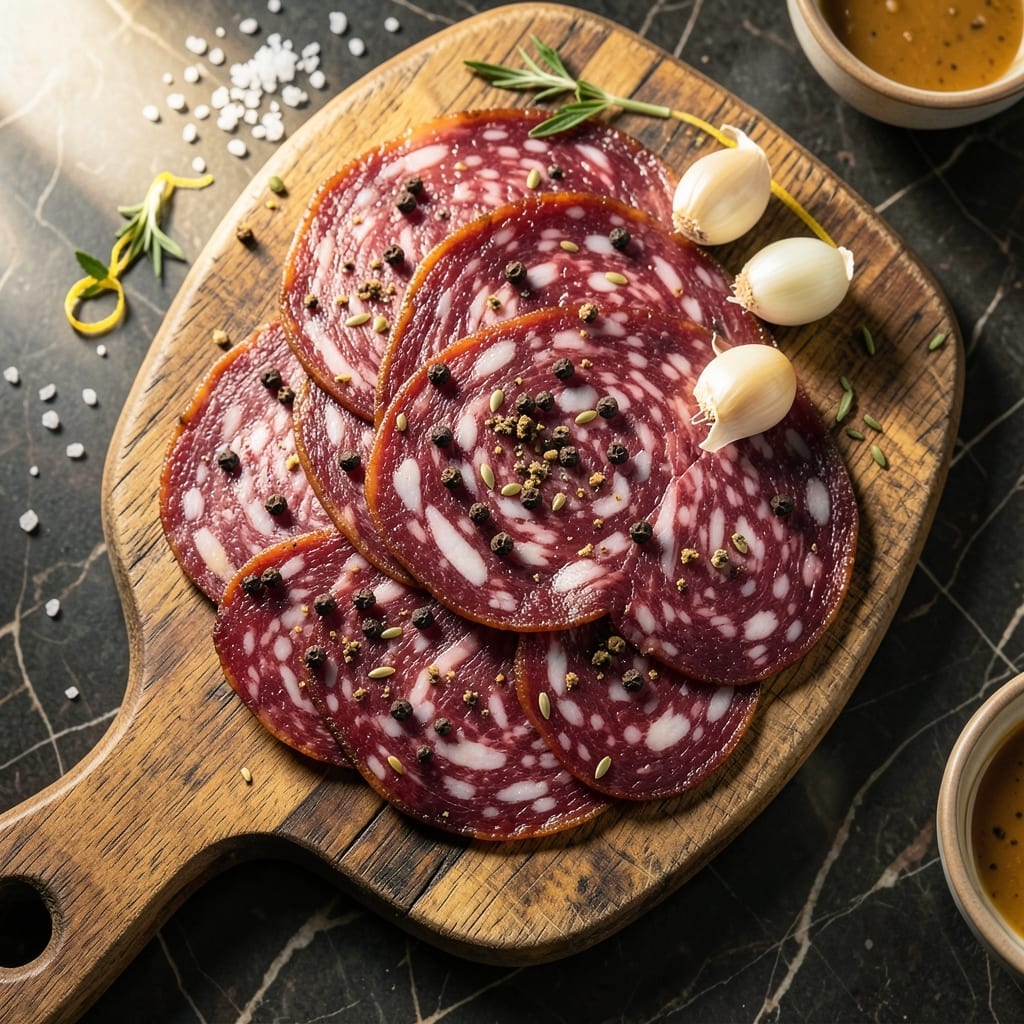
Crafting artisanal salami at home is a rewarding process that transforms simple ingredients into a restaurant-quality cured meat. This method combines traditional techniques with modern precision to deliver exceptional results every time.
The key lies in selecting the right meat cuts and maintaining proper curing conditions. With 5 ingredients and careful attention to detail, you’ll create a product that rivals commercial offerings. The curing process develops complex flavors over time.
What emerges is a firm, flavorful salami with the perfect balance of fat and lean meat. Each slice reveals the marbling and spice distribution that defines premium cured meats. The texture and taste improve with proper aging.
This recipe provides the foundation for customizing your own signature salami blend. Follow the steps precisely for consistent, professional results.
Ingredients for Recipe for Salami
Five core ingredients plus spices create restaurant-quality cured meat with proper technique and patience.
| Ingredient | Amount | Notes |
|---|---|---|
| Pork Shoulder 🐷 | 2 lb | Coarsely ground, 70% lean 30% fat ratio |
| Pork Belly 🥓 | ½ lb | Coarsely ground, adds marbling |
| Kosher Salt 🧂 | ¼ cup | Diamond Crystal preferred for curing |
| Black Peppercorns 🌶️ | 1 tbsp | Freshly cracked for texture |
| Garlic Cloves 🧄 | 6 cloves | Minced finely for even distribution |
| Fennel Seeds 🌿 | 2 tsp | Toasted to enhance aroma |
| Red Wine 🍷 | ½ cup | Dry variety for acidity |
| Curing Salt No. 2 🧂 | 1 tsp | Prague Powder, essential for preservation |
| Paprika 🌶️ | 1 tbsp | Sweet or smoked for color |
| Dextrose 🍚 | ¼ cup | Promotes fermentation, optional |
| Natural Hog Casings 🌭 | 4 pieces | Soaked in water before use |
The meat selection is critical. Pork shoulder and pork belly provide the ideal fat-to-lean ratio—source from a reputable butcher or Whole Foods for quality. The fat cap on the shoulder should be visible but not excessive. For curing salt, Prague Powder No. 2 is non-negotiable; find it at specialty stores or online at Amazon. Hog casings are available at butcher shops or Sausage Maker online.
No pork belly? Substitute with additional pork shoulder fat to maintain the 30% fat ratio. Sea salt can replace kosher salt at a 1:1 ratio, but avoid iodized table salt. For wine, any dry red works—Cabernet Sauvignon or Merlot are reliable. If avoiding alcohol, use 0.25 cup water plus 1 tbsp vinegar for acidity. Dextrose can be omitted, but it aids fermentation for better flavor development.
Store the ground meat mixture in the refrigerator (below 40°F) during preparation. Cured salami keeps in a cool, dry place for up to 6 months once fully aged. Use an airtight container for any unused portions of meat or spices to maintain freshness.
Why You’ll Love This Recipe
- Minimal Effort: I just mix the pork, salt, and spices, then let time do the work—no fancy steps.
- Rich Garlic Bite: The garlic and black peppercorns give it that deep, savory kick I crave.
- Feeds a Crowd: One batch makes enough salami to last for weeks or share at gatherings.
Step-by-Step Instructions for Salami
Master the curing process with precision and patience for authentic homemade results.
Step 1: Prepare the Meat and Casings
Begin by grinding the 2 lb Pork Shoulder and 0.5 lb Pork Belly through a coarse plate. The shoulder provides structure while the pork belly adds essential marbling. Place the ground meat in a large mixing bowl and refrigerate while you prepare the remaining ingredients.
Soak the 4 pieces Natural Hog Casings in lukewarm water for 30 minutes to soften them. Rinse the casings thoroughly under running water, then soak again in fresh water. This ensures they’ll be pliable and easy to work with during stuffing without tearing.
Step 2: Toast Spices and Mix the Cure
In a dry skillet over medium heat, toast the 1 tbsp Black Peppercorns and 2 tsp Fennel Seeds for 1-2 minutes until fragrant. Remove from heat and allow to cool, then crack the peppercorns coarsely in a mortar and pestle.
In a separate bowl, combine the 0.25 cup Kosher Salt, 1 tsp Curing Salt No. 2, 1 tbsp Paprika, and 0.25 cup Dextrose. This curing mixture is critical for preservation and flavor development, so ensure it’s evenly distributed before adding to the meat.
Step 3: Incorporate Aromatics and Wine
Add the toasted spices, minced 6 cloves Garlic Cloves, and the curing mixture to the ground meat. Pour in the 0.5 cup Red Wine and mix thoroughly using your hands. The wine adds acidity and depth, while the garlic provides a robust aromatic base.
Knead the mixture for 5-7 minutes until it becomes sticky and cohesive—this is known as the “primary bind.” The texture should be uniform with no visible fat streaks. Cover the bowl and refrigerate the mixture for 24-48 hours to allow the cure to penetrate fully.
Step 4: Stuff and Tie the Salami
After curing, transfer the meat mixture to a sausage stuffer. Slide a soaked casing onto the stuffer tube and tie a knot at the end. Fill the casing slowly, avoiding air pockets, until it reaches the desired diameter. Twist the salami into 12-inch links, tying each off with kitchen twine.
Prick any visible air bubbles with a needle to prevent spoilage during drying. The salami should feel firm but not overly compact. Hang the links on a curing rod in a temperature-controlled environment.
Step 5: Ferment and Dry
Hang the salami in a space maintained at 60-68°F with 70-80% humidity for the first 2-3 days. This fermentation phase allows beneficial bacteria to develop flavor and texture. Monitor closely for any signs of spoilage.
After fermentation, reduce the temperature to 50-55°F and maintain 60-70% humidity for drying. Allow the salami to cure for 4-6 weeks, or until it loses 30-35% of its original weight. The finished salami should be firm to the touch with a slightly wrinkled casing.
Pro Tips For Making Recipe For Salami
- Chill the Meat: Freeze pork shoulder and belly for 30-45 minutes before grinding—cold fat keeps the salami from turning greasy and improves texture.
- Toast the Peppercorns: Lightly toast black peppercorns in a dry pan for 2 minutes before crushing to wake up their aroma, it actually changes the outcome.
- Skip the Over-Salting: I learned this the hard way—start with 2.5% salt by weight of meat (about 50g per kg) and adjust after the first day, over-salting ruins the cure.
- Use Fresh Garlic: My grandmother swore by this, and she was right: only use freshly peeled garlic cloves—old or pre-minced garlic adds a bitter edge to the final salami.
Storing and Reheating This Dish
Refrigerator Storage
After stuffing but before fermentation, store your salami in the refrigerator at 40°F or below for up to 24 hours. Use a wire rack over a tray to allow airflow around the links. This prevents moisture buildup that could lead to spoilage during the initial curing phase.
Fermentation Environment
For the first 2-3 days, maintain 60-68°F with 70-80% humidity. I use a dedicated curing chamber, but a wine fridge with a humidity controller works too. Avoid temperature fluctuations, as they can disrupt the fermentation process.
Long-Term Aging
Once fermentation is complete, move your salami to a 50-55°F space with 60-70% humidity for aging. A basement or temperature-controlled closet works well. Check weekly for any signs of mold or off odors—healthy salami develops a white, dusty coating. 💪
Freezing Options
To pause the aging process, freeze fully cured salami in vacuum-sealed bags for up to 3 months. Slice before freezing for easier portioning. Thaw in the refrigerator overnight before serving to maintain texture and flavor.
Serving Temperature
For the best flavor, serve your salami at room temperature. Remove from storage 30 minutes before slicing. This allows the fats to soften slightly, enhancing the mouthfeel and releasing the full aroma of the spices.
Storage Tips
Store sliced salami in an airtight container with a paper towel to absorb moisture. It will keep in the refrigerator for up to 2 weeks. For longer storage, wrap individual slices in parchment paper before sealing in a freezer bag. ❄️
Nutrition Facts
Frequently Asked Questions
What’s the ideal fat-to-lean ratio for salami?
Aim for 70% lean meat to 30% fat for perfect texture and flavor. This ratio ensures proper marbling while preventing the mixture from becoming too greasy.
Can I skip the curing salt?
Never omit Curing Salt No. 2—it’s essential for preventing botulism and ensuring safe preservation. It also contributes to the characteristic color and flavor.
How do I know when it’s fully cured?
Your salami is ready when it loses 30-35% of its original weight and feels firm throughout. The casing should be slightly wrinkled, and the interior should be uniformly dry.
What’s the best way to store finished salami?
Hang whole links in a cool, dry place (50-55°F) for up to 6 months. For sliced salami, use an airtight container with parchment paper between layers.

- 6 Egg Cake Recipe with Oil: Light as Air With Buttery Moisture - October 4, 2026
- 4 Bean Casserole Recipe: One-Pan Heartiness With Smoky Paprika Depth - October 4, 2026
- 3-Ingredient Keto Mug Cake Recipe: Microwave Magic in 2 Minutes - October 4, 2026