
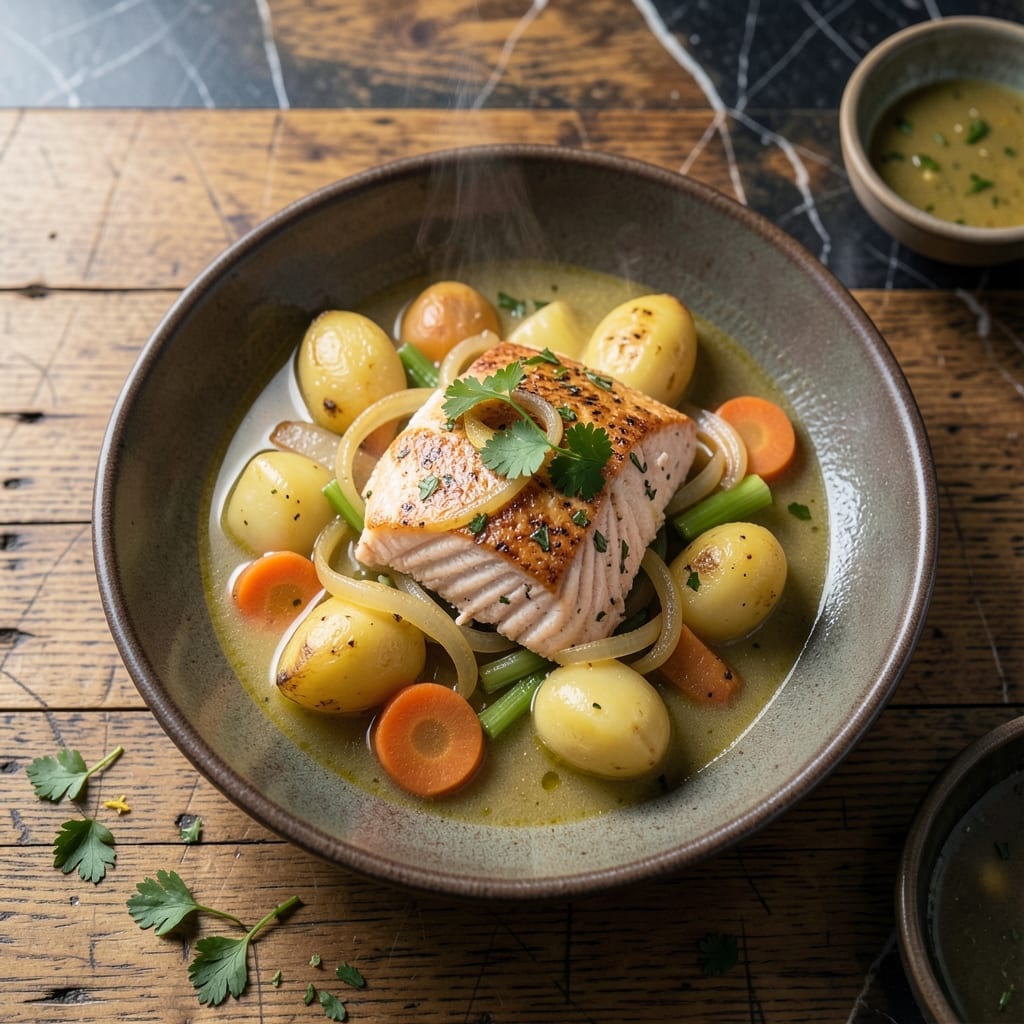
There’s a reason salmon stew remains a timeless dish—it transforms simple ingredients into a deeply satisfying meal. This recipe focuses on creating a rich broth that highlights the natural flavor of wild-caught salmon, without overpowering it.
The key is in the balance: a light but flavorful broth built from aromatic vegetables, herbs, and a touch of white wine. The salmon cooks gently in the liquid, absorbing the flavors while maintaining its tender, flaky texture.
What you’ll get is a comforting bowl with tender salmon pieces, hearty potatoes, and a broth that’s savory without being heavy. It’s the kind of dish that feels special but comes together with minimal effort.
Perfect for a cozy dinner, this stew delivers warmth and depth in every spoonful.
Ingredients for Recipe for Salmon Stew
Rich broth begins with fresh salmon, aromatic vegetables, and a few pantry staples for depth.
| Ingredient | Amount | Notes |
|---|---|---|
| Wild-Caught Salmon Fillets 🐟 | 1 ½ lb | Skin-on or skinless, cut into chunks |
| Yukon Gold Potatoes 🥔 | 1 ½ lb | Peeled and cubed into 1-inch pieces |
| Yellow Onion 🧅 | 1 whole | Medium size, finely diced |
| Carrots 🥕 | 2 whole | Medium size, sliced into rounds |
| Celery Stalks 🌿 | 2 whole | Diced, including some leaves |
| Garlic Cloves 🧄 | 4 cloves | Minced for depth of flavor |
| Dry White Wine 🍷 | ½ cup | Sauvignon Blanc or Pinot Grigio preferred |
| Fish Stock 💧 | 4 cups | Low-sodium for controlled seasoning |
| Fresh Dill 🌿 | ¼ cup | Chopped, stems removed |
| Fresh Parsley 🍃 | ¼ cup | Chopped, for garnish and flavor |
| Bay Leaves 🍃 | 2 whole | Dried, for aromatic depth |
| Unsalted Butter 🧈 | 2 tbsp | For enriching the broth |
| Olive Oil 🫒 | 2 tbsp | Extra-virgin for sautéing aromatics |
| Kosher Salt 🧂 | 1 ½ tsp | Diamond Crystal preferred for even seasoning |
| Black Pepper 🌶️ | ½ tsp | Freshly ground for best results |
The salmon quality is paramount. Wild-caught sockeye or king salmon delivers the best flavor and texture, while farmed Atlantic works in a pinch. Source from Whole Foods or a trusted fishmonger—look for vibrant color and no fishy odor. The potatoes should be waxy (Yukon Gold or red) to hold their shape in the broth. Avoid russets, which turn mealy and fall apart.
No white wine? Substitute with dry vermouth or extra fish stock plus a squeeze of lemon. Fresh herbs are ideal, but dried dill at one-third the amount works if necessary. For a richer finish, swap the butter for heavy cream (add at the end). The fish stock can be homemade or high-quality store-bought like More Than Gourmet.
This stew tastes even better the next day. Refrigerate in an airtight container for up to 3 days. The broth freezes beautifully for 2-3 months—just thaw and add fresh salmon when reheating. Avoid freezing the cooked salmon, as it can become mushy.
Why You’ll Love This Recipe
- One Pot Meal: I toss in the salmon, potatoes, and veggies—just one pot and minimal cleanup.
- Rich Broth: The Yukon Golds soak up the flavor from the salmon and carrots, making every bite ridiculously good.
- Feeds a Crowd: Honestly, this is my go-to for family dinners or when friends drop by unexpected.
- Leftovers for Days: Between us, the stew tastes even better the next day, and it freezes like a dream.
Step-by-Step Instructions for Salmon Stew
Master the technique for building layers of flavor in this hearty seafood dish.
Step 1: Build the Aromatic Base
Heat the 2 tbsp olive oil in a Dutch oven over medium heat until shimmering. Add the 1 whole yellow onion, 2 whole carrots, and 2 whole celery stalks, cooking for 8-10 minutes until the vegetables soften and the onion turns translucent.
Stir in the 4 cloves garlic cloves and cook for 1 minute until fragrant. This base, known as a mirepoix with garlic, forms the flavor foundation. Watch for the edges of the onion to turn light golden brown—this indicates proper caramelization.
Step 2: Deglaze and Develop the Broth
Pour in the 0.5 cup dry white wine and scrape the browned bits from the bottom of the pot with a wooden spoon. Let it simmer for 3-4 minutes until reduced by half. The alcohol will cook off, leaving concentrated flavor.
Add the 4 cups fish stock, 2 whole bay leaves, 1.5 tsp kosher salt, and 0.5 tsp black pepper. Bring to a gentle boil, then reduce heat to maintain a steady simmer. This is where the broth begins to develop its rich, savory depth.
Step 3: Add Potatoes and Salmon
Stir in the 1.5 lb Yukon Gold potatoes and simmer for 10 minutes until they begin to soften at the edges. The potatoes will absorb some of the broth’s flavor while thickening it slightly with their starch.
Gently add the 1.5 lb wild-caught salmon fillets in chunks, ensuring they’re submerged in the liquid. Simmer for 8-10 minutes until the salmon is just cooked through—it should flake easily with a fork and appear opaque throughout.
Step 4: Finish and Serve
Remove the pot from heat and stir in the 2 tbsp unsalted butter until melted. This final enrichment gives the broth a velvety texture. Fold in the 0.25 cup fresh dill, reserving some for garnish.
Taste and adjust seasoning if needed. Ladle the stew into bowls, garnishing each serving with the remaining fresh dill and 0.25 cup fresh parsley. The ideal serving temperature is just below boiling, allowing the flavors to shine without muting the salmon’s delicate taste.
Pro Tips For Making Recipe For Salmon Stew
- Poach Salmon Last: Add the salmon fillets only in the final 8-10 minutes of simmering—any longer and they’ll turn dry and stringy. I learned this the hard way after pulling apart overcooked fish that looked perfect on the outside.
- Cut Potatoes Small: Dice the Yukon Golds into 1-inch cubes so they cook through by the time the stew is done. Sounds obvious, but my first few batches had undercooked centers because I was too lazy to chop evenly.
- Sweat the Veggies: Cook the onion, carrots, and celery in butter for a solid 5 minutes before adding liquid—this builds a flavor base that makes the broth taste richer without extra effort.
- Skip the Skin: Remove the skin from the salmon before adding it to the stew. It curls up, looks unappetizing, and doesn’t add anything useful to the dish. I was skeptical until I tried it.
Pro Cooking Tips for This Recipe
Timing Matters
Don’t rush the mirepoix—cooking the onion, carrots, and celery for the full 8-10 minutes builds the depth of flavor that makes this stew special. I always wait until the onions are translucent with golden edges. 🌡️
Salmon Cooking Time
Add the salmon only after the potatoes have simmered for 10 minutes. The chunks need just 8-10 minutes in the broth to cook through—overcooking will make them dry and tough. Look for opaque flesh that flakes easily.
Broth Enrichment
Stir in the 2 tbsp butter off the heat to emulsify it into the broth. This creates a silky texture without breaking. I recommend using European-style butter for its higher fat content.
Herb Placement
Add most of the fresh dill at the end to preserve its bright, grassy flavor. Reserve a pinch for garnish. Dried dill won’t give the same freshness, but 1 tbsp can work if that’s all you have.
Potato Prep
Cut the Yukon Gold potatoes into uniform 1-inch cubes so they cook evenly. Larger pieces will be underdone, while smaller ones may turn mushy. Keep the skin on for extra texture.
Stock Selection
Use a low-sodium fish stock to control the seasoning. I prefer More Than Gourmet brand for its clean, rich flavor. Avoid clam juice, which can overpower the delicate salmon taste.
Nutrition Facts
Frequently Asked Questions
Can I use frozen salmon for this stew?
Yes, but thaw it overnight in the fridge first. Frozen salmon can release excess moisture, slightly diluting the broth. Pat it dry before adding to maintain texture.
What can I substitute for white wine?
Use 0.5 cup dry vermouth or extra fish stock with a squeeze of lemon. Both add acidity to balance the richness of the broth.
How do I know when the salmon is done?
It should flake easily with a fork and appear opaque throughout after 8-10 minutes. Overcooking makes it dry, so remove it from heat immediately.
Can I make this stew ahead of time?
Store the cooked stew in the fridge for up to 3 days. The broth actually improves overnight, but add fresh herbs when reheating for best flavor.

- 6 Egg Cake Recipe with Oil: Light as Air With Buttery Moisture - October 4, 2026
- 4 Bean Casserole Recipe: One-Pan Heartiness With Smoky Paprika Depth - October 4, 2026
- 3-Ingredient Keto Mug Cake Recipe: Microwave Magic in 2 Minutes - October 4, 2026