
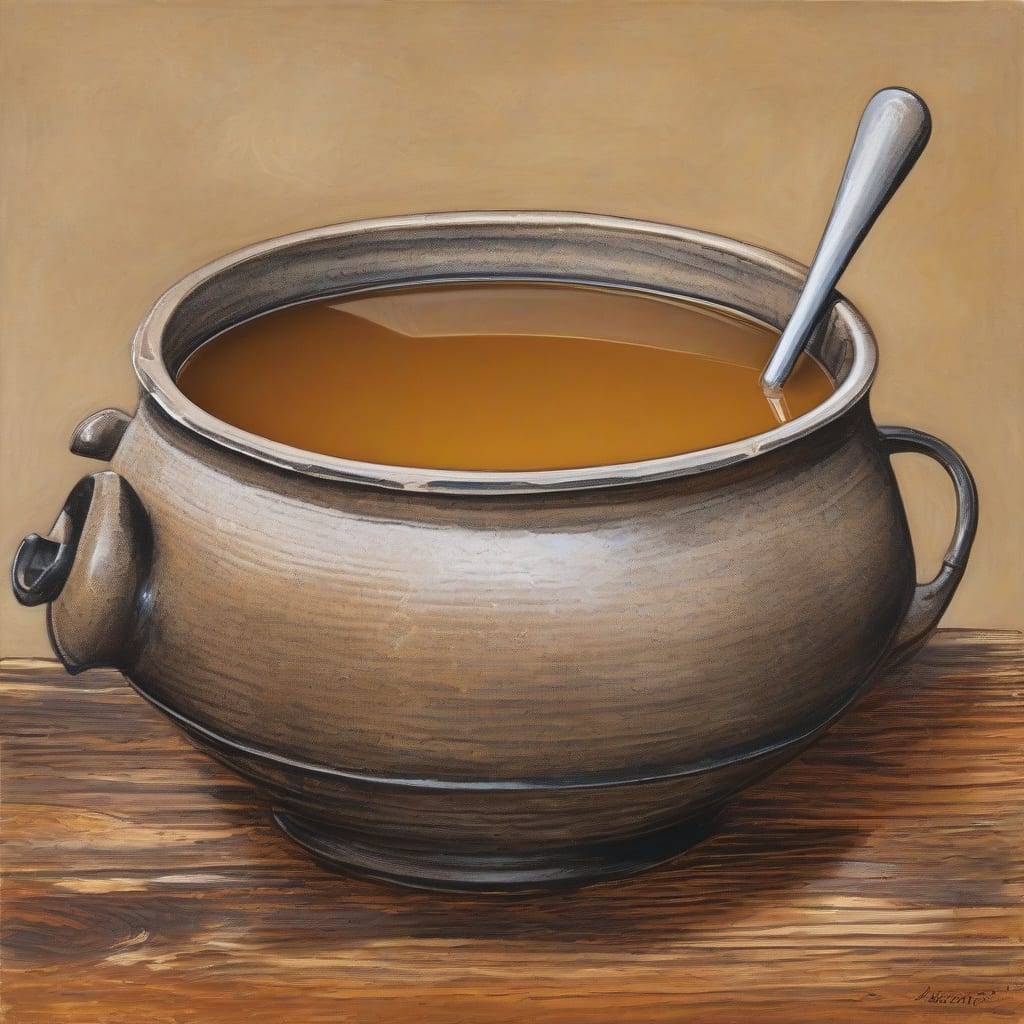
I’ve perfected my recipe for turkey bone broth, creating a rich, nourishing base that’s perfect for soups and stews. This liquid gold is packed with collagen, protein, and minerals that will elevate your cooking.
By slow-cooking turkey bones in water with aromatics, you’ll extract maximum flavor and nutrition, resulting in a deliciously versatile broth that’s ready to use in your favorite recipes.
Ingredients for Recipe for Turkey Bone Broth
Simple ingredients create rich, nourishing broth perfect for soups and stews.
| Ingredient | Amount | Notes |
|---|---|---|
| Turkey Bones 🦴 | 2 lb | Raw or roasted, meaty bones preferred |
| Onions 🧅 | 2 whole | Rough chopped, any variety |
| Carrots 🥕 | 2 whole | Rough chopped, peeled |
| Celery Stalks 🥕 | 2 stalks | Rough chopped |
| Garlic Cloves 🧄 | 4 cloves | Peeled, smashed |
| Bay Leaves 🌿 | 2 whole | Fresh or dried |
| Black Peppercorns 🌶️ | 1 tbsp | Whole, not ground |
| Apple Cider Vinegar 🍎 | 2 tbsp | For extracting minerals |
| Water 💧 | 4 cups | Filtered water preferred |
For the best broth, use a mix of raw and roasted bones—Costco and Whole Foods usually have great options. If you’re using leftover bones from a roasted turkey, toss them in the oven at 400°F for about 30 minutes to get that nice roasted flavor. The aromatics matter too, so don’t skip the onions, carrots, and celery.
No apple cider vinegar? White wine vinegar works too, but apple cider gives it a richer flavor. For peppercorns, use whole ones—they’re easier to strain out later. Want a clearer broth? Simmer gently and skim off any impurities that rise to the top. You can also add other aromatics like leeks or parsley stems if you’ve got them.
This broth keeps for 5 days in the fridge or 3 months in the freezer. I like to portion it into 1-quart containers so I can just grab what I need. When freezing, leave about an inch at the top for expansion—that’s important.
Why You’ll Love This Recipe
- Quick Start: I can throw all the ingredients – those leftover turkey bones, some onions, carrots, celery, and garlic – into a pot with minimal prep.
- Rich Rewards: The slow-cooked turkey bones with aromatics like onions and garlic create a ridiculously good base that makes my soups and stews taste like a million bucks.
- Meal Prep Master: I love making a big batch of this broth on the weekend and using it throughout the week in various dishes – it’s my secret weapon for quick weeknight meals.
- Zero Waste: Using leftover turkey bones to make broth is a budget-friendly way to reduce food waste and get the most out of my holiday meal – it’s a win-win.
Step-by-Step Instructions for Turkey Bone Broth
Follow these straightforward steps to create a rich, nourishing broth perfect for soups and cooking.
Step 1: Prepare the Ingredients
Start by rough-chopping the 2 whole Onions, 2 whole Carrots, and 2 stalks Celery Stalks. I like to keep the pieces fairly large as they’ll be simmering for a long time. Make sure to peel the carrots before chopping. Next, peel and smash the 4 cloves Garlic Cloves to release their flavor compounds.
Having all your ingredients prepped before starting ensures a smooth cooking process. The rough chopping helps release their flavors into the broth during the long simmer.
Step 2: Combine Ingredients and Water
In a large stockpot (at least 12-quart capacity), combine the 2 lb Turkey Bones, chopped onions, carrots, celery, smashed garlic, and 2 whole Bay Leaves. Pour in the 4 cups Water and add the 1 tbsp Black Peppercorns. The water should cover all the ingredients; if necessary, add a bit more water to ensure everything is submerged.
Now add the 2 tbsp Apple Cider Vinegar, which helps extract minerals from the bones. Don’t worry if it seems like a lot of liquid – the broth will reduce significantly during cooking.
Step 3: Simmer the Broth
Bring the mixture to a gentle boil over medium-high heat, then reduce the heat to low to maintain a bare simmer. You want to see just a few bubbles breaking the surface – a rolling boil can make the broth cloudy. Skim off any impurities that rise to the surface during the first 30 minutes of cooking.
Let the broth simmer uncovered for at least 12 hours, or up to 24 hours for maximum richness. The longer it simmers, the more collagen and minerals will be extracted from the bones, creating a rich, gelatinous broth. Check on it periodically to ensure it remains at a simmer and add more water if needed to keep ingredients covered.
Step 4: Strain and Cool the Broth
After the simmering time is complete, remove the pot from the heat and let it cool slightly. Strain the broth through a fine-mesh sieve or cheesecloth into a large container, discarding the solids. I like to strain it twice for an extra-clear broth. Let it cool completely before refrigerating or freezing.
As it chills, you’ll notice the broth will gel due to the collagen extracted from the bones – this is a sign of a well-made broth. If any fat solidifies on top, you can easily skim it off before using the broth in your recipes.
Pro Tips For Making Recipe For Turkey Bone Broth
- ROAST THE BONES: Roasting your turkey bones at 400°F (200°C) for about 30 minutes before making the broth adds a depth of flavor that’s hard to achieve otherwise. I learned this the hard way—unroasted bones just can’t compete with the rich, caramelized flavor you get from a quick roast.
- CHOP VEGETABLES UNEVENLY: Don’t worry too much about making your onions, carrots, and celery uniform; slightly larger chunks will caramelize better during cooking, adding more complexity to your broth. My grandmother swore by this, and she was right: it makes a real difference in the final flavor.
- SKIP OVERCROWDING THE POT: Make sure you’ve got enough room in your pot for all the bones and vegetables without overcrowding it—this ensures everything cooks evenly and extracts properly. After burning three batches, I finally figured out that giving everything some space is crucial.
- SIMMER GENTLY: Keep your broth at a bare simmer; a vigorous boil can make it cloudy and extracts too much fat from the bones. I’ve found that a gentle simmer for at least 12 hours yields a clearer, more refined broth.
Troubleshooting recipe for turkey bone broth
Common Broth Problems
One of the most common issues with turkey bone broth is cloudiness, which usually results from a rolling boil during cooking. To avoid this, maintain a gentle simmer and skim off impurities that rise during the first 30 minutes. Another frequent problem is weak flavor—this often happens when the bones aren’t roasted sufficiently before simmering. Try roasting your bones at 400°F for 30 minutes to enhance flavor.
Fixing Fat Separation
If you notice fat separating from the broth after refrigeration, don’t worry—this is normal. You can easily skim off the solidified fat before using the broth. For a clearer broth, strain it through a fine-mesh sieve or cheesecloth while it’s still warm. Some cooks like to leave the fat for added richness, while others prefer a leaner broth.
Rescuing Over-Salted Broth
If your broth turns out too salty, there’s an easy fix: dilute it with some unsalted water or add a raw potato during reheating—the potato will absorb some excess salt. Another trick is to add a splash of unsweetened almond milk or other low-sodium liquid to balance the flavor without watering it down too much.
Reviving Weak Flavor
When your broth lacks depth, a quick fix is to add more aromatics and simmer for another 2-3 hours. You can also enhance flavor by adding a bouquet garni (herbs tied in cheesecloth) during the last hour of cooking. For an instant boost, stir in some high-quality store-bought broth or a concentrated stock.
Storage Troubleshooting
Broth sometimes develops off-flavors during storage, especially if not cooled properly. To prevent this, cool your broth to room temperature within 2 hours of cooking, then refrigerate or freeze immediately. When freezing, use airtight containers and leave about 1 inch of headspace for expansion to prevent freezer burn.
Reheating Safely
When reheating frozen broth, make sure it reaches a 165°F minimum temperature to ensure food safety. I prefer to reheat it slowly on the stovetop over low heat, stirring occasionally. For convenience, you can also reheat smaller portions in the microwave using 50% power in 30-second intervals until hot. 🔥
Nutrition Facts
Frequently Asked Questions
How long should I simmer turkey bone broth?
For maximum richness, simmer the broth for at least 12 hours, or up to 24 hours. The longer it simmers, the more collagen and minerals will be extracted from the bones. This creates a rich, gelatinous broth that’s perfect for soups and stews.
Can I use frozen turkey bones for broth?
Yes, you can use frozen turkey bones. There’s no need to thaw them first—just add a few extra hours to your simmering time to account for the cold bones. Using frozen bones is convenient and works just as well as fresh ones.
How should I store leftover turkey bone broth?
Cool the broth to room temperature within 2 hours, then refrigerate or freeze it. For longer storage, use airtight containers and leave about 1 inch of headspace when freezing. The broth will keep for 5 days in the fridge or 3 months in the freezer.
Why did my broth turn out cloudy?
Cloudy broth is often caused by a rolling boil during cooking. To avoid this, maintain a gentle simmer and skim off impurities that rise during the first 30 minutes. This helps keep your broth clear and visually appealing.

- 6 Egg Cake Recipe with Oil: Light as Air With Buttery Moisture - October 4, 2026
- 4 Bean Casserole Recipe: One-Pan Heartiness With Smoky Paprika Depth - October 4, 2026
- 3-Ingredient Keto Mug Cake Recipe: Microwave Magic in 2 Minutes - October 4, 2026