
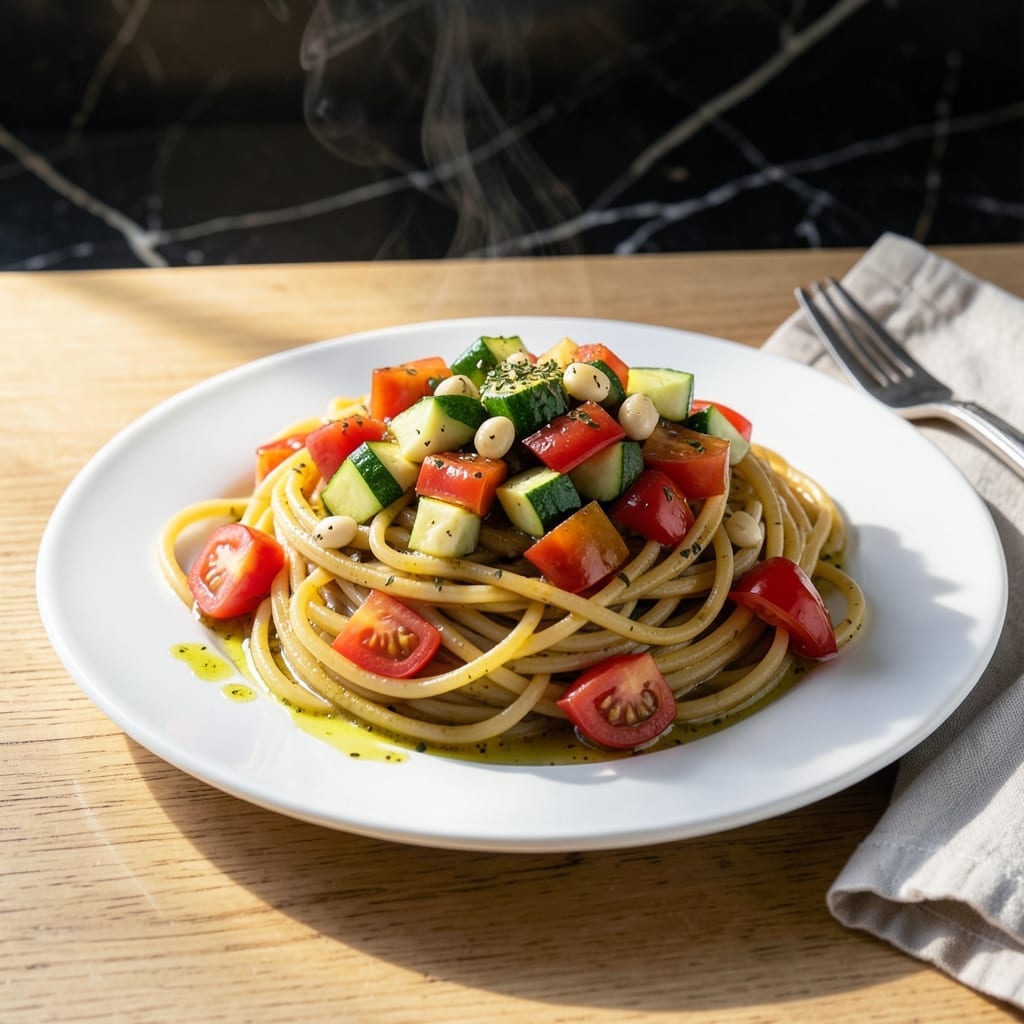
This vegetarian spaghetti transforms humble ingredients into a restaurant-quality meal that satisfies even meat lovers. The key lies in building layers of flavor through fresh vegetables and a simple technique.
I developed this dish to prove that meat-free pasta can be hearty and delicious. The sauce comes together quickly with ripe tomatoes, garlic, and herbs, creating a base that clings perfectly to the noodles.
What results is a vibrant plate of al dente spaghetti coated in a rich, garden-fresh sauce. The vegetables maintain their texture while contributing natural sweetness and depth.
Serve with crusty bread for soaking up every last bit of sauce. This is pasta done right, without compromise.
Ingredients for Recipe for Vegetarian Spaghetti
A few garden-fresh vegetables and pantry staples create this vibrant, restaurant-quality dish.
| Ingredient | Amount | Notes |
|---|---|---|
| Spaghetti 🍝 | 12 oz | Dried, uncooked al dente |
| Extra-Virgin Olive Oil 🫒 | ¼ cup | Divided for cooking and finishing |
| Garlic Cloves 🧄 | 5 cloves | Minced for sauce base |
| Ripe Tomatoes 🍅 | 4 whole | Medium-sized, diced (or 1 can crushed) |
| Red Bell Pepper 🌶️ | 1 whole | Diced, for sweetness |
| Zucchini 🥒 | 1 whole | Medium, diced for texture |
| Yellow Onion 🧅 | 1 whole | Medium, finely diced |
| Fresh Basil Leaves 🌿 | ½ cup | Packed, chopped for freshness |
| Fresh Flat-Leaf Parsley 🍃 | ¼ cup | Chopped for garnish |
| Tomato Paste 🍅 | 2 tbsp | For depth of flavor |
| Dry White Wine 🍷 | ½ cup | Optional, deglazing liquid |
| Vegetable Broth 🥫 | ½ cup | Low-sodium preferred |
| Red Pepper Flakes 🌶️ | ½ tsp | Adjust for heat preference |
| Kosher Salt 🧂 | 1 ½ tsp | Or to taste |
| Freshly Ground Black Pepper 🌶️ | ½ tsp | Divided for layering |
The tomatoes are non-negotiable for that garden-fresh quality—look for vibrant, in-season Roma or heirloom at Whole Foods or a farmers market. Fresh herbs like basil and parsley should be bright green with no wilting. For the spaghetti, De Cecco or Barilla hold sauce better than generic brands. Olive oil matters here; invest in a good extra-virgin for finishing.
No fresh tomatoes? San Marzano canned tomatoes are your best backup (drain well to avoid watery sauce). Swap zucchini for eggplant if preferred—just salt and drain first. White wine can be replaced with additional vegetable broth at one-third the amount. Dried herbs work in a pinch, but use half the quantity and add early.
The sauce keeps beautifully in the fridge for 4-5 days and freezes for 3 months. Store fresh herbs wrapped in damp paper towels in a sealed bag. Cooked pasta holds its texture for 3 days in airtight containers (the sauce absorbs best when combined fresh).
Why You’ll Love This Recipe
- One Pot Wonder: I just toss the spaghetti, tomatoes, and bell pepper into a single pot—minimal cleanup, maximum flavor.
- Garlic-Kissed Goodness: The extra-virgin olive oil and fresh garlic cloves create a rich, aromatic base that makes every bite irresistible.
- Meal Prep Magic: I make a big batch on Sunday and portion it out for easy lunches all week.
- Pocket-Friendly Feast: Honestly, it stretches a few affordable ingredients into a hearty meal that feels like a treat.
Step-by-Step Instructions for Vegetarian Spaghetti
Master the technique for vibrant, vegetable-packed pasta with professional precision and depth of flavor.
Step 1: Prepare and Sauté the Aromatic Base
Finely dice the yellow onion and mince the garlic cloves. Heat 2 tablespoons of the extra-virgin olive oil in a large, heavy skillet over medium heat until it shimmers but doesn’t smoke.
Add the diced onion and sauté for 4-5 minutes until translucent and just beginning to caramelize at the edges. Add the minced garlic and red pepper flakes, stirring constantly for 30-45 seconds until fragrant—don’t let the garlic brown or it will turn bitter. This aromatic foundation builds the flavor profile for the entire dish.
Step 2: Develop the Vegetable Sofrito
Dice the red bell pepper, zucchini, and ripe tomatoes into uniform ¼-inch pieces. Add these to the skillet along with the tomato paste. Stir to coat all vegetables in the oil and aromatics.
Cook for 8-10 minutes over medium-high heat, stirring occasionally, until the vegetables soften and the tomato paste deepens to a rich, brick-red color. The mixture should reduce slightly and become concentrated. Season with 1 teaspoon kosher salt and 0.25 teaspoon freshly ground black pepper during cooking to layer flavors effectively.
Step 3: Deglaze and Simmer the Sauce
Pour in the dry white wine and scrape up any browned bits from the bottom of the skillet with a wooden spoon. This deglazing step incorporates all the caramelized flavors into the sauce. Let the wine reduce by half, about 3-4 minutes.
Add the vegetable broth and bring to a gentle simmer. Reduce heat to medium-low and let the sauce cook for 5-7 minutes until it thickens slightly and the vegetables are completely tender. Stir in the chopped fresh basil leaves and remaining 0.5 teaspoon kosher salt and 0.25 teaspoon freshly ground black pepper.
Step 4: Cook Spaghetti and Combine
While the sauce simmers, cook the 12 oz spaghetti in generously salted boiling water until 1 minute shy of al dente according to package instructions. Reserve 1 cup of pasta water before draining.
Add the drained spaghetti directly to the skillet with the sauce. Toss vigorously with tongs, adding reserved pasta water ¼ cup at a time until the sauce clings beautifully to the pasta. The starch in the pasta water helps create a silky, restaurant-quality finish. Drizzle with the remaining 2 tablespoons extra-virgin olive oil and toss once more.
Step 5: Finish and Serve Immediately
Remove from heat and stir in the chopped fresh flat-leaf parsley. The sauce should glisten and coat each strand of spaghetti evenly. Taste and adjust seasoning if needed, though the measured 1.5 teaspoon kosher salt should provide perfect balance.
Transfer to warmed serving bowls immediately. The dish should have bright, fresh vegetable flavors with a subtle heat from the red pepper flakes. The vegetables will be tender but still retain some texture, and the sauce will have a rich, concentrated character that clings perfectly to the al dente pasta.
Pro Tips For Making Recipe For Vegetarian Spaghetti
- Salt the Pasta Water: Use at least 1 tablespoon of salt per gallon of water—spaghetti needs bold seasoning to stand up to the tomatoes and peppers.
- Bloom the Garlic: Cook the garlic in olive oil over medium-low heat until just golden, about 2-3 minutes, to mellow its bite and deepen the flavor.
- Seed the Peppers: Remove all the white membrane and seeds from the red bell pepper to avoid any bitterness in your sauce.
- Save Pasta Water: Scoop out ½ cup of starchy pasta water before draining—it helps bind the sauce to the noodles beautifully.
Health Benefits of This recipe for vegetarian spaghetti
Nutrient-Rich Vegetables
This dish packs a vitamin punch with zucchini and red bell pepper, both rich in vitamin C and antioxidants. A single serving provides over 50% of your daily vitamin C needs, supporting immune health and collagen production. 💪
Heart-Healthy Fats
The extra-virgin olive oil delivers monounsaturated fats that promote cardiovascular health. These healthy fats help lower bad cholesterol while providing anti-inflammatory benefits. I always choose cold-pressed for maximum nutrient retention.
Fiber for Digestion
Between the spaghetti, tomatoes, and vegetables, you’ll get 8-10 grams of fiber per serving. This supports healthy digestion and helps maintain steady blood sugar levels. Whole wheat pasta would boost this even higher.
Low-Calorie Satisfaction
At about 400 calories per serving, this meal is light yet filling. The fiber and protein from vegetables create lasting satiety without heavy meat. It’s a perfect balance of energy and nutrition for active lifestyles.
Antioxidant Protection
The tomatoes and basil provide lycopene and flavonoids, powerful antioxidants that combat cellular damage. Cooking tomatoes actually increases lycopene absorption, making this dish a nutritional powerhouse. ✨
Plant-Based Protein
While not as protein-dense as meat dishes, the combination of spaghetti and vegetables offers 12-15 grams of plant protein per serving. This supports muscle maintenance and provides essential amino acids in a meat-free format.
Nutrition Facts
Frequently Asked Questions
Can I use canned tomatoes instead of fresh?
Use 1 can (28 oz) of crushed San Marzano tomatoes for the best flavor. Drain well to avoid a watery sauce.
How do I make this gluten-free?
Swap regular spaghetti for your favorite gluten-free brand. Brown rice or chickpea pasta works well here. Cook according to package time, as they often require less time.
Can I add protein to this dish?
Yes! Stir in cooked chickpeas, white beans, or crumbled tofu at the end. For a richer option, top with grated Parmesan or vegan cheese.
How long will leftovers keep?
Store in an airtight container in the fridge for up to 4-5 days. Reheat gently on the stove with a splash of water to refresh the sauce.

- 6 Egg Cake Recipe with Oil: Light as Air With Buttery Moisture - October 4, 2026
- 4 Bean Casserole Recipe: One-Pan Heartiness With Smoky Paprika Depth - October 4, 2026
- 3-Ingredient Keto Mug Cake Recipe: Microwave Magic in 2 Minutes - October 4, 2026