
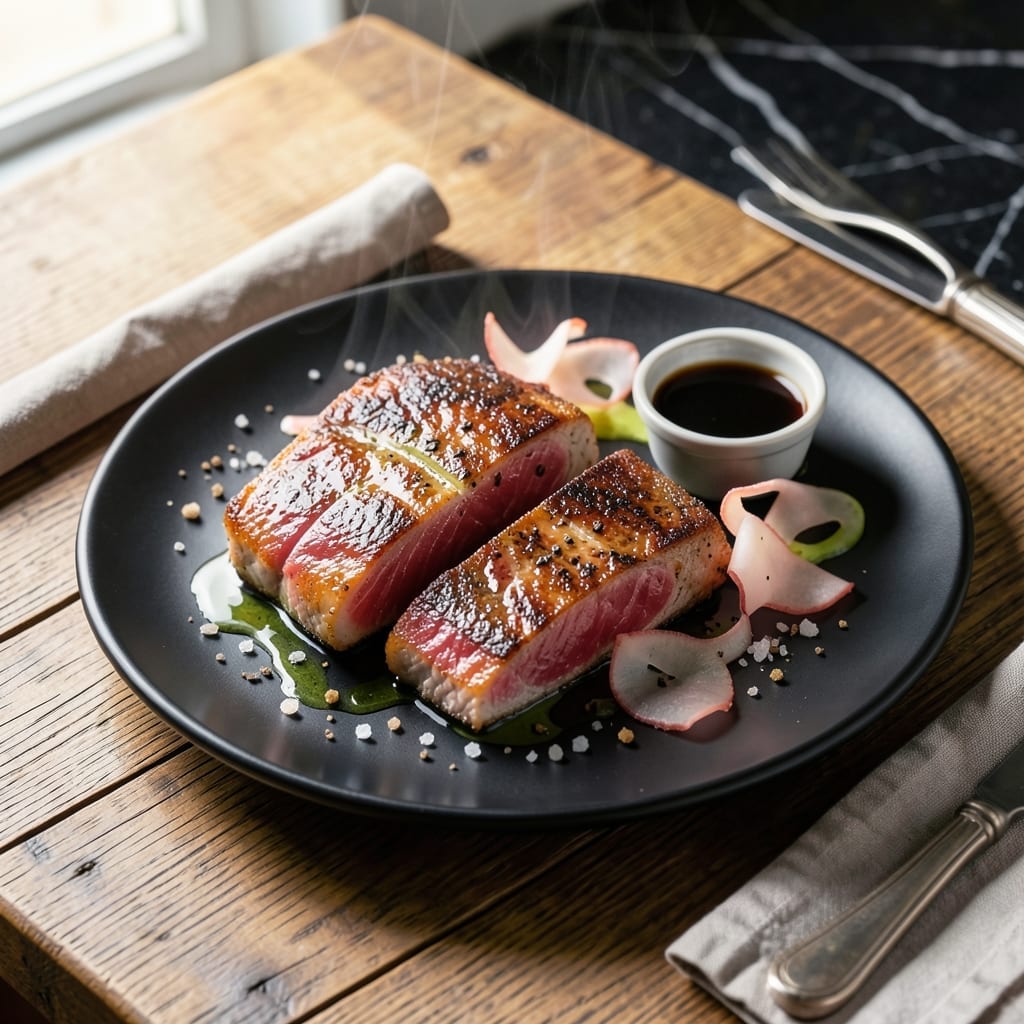
This yellowtail tuna recipe delivers buttery texture and perfect sear every time. The key is high heat and precise timing to preserve the fish’s natural tenderness.
I developed this method after years of trial and error, focusing on achieving that restaurant-quality crust while keeping the center raw and silky. A simple seasoning of salt and pepper lets the fish’s natural flavor shine.
The result is a dish that looks and tastes professional. The exterior develops a golden crust in just 2 minutes per side, while the inside remains cool and melt-in-your-mouth.
Serve immediately with soy sauce, pickled ginger, and wasabi for the complete experience. The contrast of hot sear and cool center creates an unforgettable bite.
Ingredients for Recipe for Yellowtail Tuna
Sushi-grade tuna plus pantry staples deliver restaurant-quality sear at home.
| Ingredient | Amount | Notes |
|---|---|---|
| Yellowtail Tuna Steaks 🐟 | 1 ½ lb | Sushi-grade, 1-inch thick |
| Kosher Salt 🧂 | 1 ½ tsp | Diamond Crystal preferred |
| Freshly Ground Black Pepper 🌶️ | 1 tsp | Coarse grind for texture |
| Avocado Oil 🫒 | 3 tbsp | High smoke point essential |
| Soy Sauce 🥢 | ¼ cup | Low-sodium for balance |
| Pickled Ginger 🌿 | ¼ cup | Thinly sliced for serving |
| Wasabi Paste 🌿 | 2 tbsp | Fresh or tube variety |
| Sesame Seeds 🌾 | 1 tbsp | Toasted for garnish |
| Green Onions 🧅 | 2 whole | Thinly sliced on bias |
| Lemon 🍋 | 1 whole | Zest and juice for brightness |
| Garlic Cloves 🧄 | 2 cloves | Minced for optional garnish |
| Neutral Oil 🫒 | 1 tbsp | For searing if needed |
The tuna quality is non-negotiable. Sushi-grade yellowtail from reputable seafood counters like Whole Foods or local fishmongers ensures safety for raw consumption. Look for vibrant red color and firm texture—avoid any fish that smells fishy or has brown discoloration. I prefer steaks cut to exactly 1-inch thickness for consistent cooking. The oil must have a high smoke point; avocado oil is ideal but refined coconut oil works too.
No avocado oil? Grapeseed or refined peanut oil are acceptable substitutes. For a gluten-free option, swap soy sauce for tamari. Fresh wasabi is a luxury—tube wasabi at half the amount works in a pinch. If sesame seeds aren’t on hand, crushed peanuts add a nice crunch. The green onions can be replaced with chives if preferred, though the flavor profile will be slightly milder.
Consume immediately for optimal texture and safety. Leftovers (though rare) keep in an airtight container for 1 day maximum. Never reheat seared tuna—it destroys the carefully achieved temperature contrast. Store pickled ginger and wasabi in the refrigerator for up to 1 month once opened.
Why You’ll Love This Recipe
- 5-Minute Sear: I heat the avocado oil, season the steaks with salt and pepper, and they’re done in minutes—no fuss.
- Umami Bomb: The soy sauce glaze gives the tuna that rich, salty-sweet depth that keeps me coming back for another bite.
- Fancy Without Fuss: It feels restaurant-worthy but is honestly easier than grilled chicken on a weeknight.
- Leftovers? No Chance: Between us, this dish never makes it to the next day—my family devours it all in one go.
Step-by-Step Instructions for Seared Yellowtail Tuna
Master the technique for perfectly seared tuna with a buttery center and crisp exterior.
Step 1: Prep and Season the Tuna Steaks
Pat the 1.5 lb Yellowtail Tuna Steaks completely dry with paper towels. This is non-negotiable—any moisture prevents proper searing and creates steam instead of a crust.
Season both sides evenly with the 1.5 tsp Kosher Salt and 1 tsp Freshly Ground Black Pepper. I use a coarse grind for texture that complements the fish’s natural firmness. Let the seasoned steaks sit at room temperature for 10-15 minutes to ensure even cooking.
Step 2: Sear the Tuna in High-Smoke-Point Oil
Heat 2 tbsp of the 3 tbsp Avocado Oil in a cast-iron or heavy stainless steel skillet over high heat until it shimmers but doesn’t smoke. The oil must be screaming hot to create that perfect crust without overcooking the interior.
Carefully place the tuna steaks in the pan. Sear undisturbed for 1-2 minutes per side until the exterior develops a deep golden-brown crust. The steaks should release easily when ready to flip. For a perfect medium-rare center, aim for an internal temperature of 110-115°F.
Step 3: Rest and Slice the Tuna
Transfer the seared tuna to a cutting board and tent loosely with foil. Let it rest for 5 minutes—this allows the juices to redistribute throughout the fish. Skipping this step results in dry, uneven slices.
Using a sharp chef’s knife, slice the tuna against the grain into ½-inch thick pieces. The flesh should appear pink in the center with a thin crust on the outside. The contrast between the seared exterior and raw interior is what makes this dish exceptional.
Step 4: Plate and Garnish with Traditional Accompaniments
Arrange the sliced tuna on a serving platter. Drizzle with the remaining 1 tbsp Avocado Oil and the 0.25 cup Soy Sauce for a glossy finish. The oil adds richness while the soy sauce provides a salty, umami depth.
Garnish with the 0.25 cup Pickled Ginger, 2 tbsp Wasabi Paste, 1 tbsp Sesame Seeds, thinly sliced 2 whole Green Onions, and a squeeze of fresh lemon juice from the 1 whole Lemon. For an extra touch, add minced 2 cloves Garlic Cloves if desired. Serve immediately while the exterior is still crisp.
Pro Tips For Making Recipe For Yellowtail Tuna
- Pat It Dry: Blot the tuna steaks thoroughly with paper towels before seasoning—I learned this the hard way after my first few batches steamed instead of seared.
- Sear Hot, Rest Long: Use avocado oil in a screaming-hot pan for 1-2 minutes per side, then let it rest 5 minutes before slicing. This keeps the center tender and juicy.
- Skip Cold Tuna: Take the steaks out of the fridge 15-20 minutes before cooking—cold tuna cooks unevenly and won’t develop that perfect crust.
- Soy Sauce Last: Brush soy sauce on only after searing, not before, or it’ll burn and turn bitter. A quick drizzle at the end adds flavor without the mess.
Perfect Pairings for This recipe for yellowtail tuna
Wine Pairings
A crisp Sauvignon Blanc from New Zealand cuts through the richness beautifully with its bright acidity and citrus notes. I love Kim Crawford for its consistent quality and vibrant grapefruit finish. 🍷
Beer Options
A light Japanese lager like Sapporo or Asahi complements the dish with its clean, crisp profile. The subtle sweetness balances the soy sauce without overpowering the delicate tuna flavor.
Sake Selections
Junmai ginjo sake, such as Gekkeikan Horin, offers a refined pairing with its fruity aroma and smooth finish. Serve chilled in small cups to enhance the dining experience.
Side Dish Ideas
A simple cucumber salad with rice vinegar and sesame seeds adds a refreshing crunch. I toss 2 cups thinly sliced cucumber with 1 tbsp rice vinegar and 1 tsp sesame oil for balance.
Rice Accompaniments
Steamed jasmine rice provides a neutral base to soak up the soy sauce and avocado oil drizzled over the tuna. For extra flavor, add a sprinkle of furikake seasoning on top. 💫
Fruit Complements
Fresh mango slices or a pineapple salsa offer a sweet contrast to the savory fish. I combine 1 cup diced pineapple with 1 tbsp lime juice and cilantro for a tropical touch.
Nutrition Facts
Frequently Asked Questions
What thickness works best for searing?
1-inch thick steaks are ideal. They sear perfectly in 1-2 minutes per side while keeping the center cool and buttery. Thinner cuts overcook too quickly.
Can I use frozen tuna?
Only if it’s labeled sushi-grade and properly thawed. Thaw overnight in the fridge, then pat completely dry before searing. Never refreeze after thawing.
Why rest the tuna before slicing?
Resting for 5 minutes lets juices redistribute. Slicing too soon causes dry, uneven pieces. The crust stays crisp while the center stays tender.
What if my pan isn’t hot enough?
You’ll get a gray, steamed exterior instead of a golden crust. Heat the oil until it shimmers but doesn’t smoke, then test with a small piece first.

- 6 Egg Cake Recipe with Oil: Light as Air With Buttery Moisture - October 4, 2026
- 4 Bean Casserole Recipe: One-Pan Heartiness With Smoky Paprika Depth - October 4, 2026
- 3-Ingredient Keto Mug Cake Recipe: Microwave Magic in 2 Minutes - October 4, 2026