
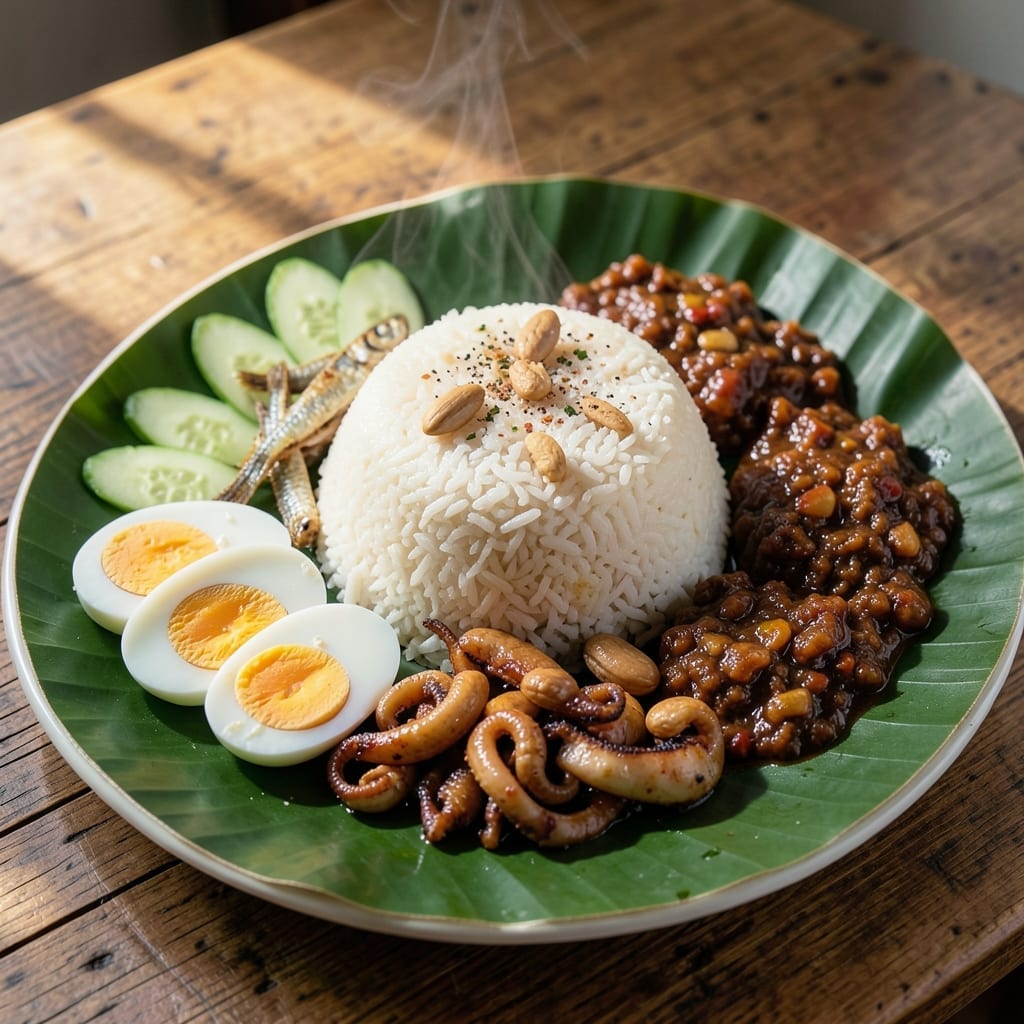
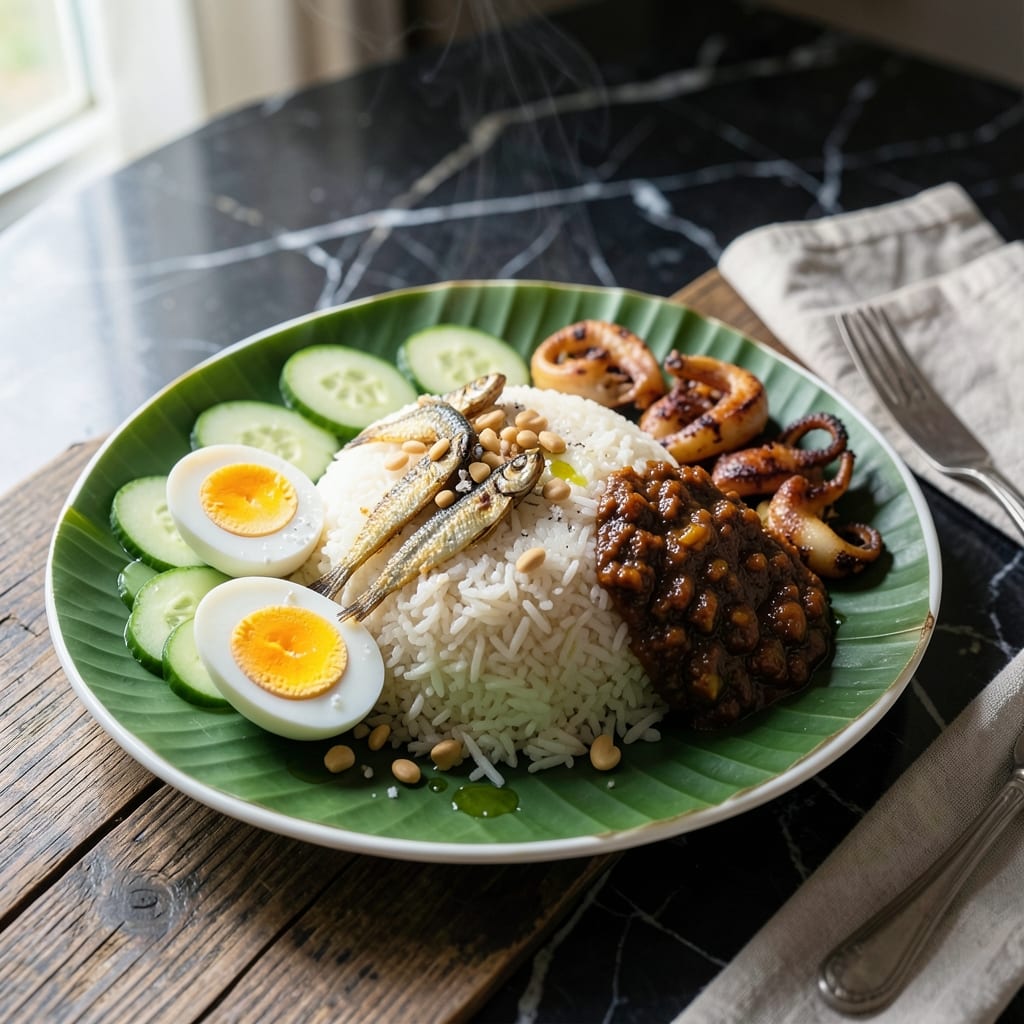
This recipe delivers the authentic flavors of Malaysia’s beloved breakfast dish with fragrant coconut rice and a perfectly balanced spicy sambal.
I’ve refined the technique to ensure the rice absorbs just enough coconut milk for a rich, aromatic base while the sambal brings the signature heat.
Ingredients for Recipe of Nasi Lemak
Fragrant coconut rice and bold spices create this iconic Malaysian breakfast dish.
| Ingredient | Amount | Notes |
|---|---|---|
| Jasmine Rice 🌾 | 2 cups | Rinsed until water runs clear |
| Coconut Milk 🥥 | 1 ½ cups | Full-fat for creaminess |
| Pandan Leaves 🌿 | 2 whole | Knot the leaves together |
| Dried Anchovies 🐟 | ½ cup | Rinsed and drained |
| Peanuts 🥜 | ½ cup | Raw, unsalted, skin-on |
| Hard-Boiled Eggs 🥚 | 4 whole | Peeled and halved |
| Cucumber 🥒 | 1 whole | Sliced into rounds |
| Red Chili Peppers 🌶️ | 10 pieces | Fresh, stems removed |
| Shallots 🧅 | 4 whole | Peeled and chopped |
| Garlic Cloves 🧄 | 4 cloves | Peeled and minced |
| Shrimp Paste 🦐 | 1 tbsp | Belacan preferred for authenticity |
| Tamari or Soy Sauce 🫒 | 2 tbsp | For umami depth |
| Palm Sugar 🍚 | 1 tbsp | Or substitute brown sugar |
| Salt 🧂 | 1 tsp | Adjust to taste |
| Vegetable Oil 💧 | ½ cup | For frying anchovies and peanuts |
The coconut milk must be full-fat for authentic richness—Thai Kitchen or Native Forest are reliable brands. Jasmine rice is non-negotiable; basmati won’t absorb the same way. Pandan leaves add the signature aroma, but if unavailable, a drop of pandan extract (found at Asian markets) works in a pinch. The dried anchovies should be plump and silvery, not dusty or brittle.
No pandan leaves? Bay leaves plus vanilla extract mimic the fragrance vaguely. Shrimp paste is key for the sambal—Belacan is ideal, but Thai shrimp paste works too. For heat control, remove some chili seeds or swap in milder peppers. Tamari adds depth; low-sodium soy sauce prevents oversalting. Peanuts can be subbed with cashews (same quantity).
Store dried anchovies in the freezer to prevent spoilage. Sambal keeps in the fridge for 5 days—the flavors deepen overnight. Rice is best served fresh, but leftovers reheat well with a splash of water. Do not freeze the rice; it loses texture.
Why You’ll Love This Recipe
- Set and Forget: I toss everything in the rice cooker with coconut milk and pandan, then walk away while it works its magic.
- Coconut-Pandan Dream: That fragrant jasmine rice steeped in creamy coconut with pandan’s floral note? I could eat it plain all day.
- Breakfast to Dinner: Honestly, I serve this for breakfast with a fried egg, then pack leftovers for lunch with extra sambal.
- Pennywise Feast: A bag of rice, a can of coconut milk, and a handful of anchovies feed my family for two meals without breaking the bank.
Step-by-Step Instructions for Fragrant Coconut Rice With Spicy Sambal
Master the technique for authentic results with balanced flavors and textures.
Step 1: Prepare the Coconut Rice
Rinse the 2 cups Jasmine Rice thoroughly until the water runs clear to remove excess starch. This prevents the rice from becoming gummy during cooking. Drain well in a fine-mesh strainer.
In a rice cooker or heavy pot, combine the drained rice with the 1.5 cups Coconut Milk, 2 whole Pandan Leaves (knotted together), 1 tsp Salt, and enough water to reach the standard rice-to-liquid ratio for your appliance. The pandan will infuse the rice with its distinctive aromatic fragrance as it cooks.
Cook according to your rice cooker’s standard cycle. Once done, let it steam undisturbed for 10 minutes to allow the grains to fully absorb the coconut flavors. Fluff gently with a fork before serving, removing the pandan leaves.
Step 2: Fry the Garnishes
Heat 0.5 cup Vegetable Oil in a skillet over medium heat. Add the 0.5 cup Dried Anchovies (rinsed and drained) and fry for 3-4 minutes until golden brown and crispy. Remove with a slotted spoon and drain on paper towels.
In the same oil, add the 0.5 cup Peanuts and fry for 2-3 minutes until lightly golden and fragrant. The residual heat will continue cooking them, so remove them promptly to prevent burning. Drain on paper towels with the anchovies.
Step 3: Make the Spicy Sambal
In a food processor or mortar and pestle, combine the 10 pieces Red Chili Peppers (stems removed), 4 whole Shallots (peeled and chopped), 4 cloves Garlic Cloves (peeled and minced), 1 tbsp Shrimp Paste, 1 tbsp Palm Sugar, and 2 tbsp Tamari or Soy Sauce. Process until you achieve a coarse paste.
Transfer the mixture to a small saucepan and cook over medium-low heat for 8-10 minutes, stirring frequently to prevent sticking. The sambal is ready when it darkens slightly and the raw aromas mellow into a deep, fragrant complexity. Adjust seasoning if needed.
Step 4: Assemble and Serve
Divide the coconut rice among serving plates. Arrange the traditional accompaniments around the rice: 4 whole Hard-Boiled Eggs (peeled and halved), 1 whole Cucumber (sliced into rounds), the fried anchovies, and the fried peanuts.
Spoon a generous portion of the spicy sambal on top of each serving or serve it on the side for individual adjustment. The contrast of cool cucumber, rich coconut rice, and fiery sambal creates the signature balance of this dish. Serve immediately while the rice is still warm and fragrant.
Pro Tips For Making Recipe Of Nasi Lemak
- Rinse the Rice: Wash the jasmine rice until the water runs clear—this removes excess starch so your nasi lemak stays fluffy, not gummy.
- Simmer the Pandan: Tie the pandan leaves in a knot and simmer them in the coconut milk for at least 5 minutes to infuse the rice with that signature fragrance.
- Dry the Anchovies: Pat the dried anchovies completely dry before frying—any moisture makes them steam instead of crisp up, and nobody wants soggy ikan bilis.
- Toast the Peanuts: Roast the peanuts in a dry pan until golden and fragrant, then rub them in a towel to remove the skins—it’s a small effort that makes the topping taste way better.
Health Benefits of This Dish
Protein Power 💪
Nasi lemak packs a protein punch, thanks to ingredients like chicken, egg, and anchovies. These protein sources help build and repair muscles, keeping you energized throughout the day. The dish’s balance of plant and animal proteins also supports immune function and overall health.
Rich in Essential Nutrients 🥗
This dish is loaded with vitamins and minerals from its diverse components. The coconut milk in the rice provides healthy fats, while the sambal offers a dose of vitamin C and antioxidants from chilies. The accompanying cucumber adds a refreshing crunch along with hydration and fiber.
Sustained Energy Boost
The combination of carbohydrates from rice and healthy fats from coconut and peanuts ensures a steady release of energy. This makes nasi lemak a great choice for a filling meal that keeps you going without the crash of processed foods.
Heart-Healthy Fats
While often overlooked, the healthy fats in coconut milk and peanuts can support heart health in moderation. These fats help lower bad cholesterol levels and provide anti-inflammatory benefits, contributing to long-term cardiovascular well-being.
Nutrition Facts

- 6 Egg Cake Recipe with Oil: Light as Air With Buttery Moisture - October 4, 2026
- 4 Bean Casserole Recipe: One-Pan Heartiness With Smoky Paprika Depth - October 4, 2026
- 3-Ingredient Keto Mug Cake Recipe: Microwave Magic in 2 Minutes - October 4, 2026