
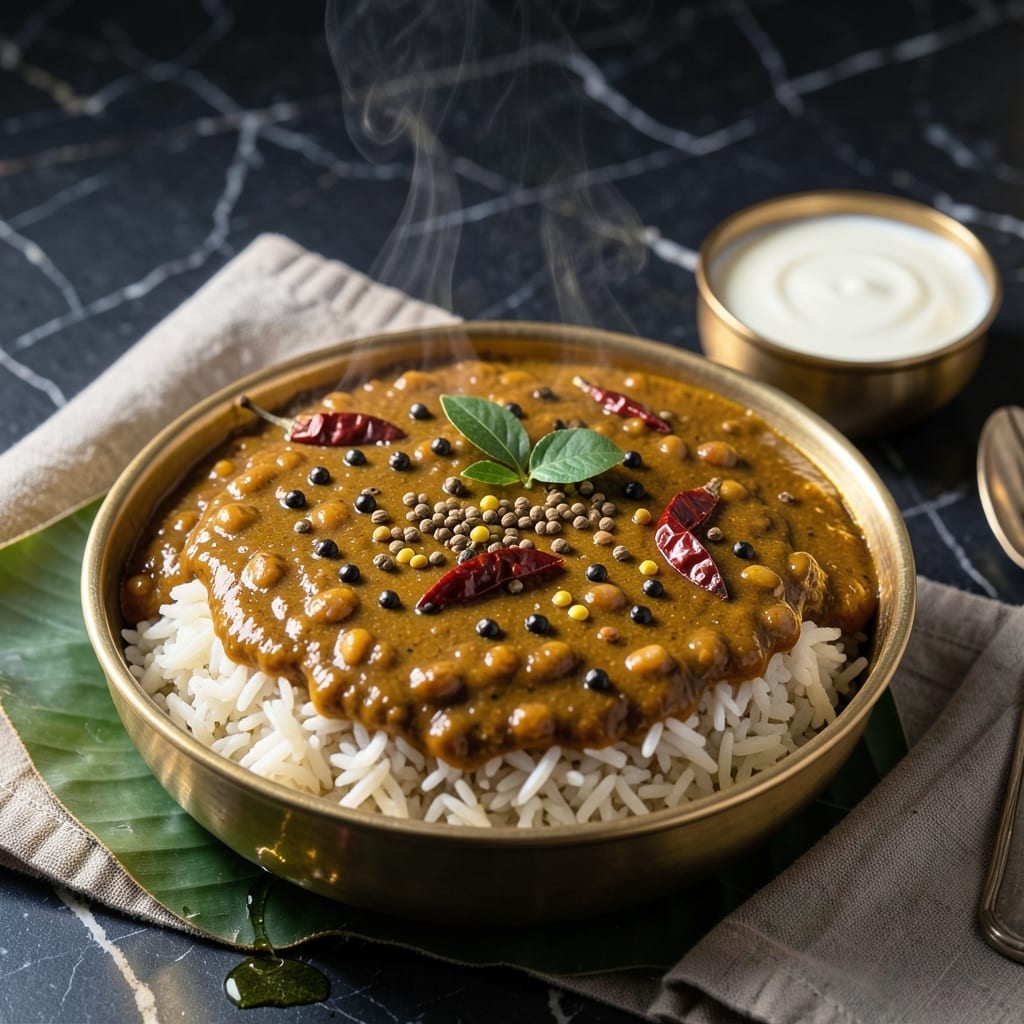
This dish captures the essence of South Indian cuisine with its perfect balance of tangy tamarind and creamy coconut. The spices come together to create a symphony of flavors that’s both comforting and complex.
Traditional methods ensure authentic taste, while simple ingredients make it accessible. The result is a dish that’s rich in culture and deeply satisfying.
Ingredients for Recipe of South Indian Food
Traditional South Indian flavors come alive with tamarind, coconut, and aromatic spices ready to transform.
| Ingredient | Amount | Notes |
|---|---|---|
| Tamarind Paste 🍈 | 2 tbsp | For tangy depth of flavor |
| Unsweetened Coconut Milk 🥥 | 1 can | Full-fat for creaminess |
| Toor Dal 🌾 | 1 cup | Rinsed and drained |
| Mustard Seeds 🌿 | 1 tsp | For tempering |
| Cumin Seeds 🌿 | 1 tsp | Whole for aroma |
| Dried Red Chilies 🌶️ | 3 whole | Adjust for heat preference |
| Turmeric Powder 🧂 | ½ tsp | For color and earthiness |
| Asafoetida 🧄 | ¼ tsp | Optional, for umami depth |
| Curry Leaves 🍃 | 10 pieces | Fresh or dried |
| Green Chilies 🌶️ | 2 whole | Slit lengthwise |
| Fresh Ginger 🌿 | 1 tbsp | Finely grated |
| Vegetable Oil 🫒 | 2 tbsp | For tempering and cooking |
| Fresh Cilantro 🌿 | ¼ cup | Chopped for garnish |
| Jaggery 🍯 | 1 tbsp | Or brown sugar substitute |
| Salt 🧂 | 1 tsp | Adjust to taste |
Authentic flavors start with quality spices. Asafoetida and curry leaves are available at Indian grocery stores like Patel Brothers or online at Burlap & Barrel. Toor dal should be bright yellow and free of debris—organic brands like 24 Mantra ensure purity. For tamarind paste, Tamicon or Deep brands offer consistent tang without added preservatives.
No tamarind paste? Lime juice plus a bit of brown sugar mimics the tangy-sweet balance. Missing curry leaves? Bay leaves plus a pinch of citrus zest work in a pinch. For heat adjustments, reduce or omit dried chilies and compensate with fresh green chilies. Coconut milk can be light, but full-fat delivers the creamy texture this dish demands.
Store tamarind paste and spices in airtight containers in a cool, dark place for up to 6 months. Fresh curry leaves keep in the fridge for 1 week or freeze for 3 months. The dish tastes even better the next day as flavors meld.
Why You’ll Love This Recipe
- One Pot Meal: I love how everything simmers together—just toss in toor dal, tamarind, and coconut milk, then let it do its thing.
- Tangy Comfort: That first hit of tamarind with the earthy cumin and mustard seeds? Honestly, it’s the flavor I crave on a rainy day.
- Meal Prep Hero: Makes enough for two days, and the leftovers taste even better after the spices meld overnight.
- Budget Stretcher: Toor dal and a few pantry staples feed my family of four for under five bucks. Between us, it’s my secret weapon for frugal feasts.
Step-by-Step Instructions for Spiced Coconut and Tamarind Harmony
Master the technique behind this South Indian classic with precise timing and layering.
Step 1: Prepare and Cook the Toor Dal
Rinse the 1 cup Toor Dal thoroughly under cold water until the water runs clear, then drain completely. Transfer to a pressure cooker with 3 cups of fresh water, 0.5 tsp Turmeric Powder, and 1 tsp Salt. This ratio ensures the lentils cook evenly without becoming mushy.
Seal the pressure cooker and cook for 4-5 whistles over medium heat, then reduce to low heat for another 5 minutes. Turn off the heat and let the pressure release naturally for 10 minutes. The lentils should be soft but still hold their shape—overcooking will turn them into a paste. Once done, mash lightly with a spoon and set aside.
Step 2: Temper the Spices for Maximum Flavor
Heat 2 tbsp Vegetable Oil in a heavy-bottomed pan over medium heat. Add 1 tsp Mustard Seeds and allow them to pop—this should take about 30-45 seconds. Immediately add 1 tsp Cumin Seeds, 3 whole Dried Red Chilies, 0.25 tsp Asafoetida, 10 pieces Curry Leaves, and 2 whole Green Chilies (slit lengthwise).
Stir constantly for 45-60 seconds until the cumin seeds turn light golden brown and the curry leaves become crisp. This tempering process, known as tadka, releases the essential oils from the spices, creating a fragrant base for the dish. Be careful not to burn the spices, as this will make them bitter.
Step 3: Incorporate the Tamarind and Coconut
Reduce the heat to low and add 1 tbsp Fresh Ginger (finely grated) to the tempered spices. Sauté for 30 seconds until the raw aroma dissipates. Stir in 2 tbsp Tamarind Paste and cook for 1-2 minutes, allowing it to blend with the spices and mellow slightly.
Pour in 1 can Unsweetened Coconut Milk and 1 tbsp Jaggery, stirring well to combine. Increase the heat to medium and bring the mixture to a gentle simmer. Cook for 5-7 minutes, stirring occasionally, until the sauce thickens slightly and the raw tamarind taste is balanced by the sweetness of the jaggery.
Step 4: Combine and Finish the Dish
Add the cooked toor dal to the coconut-tamarind mixture. Stir thoroughly to combine, ensuring the lentils are fully coated in the sauce. Cook for an additional 5 minutes over low heat, allowing the flavors to meld together. The consistency should be thick but pourable—add a splash of water if it’s too thick.
Taste and adjust the seasoning if needed. The dish should have a harmonious balance of tangy, spicy, sweet, and savory flavors. Turn off the heat and let it sit covered for 5 minutes to allow the flavors to deepen further.
Step 5: Garnish and Serve
Just before serving, stir in 0.25 cup Fresh Cilantro (chopped), reserving a small handful for garnish. The cilantro adds a fresh, bright note that complements the rich, layered flavors of the dish.
Serve hot with steamed rice or flatbread. The dish should be vibrant in color, with the golden hue of turmeric and coconut milk, and the aroma should be a complex blend of spices, tamarind, and fresh herbs. Enjoy the harmony of flavors in every bite.
Pro Tips For Making Recipe Of South Indian Food
- Toast the Seeds: Heat mustard and cumin seeds in hot oil until they pop and release aroma—about 30 seconds. I learned this the hard way: raw seeds taste bitter and ruin the tempering.
- Rinse the Dal: Wash toor dal thoroughly in 3-4 changes of water until the water runs clear. Skipping this leaves gritty texture and dull flavor.
- Balance the Tamarind: Use 1 tablespoon paste per cup of dal, but taste before adding more. After over-sourcing a batch once, I now dilute it in warm water first for even distribution.
- Simmer the Coconut: Add coconut milk at the end and simmer for 5 minutes on low heat—any longer and it can curdle. My grandmother swore by this timing, and she was right.
Pro Cooking Tips for Great recipe of south indian food
💡 Master the Heat
South Indian dishes thrive on precise heat control. Use medium-low heat for tempering spices to avoid bitterness. For dishes like dosa or appam, a well-heated, non-stick pan ensures even cooking and a golden crust. Always preheat your pan before adding batter or ingredients.
⏰ Timing Secrets
Timing is everything in South Indian cooking. Soak rice and lentils for at least 4-6 hours for perfect fermentation in idli or dosa batter. When tempering, add mustard seeds first—they should sputter within 30 seconds to release full flavor.
🌡️ Texture Tips
For fluffy idlis, whip the batter lightly before steaming. Achieve crispy vadas by frying in hot oil (350°F) and avoiding overcrowding. For sambar, cook vegetables until tender but still firm to retain texture.
✨ Flavor Boosters
Enhance depth by dry-roasting spices like cumin or coriander before grinding. A pinch of asafoetida (hing) in tempering elevates umami. Fresh coconut and curry leaves add authenticity—use them generously!
Nutrition Facts

- 6 Egg Cake Recipe with Oil: Light as Air With Buttery Moisture - October 4, 2026
- 4 Bean Casserole Recipe: One-Pan Heartiness With Smoky Paprika Depth - October 4, 2026
- 3-Ingredient Keto Mug Cake Recipe: Microwave Magic in 2 Minutes - October 4, 2026