
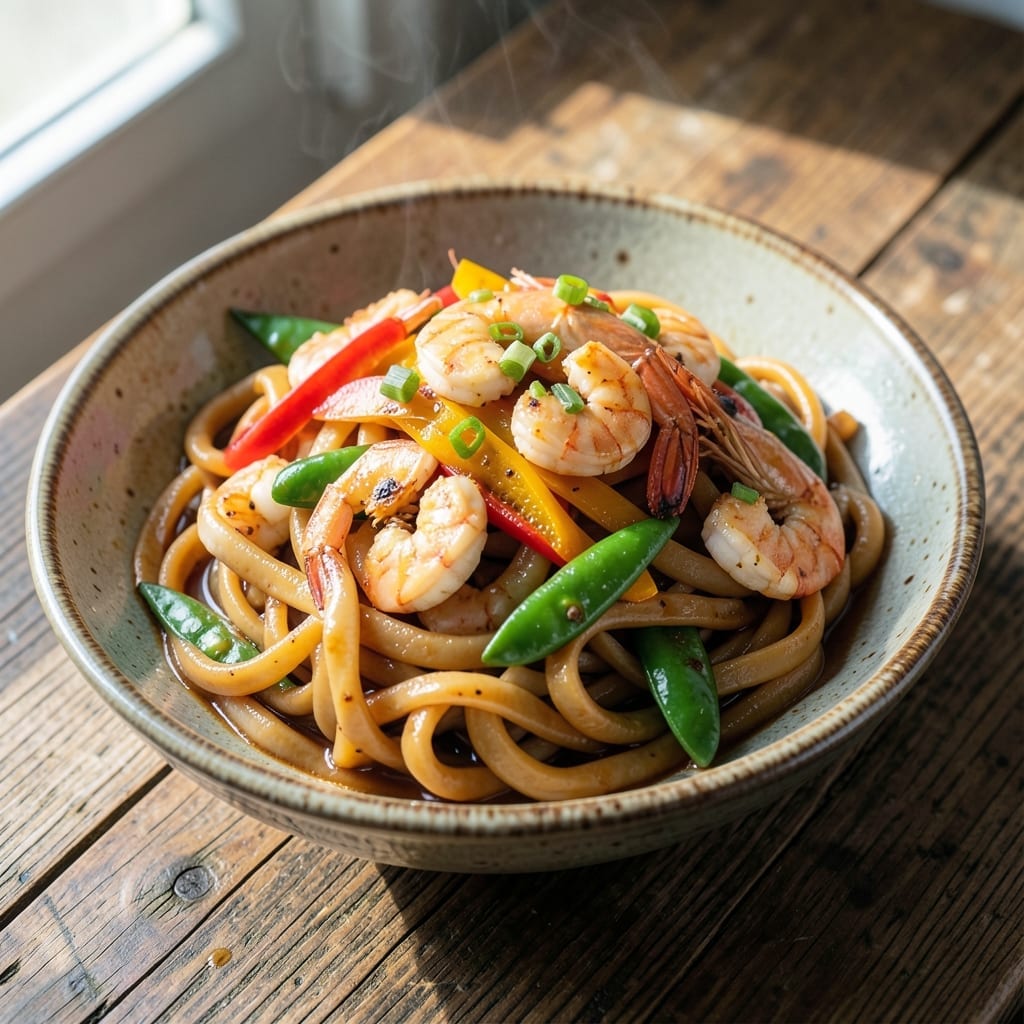
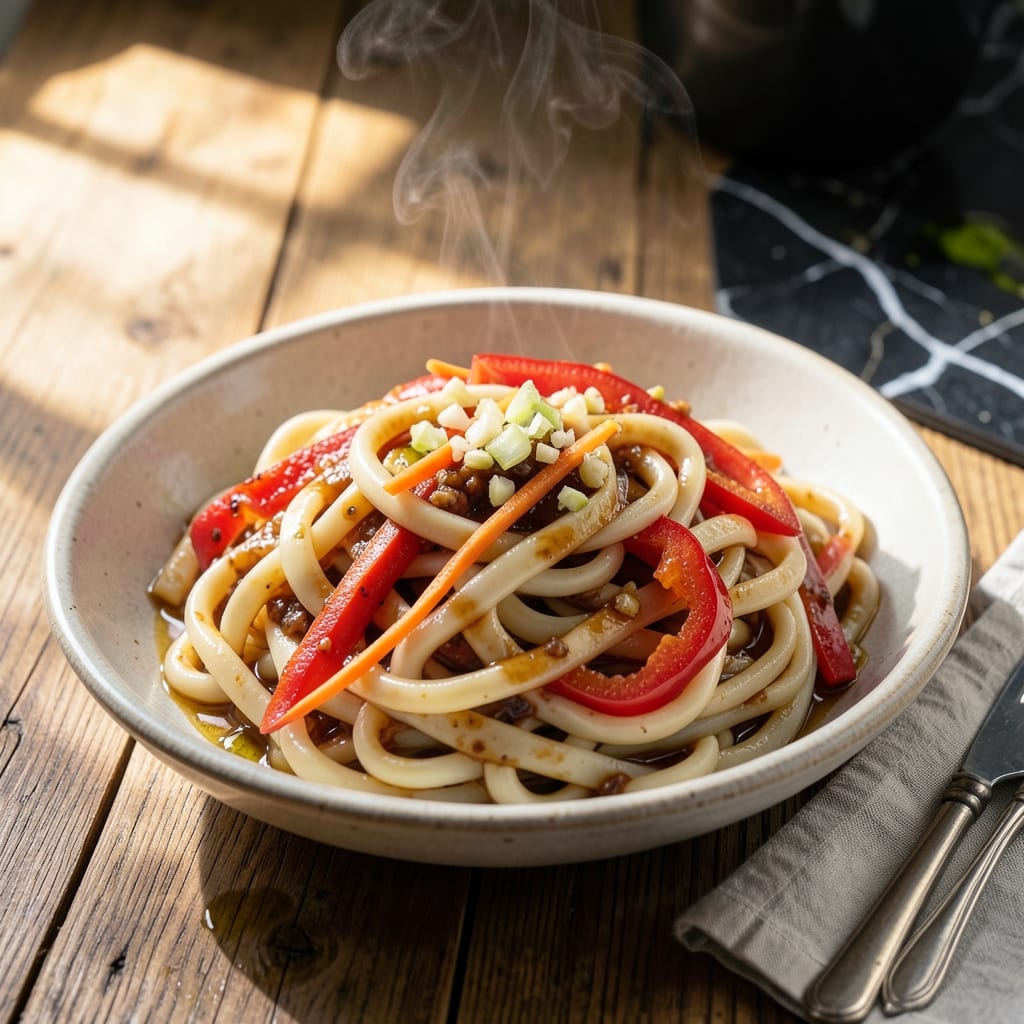
Stir-fried udon noodles deliver a satisfying combination of chewy texture and fresh vegetable crunch in one pan.
This method ensures perfectly cooked noodles with a simple yet flavorful sauce that coats every bite. The dish comes together quickly with basic ingredients.
Ingredients for Recipe Stir Fry Udon Noodles
Fresh udon, vibrant veggies, and a savory sauce create this satisfying one-pan dish.
| Ingredient | Amount | Notes |
|---|---|---|
| Dried Udon Noodles 🍜 | 12 oz | Or fresh udon if available |
| Vegetable Oil 🫒 | 2 tbsp | High smoke point preferred |
| Garlic Cloves 🧄 | 4 cloves | Minced finely for even flavor |
| Fresh Ginger Root 🌿 | 1 tbsp | Peeled and grated |
| Red Bell Pepper 🌶️ | 1 whole | Thinly sliced for crunch |
| Carrots 🥕 | 2 whole | Julienned or matchstick cut |
| Napa Cabbage 🥬 | 2 cups | Thinly shredded |
| Green Onions 🧅 | 3 whole | Sliced, green parts only |
| Soy Sauce 💧 | 3 tbsp | Use low-sodium if preferred |
| Oyster Sauce 🍯 | 1 tbsp | Vegetarian oyster sauce works too |
| Sesame Oil 🫒 | 1 tsp | Toasted for best flavor |
| Rice Vinegar 💧 | 1 tbsp | For acidity balance |
| Brown Sugar 🟤 | 1 tsp | Light or dark works |
| Sesame Seeds 🌾 | 1 tbsp | Toasted for garnish |
| Red Pepper Flakes 🔥 | ½ tsp | Adjust to heat preference |
[recipeingredientscaler]
The udon noodles are non-negotiable here. Look for dried or fresh in the refrigerated section at Asian markets or well-stocked supermarkets like Whole Foods. Fresh udon has a superior chew, but dried works perfectly if par-cooked first. The ginger and garlic should be fresh—bottled versions lack depth. For the vegetables, prioritize crispness: bell peppers, carrots, and cabbage hold their texture best.
No oyster sauce? Hoisin or teriyaki can stand in, though the flavor profile shifts slightly. For a vegetarian version, mushroom stir-fry sauce is an excellent swap. The soy sauce can be tamari for gluten-free needs. Sesame oil is potent—don’t overdo it. If you’re out of rice vinegar, apple cider vinegar at half the amount works in a pinch, but expect a sharper tang.
Store fresh udon in the fridge for up to 1 week or freeze for 3 months. Dried udon keeps indefinitely in a cool pantry. Prep veggies ahead and store in airtight containers with a damp paper towel to retain crispness for 3-4 days.
Why You’ll Love This Recipe
- One Pot Wonder: I toss everything into a single pan—udon, garlic, ginger, and bell peppers—and it’s done in a flash.
- Flavor Bomb: The garlic and ginger hit the oil and fill the kitchen with this warm, spicy aroma that makes my mouth water before the first bite.
- Weeknight Hero: It’s my Tuesday lifesaver—quick enough for busy evenings, but hearty enough that my picky nephew asks for seconds.
- Budget Stretcher: Dried udon costs pennies, and I can bulk it up with whatever veggies are on sale. Honestly, it feeds us for days.
Step-by-Step Instructions for Stir Fry Udon Noodles
Master the technique for perfectly chewy noodles with vibrant vegetables every time.
Step 1: Prepare and Cook the Udon Noodles
Bring a large pot of water to a rolling boil. Add the 12 oz dried udon noodles and cook according to package instructions until al dente—typically 7-8 minutes for dried. I always set a timer for 1 minute less than the package suggests to prevent over-softening.
Drain the noodles in a colander and immediately rinse under cold water to stop the cooking process. This also removes excess starch that could make your stir fry gummy. Toss the noodles with 1 tsp sesame oil to prevent sticking while you prepare the remaining ingredients.
Step 2: Stir Fry the Aromatics and Vegetables
Heat 2 tbsp vegetable oil in a wok or large skillet over high heat until it shimmers. Add the 4 cloves garlic cloves (minced) and 1 tbsp fresh ginger root (grated) and stir-fry for 30 seconds until fragrant but not browned. These form the flavor foundation of your dish.
Immediately add the 1 whole red bell pepper (thinly sliced), 2 whole carrots (julienned), and 2 cups napa cabbage (thinly shredded). Stir-fry for 4-5 minutes until the vegetables are tender-crisp and the bell pepper starts to soften. Keep the ingredients moving constantly to prevent burning.
Step 3: Combine Noodles with Sauce and Finish
Add the cooked udon noodles to the skillet along with 3 tbsp soy sauce, 1 tbsp oyster sauce, 1 tbsp rice vinegar, 1 tsp brown sugar, and 0.5 tsp red pepper flakes. Toss everything together for 2-3 minutes until the noodles are evenly coated and heated through.
The sauce should glaze the noodles lightly—if it looks dry, add a splash of water. Taste and adjust seasoning if needed. The brown sugar balances the saltiness, while the rice vinegar adds a subtle brightness to the dish.
Step 4: Garnish and Serve Immediately
Remove from heat and stir in 3 whole green onions (sliced, green parts only) and 1 tbsp sesame seeds. The green onions add a fresh, sharp contrast to the rich noodles, while the sesame seeds provide a nutty crunch.
Transfer to serving plates while hot. The noodles should have a satisfying chew with each bite, and the vegetables should retain some crispness. Serve immediately—the dish loses its ideal texture as it cools. The vibrant colors of the vegetables make for an appealing presentation.
Pro Tips For Making Recipe Stir Fry Udon Noodles
- Parboil the Noodles: Cook dried udon for 1-2 minutes less than package instructions—it’ll finish in the stir fry and won’t turn mushy. I learned this the hard way after ending up with gluey noodles more than once.
- Mince Ginger Fine: Grate or finely mince the ginger root so it distributes evenly and doesn’t leave chewy bits in your stir fry. Sounds obvious, but I used to chop it too coarse and regret it.
- Skip Crowded Pan: Stir fry in batches if needed—overloading the pan steams the veggies and udon instead of searing them. After burning three batches, I finally figured out the right balance.
- Prep Everything First: Chop all veggies, mince garlic, and measure sauces before heating the pan. My grandmother swore by this, and she was right—stir fries move too fast to scramble mid-cook.
Dietary Considerations for This recipe stir fry udon noodles
Keto-Friendly Options
Traditional udon noodles are high in carbs, but you can enjoy this dish with a keto twist! Swap udon for shirataki noodles or spiralized zucchini to drastically reduce carbs. Boost healthy fats with extra avocado, coconut oil, or sesame seeds for a satisfying, low-carb meal.
Gluten-Free Modifications
Udon noodles contain wheat, but gluten-free alternatives are easy to find. Use rice noodles, soba noodles (100% buckwheat), or gluten-free udon to keep the dish safe for those avoiding gluten. Always check labels to ensure no cross-contamination.
Allergen Awareness
This dish commonly includes soy sauce, which contains wheat and soy. For allergies, opt for coconut aminos or tamari (if soy-free isn’t required). If nuts are a concern, skip peanuts or cashews and use seeds like sunflower or pumpkin for crunch.
Vegetarian and Vegan Adjustments
Make this dish plant-based by replacing meat with tofu, tempeh, or mushrooms. Use vegetable broth instead of chicken or beef broth. For extra umami, add a dash of liquid smoke or nutritional yeast.
Low-Sodium Alternatives
Reduce sodium by using low-sodium soy sauce or coconut aminos. Fresh herbs like cilantro, basil, or ginger add flavor without salt. Load up on fresh veggies like bell peppers, snap peas, or bok choy for a naturally low-sodium crunch.
Nutrition Facts

- 6 Egg Cake Recipe with Oil: Light as Air With Buttery Moisture - October 4, 2026
- 4 Bean Casserole Recipe: One-Pan Heartiness With Smoky Paprika Depth - October 4, 2026
- 3-Ingredient Keto Mug Cake Recipe: Microwave Magic in 2 Minutes - October 4, 2026