
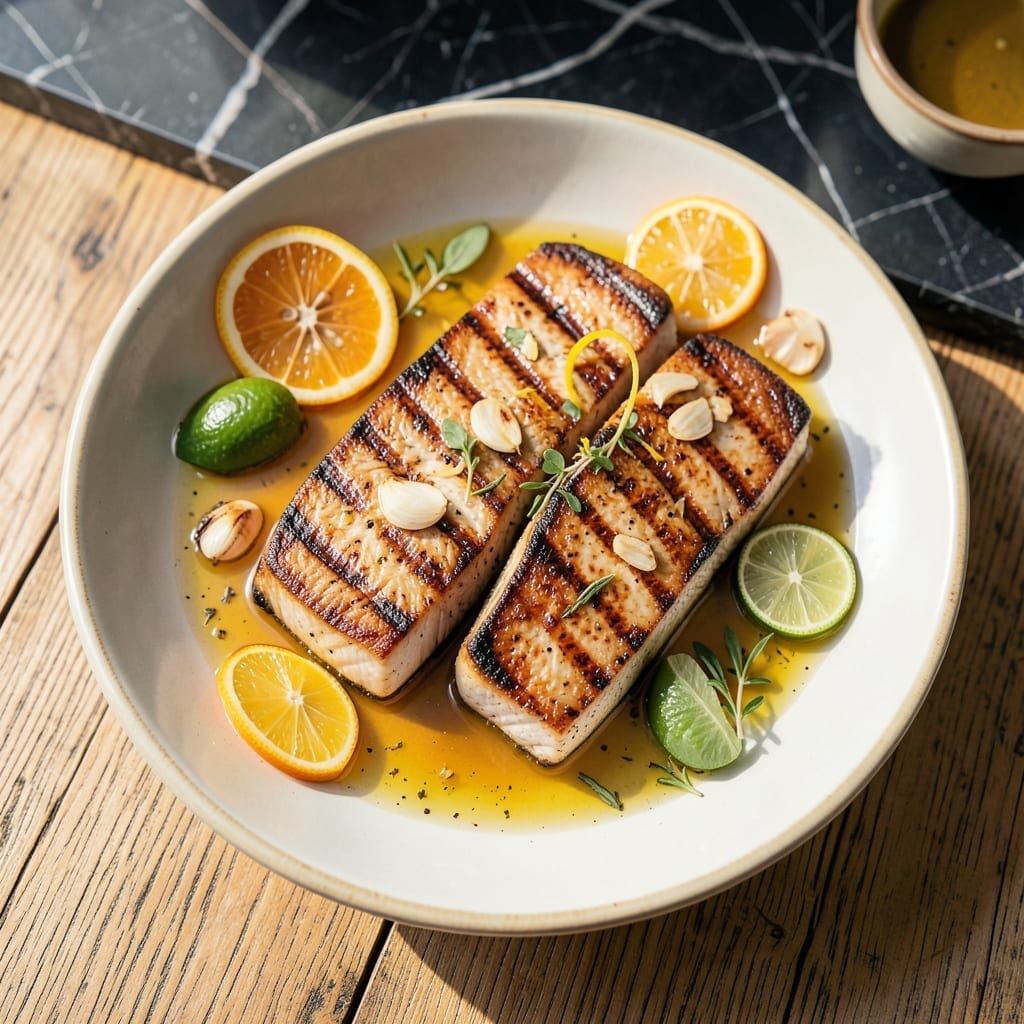
There’s an art to grilling swordfish that transforms it from good to extraordinary. This method delivers restaurant-quality results every time with minimal effort.
The secret lies in high heat and precise timing. Swordfish’s dense texture holds up beautifully to the grill, developing a perfectly charred exterior while staying moist inside.
A citrus marinade enhances the fish’s natural richness without overpowering it. The acidity also helps break down proteins, ensuring tender results with each bite.
Ready in under 20 minutes, this dish proves that elegant meals don’t require complicated techniques. The clean, bold flavors speak for themselves.
Ingredients for Recipe Swordfish Steaks
Elegant yet simple ingredients for restaurant-quality swordfish at home.
| Ingredient | Amount | Notes |
|---|---|---|
| Swordfish Steaks 🐟 | 1 ½ lb | 1-inch thick, skin removed |
| Lemon Juice 🍋 | ¼ cup | Freshly squeezed preferred |
| Lime Juice 🍈 | 2 tbsp | Freshly squeezed for brightness |
| Orange Juice 🍊 | 2 tbsp | Freshly squeezed for depth |
| Extra-Virgin Olive Oil 🫒 | ¼ cup | High quality for marinade |
| Garlic Cloves 🧄 | 4 cloves | Minced for marinade |
| Fresh Dill 🌿 | 2 tbsp | Chopped, for marinade |
| Fresh Parsley 🌿 | 2 tbsp | Chopped, for garnish |
| Dijon Mustard 🟡 | 1 tbsp | For emulsifying marinade |
| Kosher Salt 🧂 | 1 ½ tsp | Diamond Crystal preferred |
| Black Pepper 🌶️ | 1 tsp | Freshly ground for best flavor |
| Red Pepper Flakes 🌶️ | ½ tsp | Optional for heat |
| Zest of 1 Lemon 🍋 | 1 whole | Finely grated for brightness |
| Zest of 1 Lime 🍈 | 1 whole | Finely grated for aroma |
The swordfish quality is non-negotiable. Sustainably sourced from reputable seafood counters like Whole Foods or local fishmongers is ideal. Look for steaks with vibrant color and a mild ocean scent—avoid anything with a fishy odor. Thickness matters: aim for 1-inch steaks to ensure even cooking without drying out. Wild-caught from the Atlantic or Pacific is preferred for optimal texture and flavor.
No fresh citrus? Bottled juice at half the amount works in a pinch, but fresh is superior. Out of dill? Fresh tarragon or basil can substitute, though the flavor profile shifts slightly. For the olive oil, California or Italian extra-virgin provides the best balance. If you must use dried herbs, one-third the amount of fresh, but fresh herbs are strongly recommended for this dish.
Marinate the swordfish for 30 minutes maximum—the acidity can start to cook the fish if left longer. Grill immediately after marinating. Leftovers keep for 2 days in the fridge, though swordfish is best served fresh. Do not freeze previously frozen swordfish steaks.
Why You’ll Love This Recipe
- 5-Minute Marinade: I just mix the citrus juices and olive oil, coat the steaks, and let them soak while the grill heats up.
- Citrus Punch: The lemon, lime, and orange juice blend gives the swordfish a bright, tangy kick that’s honestly addictive.
- Dinner in a Dash: It’s my go-to for impromptu gatherings—fancy enough for guests but unfussy enough for a Tuesday.
- Leftovers? No Problem: The flavors actually deepen overnight, so I love packing the extras for lunch the next day.
Step-by-Step Instructions for Swordfish Steaks
Master the technique for perfectly grilled swordfish with vibrant citrus-marinated flavor.
Step 1: Prepare the Citrus Marinade
In a medium bowl, whisk together the 0.25 cup lemon juice, 2 tbsp lime juice, and 2 tbsp orange juice until fully combined. The acidity of these fresh juices will tenderize the swordfish while infusing it with bright, complex flavor.
Add the 0.25 cup extra-virgin olive oil in a slow stream while whisking constantly to create an emulsion. Stir in the 1 tbsp Dijon mustard, which acts as both a flavor enhancer and a natural emulsifier. This ensures the marinade clings properly to the swordfish steaks.
Finish by adding the 4 cloves minced garlic cloves, 2 tbsp chopped fresh dill, 1.5 tsp kosher salt, 1 tsp black pepper, 0.5 tsp red pepper flakes, zest of 1 lemon, and zest of 1 lime. The zest provides concentrated citrus oils that deepen the marinade’s aromatic profile.
Step 2: Marinate the Swordfish Steaks
Place the 1.5 lb swordfish steaks in a shallow dish or resealable plastic bag. Pour the prepared marinade over the steaks, ensuring they are fully submerged. Turn to coat evenly, pressing gently to help the marinade penetrate the surface.
Let the swordfish marinate at room temperature for 15-20 minutes. This brief marinating time is ideal for swordfish, as its dense texture doesn’t require extended exposure to the acidic ingredients. Over-marinating can actually begin to “cook” the fish, resulting in a mealy texture.
While the swordfish marinates, prepare your grill. The marinade will create a beautiful caramelization on the steaks when exposed to high heat.
Step 3: Grill to Perfection
Preheat your grill to medium-high heat (about 400°F). Clean and oil the grates thoroughly to prevent sticking. Swordfish has a tendency to adhere to grill grates, so this step is crucial for achieving those beautiful grill marks and easy release.
Remove the swordfish steaks from the marinade, allowing any excess to drip off. Place them on the preheated grill and cook for 4-5 minutes per side. The steaks are done when they reach an internal temperature of 145°F and the flesh flakes easily with a fork.
Avoid moving the steaks too soon. They’ll release naturally from the grates when a proper sear has formed, usually after about 4 minutes. You’ll see the edges turn opaque and the surface develop a golden-brown crust.
Step 4: Rest and Garnish
Transfer the grilled swordfish steaks to a serving platter and let them rest for 5 minutes. This brief resting period allows the juices to redistribute throughout the steaks, ensuring each bite is moist and flavorful.
Garnish with the remaining 2 tbsp chopped fresh parsley, which adds a pop of color and fresh herbal notes. The parsley’s mild flavor complements the bold citrus and garlic without overpowering them.
Serve the swordfish steaks immediately while still warm. The exterior should have a slightly charred, caramelized crust from the marinade sugars, while the interior remains tender and flaky. The citrus marinade will have mellowed into a subtle, aromatic background that enhances the swordfish’s natural richness.
Pro Tips For Making Recipe Swordfish Steaks
- Sear Hot, Rest Warm: Get your pan screaming hot before adding the swordfish—about 2 minutes on high—then let the steaks rest on a warm plate after cooking to keep them juicy.
- Pat Dry First: I learned this the hard way—blot the swordfish steaks with paper towels before seasoning, or they’ll steam instead of sear in the olive oil.
- Skip the Overcrowding: Resist the urge to cook all steaks at once; leave space between them in the pan or they’ll boil in their own juices instead of browning.
- Zest Before Juicing: Sounds weird, but it works: grate the zest from your lemon, lime, and orange before juicing to add extra flavor to the olive oil marinade.
Common Mistakes When Making Great recipe swordfish steaks
Over-Marinating the Fish
Swordfish’s dense texture can turn mealy if left in the acidic marinade too long. Stick to the 15-20 minute window—any longer and the citrus starts cooking the fish. I learned this the hard way with mushy steaks one summer. 🌡️
Skipping the Grill Prep
Never put swordfish on unclean or unoiled grates. The fish will stick, tear, and lose its beautiful presentation. Use tongs and a paper towel dipped in oil to coat hot grates right before cooking. This creates a non-stick surface for perfect grill marks.
Moving the Steaks Too Soon
Resist the urge to flip early. Swordfish needs 4 minutes per side to develop a proper sear. If it sticks, it’s not ready. Wait for that natural release—you’ll see the edges turn opaque and the surface caramelize.
Using Low Heat
Medium-high heat (400°F) is essential for that restaurant-quality crust. Too low and you’ll get dry, steamed fish instead of a charred exterior with a moist center. Invest in a grill thermometer if your grill doesn’t have one built in.
Ignoring Internal Temperature
Swordfish is done at 145°F internal temperature, not when it looks “done.” Use an instant-read thermometer for accuracy. Overcooking by even 5 degrees can turn your elegant meal into a dry disappointment. 💡
Skipping the Rest
Those 5 minutes of rest after grilling let juices redistribute. Slice too soon and you’ll lose all that delicious moisture to the cutting board. Tent loosely with foil to keep warm while maintaining perfect texture.
Nutrition Facts
Frequently Asked Questions
What’s the ideal thickness for swordfish steaks?
Aim for 1-inch thick steaks. This ensures even cooking without drying out while holding up to high heat. Thinner steaks risk overcooking, while thicker ones may not cook through properly.
Can I use a grill pan instead of an outdoor grill?
A grill pan works well if preheated to medium-high. Make sure it’s hot enough to sear properly, and don’t overcrowd the pan. You’ll still get great flavor and grill marks.
How do I know when the swordfish is done?
Use an instant-read thermometer—it’s done at 145°F internal temperature. The flesh should flake easily with a fork and turn opaque. Avoid overcooking, as it dries out quickly.
Can I marinate the swordfish overnight?
No, the acidic marinade will start to break down the fish, making it mushy. Stick to 15-20 minutes maximum for best texture and flavor.

- 6 Egg Cake Recipe with Oil: Light as Air With Buttery Moisture - October 4, 2026
- 4 Bean Casserole Recipe: One-Pan Heartiness With Smoky Paprika Depth - October 4, 2026
- 3-Ingredient Keto Mug Cake Recipe: Microwave Magic in 2 Minutes - October 4, 2026