
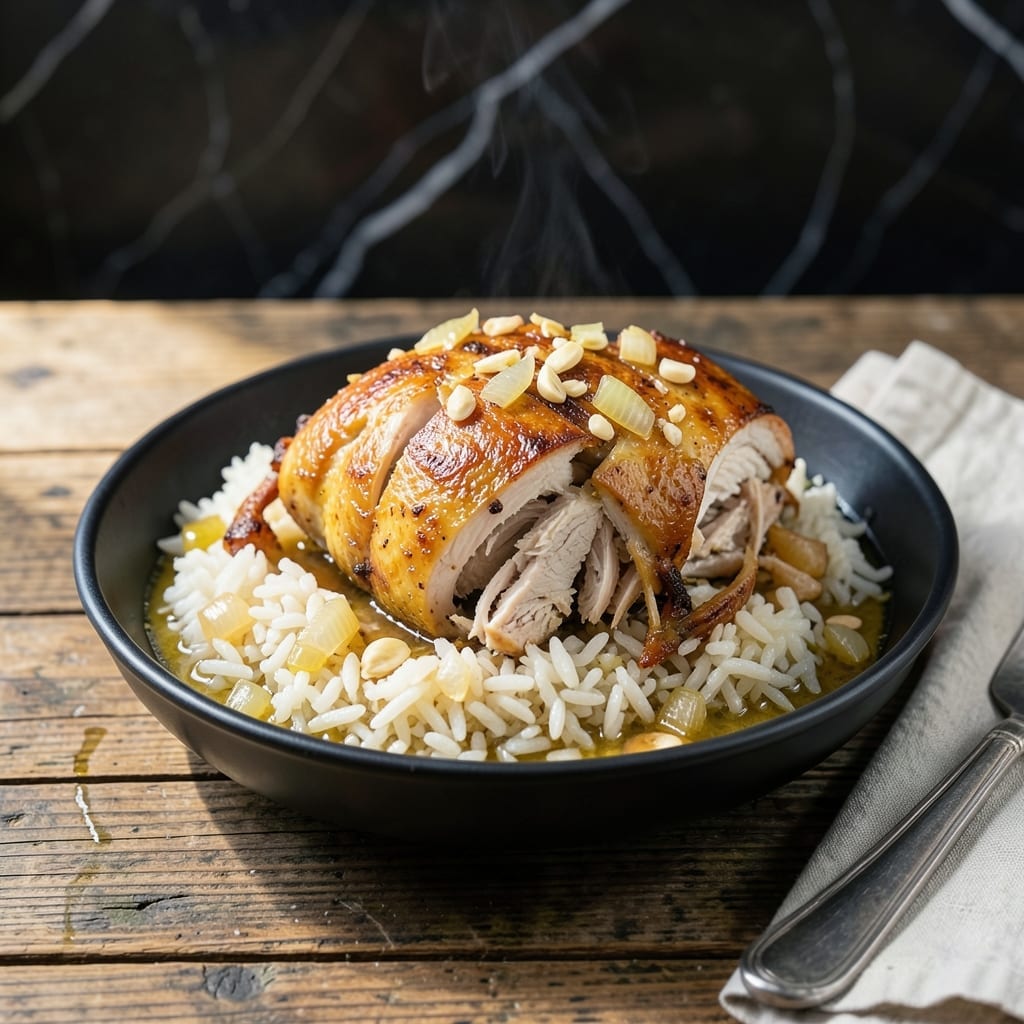
Store-bought rotisserie chicken transforms into a weeknight hero with this simple approach. No cooking the chicken yourself means dinner comes together in minutes.
This method leverages pre-cooked protein to create a complete meal that tastes homemade. The secret is in how you use those tender, flavorful pieces.
Ingredients for Recipe Using Rotisserie Chicken
Pantry staples and pre-cooked chicken make this dish effortless yet deeply satisfying.
| Ingredient | Amount | Notes |
|---|---|---|
| Rotisserie Chicken 🍗 | 1 whole | Shredded, skin removed if preferred |
| Olive Oil 🫒 | 2 tbsp | Extra-virgin for best flavor |
| Yellow Onion 🧅 | 1 whole | Medium, finely diced |
| Garlic Cloves 🧄 | 3 cloves | Minced for depth of flavor |
| Long-Grain White Rice 🍚 | 1 ½ cups | Uncooked, or substitute quinoa |
| Chicken Broth 🥣 | 2 ½ cups | Low-sodium preferred |
| Frozen Peas 🌱 | 1 cup | Thawed, or use fresh |
| Carrots 🥕 | 2 whole | Medium, peeled and diced |
| Celery Stalks 🥬 | 2 whole | Finely diced for texture |
| Dried Thyme 🌿 | 1 tsp | Or use fresh at triple quantity |
| Bay Leaf 🍃 | 1 whole | Removed before serving |
| Salt 🧂 | 1 tsp | Kosher or sea salt preferred |
| Black Pepper 🌶️ | ½ tsp | Freshly ground for best results |
| Fresh Parsley 🌿 | ¼ cup | Chopped, for garnish |
| Lemon 🍋 | 1 whole | Zested and juiced for brightness |
The rotisserie chicken is the foundation—Costco or Whole Foods offer the most reliable options. Look for birds with golden-brown skin and juices running clear when pierced. For the rice, Basmati or Jasmine varieties cook up fluffy and separate beautifully. The broth should be low-sodium so you can control the seasoning precisely. Fresh herbs at the end elevate the dish significantly.
Out of rotisserie chicken? Use 2.5 cups of cooked chicken breast instead. No fresh parsley? Dried parsley at one-third the amount works, though fresh is preferred. For extra richness, add a splash of heavy cream at the end. The peas can be swapped for diced bell peppers or corn kernels if desired. The lemon zest is optional but adds a bright finish.
Leftovers keep well in the fridge for 3-4 days in an airtight container. The rice will absorb more liquid over time, so add a splash of broth or water when reheating. This dish freezes beautifully for up to 3 months—perfect for batch cooking.
Why You’ll Love This Recipe
- No-Fuss Dinner: I grab a store-bought rotisserie chicken, shred it, and the hardest part is chopping one onion. Honestly, that’s it.
- Garlic Infused: The sizzle of garlic in olive oil with those crispy chicken bits? I’ll be real—it smells so good I start sneaking bites before it’s even done.
- Meal Prep Magic: This makes enough for three lunches, and the rice soaks up all the juices overnight. My coworkers always ask what I’m reheating.
- Budget Stretcher: One $5 chicken feeds my family of four with rice and veggies. Between us, it’s cheaper than takeout and twice as satisfying.
Step-by-Step Instructions for Rotisserie Chicken Rice Pilaf
This method delivers a complete weeknight meal with minimal hands-on time and maximum flavor.
Step 1: Prepare the Aromatic Base
Heat the 2 tbsp olive oil in a large, heavy-bottomed pot or Dutch oven over medium heat. Add the finely diced yellow onion and cook for 4-5 minutes until it becomes translucent and just begins to soften.
Stir in the minced 3 cloves garlic cloves and cook for 30 seconds until fragrant. Be careful not to let the garlic brown. Add the diced 2 whole carrots and 2 whole celery stalks, cooking for another 3-4 minutes until the vegetables start to soften. This builds a flavor foundation for the entire dish.
Step 2: Toast the Rice and Add Liquid
Add the 1.5 cups long-grain white rice to the pot and stir to coat it in the oil and vegetables. Cook for 1-2 minutes until the rice becomes slightly translucent at the edges—this toasting step enhances the nutty flavor of the grain.
Pour in the 2.5 cups chicken broth, then add the 1 tsp dried thyme, 1 whole bay leaf, 1 tsp salt, and 0.5 tsp black pepper. Stir well to combine and bring the mixture to a boil over medium-high heat.
Step 3: Simmer and Finish with Chicken and Peas
Once boiling, reduce the heat to low, cover the pot, and let it simmer for 15 minutes. After this time, remove the pot from heat and let it sit covered for 5 minutes to steam—this ensures the rice is perfectly tender.
Remove the bay leaf and fluff the rice with a fork. Fold in the shredded rotisserie chicken and 1 cup frozen peas. The residual heat will warm the chicken and peas through without overcooking them.
Step 4: Add Final Touches and Serve
Zest the 1 whole lemon directly over the pilaf, then stir in half of the juice. Taste and adjust seasoning if needed—the lemon adds a bright, fresh note that balances the richness of the chicken.
Garnish with the chopped 0.25 cup fresh parsley and serve immediately. The parsley adds a pop of color and freshness, while the lemon ties all the flavors together beautifully.
Pro Tips For Making Recipe Using Rotisserie Chicken
- Shred While Warm: Pull the rotisserie chicken apart right when you bring it home—it’s easier to shred and absorbs flavors better than when cold. I learned this the hard way after wrestling with a chilled bird once.
- Toast the Rice: Before adding liquid, cook the rice in olive oil with the onions for 2-3 minutes until slightly golden. Sounds weird, but it works: it adds a nutty depth that plain rice can’t match.
- Skip the Skin: Unless you’re using it for stock, peel off the skin before shredding—it can make the dish greasier and the texture uneven. Your future self will thank you.
- Use the Drippings: Pour those juices from the chicken container into your rice or sauce. About 2 tablespoons—enough to coat the bottom—adds a ton of flavor without extra effort.
Dietary Considerations for This Recipe
Keto-Friendly Options
For a keto-friendly meal, focus on high-fat, low-carb additions like avocado, cheese, or a creamy sauce. Skip starchy sides and opt for roasted veggies like zucchini or cauliflower. The rotisserie chicken itself is naturally low in carbs, making it a great base.
Gluten-Free
This recipe can easily be gluten-free by ensuring all sauces, broths, and seasonings are certified gluten-free. Swap regular soy sauce for tamari, and use cornstarch instead of flour for thickening. Always check labels on pre-made ingredients.
Allergens
Common allergens like dairy, nuts, or eggs may appear in certain preparations. For dairy-free versions, use coconut milk or nutritional yeast. If nuts are a concern, omit them or replace with seeds. Always verify ingredient safety for severe allergies.
Vegetarian Modifications
While rotisserie chicken is the star, you can adapt this recipe for vegetarians by substituting chickpeas, tofu, or tempeh. Use vegetable broth and load up on hearty veggies like mushrooms or eggplant to keep it satisfying.
Low-Sodium
To reduce sodium, choose a low-sodium rotisserie chicken or rinse the meat under cold water. Skip added salt and use herbs, citrus, or vinegar for flavor. Opt for homemade sauces instead of store-bought to control sodium levels.
Nutrition Facts

- 6 Egg Cake Recipe with Oil: Light as Air With Buttery Moisture - October 4, 2026
- 4 Bean Casserole Recipe: One-Pan Heartiness With Smoky Paprika Depth - October 4, 2026
- 3-Ingredient Keto Mug Cake Recipe: Microwave Magic in 2 Minutes - October 4, 2026