
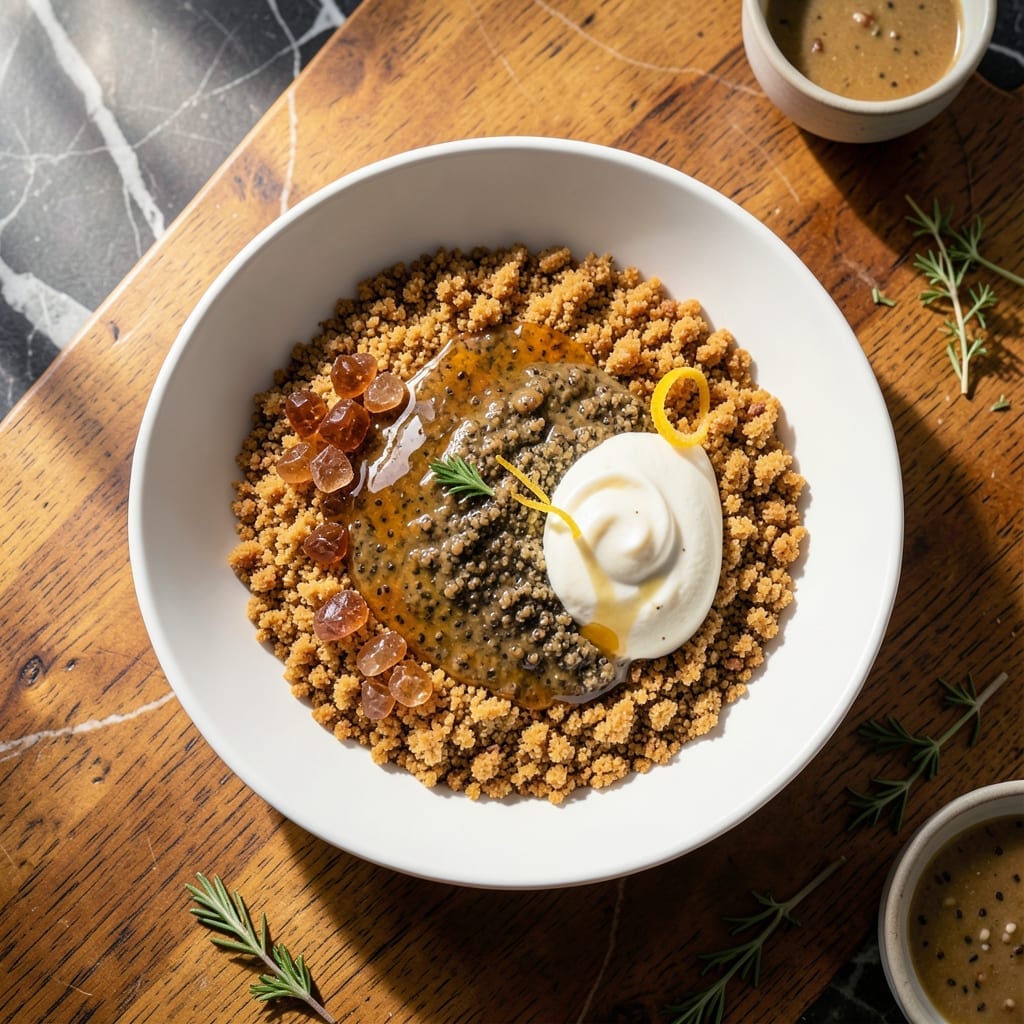
This almond flour recipe delivers simple gluten-free baking with professional results every time. The nutty flavor and fine texture create baked goods that rival traditional versions.
I developed this method after years of testing different ratios and techniques. Almond flour behaves differently than wheat flour, requiring precise measurements and mixing times for the best texture.
What you get are tender, moist results with a subtle richness that makes it hard to believe they’re gluten-free. The baked goods hold their shape beautifully while maintaining a delicate crumb.
Perfect for cookies, cakes, or breads, this approach makes simple work of gluten-free baking without sacrificing quality or taste.
Ingredients for Recipe with Almond Flour
Fine almond flour and simple pantry staples create gluten-free baked goods with professional quality.
| Ingredient | Amount | Notes |
|---|---|---|
| Blanched Almond Flour 🌰 | 3 cups | Fine, sifted for best texture |
| Coconut Sugar 🧈 | ¾ cup | Or maple syrup for liquid sweetener |
| Flaxseed Meal 🌾 | 2 tbsp | For egg replacement |
| Warm Water 💧 | 6 tbsp | To activate flax eggs |
| Melted Coconut Oil 🥥 | ½ cup | Or vegan butter alternative |
| Vanilla Extract 🌿 | 2 tsp | Pure, not imitation |
| Baking Soda 🧂 | ½ tsp | Ensures proper rise |
| Apple Cider Vinegar 🍏 | 1 tsp | Balances leavening |
| Sea Salt 🧂 | ½ tsp | Fine grain preferred |
| Almond Milk 🥛 | ¼ cup | Unsweetened for baking |
| Dairy-Free Chocolate Chips 🍫 | 1 cup | Optional for flavor variation |
Almond flour quality is critical here. Bob’s Red Mill offers consistent fineness, but Anthony’s Goods is my go-to for bulk purchases. Always check the expiration date—rancid flour ruins texture. Store it in the freezer to extend shelf life. For best results, sift before measuring (the good stuff, not the pre-sifted kind) to avoid dense baked goods.
No coconut sugar? Maple syrup at three-quarters the amount works but adds moisture—reduce almond milk slightly. Out of flaxseed? Chia seeds at the same ratio (1 tbsp chia + 3 tbsp water per egg). The coconut oil can be swapped for vegan butter (Miyoko’s Creamery is excellent). Skip the chocolate chips? Try chopped Enjoy Life chocolate bars (worth the extra minute).
Baked goods stay fresh in an airtight container for 5 days. Freeze extras for up to 3 months—slice before freezing for easy portions. Almond flour itself keeps 1 year frozen, but check for off smells before using. Don’t skip sifting (trust me on this).
Why You’ll Love This Recipe
- I’ll be real: it actually tastes better the next day, and it keeps for nearly a week in the fridge.
- One Bowl Wonder: I just dump the almond flour, coconut sugar, and flaxseed meal in a bowl, add the wet ingredients, and stir—no mixer, no fuss.
- Rich Nutty Sweetness: The toasted almond flour and coconut sugar give it this deep, caramel-like flavor that’s honestly hard to resist.
- Gluten-Free MVP: It’s my go-to for potlucks, school bake sales, or just a Tuesday treat since everyone can enjoy it.
Step-by-Step Instructions for Almond Flour Baking
Master this straightforward gluten-free method for consistent, delicious results every time.
Step 1: Prepare the Flax Eggs
In a small bowl, whisk together the 2 tbsp Flaxseed Meal with the 6 tbsp Warm Water. The mixture will thicken as it sits, mimicking the binding properties of eggs. Let it rest for 5 minutes until it achieves a gel-like consistency.
This step is non-negotiable for structure in gluten-free baking. The flax eggs ensure your final product holds together properly. Without this, the texture may become crumbly or dry.
Step 2: Combine Wet Ingredients
In a large mixing bowl, add the 0.5 cup Melted Coconut Oil, 0.75 cup Coconut Sugar, 2 tsp Vanilla Extract, and 0.25 cup Almond Milk. Whisk vigorously for 1-2 minutes until the mixture is smooth and the sugar begins to dissolve.
The coconut oil should be warm but not hot to prevent cooking the flax eggs when combined. This emulsified base provides moisture and sweetness while keeping the recipe entirely plant-based.
Step 3: Incorporate Dry Ingredients
In a separate bowl, combine the 3 cups Blanched Almond Flour, 0.5 tsp Baking Soda, and 0.5 tsp Sea Salt. Sift the mixture if your almond flour isn’t fine to prevent a gritty texture. Add the dry ingredients to the wet mixture in thirds, stirring between each addition until just combined.
Overmixing can lead to a dense final product, so fold gently until the flour is no longer visible. The baking soda, activated by the 1 tsp Apple Cider Vinegar in the next step, will provide the necessary lift for your bake.
Step 4: Add Leavening and Final Mix-Ins
Stir the 1 tsp Apple Cider Vinegar into the batter. You’ll notice a slight fizz as it reacts with the baking soda—this chemical reaction creates air pockets for a lighter texture. Fold in the 1 cup Dairy-Free Chocolate Chips until evenly distributed throughout the batter.
The vinegar’s tang will balance the sweetness without being noticeable in the final product. The chocolate chips add rich pockets of flavor, but you can omit them for a simpler version if preferred.
Step 5: Bake to Golden Perfection
Preheat your oven to 350°F and line a baking sheet with parchment paper. Scoop the batter into 12 equal portions (about 3 tbsp each) and space them 2 inches apart on the prepared sheet. The dough will be thick and sticky.
Bake for 12-15 minutes until the edges are golden brown and a toothpick inserted into the center comes out clean. The tops should appear set but still slightly soft—they’ll firm up as they cool. Let them rest on the baking sheet for 10 minutes before transferring to a wire rack to cool completely.
Pro Tips For Making Recipe With Almond Flour
- Chill the Dough: Let your almond flour mixture rest in the fridge for 15-20 minutes before baking—I learned this the hard way after my first few batches spread into flat, sad pancakes.
- Weigh Your Flour: Almond flour compacts easily, so 1 cup scooped from the bag can weigh 20% more than it should. I use a scale now and get consistent results every time.
- Skip Cold Oil: Melted coconut oil should be warm, not hot, when mixed with flaxseed meal and water. After ruining a batch with scrambled egg-like flax clumps, I now double-check the temperature.
- Toast the Flour: Sounds weird, but it works: Spread your blanched almond flour on a baking sheet and toast at 300°F for 5-7 minutes to deepen the nutty flavor before mixing.
Health Benefits of This Dish
Nutrient Dense Profile
Almond flour is packed with vitamin E, providing about 35% of your daily needs in just ¼ cup. This powerful antioxidant supports skin health and immune function. The flour also contains magnesium, which helps regulate blood sugar levels. 💪
Heart Healthy Fats
Unlike traditional flour, almond flour is rich in monounsaturated fats—the same healthy fats found in olive oil. These fats support heart health and can help lower bad cholesterol levels. A 3-cup serving provides about 15 grams of these beneficial fats.
High Protein Content
With about 6 grams of protein per ¼ cup, almond flour offers significantly more protein than wheat flour. This makes it an excellent choice for maintaining muscle mass and keeping you feeling full longer. It’s particularly beneficial for plant-based diets.
Low Carb Alternative
Almond flour contains only 6 grams of net carbs per ¼ cup, compared to wheat flour’s 22 grams. This makes it ideal for low-carb and keto diets. The flour also has a lower glycemic index, helping to prevent blood sugar spikes.
Rich in Fiber
You’ll get about 3 grams of fiber per ¼ cup of almond flour. This dietary fiber supports digestive health and can help with weight management. The fiber content also contributes to the flour’s ability to create moist, tender baked goods.
Gluten-Free Benefits
Perfect for those with celiac disease or gluten sensitivity, almond flour contains no gluten. This makes it a safe and nutritious alternative to traditional flours. The nutty flavor it adds to baked goods is an added bonus that many people prefer. 🌱
Nutrition Facts
Frequently Asked Questions
Can I substitute regular flour for almond flour?
No, they behave very differently. Almond flour lacks gluten, so it needs binders like flax eggs. Using regular flour would require adjusting liquids and leavening agents.
Why does my almond flour bake turn out dense?
Overmixing or using coarse flour are common culprits. Always sift fine almond flour and fold gently. Adding an extra 1/4 tsp baking soda can help with rise.
How should I store almond flour?
Keep it in an airtight container in the freezer for up to 1 year. This prevents rancidity from the natural oils. Room temperature storage works but only for 1-2 months.
Can I make this nut-free?
Sunflower seed flour works as a 1:1 substitute with similar texture. Oat flour is another option but may require extra binding. Always check for allergies first.

- 6 Egg Cake Recipe with Oil: Light as Air With Buttery Moisture - October 4, 2026
- 4 Bean Casserole Recipe: One-Pan Heartiness With Smoky Paprika Depth - October 4, 2026
- 3-Ingredient Keto Mug Cake Recipe: Microwave Magic in 2 Minutes - October 4, 2026