
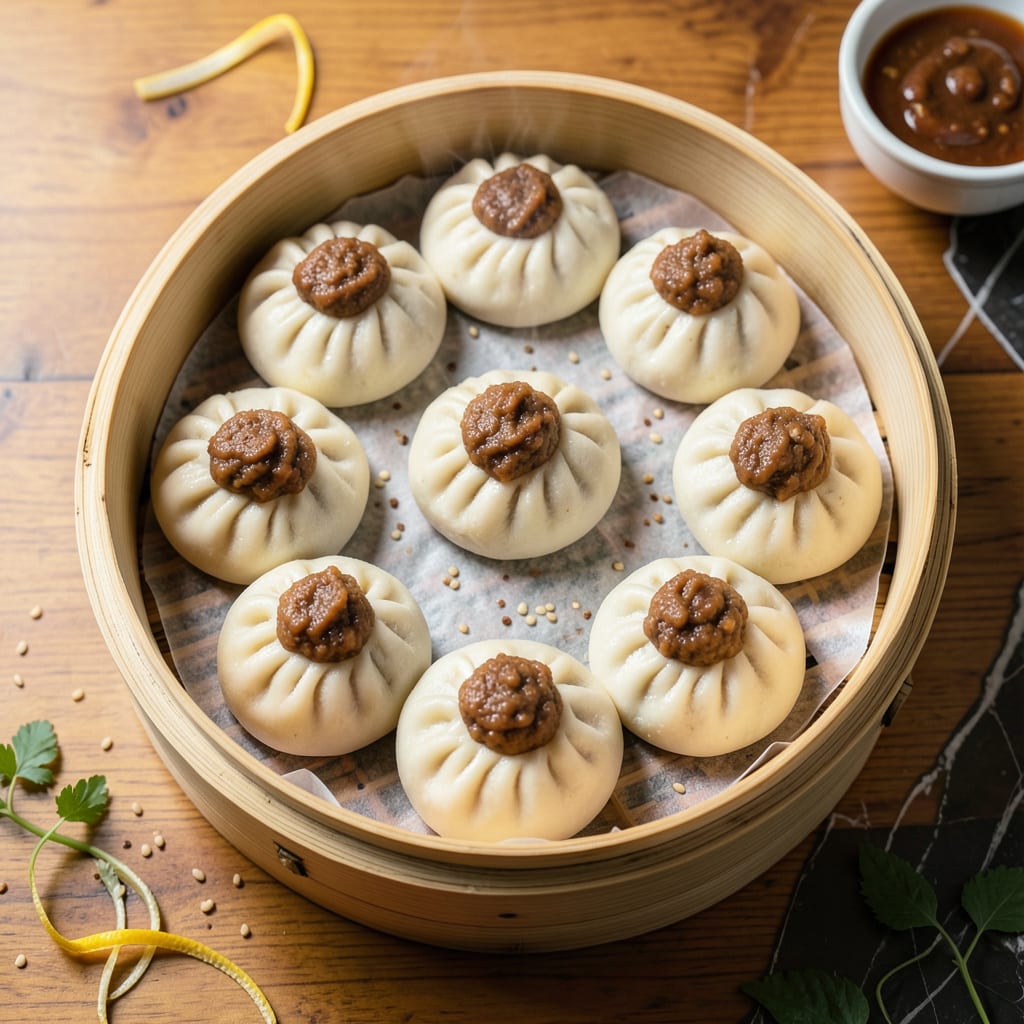
There’s nothing quite like the first bite of a freshly steamed bun, where the soft pillowy dough gives way to a sweet red bean center. This traditional method delivers authentic results every time.
I’ve refined this technique to ensure the dough stays tender and the filling perfectly balanced. The steaming process locks in moisture, creating that signature fluffy texture we all love.
Ingredients for Red Bean Steam Bun
Pantry basics and a few special items create these authentic steamed buns with their signature texture.
| Ingredient | Amount | Notes |
|---|---|---|
| All-Purpose Flour 🌾 | 4 cups | Plus extra for dusting |
| Granulated Sugar 🍚 | ½ cup | Divided for dough and filling |
| Active Dry Yeast 🍞 | 2 ¼ tsp | One standard packet |
| Warm Water 💧 | 1 ¼ cups | 110-115°F for yeast activation |
| Vegetable Oil 🫒 | ¼ cup | Plus extra for greasing |
| Sweet Red Bean Paste 🫘 | 1 ½ cups | Store-bought or homemade |
| Baking Powder 🧂 | 1 tsp | Helps with rise |
| Salt 🧂 | ½ tsp | Fine sea salt preferred |
| Cornstarch 🌽 | 2 tbsp | For dusting work surface |
| Sesame Oil 🫒 | 1 tsp | For aroma in dough |
| Warm Milk 🥛 | ½ cup | Whole milk recommended |
| Vanilla Extract 🌿 | 1 tsp | Pure extract for best flavor |
The flour quality is paramount here. King Arthur or Bob’s Red Mill all-purpose delivers consistent results. For the red bean paste, Asian markets carry superior pre-made versions—look for brands with minimal additives. The yeast must be fresh; check expiration dates at Whole Foods or your local grocer. Warm water temperature is critical—too hot kills yeast, too cold won’t activate.
No red bean paste? Sweet potato or lotus seed paste work well as fillings. Out of all-purpose flour? Bread flour plus 1 tbsp cornstarch per cup mimics the texture. For a dairy-free version, unsweetened almond milk replaces warm milk without issue. The sesame oil can be omitted, but it adds authentic aroma worth seeking out at H Mart.
Dough rises best in a warm, draft-free spot. Prepared buns freeze beautifully for up to 3 months—steam straight from frozen, adding 5 minutes to cook time. Store unused red bean paste in an airtight container for 1 week in the fridge or freeze for 6 months.
Why You’ll Love This Recipe
- No-Fuss Dough: The yeast does all the work while I sip my coffee—just mix, knead, and let it rise.
- Sweet Surprise: That first bite of warm, sugary red bean filling wrapped in soft, pillowy dough? Pure comfort.
- Crowd Pleaser: I make a big batch for potlucks, and they disappear faster than I can steam them.
- Budget Friendly: A bag of flour, a can of beans, and a few pantry staples feed my family for days.
Step-by-Step Instructions for Red Bean Steam Buns
Master the technique for achieving that signature soft, pillowy texture with a sweet center.
Step 1: Activate the Yeast and Prepare the Dough
In a small bowl, combine the 2.25 tsp active dry yeast with 1.25 cups warm water at 110-115°F and 0.5 tsp salt. Let it sit for 5-10 minutes until the mixture becomes frothy—this confirms the yeast is active and ready to work its magic.
In a large mixing bowl, whisk together the 4 cups all-purpose flour, 0.25 cup granulated sugar, and 1 tsp baking powder. Create a well in the center and add the yeast mixture, 0.5 cup warm milk, 0.25 cup vegetable oil, 1 tsp sesame oil, and 1 tsp vanilla extract. The warm liquids will help activate the yeast further and create a smooth, elastic dough.
Step 2: Knead and Let the Dough Rise
Using a stand mixer with a dough hook, knead the mixture on low speed for 8-10 minutes until the dough is smooth and pulls away from the sides of the bowl. It should feel slightly tacky but not sticky. If it’s too wet, add a little more flour, 1 tbsp at a time.
Transfer the dough to a lightly greased bowl, cover with a damp towel, and let it rise in a warm, draft-free place for 1-2 hours or until doubled in size. The dough should spring back slowly when pressed gently with a finger. This rise is crucial for achieving that airy, cloud-like texture.
Step 3: Shape the Buns and Add the Filling
Once risen, punch down the dough to release the air and turn it out onto a surface dusted with 2 tbsp cornstarch. Divide the dough into 12 equal portions and roll each into a smooth ball. Flatten each ball into a 3-inch circle, leaving the edges slightly thinner than the center.
Place 1 tbsp sweet red bean paste in the center of each dough circle. Pleat the edges upward, pinching to seal completely and enclosing the filling. Roll the sealed bun gently between your palms to smooth the surface. This pleating technique ensures the buns hold their shape and the filling stays intact during steaming.
Step 4: Proof and Steam the Buns
Arrange the buns on parchment paper squares, leaving 1 inch between each to allow for expansion. Cover with a damp towel and let them proof for 30-45 minutes until they’ve puffed up noticeably. The buns should look slightly larger and feel light when gently pressed.
Bring water to a rolling boil in a steamer large enough to accommodate the buns without crowding. Steam the buns over medium-high heat for 15-20 minutes, keeping the lid tightly closed to trap the steam. The buns are done when they’ve expanded fully and the dough feels springy to the touch. Remove the lid carefully to avoid condensation dripping onto the buns.
Pro Tips For Making Red Bean Steam Bun
- Proof the Yeast: Always activate your dry yeast in warm water with a pinch of sugar first—if it doesn’t foam within 5-10 minutes, your buns won’t rise. I learned this the hard way after wasting a batch of dough.
- Knead Thoroughly: Spend at least 10 minutes kneading the dough until it’s smooth and elastic. Sounds tedious, but it’s what gives your buns that soft, pillowy texture.
- Skip Cold Filling: Make sure your red bean filling is completely cooled before wrapping it in the dough. Hot filling will melt the dough and make a sticky mess.
- Steam with Space: Leave at least an inch between buns in the steamer—they’ll expand a lot. Crowding them means they’ll stick together and tear when you try to separate them.
Troubleshooting Great red bean steam bun
Dough Won’t Rise
If your dough isn’t rising, check your yeast first—it may be expired or inactive. Test it by mixing with 1 tsp sugar and ¼ cup warm water at 110-115°F. If it doesn’t foam in 5-10 minutes, start fresh. Also, ensure your kitchen is warm enough; I place my bowl near the oven for consistent warmth. 🌡️
Buns Collapse After Steaming
This usually means they weren’t fully proofed. Let them rise until they’ve visibly puffed up, about 30-45 minutes. Overproofing can also cause collapse, so watch for the dough to spring back slowly when pressed. Steaming too aggressively can shock them—keep the water at a gentle boil.
Filling Leaks Out
Seal the edges tightly when pleating, pressing firmly to create a complete seal. Use 1 tbsp red bean paste per bun—overfilling strains the dough. Chill the paste for 30 minutes before shaping to make it thicker and less likely to escape during steaming.
Dense or Tough Texture
Kneading too much or not enough can cause this. Aim for 8-10 minutes in a stand mixer until smooth but still slightly tacky. Also, ensure your steamer has enough space for steam to circulate—crowding leads to uneven cooking and dense results.
Wrinkled Surface
This happens when the dough is too dry. Add 1-2 tbsp warm water or milk during kneading if the mixture feels stiff. Dusting with cornstarch instead of flour helps prevent excessive drying while shaping. I’ve found this small tweak makes a big difference. ✨
Buns Stick to Parchment
Lightly grease your parchment squares with vegetable oil or use non-stick parchment. Leave 1 inch between buns to prevent merging. If they still stick, steam on a bamboo liner instead—it allows better airflow and release.
Nutrition Facts
Frequently Asked Questions
Can I make the dough ahead of time?
Yes! Prepare the dough, let it rise once, then refrigerate for up to 24 hours.
How do I store leftover buns?
Keep in an airtight container for 2-3 days. Re-steam for 5 minutes to refresh.
Can I use a different filling?
Try lotus paste or sweet potato for variation.
Why did my buns turn out dense?
Likely underproofed or over-kneaded. Ensure 1-2 hour rise and 8-10 minute knead.

- 6 Egg Cake Recipe with Oil: Light as Air With Buttery Moisture - October 4, 2026
- 4 Bean Casserole Recipe: One-Pan Heartiness With Smoky Paprika Depth - October 4, 2026
- 3-Ingredient Keto Mug Cake Recipe: Microwave Magic in 2 Minutes - October 4, 2026