
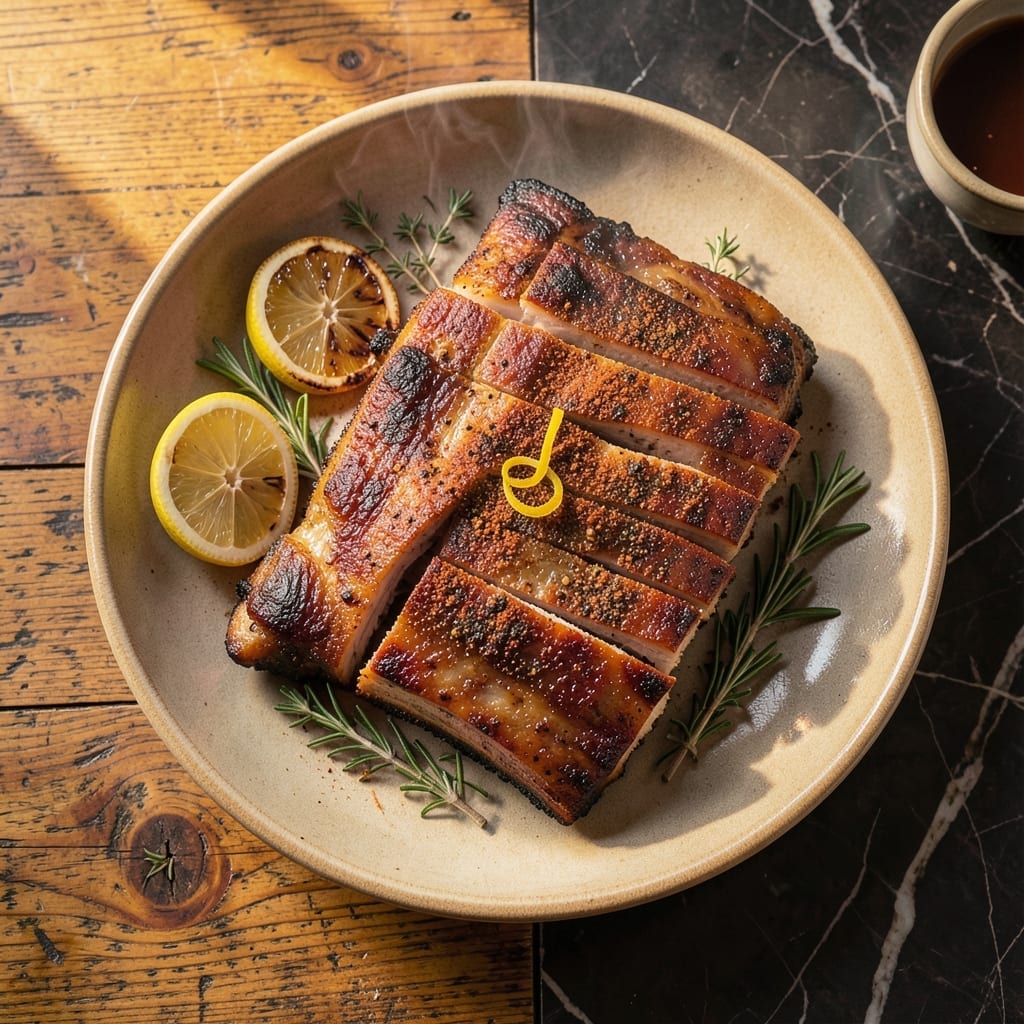
There’s an art to achieving perfectly tender ribs without relying on barbecue sauce. This dry-rubbed method delivers smoky, fall-off-the-bone results every time.
The secret lies in a well-balanced spice blend and low-and-slow cooking. I’ve refined this technique over years of testing to ensure maximum flavor penetration with minimal effort.
What emerges from the smoker or oven is meat that’s deeply seasoned on the outside and juicy on the inside. The dry rub forms a caramelized crust that locks in moisture while adding layers of flavor.
Whether you use baby back or spare ribs, this approach guarantees restaurant-quality results without the mess of saucy ribs. The process is straightforward and rewards patience.
Ingredients for Rib Recipe Without Bbq Sauce
A full rack of ribs plus a bold dry rub delivers smoky, caramelized perfection without sauce.
| Ingredient | Amount | Notes |
|---|---|---|
| Pork Baby Back Ribs 🥩 | 2 lb | Full rack, membrane removed |
| Brown Sugar 🍚 | ½ cup | Light or dark, packed |
| Paprika 🌶️ | 2 tbsp | Sweet or smoked variety |
| Garlic Powder 🧄 | 1 tbsp | Not garlic salt |
| Onion Powder 🧅 | 1 tbsp | Fresh ground preferred |
| Ground Black Pepper 🌶️ | 1 tbsp | Freshly ground for best flavor |
| Salt 🧂 | 1 tbsp | Diamond Crystal kosher preferred |
| Chili Powder 🌶️ | 1 tbsp | Mild or hot variety |
| Ground Cumin 🌿 | 1 tsp | Toasted for deeper flavor |
| Dried Oregano 🍃 | 1 tsp | Crushed between fingers |
| Cayenne Pepper 🔥 | ½ tsp | Adjust for heat preference |
| Olive Oil 🫒 | 2 tbsp | For binding dry rub |
| Apple Cider Vinegar 🍏 | 2 tbsp | For tenderizing meat |
The ribs are non-negotiable—baby back ribs yield the most tender results, though spare ribs work if that’s what you find. Costco often carries full racks at a good price, but your local butcher can trim a rack to size if needed. Look for bright pink meat with consistent marbling. The membrane on the bone side must be removed (a butter knife and paper towel make this easy) for the rub to penetrate fully.
No chili powder? Ancho powder adds similar depth. Swap smoked paprika for regular if you prefer milder flavor. Dried thyme at half the amount can replace oregano. For heat without cayenne, red pepper flakes work at a 1:1 ratio. The brown sugar can be substituted with turbinado or coconut sugar, though the crust may caramelize differently. Always use fresh spices—old ones lose potency fast.
The dry rub keeps in an airtight container for 6 months. Ribs should be cooked immediately after seasoning, but the spice blend can be made a day ahead. Leftovers? Wrap tightly in foil—they reheat beautifully in a 300°F oven for 15-20 minutes. The flavor actually improves overnight.
Why You’ll Love This Recipe
- Set It and Forget: I rub the ribs with brown sugar and spices, then let the oven do all the work while I relax.
- Sweet and Smoky: The brown sugar caramelizes with the paprika for that sticky, finger-licking crust.
- Crowd Pleaser: Whether it’s a weekend cookout or a casual Tuesday, these ribs disappear fast.
- Budget Friendly Feast: Baby back ribs with pantry staples means I serve a impressive meal without overspending.
Step-by-Step Instructions for Dry-Rubbed Ribs
Master the technique for fall-off-the-bone ribs with a perfectly balanced dry rub.
Step 1: Prepare the Pork Baby Back Ribs
Begin by patting the 2 lb Pork Baby Back Ribs completely dry with paper towels. This crucial step removes excess moisture, allowing the dry rub to adhere properly and form a beautiful crust during cooking.
Next, remove the thin membrane from the bone side of the ribs. Slide a butter knife under the membrane at one end, then lift and pull it off in one piece. This tough membrane prevents seasoning from penetrating and can make the ribs chewy if left on.
Step 2: Create and Apply the Dry Rub
In a medium bowl, combine the 0.5 cup Brown Sugar, 2 tbsp Paprika, 1 tbsp Garlic Powder, 1 tbsp Onion Powder, 1 tbsp Ground Black Pepper, 1 tbsp Salt, 1 tbsp Chili Powder, 1 tsp Ground Cumin, 1 tsp Dried Oregano, and 0.5 tsp Cayenne Pepper. I crush the dried oregano between my fingers as I add it to release its aromatic oils.
Drizzle the 2 tbsp Olive Oil and 2 tbsp Apple Cider Vinegar over the ribs, then rub the mixture evenly over all surfaces. The vinegar tenderizes while the oil helps the rub cling. Massage it in thoroughly, ensuring every crevice is coated. Let the seasoned ribs sit at room temperature for 30 minutes before cooking.
Step 3: Slow Cook the Ribs
Preheat your oven to 275°F. This low temperature allows the ribs to cook slowly, breaking down the connective tissue without drying out the meat. Place the ribs meat-side up on a foil-lined baking sheet.
Cover the ribs tightly with aluminum foil, creating a sealed environment that traps steam. This accelerates the cooking process while keeping the meat moist. Bake for 2.5 to 3 hours, or until the meat begins to pull back from the bones and reaches an internal temperature of 195-203°F.
Step 4: Finish with a Caramelized Crust
Carefully remove the ribs from the oven and increase the temperature to 400°F. Unwrap the ribs and return them to the oven, meat-side up, for 10-15 minutes. This final step caramelizes the brown sugar in the rub, creating a sticky, glossy crust.
Watch closely during this phase—the sugar can burn quickly. You’re looking for the surface to develop a deep, mahogany color with slightly crisp edges. The ribs should be tender enough that a toothpick slides in with minimal resistance, and the meat should pull cleanly from the bone when tested with a fork.
Pro Tips For Making Rib Recipe Without Bbq Sauce
- Pull the Membrane: Peel off that tough silver skin on the bone side—it blocks your rub from penetrating and makes the ribs chewy. I learned this the hard way after wondering why my spices never stuck properly.
- Dry Rub First: Pat the ribs bone-dry with paper towels before adding your brown sugar and spice mix. Sounds tedious, but it guarantees the rub clings instead of sliding off.
- Low and Slow: Keep the oven at 275°F for 2.5-3 hours—any hotter and the meat tightens up. My first batch came out tough as boots because I rushed it at 350°F.
- Rest Before Serving: Let the ribs sit wrapped in foil for 10 minutes after cooking. I skip this when I’m hungry, but the juices redistribute and actually change the outcome.
Common Mistakes When Making This Dish
Skipping the Membrane
I can’t stress this enough—never leave the membrane on. This tough layer blocks your dry rub from penetrating the meat. Use a butter knife to lift it, then pull it off in one piece. It takes 30 seconds and makes a world of difference in tenderness. 💡
Overcrowding the Rub
More spices don’t equal better flavor. A thick layer of dry rub can burn before the ribs cook through. Stick to a ¼-inch coating max. Press it in firmly so it adheres but doesn’t form clumps. The vinegar in your recipe helps it stick perfectly.
Rushing the Cook
Low and slow is non-negotiable. Cranking the oven to 350°F to speed things up will dry out your meat. Keep it at 275°F for that 2.5-3 hour window. The connective tissue needs time to break down into gelatin for that fall-off-the-bone texture.
Skipping the Rest
After the final caramelization at 400°F, let your ribs rest for at least 10 minutes. This allows the juices to redistribute. Slicing too soon sends all that moisture onto your cutting board instead of staying in the meat.
Peeking Too Often
Every time you open the oven or smoker, you lose 25-50°F of heat. Trust the process and resist the urge to check constantly. Your 195-203°F internal temp target is the only check you need until the final caramelization.
Neglecting the Vinegar
The 2 tbsp Apple Cider Vinegar isn’t just for flavor—it’s a tenderizer. Skipping it means tougher meat. Don’t worry about the taste; it cooks off, leaving only its tenderizing magic behind. The acid helps break down proteins while the sugar caramelizes.
Nutrition Facts
Frequently Asked Questions
What’s the best way to remove the membrane?
Slide a butter knife under the membrane at one end, then pull it off in one piece with a paper towel for grip. Removing it takes 30 seconds and ensures the rub penetrates the meat.
Can I use spare ribs instead of baby back?
Yes, spare ribs work well, though they’re slightly fattier and may need 30-45 extra minutes. Adjust cooking time based on tenderness, aiming for 195-203°F internally.
How do I know when the ribs are done?
The meat should pull back from the bones and reach 195-203°F internally. A toothpick should slide in with minimal resistance, and the meat should pull cleanly from the bone.
Can I make the dry rub ahead of time?
Store the rub in an airtight container for up to 6 months. Just mix with olive oil and vinegar before applying to the ribs.

- 6 Egg Cake Recipe with Oil: Light as Air With Buttery Moisture - October 4, 2026
- 4 Bean Casserole Recipe: One-Pan Heartiness With Smoky Paprika Depth - October 4, 2026
- 3-Ingredient Keto Mug Cake Recipe: Microwave Magic in 2 Minutes - October 4, 2026