
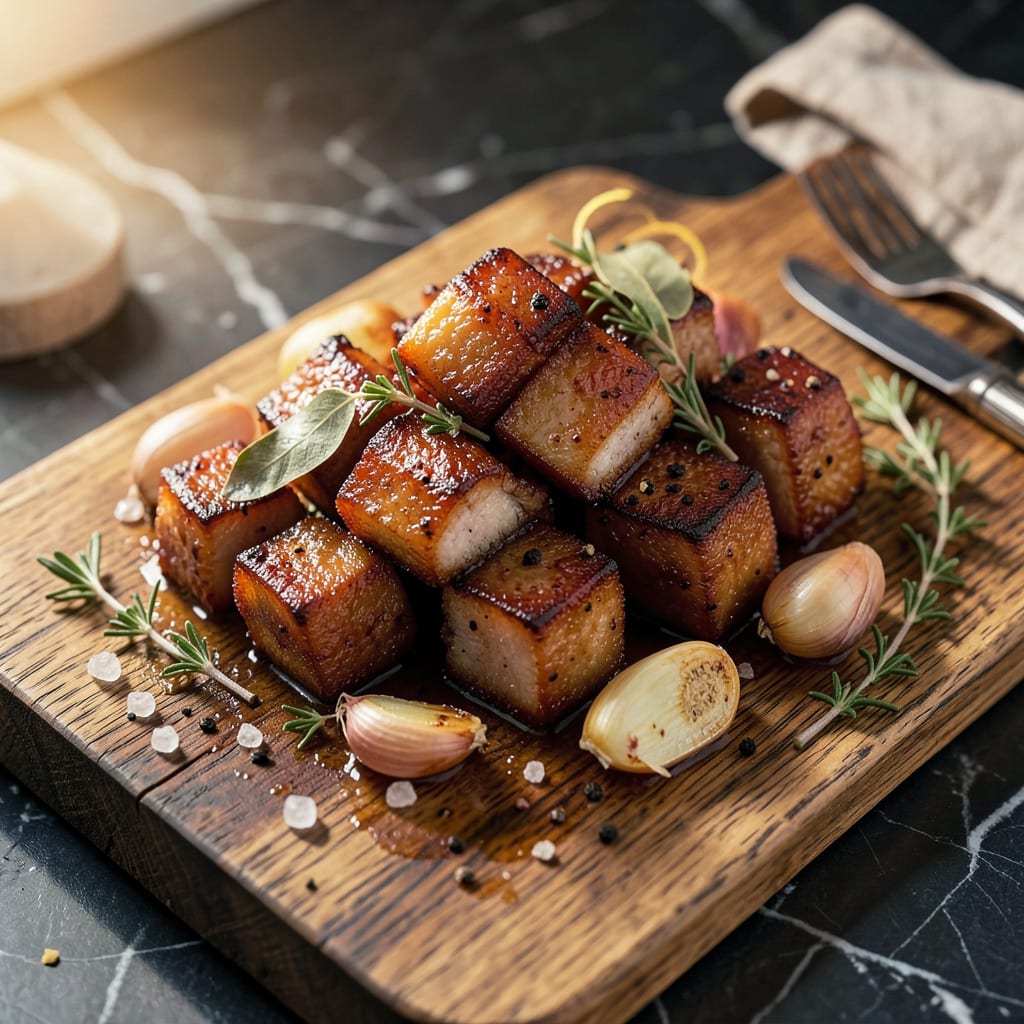
French rillons represent the pinnacle of pork preparation—tender cubes of belly or shoulder that are confit-cooked until fall-apart, then crisped to golden perfection. This traditional method transforms humble ingredients into something extraordinary through precise technique and patience. The result is a balance of textures: crispy exterior giving way to unctuous, flavorful meat within.
The process begins with careful cubing and curing, followed by slow cooking in rendered fat until the pork becomes silky. A final crisping step creates that essential golden crust. Served warm with crusty bread and tangy cornichons, these bites deliver restaurant-quality results at home. Master this technique, and you’ll understand why rillons remain a French charcuterie classic.
Ingredients for Rillons
This classic preparation requires pork belly, aromatic herbs, and rendered fat—transforming simple ingredients through precise French technique.
| Ingredient | Amount | Notes |
|---|---|---|
| Pork Belly 🥓 | 2 lb | Skin-on, cut into 1-inch cubes |
| Kosher Salt 🧂 | 2 tbsp | Diamond Crystal preferred for curing |
| Freshly Ground Black Pepper 🌶️ | 1 tsp | Coarse grind for texture |
| Dried Thyme 🌿 | 1 tsp | French thyme if available |
| Bay Leaves 🍃 | 2 whole | Fresh or dried |
| Garlic Cloves 🧄 | 6 cloves | Lightly crushed, peeled |
| Duck Fat 🦆 | 2 cups | Or substitute rendered pork fat |
| Cornichons 🥒 | ½ cup | Sliced, for serving |
| Crusty Baguette 🥖 | 1 whole | Sliced, for serving |
| Dijon Mustard 🟡 | 2 tbsp | For optional dipping sauce |
| Flat-Leaf Parsley 🌿 | ¼ cup | Chopped, for garnish |
| Shallot 🧅 | 1 whole | Minced, for optional garnish |
[recipeingredientscaler]
The pork belly quality is paramount. Optimal results require skin-on belly with even fat distribution—Whole Foods or specialty butchers typically carry superior product. The curing salt must be non-iodized; Diamond Crystal kosher salt provides the ideal texture without bitterness. For the confit fat, duck fat yields the most authentic flavor, though rendered pork fat serves as an acceptable substitute when properly clarified.
Substitutions require careful consideration. Pork shoulder may replace belly in a pinch, though the texture differs significantly. Olive oil can stand in for duck fat, but lacks the same richness—use extra-virgin for best results. Fresh thyme may be substituted at triple the dried amount, while garlic powder (at one-quarter the quantity) can replace fresh cloves when necessary. The cornichons are non-negotiable for authentic presentation.
Proper storage ensures quality. Cured pork keeps refrigerated for 3 days before cooking; cooked rillons maintain texture for 5 days when sealed. Duck fat solidifies beautifully—store in glass containers for 6 months in cool darkness. Always bring ingredients to room temperature before beginning the confit process for even cooking results.
Why You’ll Love This Recipe
- I’ll be real: it looks impressive but costs less than steak. A pound of pork belly feeds four generously, and the aroma alone makes guests think you spent hours. My trick? Serve with crusty bread and a sharp mustard—done.
- Five-Ingredient Magic: Honestly, the hardest part is remembering to grab pork belly at the store. Salt, pepper, thyme, bay leaves—stuff I already have. No last-minute grocery runs or fancy techniques, just real food with minimal fuss.
- Crispy Outside, Silky Inside: That first bite where the black pepper-crusted exterior gives way to melt-in-your-mouth belly? I’ve made this six times and still pause mid-chew to appreciate it. The thyme and bay leaves sneak in this subtle earthiness that makes it taste like you slow-cooked it all day.
- My Freezer’s MVP: Between us, I double the batch every time. These rillons reheat like a dream—crisp them in a pan for 3 minutes and they’re better than fresh. Toss into salads, stuff in sandwiches, or eat straight from the container (no judgment).
Step-by-Step Instructions for Rillons
Mastering this technique requires precision in curing, slow cooking, and crisping—each step builds the signature texture.
Step 1: Cure the Pork Belly Overnight
Begin by thoroughly coating the 2 lb pork belly cubes with the 2 tbsp kosher salt, 1 tsp freshly ground black pepper, 1 tsp dried thyme, and 2 whole bay leaves. I recommend using Diamond Crystal kosher salt for its consistent curing properties and clean flavor profile. Distribute the seasoning evenly, ensuring every surface is covered—this creates uniform flavor penetration during the curing process.
Add the 6 cloves garlic cloves (lightly crushed to release their aromatic oils) to the mixture. Transfer everything to a non-reactive container, cover tightly, and refrigerate for 12-24 hours. This extended curing time is essential for developing the proper texture and seasoning depth. The pork belly will firm up slightly and develop a pale, cured appearance when ready.
Step 2: Confit the Pork in Duck Fat
After curing, rinse the pork belly cubes briefly under cold water to remove excess salt, then pat them completely dry with paper towels. Preheat your oven to 275°F—this low temperature ensures gentle cooking that renders fat while keeping the meat tender. Place the dried pork cubes in a deep ovenproof dish or Dutch oven.
Pour the 2 cups duck fat over the pork, ensuring the cubes are completely submerged. The fat should cover the pork by at least ½ inch—this creates the confit environment where the meat cooks slowly in fat. Cover the dish tightly with foil or a lid and transfer to the preheated oven. Cook undisturbed for 2.5-3 hours until the pork is fork-tender but not falling apart. You’ll know it’s ready when a skewer slides in with minimal resistance and the meat has a translucent, jelly-like appearance at the edges.
Step 3: Crisp the Rillons to Perfection
Remove the pork from the duck fat using a slotted spoon, allowing excess fat to drain back into the dish. Increase the oven temperature to 425°F to create the ideal crisping environment. Arrange the confited pork cubes on a wire rack set over a baking sheet—this setup allows hot air to circulate completely around each piece, ensuring even browning.
Roast for 20-25 minutes, turning the pieces halfway through, until they develop a deep mahogany brown crust all over. The exterior should be crisp enough to audibly crack when bitten, while the interior remains unctuous and tender. Watch carefully during the final minutes—duck fat-confited meat can go from perfectly crisp to overdone quickly at high heat.
Step 4: Serve with Traditional Accompaniments
Transfer the crisped rillons to a serving platter while still hot. The contrast between the shattering crust and meltingly tender interior is most pronounced when served immediately. Arrange the 0.5 cup cornichons (sliced) around the pork—their acidity cuts through the richness perfectly. Serve with warm slices of crusty baguette to soak up any rendered fat.
For optional enhancement, whisk together the 2 tbsp Dijon mustard with some of the reserved duck fat to create a pungent dipping sauce. Garnish the platter with 0.25 cup flat-leaf parsley (chopped) and minced shallot for freshness and color contrast. Each bite should deliver the perfect balance of crisp texture, rich pork flavor, and bright acidic notes from the accompaniments.
Health Benefits of rillons
Rich Protein Source
Rillons deliver a substantial protein boost, with each 1-ounce serving providing about 5 grams of high-quality protein. The slow-cooking process breaks down collagen while preserving essential amino acids, making this dish particularly satisfying. I find these pork bites keep me full for hours, thanks to their balanced fat-to-protein ratio. 💪
Healthy Fats Profile
While rich in flavor, rillons contain beneficial fats when prepared properly. The duck fat used for confit contains monounsaturated fats that support heart health in moderation. The curing process also helps preserve natural pork nutrients like vitamin B12 and zinc, which are essential for energy metabolism.
Collagen for Joints
The slow-cooking method transforms pork collagen into gelatin, which supports joint health and gut function. This natural gelatin formation during the 2.5-3 hour confit process makes rillons easier to digest than many other pork preparations. I notice my joints feel better when I include collagen-rich foods like this regularly.
Low-Carb Friendly
With virtually no carbohydrates, rillons fit perfectly into keto or low-carb diets. The natural fats provide sustained energy without blood sugar spikes. When served with cornichons and mustard, you get flavor complexity while keeping net carbs under 2 grams per serving. This makes them ideal for anyone watching their carb intake.
Iron and Zinc Boost
Pork belly is naturally rich in heme iron and zinc, both crucial for immune function and oxygen transport. The curing process with kosher salt actually enhances mineral absorption. Just 3 ounces provides about 15% of your daily iron needs—an excellent way to combat fatigue naturally. ✨
Satisfying Portion Control
The rich flavor profile means you’re satisfied with smaller portions. I typically serve 2-3 ounces per person as part of a charcuterie board, which provides satisfying protein without overeating. The combination of crispy exterior and tender interior creates a sensory experience that feels indulgent yet balanced in moderation.
Nutrition Facts
Frequently Asked Questions
Can I use pork shoulder instead of belly?
While pork belly is traditional, shoulder works in a pinch. The texture will be leaner and less unctuous since shoulder has less fat marbling. If using shoulder, increase the cooking time by 30-45 minutes and add extra duck fat to compensate for the lower fat content.
Why do my rillons turn out mushy instead of crispy?
This usually happens if they’re not properly drained before crisping. After confit, pat them completely dry and let them rest on a rack for 10 minutes before roasting. Also ensure your oven reaches 425°F—lower temps won’t create that essential crust.
How far ahead can I make rillons?
The confit stage actually improves with time! Cooked rillons keep submerged in duck fat in the fridge for up to 2 weeks. Simply reheat gently in the fat, then crisp before serving. The flavors deepen beautifully with age, much like traditional French charcuterie.
What’s the best way to reheat leftovers?
Place cold rillons on a wire rack over a baking sheet. Warm at 375°F for 8-10 minutes until heated through and crisp. Avoid microwaving—it makes them soggy. For extra richness, brush with reserved duck fat before reheating.

- 6 Egg Cake Recipe with Oil: Light as Air With Buttery Moisture - October 4, 2026
- 4 Bean Casserole Recipe: One-Pan Heartiness With Smoky Paprika Depth - October 4, 2026
- 3-Ingredient Keto Mug Cake Recipe: Microwave Magic in 2 Minutes - October 4, 2026