
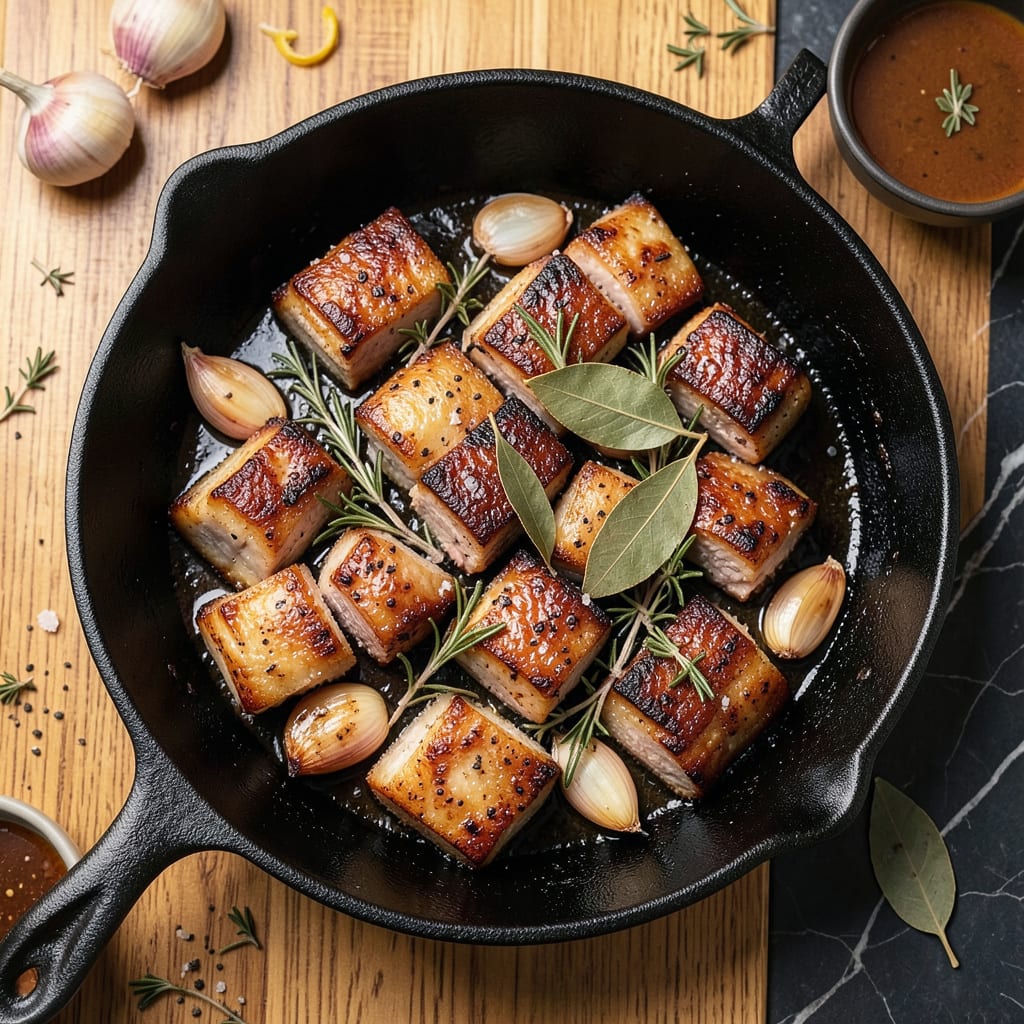
Rillons represent the pinnacle of French charcuterie technique, transforming humble pork belly into crispy, caramelized cubes with unctuous, fall-apart centers. This traditional preparation requires patience but rewards with restaurant-quality results that surpass any store-bought pork product. The method combines precise curing, slow confit cooking in rendered fat, and final high-heat crisping to achieve perfect textural contrast.
The process begins with a carefully balanced dry cure that seasons the meat while preparing it for the long, gentle cooking in its own fat. This confit technique not only tenderizes the pork but creates a preservation effect that allows rillons to be stored for weeks. When properly executed, the final crisping step yields golden, crackling exteriors that give way to rich, buttery interiors—ideal for serving with crusty bread and cornichons.
Ingredients for Rillons
This traditional preparation requires pork belly, aromatic curing agents, and rendered fat for authentic French charcuterie results.
| Ingredient | Amount | Notes |
|---|---|---|
| Pork Belly 🥓 | 2 lb | Skin-on, cut into 1.5-inch cubes |
| Diamond Crystal Kosher Salt 🧂 | ¼ cup | For initial dry cure |
| Freshly Ground Black Pepper 🌶️ | 1 tbsp | Coarsely ground preferred |
| Dried Thyme 🌿 | 1 tbsp | French thyme if available |
| Bay Leaves 🍃 | 2 whole | Turkish variety preferred |
| Garlic Cloves 🧄 | 6 cloves | Lightly crushed, unpeeled |
| Duck Fat 🦆 | 4 cups | Or rendered pork fat alternative |
| Water 💧 | 1 cup | For curing brine consistency |
| Cornichons 🥒 | ½ cup | For serving, sliced |
| Crusty Baguette 🥖 | 1 whole | Freshly baked, sliced |
| Dijon Mustard 🟡 | 2 tbsp | For serving accompaniment |
| Fresh Parsley 🌿 | ¼ cup | Chopped, for garnish |
The pork belly quality determines final texture. Heritage breed pork from specialty butchers yields superior marbling and flavor. Request skin-on belly cut into uniform 1.5-inch cubes—consistent sizing ensures even curing and cooking. Diamond Crystal kosher salt is essential for precise curing ratios; table salt substitutions require weight adjustments. The duck fat, available at gourmet markets or online purveyors, creates the signature unctuous mouthfeel during confit cooking.
No duck fat? Rendered pork fat or a 50/50 blend of lard and olive oil provides acceptable alternatives. Fresh thyme may be substituted with one-third the quantity of dried, though fresh offers superior aromatic complexity. For the garlic, elephant garlic provides milder flavor if preferred. The cornichons should be Maille brand for authentic French acidity—substitute with gherkins in a pinch, though flavor profiles differ markedly.
Properly cured rillons store submerged in fat for 4-6 weeks refrigerated. Confit fat solidifies when cold but reliquifies during reheating. Crisp finished rillons immediately before serving to preserve texture. The curing brine components (salt, pepper, thyme) may be scaled proportionally for larger batches, maintaining the 5% salt-to-meat ratio by weight. Always use non-reactive containers for curing and storage to prevent metallic off-flavors.
Why You’ll Love This Recipe
- Five-Ingredient Magic: Honestly, the ingredient list looks fancy but it’s just pork belly, salt, pepper, thyme, and bay leaves. No chopping, no measuring cups—just rub, rest, and let the oven do the work.
- Crispy, Fatty, Herby Bite: That first crunch into the caramelized pork fat, then the melt-in-your-mouth center? The thyme and black pepper give it this earthy kick that makes it impossible to stop at one. (I’ve tested this theory. Repeatedly.)
- Meal Prep Overachiever: I make a double batch on Sunday—toss the rillons into salads, stuff them in sandwiches, or serve with eggs all week. They reheat like a dream, and the flavor just gets deeper.
- Budget-Friendly Luxury: Pork belly’s cheaper than steak but tastes like a splurge. One batch feeds four as a main or stretches to eight as an appetizer. Leftovers? They vanish. Every. Time.
Step-by-Step Instructions for Rillons
Mastering the balance between crisp exterior and unctuous interior requires precision at each stage.
Step 1: Cure the Pork Belly Overnight
Begin by thoroughly combining the 0.25 cup Diamond Crystal Kosher Salt, 1 tbsp Freshly Ground Black Pepper, 1 tbsp Dried Thyme, and 2 whole Bay Leaves in a bowl. Rub this mixture evenly over all surfaces of the 2 lb Pork Belly cubes, ensuring complete coverage. The coarse texture of the salt and pepper will help create the signature crust.
Place the seasoned pork in a non-reactive container and add the 6 cloves Garlic Cloves and 1 cup Water. The water creates a light brine that penetrates the meat while the garlic infuses subtle aromatic notes. Cover and refrigerate for 12-18 hours, allowing the cure to fully penetrate. This extended curing time is essential for developing the proper texture and seasoning throughout.
Step 2: Slow-Cook in Duck Fat
After curing, rinse the pork cubes under cold water to remove excess salt, then pat them completely dry with paper towels. In a heavy pot or Dutch oven, melt the 4 cups Duck Fat over medium-low heat until it reaches 160°F. The duck fat’s low smoking point makes it ideal for this gentle cooking process.
Carefully add the pork cubes in a single layer, ensuring they’re fully submerged. Maintain the temperature between 160-180°F and cook for 2-3 hours, turning occasionally. The pork is ready when it’s fork-tender but still holds its shape. This slow confit process transforms the collagen into gelatin, creating that luxurious mouthfeel while preserving the meat’s structure.
Step 3: Achieve the Perfect Crisp
Remove the pork from the fat using a slotted spoon and transfer to a wire rack set over a baking sheet. Let the cubes drain for 10 minutes, then pat them dry again. This step is crucial for removing excess fat that would inhibit crisping.
Heat your oven to 425°F. Arrange the pork cubes on a clean baking sheet, leaving space between each piece. Roast for 15-20 minutes, turning halfway through, until the exterior develops a deep golden-brown crust and the edges become crisp. The high heat creates the textural contrast that defines proper rillons, while the interior remains succulent from the confit process.
Step 4: Serve with Traditional Accompaniments
While the rillons are still warm, arrange them on a serving platter. Thinly slice the 0.5 cup Cornichons and scatter them around the pork. The acidity of the cornichons cuts through the richness of the fat, providing necessary balance to each bite.
Slice the 1 whole Crusty Baguette into thin pieces and serve alongside with the 2 tbsp Dijon Mustard and chopped 0.25 cup Fresh Parsley. The mustard’s sharpness complements the pork’s richness, while the parsley adds a fresh herbal note. Serve immediately while the exterior remains crisp and the interior is still warm and tender.
Best Sauces and Condiments for These Flavors
Classic Dijon Mustard
The sharp, tangy flavor of Maille Dijon Mustard is the perfect foil for rillons’ richness. I love serving it on the side for dipping—about 1 tsp per bite gives just the right punch. The mustard’s acidity cuts through the fat while its grainy texture adds contrast. 💛
Cornichons and Capers
Tiny, tart Maille cornichons provide the traditional French pairing, but I also keep nonpareil capers on hand. Their briny pop balances each fatty bite. Try 1 tbsp chopped cornichons mixed with 1 tsp capers for a quick relish to spoon over the pork.
Garlic Aioli
For something creamier, whip up a quick aioli with ½ cup mayonnaise, 2 minced garlic cloves, and 1 tbsp lemon juice. The garlic echoes the confit aromatics while the lemon brightens everything. I make this in my mini food processor for perfect emulsion.
Red Wine Reduction
A simple reduction of 1 cup dry red wine (I use Cotes du Rhone) and 1 tbsp balsamic vinegar creates a glossy sauce. Simmer until syrupy, then drizzle over the rillons. The wine’s tannins stand up to the pork’s richness beautifully. 🍷
Herb Gremolata
Mix ¼ cup chopped parsley, 1 tbsp lemon zest, and 1 minced garlic clove for a fresh finish. The bright green flecks look stunning against the golden pork, and the lemon cuts through the fat. I sprinkle this over just before serving.
Spicy Mustard Glaze
Combine 2 tbsp Dijon with 1 tbsp honey and ½ tsp cayenne for a sweet-heat glaze. Brush it on during the final 5 minutes of crisping. The glaze caramelizes beautifully, adding another layer of flavor to the crispy exterior. ⚡
Nutrition Facts

- 6 Egg Cake Recipe with Oil: Light as Air With Buttery Moisture - October 4, 2026
- 4 Bean Casserole Recipe: One-Pan Heartiness With Smoky Paprika Depth - October 4, 2026
- 3-Ingredient Keto Mug Cake Recipe: Microwave Magic in 2 Minutes - October 4, 2026