
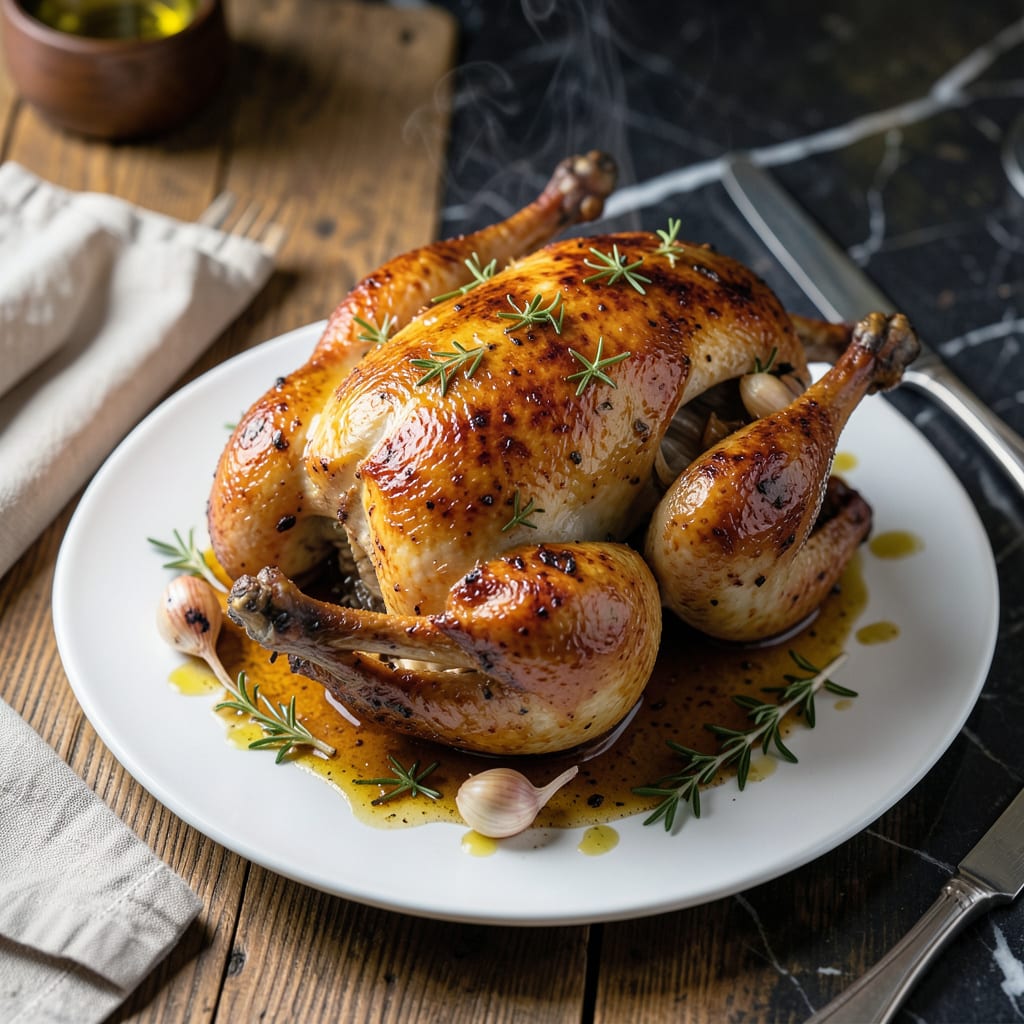
This convection oven method delivers juicy chicken with perfectly browned skin every time. The even heat circulation ensures consistent cooking without hot spots that can dry out the meat.
I’ve refined this technique to create a foolproof process for achieving tender, flavorful roast chicken. The result is a golden, crisp exterior with meat that stays moist throughout.
Ingredients for Roast Chicken in Convection Oven
One whole bird, fresh herbs, and a few pantry staples create this foolproof roast.
| Ingredient | Amount | Notes |
|---|---|---|
| Whole Chicken 🍗 | 1 whole | 3 to 4 lbs, giblets removed |
| Unsalted Butter 🧈 | ½ cup | Softened for rubbing under skin |
| Extra-Virgin Olive Oil 🫒 | 2 tbsp | For skin crisping finish |
| Kosher Salt 🧂 | 1 ½ tbsp | Diamond Crystal preferred for even seasoning |
| Freshly Ground Black Pepper 🌶️ | 1 tsp | Coarse grind for texture |
| Garlic Cloves 🧄 | 6 cloves | Smashed but left whole |
| Fresh Rosemary Sprigs 🌿 | 4 sprigs | Woody stems removed |
| Fresh Thyme Sprigs 🍃 | 6 sprigs | Leaves stripped from stems |
| Lemon 🍋 | 1 whole | Halved for cavity |
| Yellow Onion 🧅 | 1 whole | Quartered for aromatics |
| Chicken Stock 🥣 | ½ cup | Low-sodium preferred for pan juices |
| Dry White Wine 🍷 | ¼ cup | Optional for deglazing pan |
| All-Purpose Flour 🌾 | 2 tbsp | For optional pan gravy |
The chicken quality is paramount. Seek out air-chilled birds (like Bell & Evans or Mary’s Free-Range) for superior texture and flavor—they don’t retain water like conventionally processed options. Aim for a 3.5-4 lb bird for even cooking in convection. The butter should be European-style (82% fat) for richer flavor, though standard unsalted works. Fresh herbs are non-negotiable; dried simply won’t deliver the same aromatic impact.
No fresh herbs? Dried at one-third the quantity (1 tbsp dried rosemary, 1.5 tsp dried thyme) works in a pinch, but expect muted flavor. Skip the wine? Use additional chicken stock. For a deeper golden color, brush the skin with honey or maple syrup in the last 15 minutes. The onion and lemon can be swapped for celery and orange for variation.
Roast chicken is best served immediately, but leftovers keep 3-4 days refrigerated. Reheat gently in a 300°F oven to preserve moisture. Carve and freeze portions for up to 3 months. The pan juices can be strained and frozen separately for quick sauces.
Why You’ll Love This Recipe
- I’ll be real: the carcass makes the best broth, and the meat stretches into three more meals without trying.
- Set It and Forget: That convection oven does all the work—just rub the chicken with butter, oil, salt, and pepper, then let it roast to golden perfection.
- Crispy Skin Magic: The butter and olive oil combo under that hot air gives skin so shatteringly crisp it’ll have everyone fighting over the dark meat.
- Sunday to Thursday: Honestly, this chicken works for a fancy dinner or sliced into salads and sandwiches all week long.
Step-by-Step Instructions for Roast Chicken in a Convection Oven
This convection method ensures perfectly crisp skin and juicy meat with even browning throughout.
Step 1: Prepare and Season the Chicken
Pat the whole chicken completely dry inside and out with paper towels. Season the cavity generously with 1 tablespoon kosher salt and ½ teaspoon freshly ground black pepper. This step is crucial for both flavor and achieving that coveted crispy skin.
Gently loosen the skin over the breast and thighs, then rub 0.5 cup softened unsalted butter beneath it. This creates a flavor barrier that keeps the meat moist while the skin crisps. Place the halved lemon, 6 cloves smashed garlic, 4 sprigs rosemary, and 6 sprigs thyme in the cavity for aromatic infusion.
Step 2: Truss and Prep for Roasting
Truss the chicken legs together with kitchen twine and tuck the wings under the body. This compact shape promotes even cooking and prevents the tips from burning. Place the quartered yellow onion in the center of a roasting pan or on a rack to elevate the bird.
Position the chicken breast-side up on the onions. Brush the exterior with the 2 tablespoons extra-virgin olive oil and sprinkle with the remaining ½ tablespoon kosher salt and ½ teaspoon black pepper. The oil helps conduct heat for uniform browning while the salt draws out moisture for crispier skin.
Step 3: Roast in Convection Oven
Preheat the convection oven to 375°F. This temperature is lower than conventional roasting because convection circulates hot air more efficiently. Place the chicken in the center rack position and roast for 1 hour to 1 hour 15 minutes, or until the internal temperature reaches 165°F in the thickest part of the thigh.
The convection’s even air circulation will produce golden-brown skin all over without the need to rotate the pan. Start checking the temperature at the 1-hour mark, as convection ovens often cook faster than conventional ones.
Step 4: Rest and Prepare Pan Gravy
Transfer the chicken to a cutting board and tent loosely with foil. Let it rest for 15-20 minutes—this allows the juices to redistribute, ensuring moist meat when carved. Meanwhile, place the roasting pan on the stovetop over medium heat.
Add the ¼ cup dry white wine to the pan and scrape up any browned bits with a wooden spoon. Sprinkle in the 2 tablespoons all-purpose flour and whisk to form a smooth paste. Gradually pour in the ½ cup chicken stock, whisking constantly until the gravy thickens to your desired consistency. Serve the chicken with this flavorful pan sauce for a complete meal.
Pro Tips For Making Roast Chicken In Convection Oven
- Reduce Convection Temp: Drop the oven temp 25°F from standard recipes—convection circulates heat more aggressively, and I learned this the hard way after drying out two chickens.
- Pat It Dry: Use paper towels to thoroughly dry the chicken skin before seasoning; even a little moisture steams the skin instead of crisping it, and I was skeptical until I tried it.
- Butter Under Skin: Gently loosen the skin and rub softened unsalted butter directly on the meat—this keeps the breast juicy while the skin browns beautifully.
- Rest Before Carving: Give it a solid 10-15 minutes under foil after roasting; I skip this when I’m hungry, but the juices redistribute and the meat stays moist every time I wait.
Common Mistakes When Making This Dish
Skipping the Dry
Don’t rush the drying step—pat the chicken completely dry inside and out with paper towels. Any moisture left on the skin will steam instead of crisp, leaving you with rubbery results. I use 3-4 paper towels to ensure every surface is bone-dry. 💡
Uneven Seasoning
Avoid sprinkling salt only on top. Season the cavity generously with 1 tablespoon kosher salt and don’t forget the wings and legs. I rub the seasoning directly onto the meat under the skin for maximum flavor penetration.
Overcrowding the Pan
Place the chicken on a rack in the roasting pan, not directly on the surface. This allows hot air to circulate all around for even browning. If using onions as a base, arrange them in a single layer so they don’t steam the bird’s bottom.
Ignoring the Thermometer
Never rely on time alone. Convection ovens vary, so use a meat thermometer to check for 165°F in the thickest part of the thigh. I pull mine at 160°F—it’ll rise to 165°F while resting. 🌡️
Skipping the Rest
Let the chicken rest for 15-20 minutes before carving. Cutting too soon causes juices to spill out, leaving dry meat. I tent it loosely with foil to keep it warm while the juices redistribute.
Neglecting the Pan Juices
Don’t discard those browned bits! Deglaze with ¼ cup dry white wine or stock to create a rich pan sauce. I whisk in 2 tablespoons flour for a quick gravy that ties the whole meal together.
Nutrition Facts
Frequently Asked Questions
What temperature should I use for convection roasting?
Set your convection oven to 375°F. This is lower than conventional ovens because the circulating air cooks more efficiently. Always check the internal temperature reaches 165°F.
How long does it take to roast a chicken in convection?
A 3.5-4 lb bird typically takes 1 hour to 1 hour 15 minutes. Start checking at the 1-hour mark since convection ovens often finish faster than conventional ones.
Why isn’t my chicken skin crispy?
Pat the skin completely dry before seasoning. Any moisture will steam instead of crisp. Also, ensure you’re using enough fat—either butter under the skin or oil on the surface.
Can I use frozen chicken for this recipe?
Thaw it completely first in the refrigerator, which takes about 24 hours for a 4 lb bird. Never roast from frozen as it leads to uneven cooking.

- 6 Egg Cake Recipe with Oil: Light as Air With Buttery Moisture - October 4, 2026
- 4 Bean Casserole Recipe: One-Pan Heartiness With Smoky Paprika Depth - October 4, 2026
- 3-Ingredient Keto Mug Cake Recipe: Microwave Magic in 2 Minutes - October 4, 2026