
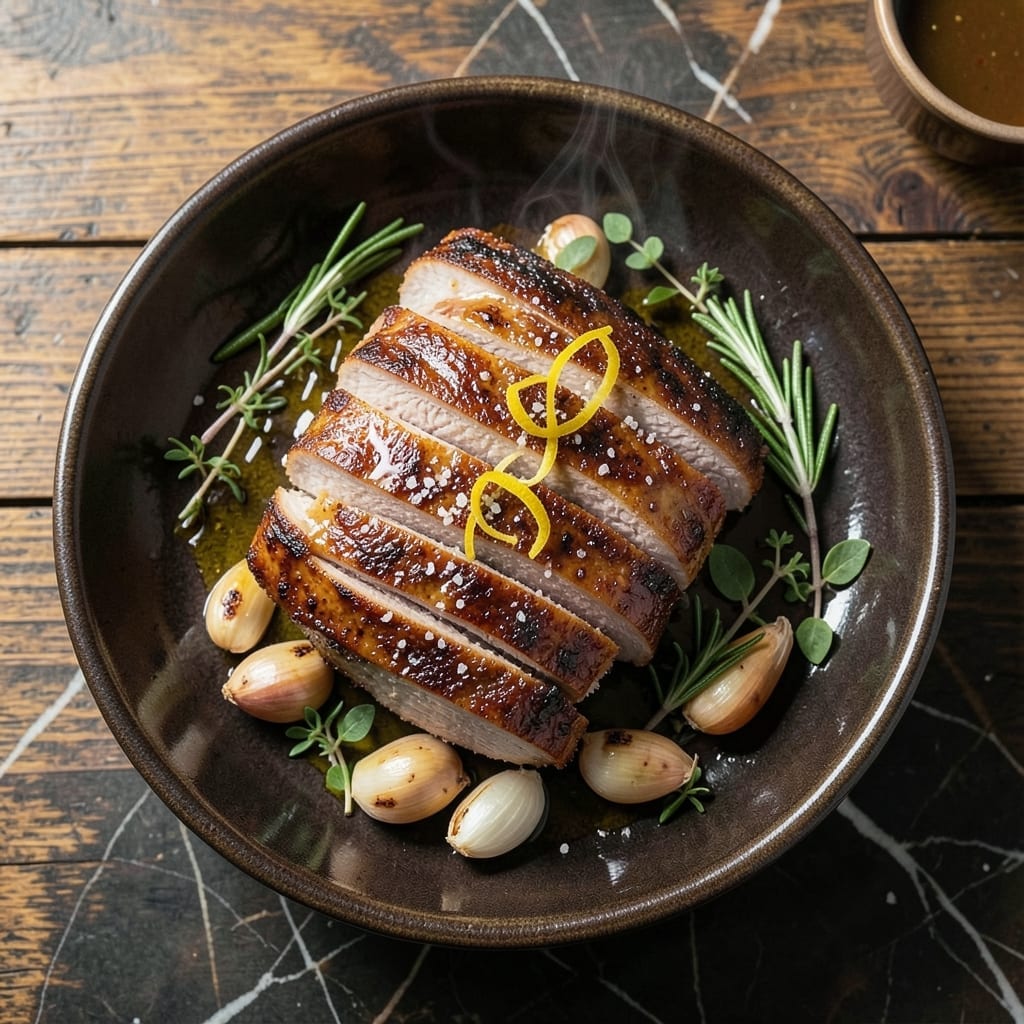
Mastering rotisserie pork tenderloin at home delivers tender, flavorful results that rival your favorite restaurant. This method ensures juicy meat with a perfectly seasoned crust every time.
The key is a simple herb rub and slow rotation on the spit, allowing the meat to cook evenly while basting in its own juices. I’ve refined this technique to create a foolproof process for home cooks.
What you’ll achieve is a beautifully browned exterior with a moist, tender interior that slices like butter. The herbs form a fragrant crust that enhances each bite without overpowering.
Serve this centerpiece dish with roasted vegetables or a fresh salad for a complete meal that impresses without effort.
Ingredients for Rotisserie Pork Tenderloin
Simple herb rub and quality pork deliver that restaurant-worthy tenderness and crust.
| Ingredient | Amount | Notes |
|---|---|---|
| Pork Tenderloin 🥩 | 1 ½ lb | Trimmed of excess fat |
| Fresh Rosemary 🌿 | 2 tbsp | Finely chopped |
| Fresh Thyme 🍃 | 2 tbsp | Leaves stripped from stems |
| Garlic Cloves 🧄 | 4 cloves | Minced finely |
| Olive Oil 🫒 | ¼ cup | Extra-virgin preferred |
| Kosher Salt 🧂 | 1 ½ tsp | Diamond Crystal or Morton |
| Black Pepper 🌶️ | 1 tsp | Freshly cracked |
| Dijon Mustard 🟡 | 2 tbsp | Smooth, not whole grain |
| Brown Sugar 🟤 | 1 tbsp | Light or dark |
| Smoked Paprika 🌶️ | 1 tsp | Sweet or hot variety |
| Ground Cumin 🌿 | ½ tsp | Toasted for depth |
| Red Wine Vinegar 🍷 | 1 tbsp | For acidity balance |
The pork tenderloin is the star—look for 1.5 lb pieces with even thickness at Whole Foods or Costco (they often have pre-trimmed options). Fresh herbs make the crust pop, so grab organic rosemary and thyme from the produce section. If you’re buying a whole tenderloin, trim any silver skin yourself—it’s tough and doesn’t soften during cooking.
No fresh herbs? Dried work in a pinch (use one-third the amount). Honey instead of brown sugar adds a touch of sweetness if that’s your preference. Dijon mustard can be swapped for whole grain, but the smooth version distributes better in the rub. For extra smokiness, add half a teaspoon of chipotle powder.
The herb rub can be made a day ahead—just store it in the fridge. Pork tenderloin cooks best immediately after seasoning, so don’t let it sit too long. Leftovers keep for 4-5 days in the fridge or freeze for up to 3 months.
Why You’ll Love This Recipe
- Set and Forget: I rub the pork with olive oil, garlic, and herbs, then let the rotisserie do the work—no babysitting required.
- Herb-Crusted Perfection: The rosemary and thyme crust forms this incredible aroma while it spins, and the garlic mellows into this sweet, savory bite.
- Feeds the Week: I make this Sunday and we’re eating it in tacos, salads, and sandwiches until Wednesday.
- Budget Roast: Pork tenderloin is cheap, and one roast gives us three full meals with hardly any effort.
Step-by-Step Instructions for Herb-Crusted Rotisserie Pork Tenderloin
This method ensures perfectly tender pork with a flavorful crust every time.
Step 1: Prepare the Herb Marinade
In a bowl, whisk together the 0.25 cup olive oil, 2 tbsp Dijon mustard, 1 tbsp brown sugar, 1 tbsp red wine vinegar, 1.5 tsp kosher salt, 1 tsp black pepper, 1 tsp smoked paprika, and 0.5 tsp ground cumin until fully combined. The mixture should be smooth and slightly thickened from the mustard.
Add the 2 tbsp fresh rosemary and 2 tbsp fresh thyme to the bowl, followed by the 4 cloves garlic cloves. Stir well to distribute the herbs and garlic evenly. This marinade will infuse the pork tenderloin with deep, aromatic flavors while keeping it moist during cooking.
Step 2: Coat and Marinate the Pork Tenderloin
Pat the 1.5 lb pork tenderloin dry with paper towels to ensure the marinade adheres properly. Place the pork in a resealable plastic bag or shallow dish and pour the marinade over it, turning to coat every surface. The pork should be fully submerged or evenly coated on all sides.
Let the pork marinate at room temperature for 30 minutes, or refrigerate for up to 4 hours for deeper flavor penetration. If marinating longer, turn the pork occasionally to ensure even coverage. The acidity from the vinegar and mustard will tenderize the meat while the herbs and spices build a rich flavor base.
Step 3: Roast the Pork Tenderloin
Preheat your oven to 425°F. Place the marinated pork tenderloin on a rack set over a baking sheet, reserving any leftover marinade. Roast for 20-25 minutes, or until the internal temperature reaches 145°F in the thickest part of the meat.
The pork should develop a golden-brown crust while remaining juicy inside. If the crust begins to darken too quickly, tent the pork loosely with foil. Baste the pork with the reserved marinade halfway through cooking to enhance the herb crust and add extra moisture.
Step 4: Rest and Serve
Remove the pork tenderloin from the oven and transfer it to a cutting board. Tent it loosely with foil and let it rest for 10 minutes—this allows the juices to redistribute throughout the meat, ensuring each slice is tender and flavorful.
Slice the pork against the grain into ½-inch thick pieces. The meat should be slightly pink in the center, moist, and topped with a fragrant herb crust. Serve immediately while warm, with any pan juices spooned over the top for added flavor.
Pro Tips For Making Rotisserie Pork Tenderloin
- Sear Before Roasting: I learned this the hard way—searing the pork tenderloin in a hot pan with olive oil before transferring to the oven locks in moisture and adds a deep, caramelized crust that you just can’t get from roasting alone.
- Pound the Tenderloin: Pork tenderloins are uneven in thickness, so I pound the thinner end to about the same width as the thick end—this way, the whole thing cooks evenly and you won’t end up with dry tips.
- Skip Whole Herb Sprigs: Sounds weird, but mincing the rosemary and thyme instead of using whole sprigs actually changes the outcome—you get flavor in every bite rather than just a few herb-heavy spots.
- Rest Under Foil: After pulling it from the oven, tent the pork with foil and let it rest for at least 10 minutes—this keeps it juicy while the internal temp finishes rising to 145°F.
Troubleshooting rotisserie pork tenderloin
Uneven Cooking
If your pork tenderloin cooks unevenly on the rotisserie, check that it’s centered on the spit. I use butcher’s twine every 2 inches to secure it tightly. Uneven shapes can cause one end to dry out while the other stays undercooked. 🌡️
Dry Meat
Dryness often happens when the internal temperature overshoots. Pull it at exactly 145°F and tent with foil for 10 minutes while resting. Also, avoid skipping the marinade step—the olive oil and Dijon mustard create a moisture barrier.
Poor Crust Formation
The herb crust won’t form if the rotisserie speed is too high. Set it to medium-low for even browning. I also brush the meat with extra marinade during the first 30 minutes of cooking to build that flavorful exterior.
Sticking to Spit
Prevent sticking by oiling the spit before threading the meat. I rub mine with a paper towel dipped in olive oil first. Also, don’t overload the spit—1.5 lb is the perfect size for even cooking and easy rotation.
Flavor Too Mild
If your seasoning seems weak, let the pork marinate longer. I’ve found 4 hours in the fridge makes a noticeable difference. Also, use fresh herbs—dried won’t give you that vibrant rosemary and thyme punch. 💡
Rotisserie Malfunction
If your rotisserie stops turning, check the motor connection first. I keep a meat thermometer handy to monitor progress manually. Most home models have a 30-minute auto-shutoff, so restart if needed and finish in the oven at 425°F.
Nutrition Facts
Frequently Asked Questions
What temperature should the pork reach?
Cook until the internal temperature hits 145°F in the thickest part. This ensures tenderness while being safe to eat. Use a meat thermometer for accuracy.
How do I prevent dry meat?
Marinate for at least 30 minutes and pull it at exactly 145°F. Rest it for 10 minutes before slicing to retain juices.
Can I use dried herbs instead of fresh?
Yes, but use one-third the amount. Fresh herbs provide the best flavor, but dried work in a pinch.
What’s the best way to secure it on the spit?
Use butcher’s twine every 2 inches to keep it centered. This prevents uneven cooking and sticking.

- 6 Egg Cake Recipe with Oil: Light as Air With Buttery Moisture - October 4, 2026
- 4 Bean Casserole Recipe: One-Pan Heartiness With Smoky Paprika Depth - October 4, 2026
- 3-Ingredient Keto Mug Cake Recipe: Microwave Magic in 2 Minutes - October 4, 2026