
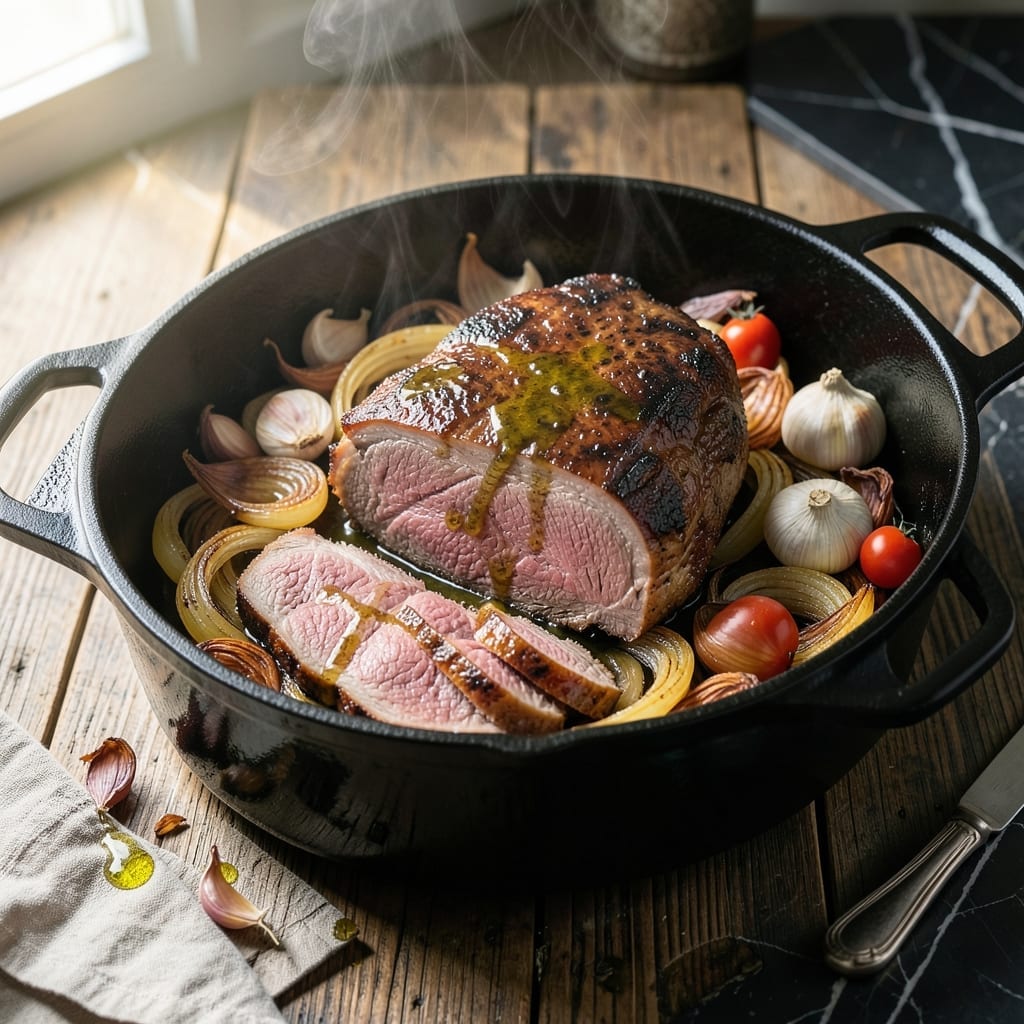
This Dutch oven method transforms tough rump roast into meltingly tender perfection with minimal effort. The slow braising process breaks down connective tissue, creating a dish that falls apart at the touch of a fork.
I’ve refined this technique over years of Sunday dinners, focusing on low, steady heat and a flavorful liquid base. The Dutch oven’s even heat distribution ensures consistent results, while the tight-fitting lid locks in moisture.
The result is rich, succulent beef with a deep, savory sauce that soaks into every bite. No special skills required—just patience and a few simple ingredients to achieve restaurant-quality tenderness at home.
Serve with mashed potatoes or crusty bread to soak up every last drop of the braising liquid. This is comfort food at its finest.
Ingredients for Rump Roast Dutch Oven
Simple ingredients, restaurant-quality results. The Dutch oven handles the rest with patience.
| Ingredient | Amount | Notes |
|---|---|---|
| Rump Roast 🥩 | 3 lb | Well-marbled, trimmed of excess fat |
| Olive Oil 🫒 | 2 tbsp | Divided for searing and sautéing |
| Kosher Salt 🧂 | 1 ½ tsp | Diamond Crystal preferred for consistency |
| Black Pepper 🌶️ | 1 tsp | Freshly ground for optimal flavor |
| Yellow Onion 🧅 | 1 whole | Large, finely diced for base flavor |
| Garlic Cloves 🧄 | 6 cloves | Peeled and smashed for depth |
| Carrots 🥕 | 3 whole | Peeled and cut into chunks |
| Celery Stalks 🌿 | 3 whole | Cut into large pieces for aroma |
| Tomato Paste 🍅 | 2 tbsp | Double-concentrated for richness |
| Red Wine 🍷 | 1 ½ cups | Dry variety like Cabernet Sauvignon |
| Beef Stock 🥘 | 2 cups | Low-sodium for controlled seasoning |
| Fresh Thyme Sprigs 🌿 | 4 whole | Plus extra for garnish if desired |
| Bay Leaf 🍃 | 2 whole | Dried, for slow braising depth |
| All-Purpose Flour 🌾 | 2 tbsp | For thickening the braising liquid |
The rump roast is the foundation—select a piece with good marbling (those white fat streaks) for maximum tenderness. Costco or Whole Foods typically carry well-marbled cuts, but your local butcher can guide you. Avoid pre-cut stew meat; whole roasts yield better texture. For the red wine, Cabernet Sauvignon or Merlot work beautifully (don’t waste a $50 bottle—cooking wine is fine).
No red wine? Beef broth with a splash of balsamic vinegar mimics the acidity. Fresh thyme is ideal, but dried at one-third the amount works. If tomato paste isn’t on hand, tomato sauce reduced by half can substitute. For the beef stock, Better Than Bouillon paste is a reliable store-bought option (just dissolve in hot water).
Braising liquid tastes even better the next day. Store in an airtight container for up to 4 days in the fridge or freeze for 3 months. Skim off solidified fat before reheating to serve.
Why You’ll Love This Recipe
- I’ll be real: a rump roast is cheaper than fancy cuts, but the Dutch oven turns it into something special.
- One-Pot Wonder: I love that this cooks entirely in my Dutch oven—just sear the rump roast, toss in the onion, and let the oven do the work.
- Rich and Simple: Honestly, the combo of olive oil, salt, and pepper with the slow-cooked rump roast makes it taste like it simmered all day.
- Feeds a Crowd: Between us, this is my go-to for Sunday dinners because it stretches easily for leftovers or a full table.
Step-by-Step Instructions for Rump Roast Dutch Oven
Here’s the method. Straightforward, tested, works every time.
Step 1: Sear and Season the Rump Roast
Pat the 3 lb Rump Roast dry with paper towels—this ensures a perfect sear. Season generously with the 1.5 tsp Kosher Salt and 1 tsp Black Pepper, pressing the seasoning into the meat so it adheres well.
Heat 1 tbsp Olive Oil in a Dutch oven over medium-high heat until shimmering. Add the rump roast and sear for 4-5 minutes per side until deeply browned. You want a rich crust—this builds the foundation of flavor. Transfer the roast to a plate and set aside.
Step 2: Sauté Aromatics and Build the Base
In the same Dutch oven, add the remaining 1 tbsp Olive Oil. Add the finely diced 1 whole Yellow Onion, 3 whole Carrots (cut into chunks), and 3 whole Celery Stalks. Sauté for 5-6 minutes until the onions soften and begin to caramelize.
Add the 6 cloves Garlic Cloves (smashed) and 2 tbsp Tomato Paste, stirring for 1-2 minutes until the tomato paste deepens in color. This step develops the rich, savory base of your braising liquid. Stir in the 2 tbsp All-Purpose Flour and cook for 1 minute to remove the raw taste.
Step 3: Deglaze and Add Braising Liquid
Pour in the 1.5 cups Red Wine and scrape up all the browned bits from the bottom of the pot with a wooden spoon. This deglazing step captures all the concentrated flavor from the searing process. Let the wine simmer for 3-4 minutes until reduced by half.
Add the 2 cups Beef Stock, 4 whole Fresh Thyme Sprigs, and 2 whole Bay Leaf. Return the seared rump roast to the Dutch oven, along with any accumulated juices. The liquid should come about halfway up the roast—this ensures even cooking and maximum tenderness.
Step 4: Braise to Melting Tenderness
Cover the Dutch oven and transfer it to a preheated 325°F oven. Braise for 2.5 to 3 hours, turning the roast halfway through. You’ll know it’s done when the meat pulls apart easily with a fork and reaches an internal temperature of 195-200°F.
This slow, gentle cooking process breaks down the connective tissue, transforming the rump roast into a melt-in-your-mouth masterpiece. The aromatics infuse the braising liquid, creating a rich, flavorful sauce that complements the tender meat perfectly.
Step 5: Rest and Serve
Carefully remove the Dutch oven from the oven and transfer the rump roast to a cutting board. Tent it loosely with foil and let it rest for 15-20 minutes. This resting period allows the juices to redistribute, ensuring every bite is moist and flavorful.
Skimming excess fat from the braising liquid and reducing it slightly on the stovetop creates a luxurious sauce. Slice the rump roast against the grain and serve with the sauce spooned over the top. The result is a dish that delivers on the promise of slow-braised, melting tenderness.
Pro Tips For Making Rump Roast Dutch Oven
- Sear It Hard: Crank the heat to medium-high and get a deep brown crust on all sides of the rump roast—this builds flavor before the slow cook. I learned this the hard way after too many pale, bland roasts.
- Salt Generously: Use at least 1 tablespoon of kosher salt for a 3-pound roast, rubbing it in the night before if you can. Sounds like a lot, but rump roast needs it to taste seasoned through.
- Don’t Rush the Braise: After searing, drop the heat to low and cover the Dutch oven—rushing with high heat turns the meat tough. My first few attempts were dry until I forced myself to wait.
- Slice Against Grain: After resting 10-15 minutes, slice the roast against the grain for tender bites. I used to ignore this and wondered why my roast felt chewy.
Serving Suggestions for This Recipe
Classic Pairings
I always serve this with creamy mashed potatoes—they soak up that rich braising liquid like a dream. Use Yukon Golds for the perfect texture. A simple green salad with a tangy vinaigrette cuts through the richness beautifully.
Bread Options
For something more rustic, try crusty sourdough or a baguette to mop up every last bit of sauce. Toast slices with garlic butter for extra flavor. My family fights over who gets the last piece of bread!
Vegetable Sides
Roasted Brussels sprouts with balsamic glaze complement the beef’s depth. Toss 1 lb halved sprouts with 2 tbsp olive oil and roast at 400°F for 20-25 minutes. 🥗
Starch Alternatives
Swap potatoes for buttered egg noodles or polenta if you want a change. The noodles twirl perfectly with the tender meat, while polenta’s creaminess pairs wonderfully with the sauce.
Garnish Ideas
Fresh chopped parsley or thyme leaves add a pop of color and brightness. A sprinkle of flaky sea salt like Maldon elevates the dish just before serving. Simple touches make it feel special.
Family-Style Service
I love serving this family-style in the Dutch oven itself—it keeps the meat warm and makes for a cozy presentation. Let everyone serve themselves with tongs and a ladle for the sauce. 💛
Nutrition Facts
Frequently Asked Questions
What temperature should the oven be set to?
Preheat your oven to 325°F for even, slow cooking. This temperature ensures the meat becomes tender without drying out.
Can I use a slow cooker instead?
Yes, but first sear the roast and sauté aromatics in a pan. Then transfer everything to the slow cooker and cook on low for 6-8 hours.
How do I know when it’s done?
The meat should pull apart easily with a fork and reach an internal temperature of 195-200°F. This ensures maximum tenderness.
Can I make this ahead of time?
The flavors deepen when reheated. Store in an airtight container for up to 4 days in the fridge or freeze for 3 months.

- 6 Egg Cake Recipe with Oil: Light as Air With Buttery Moisture - October 4, 2026
- 4 Bean Casserole Recipe: One-Pan Heartiness With Smoky Paprika Depth - October 4, 2026
- 3-Ingredient Keto Mug Cake Recipe: Microwave Magic in 2 Minutes - October 4, 2026