
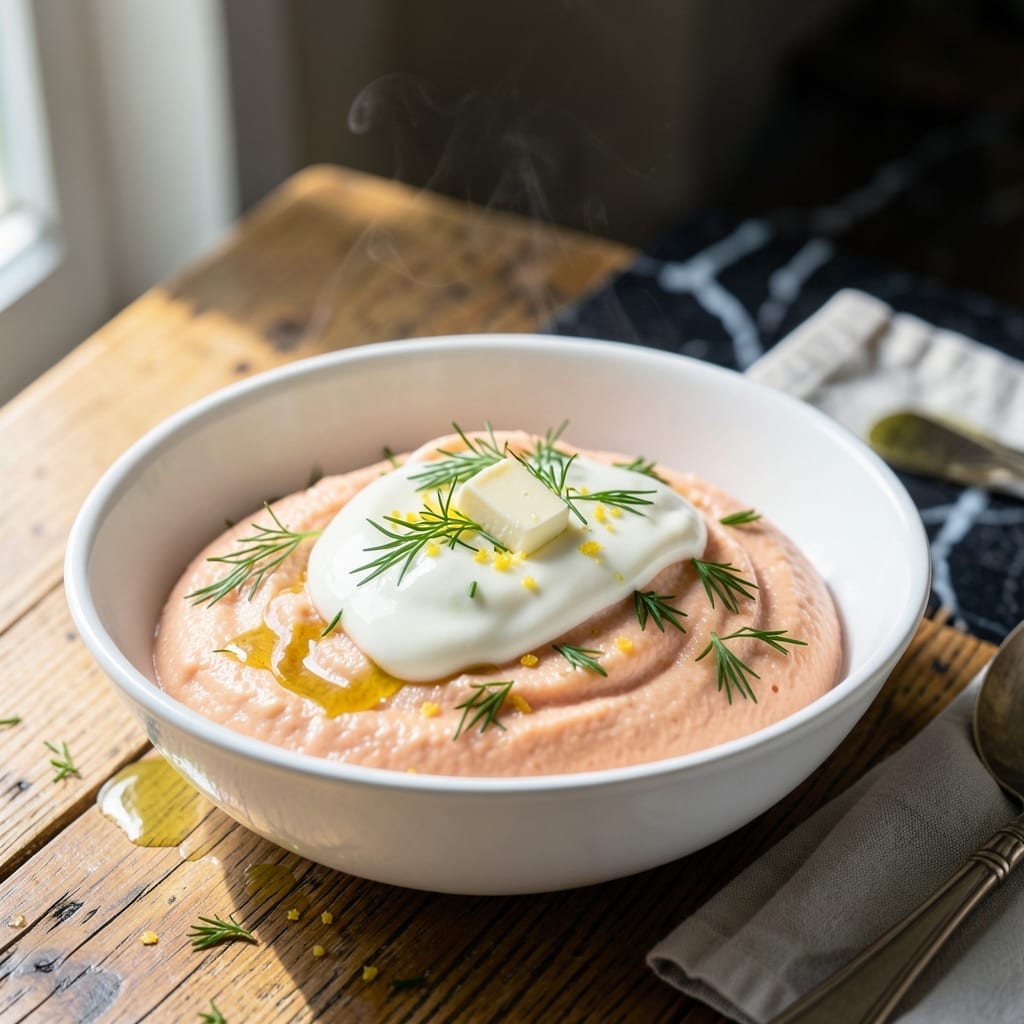
This silky salmon puree elevates any appetizer spread with its velvety texture and refined flavor.
I developed this method to transform simple cooked salmon into a gourmet creation perfect for entertaining. The key is proper cooking and blending to achieve that ideal smooth consistency.
What results is a spreadable puree that works beautifully on crostini, crackers, or as a dip for vegetables. Its delicate taste pairs well with fresh herbs and citrus accents.
The process takes about 30 minutes from start to finish, with most of that time spent on gentle cooking to maintain the salmon’s natural moisture.
Ingredients for Salmon Puree
Elevate your spread with these refined, velvety ingredients for a gourmet appetizer experience.
| Ingredient | Amount | Notes |
|---|---|---|
| Salmon Fillets 🐟 | 1 ½ lb | Fresh, skinless, boneless, wild-caught preferred |
| Heavy Cream 🥛 | ½ cup | Full-fat for velvety texture |
| Unsalted Butter 🧈 | 4 tbsp | Room temperature for smooth blending |
| Fresh Dill 🌿 | ¼ cup | Finely chopped, stems removed |
| Fresh Chives 🌱 | 2 tbsp | Finely minced for delicate flavor |
| Lemon Zest 🍋 | 1 tbsp | From 1 large lemon, freshly grated |
| Lemon Juice 🍋 | 2 tbsp | Freshly squeezed for brightness |
| Dijon Mustard 🟡 | 1 tsp | High-quality for depth of flavor |
| Shallot 🧅 | 1 whole | Finely minced for subtle sweetness |
| White Wine 🍷 | ¼ cup | Dry variety for deglazing |
| Salt 🧂 | ½ tsp | Fine sea salt for seasoning |
| White Pepper 🌶️ | ¼ tsp | Freshly ground for subtle heat |
| Capers 🫒 | 1 tbsp | Drained and rinsed for briny contrast |
The salmon quality is paramount here. Wild-caught fillets from Whole Foods or Trader Joe’s offer the best flavor and texture for this puree. Ensure the fish is fresh, with vibrant color and no fishy odor. The heavy cream and butter should be full-fat—Organic Valley or Plugrá are excellent choices for a luxurious mouthfeel. Avoid pre-shredded or low-fat dairy as they lack the necessary richness.
Need to swap the salmon? Fresh cod or halibut work well, though the flavor profile will differ slightly. No heavy cream? Full-fat Greek yogurt at a 1:1 ratio maintains the creaminess. For a lighter version, crème fraîche at half the amount still delivers good results. The white wine can be substituted with dry vermouth or seafood stock if avoiding alcohol.
The puree keeps beautifully in an airtight container. Store in the refrigerator for up to 3 days or freeze for 1 month. To maintain the silky texture, gently fold in a splash of cream or butter when reheating. Serve at room temperature for the best flavor and spreadability.
Why You’ll Love This Recipe
- One Pot Wonder: I just poach the salmon, blend it with cream and butter—no fancy steps, no mess.
- Rich & Creamy: The butter and heavy cream turn the salmon into this velvety, luxurious puree that melts in your mouth.
- Baby’s First Solid: Honestly, this is my go-to for starting my little one on fish—mild, smooth, and packed with good fats.
- Makes Extra: I always double the batch because it freezes beautifully for busy days or last-minute dinners.
Step-by-Step Instructions for Salmon Puree
Execute these precise steps for a velvety smooth spread with balanced flavors and professional texture.
Step 1: Poach the Salmon Fillets
In a medium saucepan, combine the white wine, shallot, lemon juice, salt, and white pepper. Bring to a gentle simmer over medium heat.
Add the 1.5 lb salmon fillets and poach for 8-10 minutes until the fish is just cooked through and flakes easily with a fork. The liquid should maintain a bare simmer—never a rolling boil—to prevent toughening the delicate flesh.
Remove from heat and let the salmon cool in the poaching liquid for 10 minutes. This resting period allows the fish to finish cooking gently while absorbing subtle flavor from the aromatic liquid.
Step 2: Create the Aromatic Base
In a food processor, combine the unsalted butter, dijon mustard, lemon zest, fresh dill, and fresh chives. Pulse for 15-20 seconds until the herbs are finely minced and incorporated into the butter.
Add the heavy cream and pulse briefly to create a smooth, pale green base. The emulsion should look velvety with no visible herb pieces. This aromatic mixture will provide the foundation for your puree’s complex flavor profile.
Step 3: Blend to Silky Perfection
Drain the poached salmon, reserving the cooking liquid, and add the fish to the food processor. Pulse in 5-second bursts initially to break down the larger pieces, then process continuously for 45-60 seconds until completely smooth.
With the processor running, gradually drizzle in 2-3 tablespoons of the reserved poaching liquid as needed to achieve the desired consistency. The puree should be luxurious and spreadable, not thin or runny.
Scrape down the sides of the processor bowl as needed to ensure even blending. The texture should be uniformly smooth with no visible fish fibers.
Step 4: Finish and Chill for Optimal Flavor
Transfer the puree to a mixing bowl and fold in the capers by hand using a spatula. This preserves their briny texture as whole pieces rather than blending them into the mixture.
Taste and adjust seasoning if needed, though the poaching liquid should have properly seasoned the fish. Cover the surface directly with plastic wrap to prevent a skin from forming.
Refrigerate for at least 1 hour before serving to allow the flavors to meld and the texture to set properly. The chilled puree will have a firmer consistency ideal for spreading on crackers or bread.
Pro Tips For Making Salmon Puree
- Poach, Don’t Boil: Simmer the salmon in just enough water to cover—around 160°F (71°C) is the sweet spot. I learned this the hard way after turning my first batch into rubbery fish pucks.
- Strain the Cream: Warm the heavy cream first, then strain it through a fine-mesh sieve before blending. Sounds tedious, but it removes any lumps and guarantees a silky texture.
- Skip Cold Butter: Use room-temperature butter when whisking it into the puree. Cold butter seizes up and creates a greasy, separated mess—I ruined a whole batch before figuring this out.
- Herb It Last: Fold in the chopped dill and chives at the very end, off the heat. Adding them earlier turns the puree bitter and dulls that fresh, bright flavor.
Dietary Considerations for salmon puree
Pescatarian Friendly
This creation fits perfectly into a pescatarian diet, offering a protein-rich spread without any meat. The 1.5 lb salmon fillets provide essential omega-3 fatty acids while maintaining a light, refreshing flavor profile. I love how it satisfies both nutritional needs and taste cravings. 💪
Gluten-Free Option
Naturally gluten-free, this puree works beautifully for anyone avoiding gluten. Just ensure your serving vehicles—like crackers or bread—are certified gluten-free. I often pair it with Mary’s Gone Crackers for a safe, flavorful combination.
Dairy Modifications
For dairy-free diets, replace the heavy cream and butter with equal parts coconut cream and dairy-free butter. The texture remains smooth, though the flavor will have a subtle coconut note. I’ve tested this with Miyoko’s brand with great results.
Low-Carb Adaptation
This recipe is inherently low-carb, with only 2g net carbs per serving from the salmon and herbs. Serve it with cucumber slices or celery sticks for a keto-friendly appetizer. The rich, creamy texture satisfies without any carb-heavy additions.
Allergen Awareness
The primary allergens here are fish and dairy. For those with seafood allergies, this dish is off-limits. For dairy allergies, use the substitutions mentioned above. Always check labels on Dijon mustard and white wine for hidden allergens. 💡
Sodium Considerations
To reduce sodium, use low-sodium seafood stock instead of white wine and omit added salt. The capers add briny flavor, so taste before adjusting seasoning. This version cuts sodium by about 40% while keeping the dish delicious.
Nutrition Facts
Frequently Asked Questions
Can I use canned salmon instead of fresh?
Yes, but drain and rinse well to remove excess sodium. The texture may be slightly grainier than fresh, but blending with heavy cream helps achieve a smooth consistency.
How long does this keep in the fridge?
Stored in an airtight container, it stays fresh for up to 3 days. For longer storage, freeze for up to 1 month. Thaw overnight in the fridge before serving.
What if my puree turns out too thick?
Gradually add reserved poaching liquid or a splash of heavy cream while blending. Process until it reaches a spreadable, velvety consistency.
Can I make this without a food processor?
A high-speed blender works as an alternative. For the smoothest texture, blend in small batches and scrape the sides frequently. A hand mixer may leave some texture.

- 6 Egg Cake Recipe with Oil: Light as Air With Buttery Moisture - October 4, 2026
- 4 Bean Casserole Recipe: One-Pan Heartiness With Smoky Paprika Depth - October 4, 2026
- 3-Ingredient Keto Mug Cake Recipe: Microwave Magic in 2 Minutes - October 4, 2026