
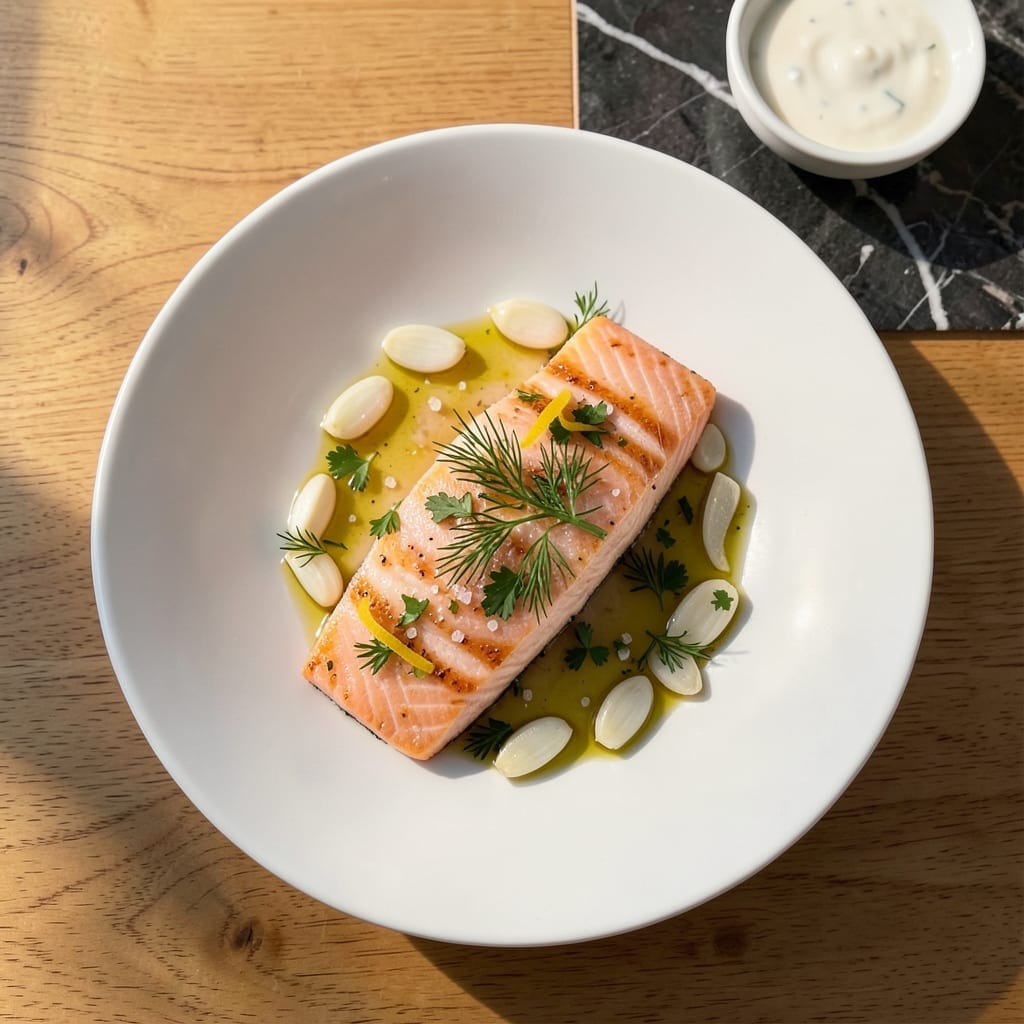
This baked salmon recipe offers a gentle, acid-reflux-friendly approach to enjoying seafood without triggering discomfort. The method focuses on mild seasonings and low-fat preparation to keep flavors soothing yet satisfying.
By baking the salmon at a moderate temperature, we preserve its natural moisture while avoiding harsh ingredients. A touch of fresh dill and a light olive oil drizzle enhance the dish without adding acidity or excess fat.
The result is tender, flaky salmon with a subtle herbal note that’s easy on digestion. This preparation ensures the fish stays moist and flavorful, making it a reliable option for sensitive stomachs.
Serve it alongside steamed vegetables or mild grains for a complete, comforting meal. This method delivers consistent, gentle flavor every time.
Ingredients for Salmon Recipe for Acid Reflux
Gentle ingredients for a soothing, digestion-friendly baked salmon dish with subtle herbal notes.
| Ingredient | Amount | Notes |
|---|---|---|
| Salmon Fillets 🐟 | 1 ½ lb | Skin-on or skinless, fresh or thawed |
| Extra-Virgin Olive Oil 🫒 | 2 tbsp | Mild, light variety preferred |
| Fresh Dill 🌿 | 2 tbsp | Finely chopped, stems removed |
| Fresh Parsley 🍃 | 2 tbsp | Flat-leaf variety, chopped |
| Garlic Cloves 🧄 | 2 cloves | Minced, optional for mild flavor |
| Sea Salt 🧂 | ½ tsp | Fine grain, to taste |
| Ground Black Pepper 🌶️ | ¼ tsp | Freshly ground preferred |
| Lemon Zest 🍋 | 1 tsp | From 1 lemon, acid-free |
| Baby Spinach 🥬 | 4 cups | For serving, optional |
| Jasmine Rice 🍚 | 1 cup | Uncooked, for serving |
| Low-Sodium Chicken Broth 💧 | ½ cup | For poaching or steaming |
| Unsalted Butter 🧈 | 1 tbsp | Optional finish, use sparingly |
The salmon quality is paramount here. Wild-caught Alaskan or sockeye offers the richest flavor and healthiest fats. Look for fillets with vibrant color and no fishy odor—Whole Foods or Trader Joe’s consistently stock high-quality options. Avoid previously frozen unless it’s been properly thawed in the fridge overnight. Freshness ensures the mild, clean taste essential for acid-sensitive diners.
No fresh dill? Dried dill at half the amount works in a pinch, but fresh delivers the brightest, most delicate flavor. Parsley can be swapped for cilantro if preferred (though cilantro’s boldness may overpower). The olive oil must be mild and light—avoid robust, peppery varieties. For extra moisture, a splash of low-sodium vegetable broth can replace chicken broth if avoiding poultry.
Prepped salmon keeps in the fridge for 1-2 days before cooking. Leftovers store for 3 days maximum—reheat gently to avoid drying. The cooked dish doesn’t freeze well due to texture changes. Serve immediately for best moisture retention (worth the extra minute).
Why You’ll Love This Recipe
- One Pan Meal: I love that this comes together in a single skillet—just salmon, olive oil, and herbs, with almost no cleanup.
- Gentle but Flavorful: The garlic and dill add just enough punch without triggering reflux, and the salmon stays tender.
- Weeknight Lifesaver: Honestly, it’s my go-to when I need a light but satisfying dinner in under 20 minutes.
- Leftovers Hold Up: The flavors actually taste better the next day, so I double the batch for easy lunches.
Step-by-Step Instructions for Baked Salmon
Here’s a gentle cooking method that preserves flavor while being kind to sensitive digestive systems.
Step 1: Prepare the Salmon Fillets
Preheat your oven to 375°F. Pat the 1.5 lb salmon fillets dry with paper towels to ensure even cooking and prevent steaming. This step is crucial for achieving the right texture—moisture on the surface can cause uneven heat distribution.
Place the fillets on a parchment-lined baking sheet. Drizzle with 2 tbsp extra-virgin olive oil, ensuring each piece is lightly coated. This not only adds flavor but also creates a barrier that helps lock in moisture during baking.
Step 2: Season with Herbs and Aromatics
In a small bowl, combine the 2 tbsp fresh dill, 2 tbsp fresh parsley, 1 tsp lemon zest, 0.5 tsp sea salt, and 0.25 tsp ground black pepper. Sprinkle this mixture evenly over the salmon fillets, pressing gently to adhere.
If using, add the 2 cloves minced garlic cloves for a subtle aromatic touch. Avoid overpowering spices, as the goal is to enhance the natural flavor of the fish without triggering acid reflux. The lemon zest adds brightness without the acidity of juice.
Step 3: Bake to Perfection
Transfer the baking sheet to the preheated oven and bake for 12-15 minutes, depending on the thickness of the fillets. The salmon is done when it flakes easily with a fork and reaches an internal temperature of 145°F.
Resist the urge to overcook—salmon continues to cook slightly after being removed from the oven. The flesh should be opaque but still tender and moist. For extra gentleness, you can cover the baking sheet loosely with foil for the first 10 minutes to trap steam and cook the fish more evenly.
Step 4: Serve with Mild Accompaniments
While the salmon bakes, cook the 1 cup jasmine rice according to package instructions, substituting 0.5 cup low-sodium chicken broth for half the water. This adds subtle flavor without excess acidity or seasoning.
Plate the salmon alongside the rice and a bed of 4 cups baby spinach for a light, easy-to-digest meal. If desired, finish with a small pat of 1 tbsp unsalted butter melted over the fillets, adding richness without irritation. Serve immediately for the best texture and temperature.
Pro Tips For Making Salmon Recipe For Acid Reflux
- Poach, Don’t Sear: Use low heat and a gentle poach in olive oil with garlic and herbs—this keeps the salmon tender and avoids the high-fat sear that can trigger reflux.
- Skip the Citrus: I learned this the hard way—even a squeeze of lemon can irritate acid reflux, so stick to mild herbs like dill and parsley for flavor.
- Pat Dry First: Sounds weird, but it works: drying the salmon fillets with a paper towel before cooking prevents splattering oil and ensures even cooking.
- Use Fresh Herbs: Dried herbs just don’t cut it here—fresh dill and parsley add bright, soothing flavors without the acidity that aggravates reflux.
Health Benefits of This salmon recipe for acid reflux
Digestive Relief
Salmon is naturally low in fat compared to other proteins, making it a gentle choice for acid reflux. The healthy omega-3s in salmon reduce inflammation in the digestive tract, which can help minimize discomfort. A 6-ounce serving provides about 2,000mg of EPA and DHA without the saturated fats that trigger reflux. 💪
Low-Acid Protein
Unlike many proteins, salmon has a neutral pH, so it won’t aggravate your stomach lining. The mild flavor pairs well with simple seasonings like dill and parsley, which are low in acidity. This makes it easier to digest than heavily spiced or citrus-marinated dishes.
Easy on the Stomach
Baking salmon at 375°F preserves its natural moisture, preventing dryness that can slow digestion. The gentle cooking method ensures the fish stays tender and easy to break down, which is key for sensitive stomachs.
Nutrient-Rich Benefits
This fish is packed with vitamin D and B vitamins, which support overall health without triggering reflux. A single serving covers about 80% of your daily vitamin D needs, helping your body absorb calcium and maintain immune function.
Hydration Support
Salmon’s natural oils help lubricate the digestive system, reducing the risk of irritation. Pairing it with mild sides like jasmine rice or baby spinach keeps the meal soothing and easy to digest. 💛
Nutrition Facts
Frequently Asked Questions
Can I use frozen salmon for this?
Yes, but thaw it overnight in the fridge first. Pat it very dry before baking to avoid excess moisture.
Why avoid lemon juice in the recipe?
Lemon juice is highly acidic and can trigger reflux. We use zest only for flavor without the acidity.
What if I don’t have dill?
Substitute with 1 tsp dried dill or try mild herbs like tarragon or basil. Avoid strong spices.
How do I know when it’s done?
Check for 145°F internal temp or when it flakes easily with a fork. Overcooking dries it out.

- 6 Egg Cake Recipe with Oil: Light as Air With Buttery Moisture - October 4, 2026
- 4 Bean Casserole Recipe: One-Pan Heartiness With Smoky Paprika Depth - October 4, 2026
- 3-Ingredient Keto Mug Cake Recipe: Microwave Magic in 2 Minutes - October 4, 2026