
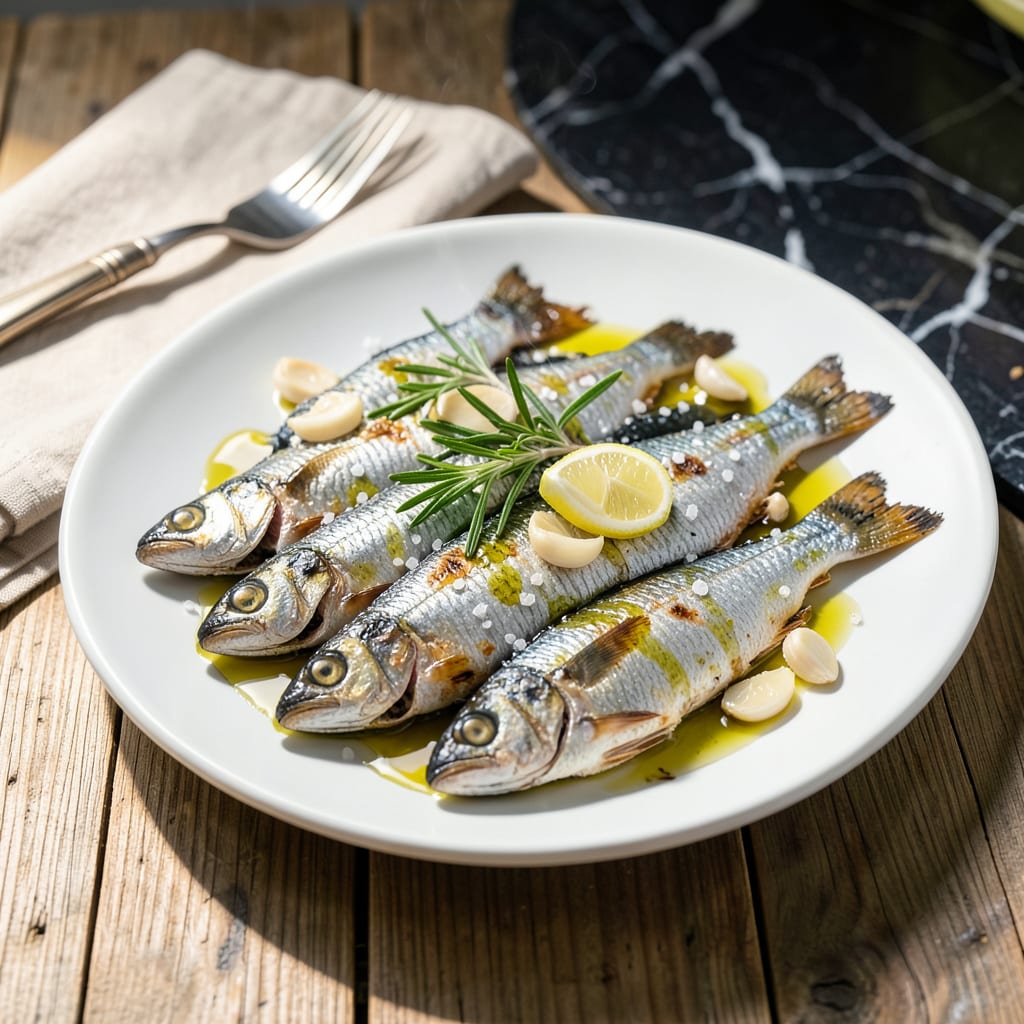
This traditional method preserves sardines in their own oil for a simple yet flavorful dish. The process enhances their natural richness while extending shelf life.
With just a few ingredients and basic techniques, you’ll create a versatile pantry staple. Perfect for appetizers, salads, or pasta toppings.
Ingredients for Sardines in Oil
Fresh sardines meet aromatic herbs and citrus in this Mediterranean pantry classic.
| Ingredient | Amount | Notes |
|---|---|---|
| Fresh Sardines 🐟 | 1 ½ lb | Gutted, cleaned, heads removed |
| Extra-Virgin Olive Oil 🫒 | 2 cups | High-quality, cold-pressed preferred |
| Sea Salt 🧂 | 1 tbsp | Coarse grain, Diamond Crystal recommended |
| Fresh Lemon Juice 🍋 | ¼ cup | Freshly squeezed, about 2-3 lemons |
| Garlic Cloves 🧄 | 6 cloves | Thinly sliced for infusion |
| Fresh Rosemary Sprigs 🌿 | 3 pieces | Whole sprigs for flavor |
| Fresh Thyme Sprigs 🍃 | 3 pieces | Whole sprigs for aroma |
| Red Pepper Flakes 🌶️ | 1 tsp | Crushed, for subtle heat |
| Bay Leaves 🌿 | 2 pieces | Dried, for depth |
| Black Peppercorns 🌶️ | 1 tsp | Whole, lightly crushed |
| White Wine Vinegar 🍷 | 2 tbsp | For acidity balance |
The sardines are the foundation here. Seek out fresh, whole sardines from a trusted fishmonger—look for bright, clear eyes and firm flesh. Wild-caught Mediterranean sardines are ideal if you can source them. The olive oil should be high-quality extra-virgin, as it becomes the preserving medium and primary flavor carrier. I prefer Italian or Spanish varieties for their fruit-forward profiles.
No fresh herbs? Dried rosemary and thyme at one-third the amount work in a pinch, but fresh delivers superior aroma. If you can’t find whole sardines, fresh sardine fillets are acceptable (reduce oil slightly). The lemon juice can be swapped with white wine vinegar for a different acidity profile. For heat adjustments, omit the red pepper flakes or add a pinch of cayenne instead.
Store the finished sardines in a cool, dark place for up to 6 months. Once opened, transfer to the refrigerator and consume within 1 week. The oil can be reused for cooking—it takes on incredible flavor. Always use clean utensils when removing sardines to prevent contamination.
Why You’ll Love This Recipe
- One Pan Wonder: I just toss the sardines with olive oil, salt, and lemon juice, then let the oven do the work.
- Garlic Lovers’ Dream: The garlic cloves mellow in the oil, infusing every bite with that rich, savory depth.
- Weeknight Savior: Honestly, it’s my go-to for busy evenings—ready in 20 minutes, no fuss.
- Budget-Friendly Protein: I get fresh sardines for a fraction of the cost of other fish, and they’re just as satisfying.
Step-by-Step Instructions for Sardines in Oil
This method preserves the fresh flavor of sardines while infusing them with aromatic Mediterranean notes.
Step 1: Prepare and Cure the Sardines
Rinse the 1.5 lb Fresh Sardines under cold water and pat them completely dry with paper towels. This step is crucial for achieving the right texture and preventing spoilage. Arrange the sardines in a single layer in a shallow glass or ceramic dish.
Sprinkle the 1 tbsp Sea Salt evenly over both sides of the sardines. The coarse grain will draw out excess moisture while gently curing the fish. Let them sit at room temperature for 30 minutes—you’ll notice the flesh firm up slightly as the salt works its magic.
Step 2: Infuse the Olive Oil with Aromatics
In a small saucepan, combine the 2 cups Extra-Virgin Olive Oil with the 6 cloves Garlic Cloves, 3 pieces Fresh Rosemary Sprigs, 3 pieces Fresh Thyme Sprigs, 1 tsp Red Pepper Flakes, 2 pieces Bay Leaves, and 1 tsp Black Peppercorns.
Heat the mixture over low heat for 10-12 minutes until the garlic just begins to turn pale golden and the oil becomes fragrant. Do not let the garlic brown or it will impart a bitter flavor. Remove from heat and stir in the 2 tbsp White Wine Vinegar—this adds a bright note to balance the richness.
Step 3: Combine and Marinate
After the sardines have cured, rinse them briefly under cold water to remove excess salt, then pat dry again. Arrange them in a clean glass jar or container that can hold at least 1 quart.
Pour the warm (not hot) infused oil over the sardines, ensuring they are completely submerged. Add the 0.25 cup Fresh Lemon Juice to the jar, which will further preserve the fish and add a citrusy brightness. The oil should cover the sardines by at least ½ inch.
Step 4: Seal and Store for Optimal Flavor
Seal the jar tightly and give it a gentle shake to distribute the aromatics. Let the sardines marinate at room temperature for 1 hour, then transfer to the refrigerator. The fish will absorb the flavors of the oil and herbs as it chills.
For best results, let the sardines cure in the refrigerator for at least 24 hours before serving. The oil will become cloudy as it absorbs the flavors of the fish and aromatics, and the sardines will develop a tender, almost buttery texture. They will keep refrigerated for up to 1 week.
Pro Tips For Making Sardines In Oil
- Pat Them Dry: Fresh sardines hold a lot of moisture—I learned this the hard way after my first batch turned out watery instead of crisp. A quick pat with paper towels before cooking guarantees they sear properly in the oil. —
- Warm the Oil: Start with medium heat and let the olive oil shimmer before adding the sardines. After burning a few early attempts, I realized cold oil just steams the fish instead of giving it that golden, crisp skin. —
- Slice Garlic Thin: Thick garlic slices can burn before they infuse the oil. I now cut mine paper-thin so it melts into the oil and coats the sardines without bitter, charred bits. —
- Rest Before Serving: Let the sardines sit in the warm oil for 5-10 minutes after cooking. Sounds weird, but it works—the flavors meld, and the fish stays juicy instead of drying out on the plate.
Essential Equipment for sardines in oil
Quality Glass Jars
A 1-quart mason jar or similar airtight glass container is essential for storing your sardines. I prefer Ball or Le Parfait jars for their reliable seals. Ensure the jar is thoroughly cleaned and sterilized before use to prevent any bacterial growth. 🫒
Small Saucepan
Use a 2-3 quart saucepan for infusing the oil with aromatics. A heavy-bottomed pan like All-Clad stainless steel distributes heat evenly, preventing hot spots that could burn the garlic. Low heat is key here—you want gentle infusion, not frying.
Digital Scale
Precision matters with curing and preserving. A kitchen scale measuring in grams ensures accurate salt ratios. I use an OXO Good Grips scale for its reliability. This is especially helpful if you’re scaling the recipe up or down.
Wooden Spoon
A wooden spoon is ideal for stirring the oil mixture while infusing. It won’t react with the acid in the lemon juice or vinegar. Plus, it gently nudges the garlic and herbs without crushing them, which could make the oil bitter.
Fine Mesh Strainer
When transferring the infused oil to the jar, a fine mesh strainer keeps the herbs and spices in place while letting the flavorful oil flow through. This ensures a clean presentation and prevents bits from settling at the bottom.
Tongs or Slotted Spoon
Use stainless steel tongs or a slotted spoon to handle the sardines after curing. This lets you transfer them without excess moisture, keeping the oil clear. I find tongs give me better control for arranging the fish neatly in the jar. 💪
Nutrition Facts
Frequently Asked Questions
How long do they last in the fridge?
Once prepared, they stay fresh for up to 1 week in the fridge. For longer storage, keep the jar in a cool, dark place where they’ll last up to 6 months unopened.
Can I use canned sardines instead?
Fresh sardines work best for this recipe, but in a pinch, high-quality canned sardines in water or oil can be used. Drain and pat them dry before adding to the infused oil.
What if my oil turns cloudy?
Don’t worry—this is normal! The oil absorbs flavors from the fish and herbs, which can make it cloudy. It’s still safe to eat and packed with delicious taste.
Can I reuse the oil after finishing the sardines?
The infused oil is perfect for cooking, drizzling over pasta, or dressing salads. Just store it in the fridge and use within 1 month.

- 6 Egg Cake Recipe with Oil: Light as Air With Buttery Moisture - October 4, 2026
- 4 Bean Casserole Recipe: One-Pan Heartiness With Smoky Paprika Depth - October 4, 2026
- 3-Ingredient Keto Mug Cake Recipe: Microwave Magic in 2 Minutes - October 4, 2026