
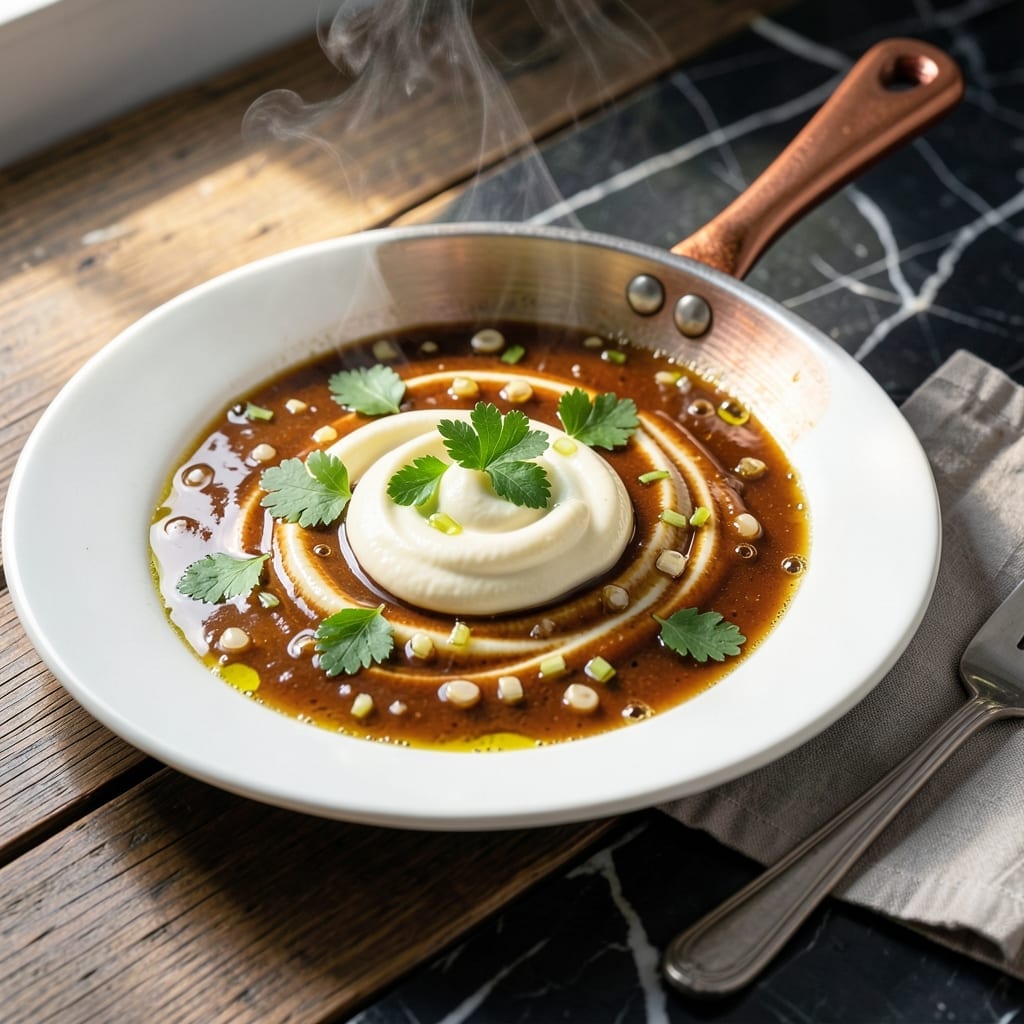
This French classic transforms simple pan drippings into a tangy, restaurant-quality sauce that elevates steaks and roasts effortlessly.
I’ve perfected this method over years of testing, focusing on the balance between sour vinegar, sweet shallots, and rich butter. The technique is straightforward yet precise, ensuring a smooth, glossy finish every time.
The result is a sauce with bright acidity and velvety texture that complements rich meats beautifully. Its versatility makes it a staple for any home cook looking to add French flair to their dishes.
Ready in 10 minutes with pantry staples, this condiment delivers authentic flavor without unnecessary complexity.
Ingredients for Sauce Robert
Eight ingredients transform pan drippings into a tangy, glossy French masterpiece for meats.
| Ingredient | Amount | Notes |
|---|---|---|
| Pan Drippings 🥩 | ½ cup | From cooked steak or roast |
| White Wine Vinegar 🍷 | ½ cup | Or substitute red wine vinegar |
| Shallots 🧅 | 2 whole | Finely minced for best texture |
| Unsalted Butter 🧈 | ½ cup | Cold, cubed for emulsification |
| Dijon Mustard 🟡 | 1 tbsp | High-quality for depth of flavor |
| Fresh Parsley 🌿 | 2 tbsp | Finely chopped, for garnish |
| Black Pepper 🌶️ | ½ tsp | Freshly cracked preferred |
| Salt 🧂 | ¼ tsp | Kosher or fine sea salt |
The pan drippings are non-negotiable for authentic flavor. Use drippings from a steak or roast—the richer the better. White wine vinegar provides the signature tang, but apple cider vinegar works in a pinch. Shallots must be fresh and firm; avoid pre-minced for best texture. For butter, European-style (higher fat content) ensures a velvety finish.
No pan drippings? Beef stock reduced by half mimics the depth. Shallots can be swapped with yellow onion at half the amount, but the flavor profile changes slightly. For vinegar, champagne vinegar offers a milder touch. Dijon mustard is key—whole-grain mustard adds texture but alters the classic smooth consistency. Fresh parsley is ideal, but chives bring a similar brightness.
This sauce is best served immediately but can be reheated gently. Store leftovers in an airtight container in the fridge for up to 3 days. Do not freeze—butter separates upon thawing. Rewhisk before serving to restore its glossy texture.
Why You’ll Love This Recipe
- Five Minute Sauce: I just toss the pan drippings with shallots and white wine vinegar, then finish with butter—no fuss, all flavor.
- Tangy Depth: The Dijon and vinegar give it that sharp, bright kick I crave with roasted meats.
- Pairs With Everything: Honestly, it’s my go-to for steak, chicken, even roasted veggies—never fails me.
- Budget Stretch: A little butter and shallots turn humble drippings into a restaurant-worthy sauce for pennies.
Step-by-Step Instructions for Sauce Robert
Master this classic French technique with precision and attention to detail for authentic results.
Step 1: Sauté the Shallots in Pan Drippings
Begin by placing your skillet over medium heat and adding the 0.5 cup Pan Drippings. Allow them to warm for 1-2 minutes until they become fragrant and slightly bubbly at the edges.
Immediately add the 2 whole Shallots, finely minced as specified. Sauté for 3-4 minutes, stirring frequently, until they soften and turn translucent. Avoid browning—this step builds a delicate, aromatic foundation for the sauce.
This gentle cooking process extracts the shallots’ natural sweetness while preventing bitterness. The pan drippings infuse the base with rich, meaty depth from your roast or steak.
Step 2: Deglaze with White Wine Vinegar
Carefully pour in the 0.5 cup White Wine Vinegar all at once. The mixture will sizzle and steam as it deglazes the pan, lifting all the flavorful browned bits from the bottom.
Simmer for 4-5 minutes until the liquid reduces by about half and the sharp vinegar aroma mellows. You’ll notice the sauce beginning to take on a slightly syrupy consistency as the acid balances the richness of the drippings.
This reduction concentrates the flavors and creates the signature tang that defines Sauce Robert. Watch for the edges to just start looking glossy—this is your visual cue.
Step 3: Emulsify with Cold Butter
Reduce the heat to low and add the 0.5 cup Unsalted Butter, cubed and cold, a few pieces at a time. Whisk constantly as each addition melts, creating a smooth, velvety emulsion.
The sauce will transform from a thin liquid to a rich, creamy consistency that coats the back of a spoon. This process, known as monte au beurre, is crucial for achieving the classic silkiness of French pan sauces.
If the sauce threatens to separate, remove the pan from heat temporarily while continuing to whisk. The colder the butter, the more stable your emulsion will be.
Step 4: Finish with Mustard and Seasonings
Once all the butter is incorporated, whisk in the 1 tbsp Dijon Mustard until fully combined. The mustard adds complexity and helps stabilize the emulsion further.
Season with 0.25 tsp Salt and 0.5 tsp Black Pepper, adjusting to taste. Remember that pan drippings may already contain salt, so taste carefully before adding more.
The finished sauce should have a glossy appearance and a balance of tangy, rich, and slightly sharp flavors. The texture should be smooth enough to nappe—coat the back of a spoon lightly.
Step 5: Garnish and Serve Immediately
Stir in the 2 tbsp Fresh Parsley, finely chopped, just before serving. The parsley adds a fresh, bright note that complements the sauce’s depth.
Sauce Robert is best served immediately while still warm and emulsified. Pour it over the same meat that provided the pan drippings, or use it to elevate simple roasted vegetables or mashed potatoes.
The sauce will thicken slightly as it cools, so if you must hold it briefly, keep it in a warm (not hot) spot and whisk in a splash of warm water to restore its consistency.
Pro Tips For Making Sauce Robert
- Deglaze While Hot: Pour the white wine vinegar into the pan immediately after removing the meat while the drippings are still sizzling—this lifts all those browned bits that carry the flavor. I learned this the hard way after scrubbing a cold pan more times than I care to admit.
- Mince Shallots Fine: Chop the shallots into tiny, even pieces so they melt into the sauce rather than float as chunky bits. After burning a few batches with uneven cuts, I finally switched to a microplane for consistency.
- Skip the High Heat: Once you add the butter, keep the flame low to prevent it from separating or browning. My grandmother swore by this, and she was right: a gentle simmer emulsifies the sauce perfectly.
- Whisk in Mustard Last: Stir in the Dijon mustard off the heat at the very end to preserve its sharpness and prevent it from turning bitter. Sounds weird, but it works—every time.
Serving Suggestions for This Dish
Over Steaks
Pour this sauce generously over a perfectly cooked ribeye or filet mignon—the tangy acidity cuts through the richness beautifully. I love the contrast of the bright vinegar with the deep beef flavors. A medium-rare steak pairs best with this classic combination. 💛
With Roasted Meats
Drizzle over sliced roast beef or lamb for an elegant presentation. The sauce’s glossy texture makes any Sunday roast look restaurant-worthy. I always make extra when serving a crowd—it disappears fast.
On Mashed Potatoes
Transform simple creamy mashed potatoes into a gourmet side by creating a well in the center and pouring the warm sauce inside. The butter in the sauce blends perfectly with the potatoes. Stir it in or leave it as a pool for dipping.
Vegetable Pairings
Toss with roasted asparagus or grilled zucchini for a lighter application. The sauce adds depth to vegetables without overpowering their natural flavors. I use about 2 tbsp per serving of veggies.
As a Dip
Serve in a small bowl alongside crusty bread or roasted potato wedges for dipping. The tangy flavor makes it irresistible. I often add a pinch of cayenne for extra kick in the dip version.
Garnish Tips
Always finish with a sprinkle of fresh parsley or chives for color contrast. For special occasions, I add a few edible flowers for an elegant touch. The green pops against the golden sauce beautifully. ✨
Nutrition Facts
Frequently Asked Questions
Can I use a different vinegar?
Yes, but white wine vinegar gives the classic flavor. Apple cider or champagne vinegar work as substitutes. Avoid balsamic—it’s too sweet and dark for this sauce.
Why does my sauce separate?
Separation happens if the butter gets too hot or melts too quickly. Keep heat on low and whisk constantly. If it breaks, remove from heat and whisk vigorously to re-emulsify.
How long can I store leftovers?
Store in an airtight container in the fridge for up to 3 days. Reheat gently and whisk to restore texture. Do not freeze—it will separate.

- 6 Egg Cake Recipe with Oil: Light as Air With Buttery Moisture - October 4, 2026
- 4 Bean Casserole Recipe: One-Pan Heartiness With Smoky Paprika Depth - October 4, 2026
- 3-Ingredient Keto Mug Cake Recipe: Microwave Magic in 2 Minutes - October 4, 2026