
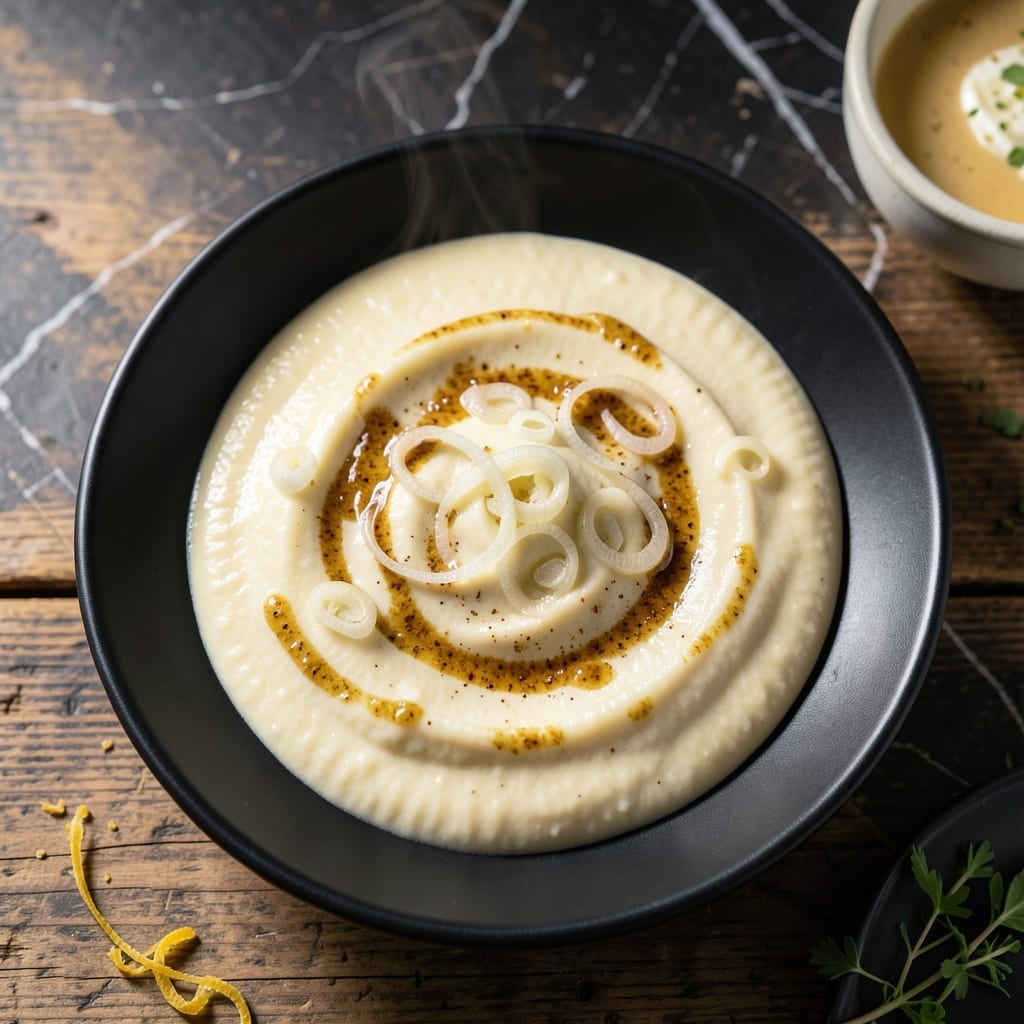
This savory sabayon elevates any dish with its light, airy texture and rich, custard-like consistency. I developed this technique to add a touch of French sophistication to simple ingredients.
The process involves gently cooking egg yolks and liquid over a double boiler until thickened. This creates a velvety sauce that pairs beautifully with vegetables, seafood, or meats.
What you’ll achieve is a delicate, creamy custard that enhances without overpowering. It’s a versatile addition to your culinary repertoire.
Serve it warm for the best texture and flavor. Here’s how to make it perfectly every time.
Ingredients for Savory Sabayon
A handful of quality ingredients for that perfect French custard texture and depth.
| Ingredient | Amount | Notes |
|---|---|---|
| Large Egg Yolks 🥚 | 6 whole | Room temperature for best volume |
| Dry White Wine 🍷 | ¼ cup | Sauvignon Blanc or Pinot Grigio |
| Chicken Stock 🥣 | ¼ cup | Low-sodium preferred for control |
| Unsalted Butter 🧈 | 4 tbsp | Cut into small cubes |
| Shallot 🧅 | 1 whole | Finely minced for even distribution |
| Dijon Mustard 🟡 | 1 tsp | Smooth, not whole grain |
| Lemon Juice 🍋 | 1 tbsp | Freshly squeezed for brightness |
| Kosher Salt 🧂 | ¼ tsp | Plus more to taste |
| White Pepper 🌶️ | 0.125 tsp | Ground, for subtle heat |
| Heavy Cream 🥛 | 2 tbsp | Optional for richer texture |
| Fresh Chives 🌿 | 1 tbsp | Finely chopped for garnish |
| Fresh Tarragon 🍃 | 1 tsp | Chopped, classic French pairing |
The egg yolks are the foundation here—fresh, high-quality eggs make all the difference. I grab mine from Whole Foods or the farmers market when possible. The wine should be something you’d actually drink (no cooking wine in a box). Sauvignon Blanc gives a nice acidity that balances the richness. For the stock, homemade is ideal, but a good low-sodium store-bought version from Bonafide Provisions works in a pinch.
No white wine? Dry vermouth is your best substitute—it’s got similar acidity and alcohol content. Short on shallots? Red onion at half the amount works, though the flavor’s a touch stronger. Skipping the cream? The sabayon will be slightly lighter but still delicious. If you’re out of tarragon, chervil or a pinch of dried tarragon can stand in (use less—dried is more concentrated).
Sabayon is best served immediately, but you can hold it warm for about 30 minutes in a thermos or over a pot of warm water. Leftover? Honestly, it’s not the same reheated, but you can refrigerate for 1 day and gently rewarm with a splash of water. The butter can be prepped ahead—just cube it and keep it chilled.
Why You’ll Love This Recipe
- One Bowl Wonder: I just whisk the egg yolks, wine, and stock in a single saucepan—no fancy equipment, no mess.
- Umami Bomb: The shallots sweat into the butter, then the wine and stock deepen into this rich, velvety sauce that clings to everything.
- Dresses Up Anything: I spoon it over roasted veggies, poached chicken, even toast. Honestly, it turns leftovers into a restaurant-worthy plate.
- Pantry Hero: Between us, I always have these ingredients on hand, and it still feels like a treat.
Step-by-Step Instructions for Savory Sabayon
Here’s my foolproof method for this classic French technique—light, airy, and packed with flavor.
Step 1: Sauté the Shallot and Reduce the Liquid
Finely mince the shallot and cook it in a small saucepan with the dry white wine and chicken stock over medium heat. Simmer for 5-7 minutes until the mixture reduces by half and the shallot softens completely.
This step concentrates the flavors before combining with the egg yolks. You’ll know it’s ready when the liquid coats the back of a spoon and the shallot is translucent. Don’t let it boil vigorously or it may reduce too quickly and burn.
Step 2: Whisk the Egg Yolks to Ribbon Stage
In a heatproof bowl, combine the 6 whole Large Egg Yolks, 1 tsp Dijon Mustard, 1 tbsp Lemon Juice, 0.25 tsp Kosher Salt, and 0.125 tsp White Pepper. Whisk vigorously until the mixture turns pale yellow and thickens slightly—about 2-3 minutes.
The mustard acts as an emulsifier while the lemon juice adds brightness. At this stage, the yolks should leave a ribbon-like trail when the whisk is lifted. This ensures maximum volume and stability when cooked.
Step 3: Temper and Cook the Sabayon
Set the bowl over a pot of barely simmering water (not touching the water) and continue whisking constantly. Slowly drizzle in the warm shallot and liquid mixture from Step 1. This tempering process prevents the egg yolks from scrambling.
Keep whisking for 8-10 minutes until the sabayon thickens to the consistency of heavy cream and turns a pale, creamy color. The mixture should triple in volume and leave a clear trail when the whisk is lifted. If it’s not thickening, keep whisking—this step can’t be rushed.
Step 4: Finish with Butter and Cream
Reduce the heat to low and whisk in the 4 tbsp Unsalted Butter, one cube at a time, allowing each piece to melt completely before adding the next. This creates a rich, velvety texture. Then, whisk in the 2 tbsp Heavy Cream until fully incorporated.
The sabayon should now be thick, glossy, and coat the back of a spoon. If it seems too thick, whisk in a teaspoon of warm water to loosen. Taste and adjust seasoning with additional Kosher Salt if needed.
Step 5: Garnish and Serve Immediately
Remove the bowl from the heat and fold in the 1 tbsp Fresh Chives and 1 tsp Fresh Tarragon. These herbs add a fresh, aromatic finish that complements the richness of the sabayon.
Serve the sabayon immediately while still warm and airy—it’s best enjoyed fresh. The texture will deflate slightly as it cools, so timing is everything. Spoon it over vegetables, fish, or toasted bread for an elegant finish.
Pro Tips For Making Savory Sabayon
- Whisk Constantly: Keep the whisk moving nonstop once the yolks hit the heat—even for a second—or you’ll end up with scrambled eggs in your sabayon. I learned this the hard way after ruining two batches.
- Use Room-Temp Yolks: Pull your egg yolks out 20-30 minutes before starting. Cold yolks resist emulsifying with the butter, and you’ll spend twice as long trying to get that silky texture.
- Skip Cheap Wine: That leftover cooking wine in your pantry won’t cut it here. Use a dry white you’d actually drink—the flavor concentrates as it reduces, and harsh wine makes a harsh sabayon.
- Strain the Shallots: After sweating the shallots in butter, strain them out before adding the liquid. Sounds weird, but it works: you get all the flavor without the stringy bits in your final sauce.
Wine and Beer Pairings for These Flavors
White Wine Pairings
The Sauvignon Blanc you used in the recipe makes an excellent pairing. Its crisp acidity and citrus notes cut through the richness beautifully. I recommend a New Zealand Sauvignon Blanc for its vibrant, grassy character. 🍷
Sparkling Options
A dry sparkling wine like Brut Champagne or Prosecco adds a refreshing contrast to the creamy texture. The bubbles cleanse your palate between bites. Serve chilled at 45-50°F for the best experience.
Light Red Wines
For those who prefer red, a chilled Pinot Noir from Oregon or Burgundy works wonderfully. Its bright acidity and red fruit notes complement without overpowering. I love Domaine Serene for special occasions.
Beer Pairings
A crisp Belgian Witbier like Hoegaarden or Blue Moon offers citrus and spice notes that pair well. The wheat base adds a light body that won’t compete with the delicate sabayon. Serve at 40-45°F. 🍺
Saison Style
For beer lovers, a Saison with its peppery, fruity profile can be magical. I enjoy Saison Dupont with its dry finish. The complexity enhances the dish’s French roots while keeping the pairing light.
Nutrition Facts
Frequently Asked Questions
What’s the best way to prevent scrambling the eggs?
Use a double boiler with barely simmering water and whisk constantly. Keep the heat low—if the water boils, the eggs will cook too fast. Tempering by slowly adding the warm liquid helps too.
Can I make this ahead of time?
Sabayon is best served immediately, but you can hold it warm for 30 minutes in a thermos. Refrigerate leftovers for 1 day and rewarm gently with a splash of water.
What can I substitute for white wine?
Dry vermouth works perfectly as it has similar acidity. In a pinch, use 1 tbsp lemon juice plus 3 tbsp water to mimic the volume and tang.

- 6 Egg Cake Recipe with Oil: Light as Air With Buttery Moisture - October 4, 2026
- 4 Bean Casserole Recipe: One-Pan Heartiness With Smoky Paprika Depth - October 4, 2026
- 3-Ingredient Keto Mug Cake Recipe: Microwave Magic in 2 Minutes - October 4, 2026