
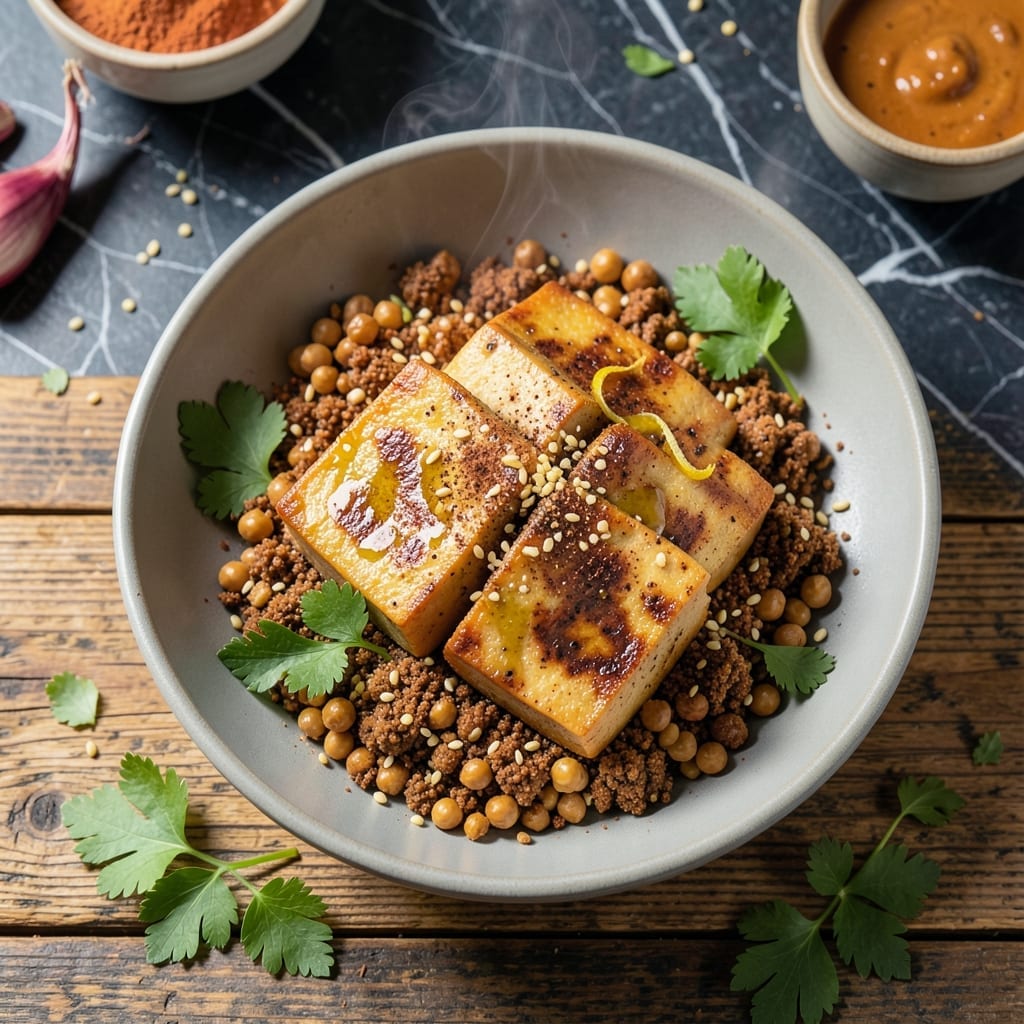
This seitan recipe transforms vital wheat gluten into a chewy, meat-like texture with minimal effort. I developed this method to create a protein-rich alternative that holds up in any dish.
With simple ingredients and a straightforward process, you can achieve restaurant-quality results at home. The key is proper seasoning and simmering for the perfect bite every time.
Ingredients for Seitan Recipe Vital Wheat Gluten
Transform vital wheat gluten into chewy, meat-like texture with these straightforward ingredients.
| Ingredient | Amount | Notes |
|---|---|---|
| Vital Wheat Gluten 🌾 | 1 ½ cups | The primary protein base |
| Nutritional Yeast 🧀 | ¼ cup | For cheesy, umami depth |
| Chickpea Flour 🥜 | ¼ cup | Adds structure and nuttiness |
| Garlic Powder 🧄 | 1 tsp | Freshly ground preferred |
| Onion Powder 🧅 | 1 tsp | Balances savory notes |
| Smoked Paprika 🌶️ | 1 tsp | Infuses subtle smokiness |
| Dried Thyme 🍃 | 1 tsp | Earthy, aromatic herb |
| Sea Salt 🧂 | 1 tsp | Fine grain for even distribution |
| Black Pepper 🌶️ | ½ tsp | Freshly ground for potency |
| Vegetable Broth 💧 | 4 cups | Low-sodium preferred |
| Soy Sauce 🫒 | 3 tbsp | Use tamari for gluten-free |
| Olive Oil 🫒 | 2 tbsp | For searing and moisture |
| Liquid Smoke 🔥 | 1 tsp | Optional for smoky depth |
Vital wheat gluten is non-negotiable—Bob’s Red Mill or Anthony’s are reliable brands with consistent texture. Chickpea flour adds body and a subtle nuttiness; find it in the bulk section at Whole Foods or Indian grocery stores. Nutritional yeast is the secret weapon here (the Bragg or Bob’s Red Mill varieties pack the most umami). Avoid expired spices—they lose potency fast.
No chickpea flour? Lentil flour works at a 1:1 swap. Out of liquid smoke? Smoked salt at half the amount adds depth. Tamari replaces soy sauce beautifully for gluten-free diets. The vegetable broth can be homemade or high-quality store-bought (I like Imagine Foods), but avoid overly salty brands—they’ll overpower the seitan’s flavor.
The dough rests best at room temperature for 20 minutes before simmering. Cooked seitan keeps 5 days refrigerated or 3 months frozen. Slice against the grain for the most convincing meat-like texture.
Why You’ll Love This Recipe
- Five Ingredient Magic: I just dump vital wheat gluten, nutritional yeast, chickpea flour, and those two powdered seasonings in a bowl—no chopping, no fuss.
- Rich Umami Depth: The nutritional yeast and garlic powder give it that savory, almost meaty punch I crave in plant-based meals.
- Meal Prep MVP: I make a double batch on Sunday and slice it thin for stir-fries, thick for sandwiches, or cube it for stews all week.
- Pantry Stretch: Honestly, it costs pennies per serving and keeps forever in the fridge or freezer.
Step-by-Step Instructions for Seitan
Master the technique for achieving the ideal chewy, meat-like texture with these precise steps.
Step 1: Combine Dry Ingredients for the Base
In a large mixing bowl, whisk together the 1.5 cups Vital Wheat Gluten, 0.25 cup Nutritional Yeast, and 0.25 cup Chickpea Flour. These form the structural foundation, with the vital wheat gluten providing the essential elasticity for that signature chew.
Add the 1 tsp Garlic Powder, 1 tsp Onion Powder, 1 tsp Smoked Paprika, 1 tsp Dried Thyme, 1 tsp Sea Salt, and 0.5 tsp Black Pepper. Distribute these seasonings evenly throughout the dry mixture to ensure every bite is flavorful. The smoked paprika and liquid smoke will later enhance the depth of flavor.
Step 2: Create the Wet Mixture
In a separate bowl, combine the 4 cups Vegetable Broth, 3 tbsp Soy Sauce, 2 tbsp Olive Oil, and 1 tsp Liquid Smoke. Whisk thoroughly to fully integrate the liquid smoke and soy sauce into the broth. This mixture will hydrate the dry ingredients and infuse the seitan with savory, umami-rich flavor.
Real talk: the liquid smoke is optional but highly recommended for that authentic, smoky depth. If using low-sodium vegetable broth, the soy sauce will compensate by adding the necessary saltiness and complexity.
Step 3: Form and Knead the Dough
Pour the wet mixture into the dry ingredients all at once. Stir with a wooden spoon or silicone spatula until a shaggy dough forms. It will be sticky initially, but this is normal. Let it rest for 2-3 minutes to allow the vital wheat gluten to begin absorbing the liquid.
Turn the dough out onto a clean surface and knead for 3-5 minutes until smooth and elastic. The texture should be firm yet slightly tacky. If it feels too wet, add a sprinkle of vital wheat gluten; if too dry, add a splash of vegetable broth. Proper kneading develops the gluten strands, which are crucial for the chewy texture.
Step 4: Simmer for Optimal Texture
Divide the dough into 4 equal portions and shape each into a cutlet or desired shape. Bring a large pot of water or additional vegetable broth to a gentle simmer—do not boil vigorously, as this can make the seitan tough. The ideal temperature is just below a rolling boil, around 180-190°F.
Carefully place the seitan pieces into the simmering liquid. Cook for 30-40 minutes, turning occasionally, until the seitan is firm to the touch and has expanded slightly. You’ll notice the texture becomes denser and more meat-like as it cooks. Remove with a slotted spoon and let cool slightly before serving or searing.
Step 5: Optional Searing for Enhanced Flavor
For added depth, heat a tablespoon of olive oil in a skillet over medium-high heat. Sear the cooked seitan for 2-3 minutes per side until golden brown. This step caramelizes the surface, adding a delicious crust and enhancing the overall flavor profile.
Serve immediately while warm. The seitan should have a firm, slightly springy texture that mimics meat, with a rich, savory taste from the broth and seasonings. Slice thinly against the grain for the best mouthfeel in dishes like stir-fries, sandwiches, or stews.
Pro Tips For Making Seitan Recipe Vital Wheat Gluten
- Knead it Longer: I learned this the hard way—knead the vital wheat gluten for at least 5 minutes to develop the chewy texture. Less than that and your seitan will turn out gummy, not meaty.
- Simmer, Don’t Boil: After burning my first batch, I finally figured out that a gentle simmer in broth keeps the seitan tender, while boiling makes it rubbery and tough.
- Use Warm Broth: Sounds weird, but it works: soaking the formed seitan in warm (not cold) broth before simmering helps the flavors penetrate deeper and prevents a bland center.
- Add Acid Last: My grandmother swore by this, and she was right: if you’re adding vinegar or lemon for tang, mix it into the simmering liquid, not the dry ingredients—it can weaken the gluten structure.
Dietary Considerations for seitan recipe vital wheat gluten
Keto-Friendly Options
While traditional seitan is high in carbs due to its wheat gluten base, you can make low-carb modifications by pairing it with keto-friendly sauces and sides. Avoid breading or sugary marinades to keep net carbs minimal.
Gluten-Free Alternatives
Seitan is not gluten-free, as it’s made from vital wheat gluten. For a gluten-free alternative, try tofu, tempeh, or jackfruit to achieve a similar meaty texture without gluten.
Allergen Information
This recipe contains wheat gluten, making it unsuitable for those with celiac disease or gluten sensitivities. Always check labels for cross-contamination risks if allergies are severe.
Vegetarian and Vegan Modifications
Seitan is naturally plant-based, but ensure broths and seasonings used are animal-product-free. For extra flavor, add nutritional yeast or smoked paprika to enhance its savory profile.
Low-Sodium Adjustments
To reduce sodium, use low-sodium soy sauce or homemade broths instead of store-bought varieties. Rinse seitan after cooking to remove excess salt if needed.
Nutrition Facts

- 6 Egg Cake Recipe with Oil: Light as Air With Buttery Moisture - October 4, 2026
- 4 Bean Casserole Recipe: One-Pan Heartiness With Smoky Paprika Depth - October 4, 2026
- 3-Ingredient Keto Mug Cake Recipe: Microwave Magic in 2 Minutes - October 4, 2026