
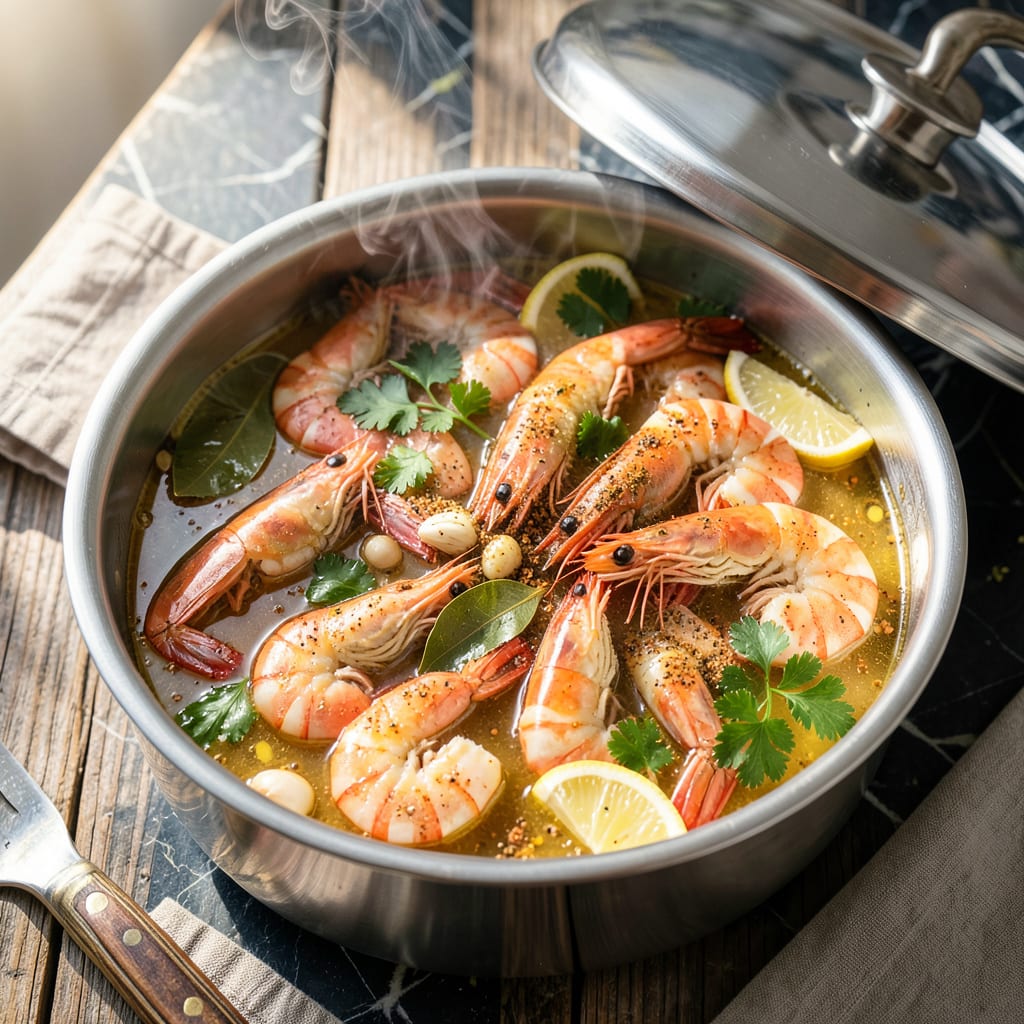
This shrimp steam pot delivers garlic butter flavor in minutes with minimal effort. The combination of fresh shrimp, aromatic garlic, and rich butter creates a dish that’s both impressive and simple.
Steaming locks in natural sweetness while the garlic butter infusion adds depth. Perfect for a quick weeknight meal or a special occasion, this method ensures tender, flavorful shrimp every time.
Ingredients for Shrimp Steam Pot
Fresh shrimp, aromatic garlic, and rich butter create this impressive yet simple dish.
| Ingredient | Amount | Notes |
|---|---|---|
| Large Shrimp 🍤 | 2 lb | Peeled, deveined, tails on |
| Unsalted Butter 🧈 | ½ cup | Cut into small cubes |
| Garlic Cloves 🧄 | 8 cloves | Minced finely |
| Fresh Lemon 🍋 | 1 whole | Cut into wedges for serving |
| Fresh Parsley 🌿 | ¼ cup | Chopped, for garnish |
| Old Bay Seasoning 🌶️ | 1 tbsp | Classic seafood seasoning blend |
| Kosher Salt 🧂 | 1 tsp | Adjust to taste |
| Ground Black Pepper 🌶️ | ½ tsp | Freshly ground preferred |
| Dry White Wine 🍷 | ½ cup | Sauvignon Blanc or Pinot Grigio |
| Bay Leaves 🍃 | 2 pieces | For steaming liquid |
| Red Pepper Flakes 🔥 | ½ tsp | Optional for heat |
| Lemon Zest 🍋 | 1 tbsp | From 1 lemon |
The shrimp quality is non-negotiable here. Wild-caught Gulf shrimp or sustainably farmed Pacific whites are ideal—look for 16-20 count per pound for even cooking. Most seafood counters will peel and devein them for you if asked (saves time). For the butter, Plugrá or Kerrygold have the right fat content for proper emulsification with the garlic.
No white wine? Seafood or chicken stock works in a pinch, though the acidity of wine balances the richness best. Fresh thyme sprigs can substitute for bay leaves at a 1:1 ratio. For a dairy-free version, coconut oil or vegan butter stands in well (though flavor differs slightly). The Old Bay is traditional but Cajun seasoning adds a nice kick.
This tastes best served immediately, but leftovers keep 2-3 days refrigerated in an airtight container. Reheat gently in a skillet with a splash of water to prevent drying. The garlic butter can be made ahead and reheated—it’ll separate slightly but comes back together with a quick whisk.
Why You’ll Love This Recipe
- One Pot Wonder: I toss everything in, cover it, and let the steam do the work—minimal cleanup, maximum flavor.
- Buttery Garlic Heaven: The butter and garlic melt together with the shrimp, creating a sauce so good I sop it up with bread.
- Weeknight Winner: Honestly, it’s my go-to for busy evenings when I need something fast but still impressive.
- Budget Friendly Feast: Large shrimp feel fancy, but this recipe stretches them into a meal that won’t break the bank.
Step-by-Step Instructions for Shrimp Steam Pot
Master the technique for perfectly cooked shrimp with aromatic garlic butter infusion.
Step 1: Prepare the Steaming Liquid Base
In a large pot with a tight-fitting lid, combine the 0.5 cup dry white wine, 0.5 cup unsalted butter, 8 cloves minced garlic, 2 pieces bay leaves, 1 tbsp Old Bay seasoning, 1 tsp kosher salt, 0.5 tsp ground black pepper, 0.5 tsp red pepper flakes, and 1 tbsp lemon zest.
Place the pot over medium-high heat and bring to a gentle simmer. You want the liquid hot enough to create steam but not so aggressive that it boils over when the shrimp is added. This base will infuse every bite with complex flavor.
Step 2: Add the Shrimp and Steam
Once the liquid reaches a steady simmer, carefully add the 2 lb large shrimp in a single layer. The tails-on presentation looks beautiful and helps prevent overcooking. Cover immediately with the lid to trap all the aromatic steam inside.
Steam for exactly 4-5 minutes until the shrimp turn opaque pink and curl into a C shape. Resist the urge to peek—every time you lift the lid, you release precious steam and extend the cooking time. The shrimp are done when they float to the surface and their color changes completely.
Step 3: Finish and Garnish for Serving
Using a slotted spoon, transfer the shrimp to a serving platter, leaving the flavorful liquid behind. The shrimp should glisten with traces of garlic butter and steam fragrantly. If any liquid spills onto the platter, it’s fine—it adds to the sauce.
Sprinkle the 0.25 cup chopped fresh parsley over the hot shrimp. The heat will slightly wilt the parsley, releasing its bright, herbal notes. Serve immediately with the fresh lemon wedges on the side for a final squeeze of acidity that cuts through the richness.
Step 4: Serve with the Infused Broth
Ladle some of the hot garlic butter broth into small bowls to serve alongside the shrimp. This liquid gold is packed with flavor and perfect for dipping crusty bread or drizzling over the shrimp at the table.
Encourage your guests to use their hands—peeling the tails off as they eat enhances the experience. The broth should be golden and fragrant, with visible specks of garlic and herbs throughout.
Pro Tips For Making Shrimp Steam Pot
- Pat Shrimp Dry: After peeling, blot the shrimp with paper towels—excess moisture steams them instead of searing in that buttery garlic flavor.
- Low and Slow Garlic: Cook the garlic in butter on medium-low for 2-3 minutes until fragrant but not brown; burnt garlic turns bitter and ruins the dish.
- Zest Before Juicing: Grate the lemon zest into the pot first—it infuses the oil with bright citrus flavor, while the juice can be added later to finish.
- Cover Tightly: Use a heavy lid or foil to trap steam; without it, the shrimp dry out instead of staying tender and soaking up the garlicky butter.
Common Mistakes When Making shrimp steam pot
Overcrowding the Pot
This is the most common mistake I see. If you dump all 2 lb of shrimp in at once, they’ll steam unevenly and some will overcook. I recommend cooking in batches if your pot isn’t wide enough for a single layer. 🔥
Skipping the Lid
A tight-fitting lid is essential for trapping steam. Without it, the shrimp will essentially boil in liquid rather than steam, which dilutes the garlic butter flavor. I use a heavy stainless pot with a glass lid to monitor progress.
Peeking Too Often
Every time you lift the lid, you release precious steam and lower the temperature. This extends cooking time and can lead to rubbery shrimp. Trust the process—4-5 minutes with the lid closed is all you need for perfect doneness.
Using Cold Shrimp
Adding shrimp straight from the fridge shock the hot liquid, causing uneven cooking. I always let mine sit at room temperature for 10-15 minutes first. This small step makes a noticeable difference in texture and flavor absorption.
Ignoring the Liquid Ratio
Too much liquid means boiling, not steaming. Too little and your pot may run dry. For 2 lb shrimp, 1 cup total liquid (wine + butter) is the sweet spot. The shrimp should be mostly above the liquid, not submerged.
Overcooking the Garlic
Burnt garlic turns bitter and ruins the dish. Add your 8 minced cloves to the pot just as the butter melts, then remove from heat if the liquid starts simmering too aggressively before adding shrimp. The residual heat will keep it warm.
Nutrition Facts
Frequently Asked Questions
Can I use frozen shrimp for this?
Yes, but thaw them completely first in cold water for 15-20 minutes. Pat dry to prevent excess moisture from diluting the garlic butter flavor. Never cook from frozen.
What if I don’t have white wine?
Substitute seafood or chicken stock with 1 tbsp lemon juice added. The acidity mimics wine’s role in balancing the richness. Avoid vinegar—it’s too harsh.
How do I know when the shrimp are done?
Look for opaque pink color and a C-shaped curl. They’ll float to the surface when ready. Overcooking makes them rubbery, so pull them out at 4-5 minutes.
Can I make this ahead of time?
Best served immediately, but you can prep the garlic butter broth 1 day ahead. Reheat gently before adding shrimp. Leftovers keep 2-3 days refrigerated.

- 6 Egg Cake Recipe with Oil: Light as Air With Buttery Moisture - October 4, 2026
- 4 Bean Casserole Recipe: One-Pan Heartiness With Smoky Paprika Depth - October 4, 2026
- 3-Ingredient Keto Mug Cake Recipe: Microwave Magic in 2 Minutes - October 4, 2026