
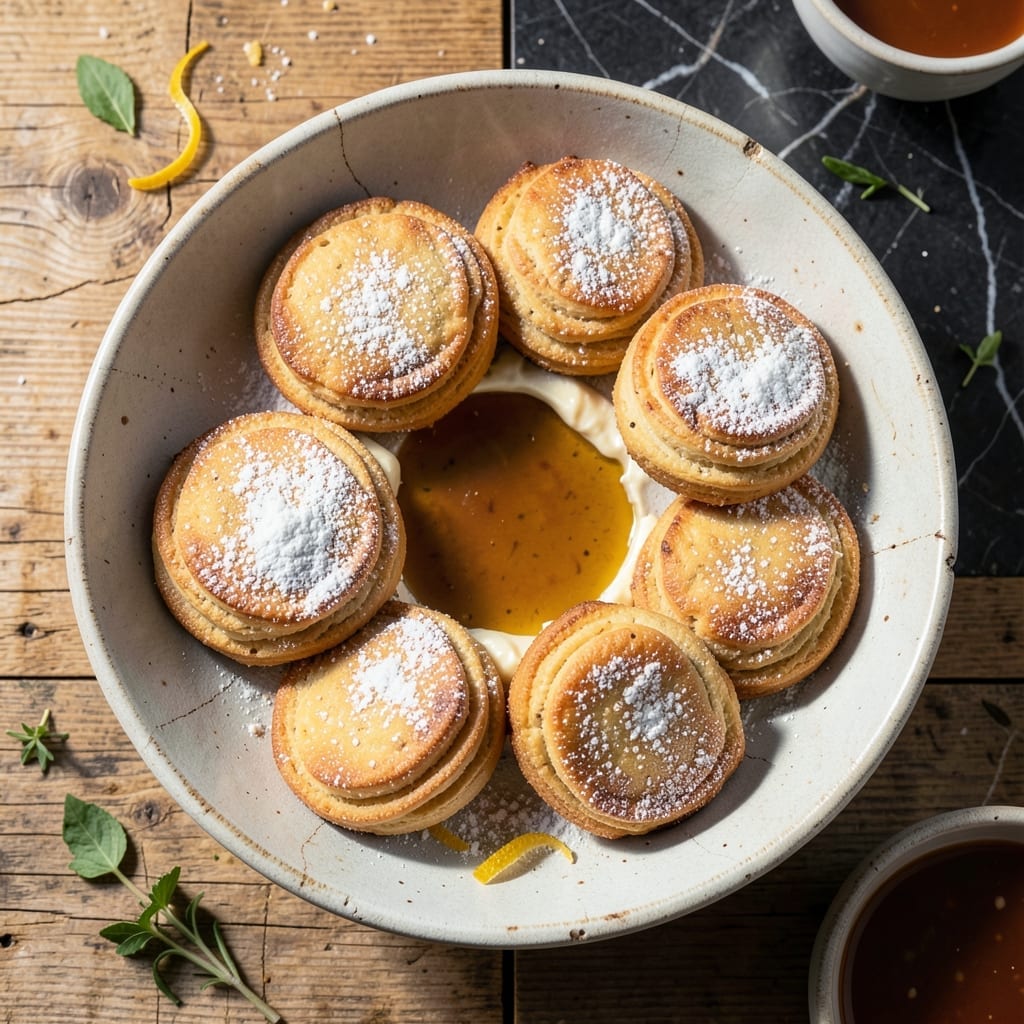
This is the simple biscuit recipe you need when dairy isn’t an option. A few basic ingredients and a straightforward method produce biscuits with impressive flaky layers every time.
The secret lies in cold fat and minimal handling. Using vegetable shortening or coconut oil instead of butter ensures the same tender texture without any milk products.
You’ll get golden, layered biscuits that rise beautifully in the oven. They’re ready in about 15 minutes from start to finish, perfect for breakfast or as a side.
No special equipment or techniques required. The dough comes together quickly and bakes into light, airy biscuits that rival traditional versions.
Ingredients for Simple Biscuit Recipe No Milk
Basic pantry staples create these dairy-free biscuits with impressive flaky layers.
| Ingredient | Amount | Notes |
|---|---|---|
| All-Purpose Flour 🌾 | 2 cups | Sifted for lighter texture |
| Baking Powder 🧂 | 1 tbsp | Aluminum-free preferred |
| Salt 🧂 | ½ tsp | Fine sea salt or table salt |
| Vegetable Shortening 🧈 | ⅓ cup | Cold, cut into small pieces |
| Coconut Oil 🥥 | ⅓ cup | Solid, cold, unrefined preferred |
| Unsweetened Almond Milk 🥛 | ¾ cup | Cold, any plant milk works |
| White Vinegar 🍶 | 1 tsp | Or apple cider vinegar |
| Sugar 🍚 | 1 tsp | Granulated, optional for sweetness |
The fat is critical for flakiness. Vegetable shortening (like Crisco) gives the most reliable results, but coconut oil (refined for neutral flavor) works beautifully too. Ensure both are ice-cold—store them in the fridge before starting. The flour should be all-purpose; avoid self-rising as it contains added leavening agents that can throw off the balance.
No almond milk? Any unsweetened plant milk (soy, oat, or cashew) substitutes perfectly. For extra flakiness, use half the liquid as cold water and half as plant milk. The vinegar reacts with the baking powder for lift—lemon juice works too at the same ratio. Skip the sugar if you prefer savory biscuits.
The dough handles best when kept cold. Bake immediately for maximum rise. Leftovers stay fresh wrapped in foil at room temperature for 2 days, or freeze for up to 1 month. Reheat in a 350°F oven for 5-10 minutes to revive.
Why You’ll Love This Recipe
- Five-Ingredient Magic: I just dump flour, baking powder, salt, shortening, and coconut oil—no milk, no fuss, no last-minute store runs.
- Flaky Perfection: The combo of shortening and coconut oil gives layers that crack open like a warm hug.
- Breakfast to Dinner: I’ve served these with jam at dawn and alongside stew at supper—same batch, zero stress.
Step-by-Step Instructions for Simple Biscuits Without Milk
This proven method ensures tall, flaky layers using only plant-based ingredients.
Step 1: Combine Dry Ingredients for Structure
In a large bowl, whisk together the 2 cups All-Purpose Flour, 1 tbsp Baking Powder, 0.5 tsp Salt, and 1 tsp Sugar. I sift the flour first for lighter texture, as mentioned in the ingredients, which creates air pockets essential for flaky layers.
Whisk vigorously for 30 seconds to evenly distribute the leavening agent. The baking powder reacts with liquid to create lift, so proper distribution prevents dense spots. This dry mix forms the foundation of your biscuit structure.
Step 2: Cut in Solid Fats for Flakiness
Add the 0.33 cup Vegetable Shortening (cut into small pieces) and 0.33 cup Coconut Oil (solid, cold) to the dry ingredients. Using a pastry cutter or two forks, work the fats into the flour until the mixture resembles coarse crumbs with pea-sized pieces visible.
This step creates the flaky layers—cold fat melts during baking, leaving pockets that expand with steam. Work quickly to prevent the fats from warming. The mixture should look slightly uneven; overworking melts the fat and ruins the texture.
Step 3: Add Liquid and Form Dough
In a small bowl, combine the 0.75 cup Unsweetened Almond Milk with 1 tsp White Vinegar. Let it sit for 2 minutes to slightly curdle—this mimics buttermilk’s acidity, which enhances rise and tenderness.
Create a well in the center of the flour mixture and pour in the almond milk mixture. Using a wooden spoon, stir just until the dough comes together. It will be shaggy and slightly sticky—that’s correct. Overmixing develops gluten, which makes biscuits tough instead of flaky.
Step 4: Fold and Cut for Layers
Turn the dough onto a lightly floured surface and pat it into a 1-inch thick rectangle. Fold the dough in half like a book, then pat it down again to 1-inch thickness. Repeat this fold-and-pat process 2 more times for a total of three folds.
This laminating technique creates distinct layers that separate during baking for that classic flaky texture. Don’t use a rolling pin—pressing down with your hands maintains the air pockets. Use a 2.5-inch biscuit cutter to stamp out biscuits, pressing straight down without twisting to ensure even rise.
Step 5: Bake Until Golden and Layered
Preheat your oven to 425°F and place biscuits on a baking sheet with sides touching for support. Bake for 12-15 minutes until the tops are golden brown and the layers are visibly separated.
The biscuits are done when the bottoms are light golden brown and the tops feel firm when gently pressed. Avoid opening the oven during the first 10 minutes to prevent temperature drops that could affect the rise. Serve warm for the best texture.
Pro Tips For Making Simple Biscuit Recipe No Milk
- Chill the Fat: Keep your vegetable shortening and coconut oil ice cold before cutting into the flour—this creates flaky layers instead of dense biscuits. I learned this the hard way after my first few batches came out tough.
- Don’t Overwork Dough: Mix just until the dough comes together, even if it looks shaggy. Overmixing develops gluten, and suddenly you’ve got hockey pucks instead of biscuits.
- Use Fresh Baking Powder: If your baking powder’s been sitting in the cabinet for a year, test it first by dropping a teaspoon in hot water—if it doesn’t fizz vigorously, your biscuits won’t rise.
- Cut Straight Down: Press your biscuit cutter straight into the dough without twisting—this seals the edges and helps them rise evenly. Sounds fussy, but it works.
Essential Equipment for simple biscuit recipe no milk
Mixing Bowls
A large stainless steel mixing bowl is ideal for combining dry ingredients. I prefer 1.5-quart capacity for this recipe—it gives enough room to whisk without spilling. A wide rim makes it easier to incorporate fats later. 💡
Pastry Tools
Invest in a pastry cutter for perfectly cutting cold fats into flour. I use the OXO Good Grips model—it saves time and keeps the fat intact. Two forks work in a pinch but require more effort.
Baking Sheet
A half-sheet pan (13×18 inches) with a light color prevents over-browning. I line mine with parchment paper for easy cleanup. Dark pans can cause the bottoms to burn before the tops finish baking.
Biscuit Cutter
Use a 2.5-inch fluted biscuit cutter for even rising. Press straight down without twisting to maintain layers. I found mine at Williams Sonoma for under $10. A glass with a similar diameter works as a substitute.
Measuring Cups
Accurate measurements matter for consistent results. I use stainless steel measuring cups from Cuisinox for both dry and wet ingredients. Level off flour with a knife for precision.
Oven Thermometer
An oven thermometer ensures your 425°F is accurate. Many home ovens run hot or cold. I check mine monthly and adjust as needed for perfect bakes every time.
Nutrition Facts
Frequently Asked Questions
Can I use water instead of plant milk?
Yes, but add 1 tsp vinegar to 0.75 cup water first. This mimics buttermilk’s acidity for better rise and tenderness. The flavor will be more neutral.
Why do my biscuits turn out flat?
Usually from warm fat or overworking the dough. Keep fats ice-cold and handle minimally. Also check your baking powder’s freshness—old leavening loses potency.
What’s the best fat substitute for flakiness?
Vegetable shortening works best for layers. Coconut oil (solid) is second best. Avoid melted butter or oil—they won’t create the same structure.
How do I make them crispier on top?
Brush tops with a little plant milk or melted vegan butter before baking. Bake at 425°F for the full 15 minutes for maximum browning.

- 6 Egg Cake Recipe with Oil: Light as Air With Buttery Moisture - October 4, 2026
- 4 Bean Casserole Recipe: One-Pan Heartiness With Smoky Paprika Depth - October 4, 2026
- 3-Ingredient Keto Mug Cake Recipe: Microwave Magic in 2 Minutes - October 4, 2026