
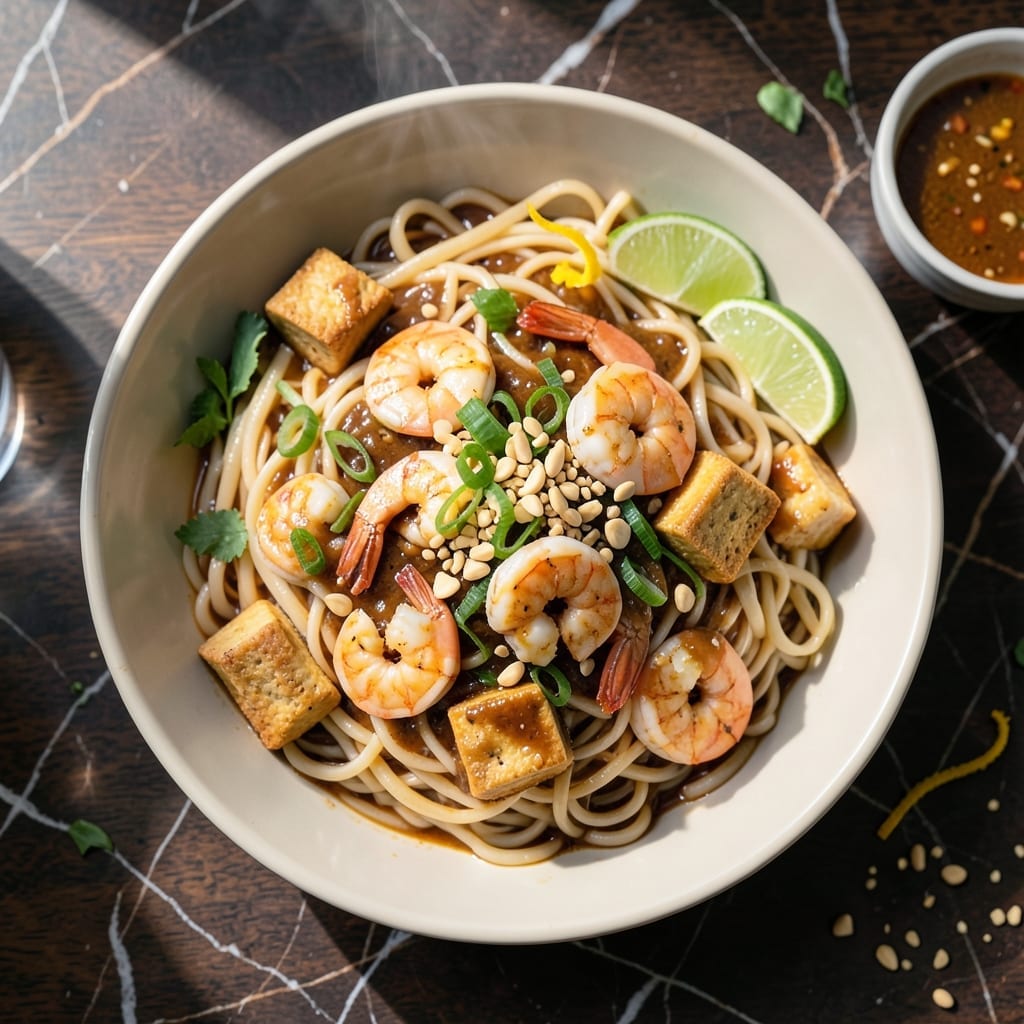
Street food magic doesn’t require a plane ticket—just 20 minutes and a handful of pantry staples. This dish brings the vibrant flavors of Thailand to your kitchen with minimal effort.
The secret lies in the balance of sweet, tangy, and savory. Rice noodles soak up the sauce while staying perfectly tender. A quick stir-fry ensures everything comes together fast.
You’ll get restaurant-quality results with shrimp, tofu, or chicken—all coated in that signature tamarind sauce. The crunch of peanuts and fresh lime finishes it perfectly.
Perfect for busy weeknights when you crave bold flavors without the fuss. Let’s get started.
Ingredients for Simple Pad Thai
Pantry staples meet fresh additions for that authentic street food vibe.
| Ingredient | Amount | Notes |
|---|---|---|
| Rice Noodles 🍜 | 8 oz | Flat, medium-width preferred |
| Tamarind Paste 🍋 | 3 tbsp | Pure, no added sugar |
| Fish Sauce 🐟 | 3 tbsp | Thai brand recommended |
| Palm Sugar 🥥 | 3 tbsp | Or substitute brown sugar |
| Shrimp 🦐 | ½ lb | Peeled, deveined, medium size |
| Firm Tofu 🧈 | 14 oz | Pressed, cubed (or chicken) |
| Garlic Cloves 🧄 | 4 cloves | Minced finely |
| Shallot 🧅 | 1 whole | Thinly sliced |
| Large Eggs 🥚 | 2 whole | Lightly beaten |
| Bean Sprouts 🌱 | 2 cups | Rinsed, drained |
| Crushed Peanuts 🥜 | ½ cup | Unsalted preferred |
| Fresh Lime 🍈 | 2 whole | Cut into wedges for serving |
| Fresh Cilantro 🌿 | ¼ cup | Chopped, for garnish |
| Dried Chili Flakes 🌶️ | ½ tsp | Adjust to taste |
| Vegetable Oil 🫒 | 3 tbsp | High smoke point for stir-frying |
The tamarind paste is non-negotiable—look for it in Asian markets or the international aisle. Palm sugar adds authentic sweetness but brown sugar works in a pinch (just less complex). For fish sauce, Red Boat or Thai Kitchen are solid choices—avoid brands with added preservatives. Shrimp should be fresh or high-quality frozen (thawed in cold water). If using tofu, press it well to avoid soggy results.
No tamarind? Lime juice plus brown sugar at a 1:1 ratio gets you close but lacks depth. Skip the shrimp and double the tofu for a vegetarian version. Bean sprouts can be swapped for shredded cabbage (adds crunch). The peanuts? Cashews or almonds work too—just chop them fine. For extra veg, throw in sliced bell peppers or snap peas.
Store tamarind paste and fish sauce in the fridge after opening—they’ll keep for 6-12 months. Fresh lime and cilantro last 5 days in the fridge (wrap herbs in damp paper towels). Leftovers? They reheat surprisingly well—3-4 days in the fridge, but the noodles are best fresh.
Why You’ll Love This Recipe
- One Pot Wonder: I love that everything cooks in a single pan—noodles, shrimp, and that tangy tamarind sauce come together fast.
- Sweet-Savory Magic: The palm sugar and fish sauce balance is what makes this pad thai crave-worthy every time.
- Weeknight Lifesaver: Honestly, it’s my go-to for busy evenings when I need dinner on the table in 25 minutes.
- Budget Stretcher: Shrimp and rice noodles are affordable, and this recipe makes enough for leftovers that taste even better the next day.
Step-by-Step Instructions for Pad Thai
This method delivers authentic street-food flavor with minimal effort and maximum impact.
Step 1: Soak the Rice Noodles and Prepare the Sauce
Place the 8 oz rice noodles in a large bowl and cover with warm water. Let them soak for 15-20 minutes until pliable but still slightly firm—they’ll finish cooking in the pan. Drain and set aside.
In a small bowl, whisk together the 3 tbsp tamarind paste, 3 tbsp fish sauce, and 3 tbsp palm sugar until the sugar dissolves completely. This balanced sauce is the soul of the dish, so taste it now and adjust the sweet-sour-salty ratio if needed.
Step 2: Stir-Fry the Protein and Aromatics
Heat 2 tbsp vegetable oil in a large skillet or wok over medium-high heat. Add the 0.5 lb shrimp and 14 oz firm tofu, cooking for 3-4 minutes until the shrimp turn opaque and pink and the tofu develops golden edges. Remove and set aside.
In the same pan, add the remaining 1 tbsp vegetable oil, then sauté the 4 cloves minced garlic cloves and 1 thinly sliced shallot for 1-2 minutes until fragrant and translucent. Don’t let the garlic burn—it’ll turn bitter.
Step 3: Cook the Eggs and Combine Everything
Push the aromatics to one side of the pan and pour in the 2 lightly beaten large eggs. Scramble quickly with a spatula until just set—about 30 seconds. The eggs should be soft and slightly runny; they’ll finish cooking with the noodles.
Add the drained rice noodles, protein, and sauce to the pan. Toss everything together with tongs for 2-3 minutes until the noodles are tender and coated evenly in the sauce. If the mixture seems dry, add a splash of water to loosen it.
Step 4: Finish with Fresh Garnishes and Serve
Remove from heat and stir in 2 cups bean sprouts, 0.5 tsp dried chili flakes, and half the 0.5 cup crushed peanuts. The bean sprouts should remain crisp and bright green—they add freshness and texture.
Transfer to serving plates and top with the remaining crushed peanuts, 0.25 cup chopped fresh cilantro, and fresh lime wedges. Serve immediately with extra lime and cilantro on the side for customization. The contrast of tangy lime, crunchy peanuts, and fresh herbs elevates every bite.
Pro Tips For Making Simple Pad Thai
- Soak Noodles Right: Cover rice noodles with room temp water for 20-25 minutes—they should be bendy but still firm. I learned this the hard way after ending up with mushy noodles that turned to paste in the wok.
- Balance the Sauce: Mix 2 tbsp tamarind, 1 tbsp fish sauce, and 1 tbsp palm sugar first, then adjust. Sounds weird, but it works: tasting as you go prevents that face-scrunching sour or salty bite.
- Shrimp Last: Add shrimp only after the noodles and sauce are in the pan—2-3 minutes max. After burning three batches, I finally figured out they cook fast and turn rubbery if overdone.
- Use a Ripe Lime: Skip the bottled stuff and squeeze fresh lime at the end. My grandmother swore by this, and she was right: it brightens the whole dish in a way pre-squeezed never does.
Serving Suggestions for This Dish
Plating Like a Pro
Use a large, shallow bowl to showcase the vibrant colors. I arrange the noodles in a loose nest, then top with crushed peanuts and cilantro in a circular pattern. The lime wedges go on the rim for easy access. 💛
Family-Style Serving
For groups, present the dish on a large platter with garnishes in small bowls. This lets everyone customize their plate with extra bean sprouts, chili flakes, or peanuts. I love watching guests build their perfect bite.
Garnish Bar Idea
Set out additional toppings like sliced green onions, Thai basil, or pickled radishes for a restaurant-style experience. A small dish of sriracha on the side adds heat for those who want it.
Portion Control
This recipe serves 4 generously. For lighter portions, divide into 6 servings and pair with a cucumber salad or spring rolls. The flavors are rich, so smaller portions work well.
Kid-Friendly Adjustments
For picky eaters, serve the noodles plain with toppings on the side. I’ve found that letting kids add their own peanuts and lime makes them more excited to try the dish. 💡
Make It a Feast
Turn this into a Thai night with tom yum soup as a starter and mango sticky rice for dessert. The balance of flavors across the meal creates a memorable dining experience.
Nutrition Facts
Frequently Asked Questions
What can I use instead of tamarind paste?
Mix equal parts lime juice and brown sugar as a substitute. It won’t be identical, but the tangy-sweet balance works well in a pinch.
How do I prevent noodles from sticking?
Soak noodles just until pliable, not fully soft. Use high heat and stir constantly with tongs. A splash of water can loosen them if needed.
Can I make this vegetarian?
Skip shrimp and double tofu. Use soy sauce instead of fish sauce for a fully plant-based version.
What’s the best way to reheat leftovers?
Microwave with a damp paper towel over the dish for 1-2 minutes. Stir halfway to distribute heat evenly.

- 6 Egg Cake Recipe with Oil: Light as Air With Buttery Moisture - October 4, 2026
- 4 Bean Casserole Recipe: One-Pan Heartiness With Smoky Paprika Depth - October 4, 2026
- 3-Ingredient Keto Mug Cake Recipe: Microwave Magic in 2 Minutes - October 4, 2026