
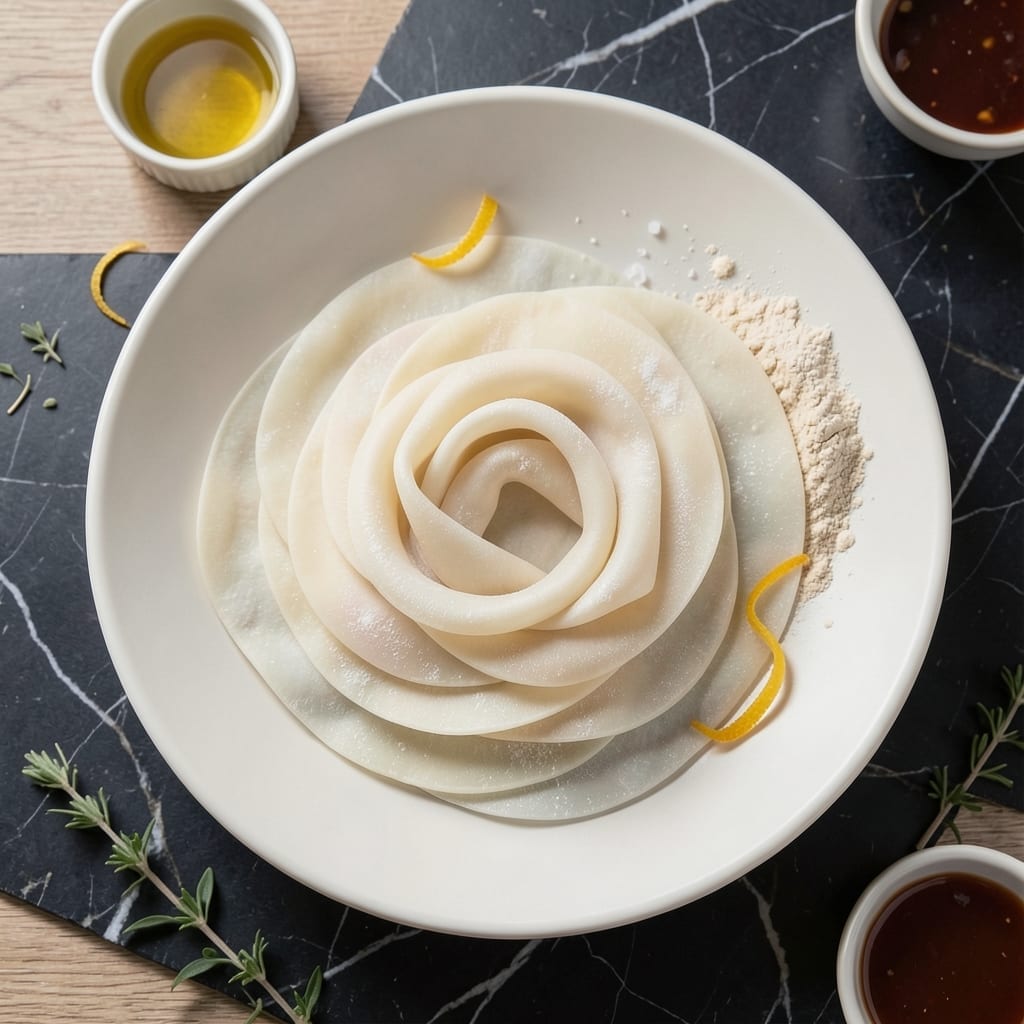
Making dumpling skins from scratch transforms any dim sum experience into something truly special. This method delivers homemade wrappers that are thin yet sturdy enough to hold their shape during steaming.
The dough comes together with just flour, water, and a touch of oil, creating a smooth, elastic ball that rests briefly before rolling. The resting period is crucial—it relaxes the gluten for easier shaping.
Once rolled thin, these wrappers develop the perfect chewy texture after steaming. They’re slightly translucent when cooked, with just enough stretch to cradle the filling without tearing.
Master this foundation, and you’ll elevate every dumpling you make from here forward.
Ingredients for Siu Mai Wrappers
Five basic ingredients. That is all you need for perfect homemade wrappers.
| Ingredient | Amount | Notes |
|---|---|---|
| All-Purpose Flour 🌾 | 2 cups | Plus extra for dusting |
| Warm Water 💧 | ¾ cup | About 110°F, not boiling |
| Neutral Oil 🫒 | 1 tbsp | Vegetable or canola oil |
| Salt 🧂 | ¼ tsp | Fine sea salt preferred |
| Cornstarch 🌽 | 2 tbsp | For dusting and rolling |
The flour is the foundation, so use a good all-purpose brand like King Arthur or Gold Medal. Warm water is key—too hot and it’ll kill the gluten development, too cold and the dough won’t come together smoothly. I usually heat mine in the microwave for about 45 seconds (just warm to the touch). The oil keeps the dough pliable, so don’t skip it—vegetable or canola works best here.
No all-purpose flour? Bread flour in a pinch, but it’ll be slightly chewier. Out of neutral oil? Melted coconut oil works too (just cool it slightly). The salt can be omitted if you prefer, but I like the subtle flavor it adds. If your dough feels too sticky, add a bit more flour; too dry, a splash more water. Easy fixes.
The dough rests best covered with a damp towel at room temp for 30 minutes. Wrappers keep in the fridge for 2 days or freeze for 1 month (layer with parchment). Let them thaw before using—no need to re-roll.
Why You’ll Love This Recipe
- Five Ingredients: I just need flour, water, oil, salt, and cornstarch—nothing fancy, all pantry staples.
- Pillowy Texture: The cornstarch gives them that slightly chewy, tender bite that makes siu mai feel restaurant-quality.
- Dim Sum Nights: Now I can make fresh dumplings whenever the craving hits, no store-bought wrappers needed.
- Penny-Pincher Approved: A batch costs me pennies compared to buying pre-made, and they freeze beautifully for later.
Step-by-Step Instructions for Siu Mai Wrappers
Making these from scratch is simpler than you think and the results are far superior to store-bought.
Step 1: Combine the Dry Ingredients
In a large mixing bowl, whisk together the 2 cups All-Purpose Flour and 0.25 tsp Salt until evenly distributed. I like to sift the flour first to prevent lumps, but it’s not strictly necessary if your flour is fresh and clump-free.
This is your base mixture. The salt enhances the flavor of the final wrappers, so don’t skip it even though it seems like a small amount. The flour provides the structure that will hold your dumpling fillings.
Step 2: Incorporate the Wet Components
Make a well in the center of your flour mixture. Pour in the 0.75 cup Warm Water and 1 tbsp Neutral Oil. Using a wooden spoon or chopsticks, gradually incorporate the flour into the liquid until a shaggy dough forms.
The water should be about 110°F—warm to the touch but not hot. This temperature helps activate the gluten without cooking the flour. The neutral oil adds pliability to the dough, making it easier to roll thin.
You’ll know it’s ready when the dough starts pulling away from the bowl sides. If it feels too dry, add warm water 1 teaspoon at a time.
Step 3: Knead to Develop the Gluten
Turn the dough onto a lightly floured surface and knead for 8-10 minutes until smooth and elastic. I press the heel of my hand into the dough, then fold and turn, repeating this motion consistently.
The dough will start out rough and sticky but should become silky as you work it. If it sticks to your hands or the surface, dust with a bit more flour, but use a light hand—too much additional flour can make the wrappers tough.
You’ll feel the texture change as the gluten develops. The finished dough should spring back slowly when pressed with a finger.
Step 4: Rest and Portion the Dough
Shape the dough into a ball, place it back in the bowl, and cover with a damp towel. Let it rest at room temperature for 30 minutes. This relaxation period makes the dough easier to roll out.
After resting, divide the dough into 4 equal portions. Work with one portion at a time, keeping the others covered to prevent drying. Dust your work surface with some of the 2 tbsp Cornstarch—it prevents sticking better than flour for this type of dough.
Step 5: Roll and Cut the Wrappers
Roll one dough portion into a ¼-inch thick rope, then cut into 1-inch pieces. Flatten each piece into a disc, then roll each into a 3-inch circle, dusting with more cornstarch as needed.
The edges should be thinner than the center. This creates that characteristic siu mai wrapper shape. Stack finished wrappers between layers of parchment paper to prevent sticking.
Use immediately or cover tightly and refrigerate for up to 24 hours. The cornstarch dusting keeps them from sticking together during storage.
Pro Tips For Making Siu Mai Wrappers
- Test the Water: Warm water should feel like a baby’s bath—around 110°F. I learned this the hard way after using scalding water and ending up with wrappers that were tough as leather.
- Knead Longer: Don’t stop kneading until the dough is smooth and elastic, usually 8-10 minutes. It’s the thing that matters most for wrappers that stretch without tearing.
- Rest the Dough: After kneading, let the dough rest for at least 30 minutes under a damp towel. Sounds weird, but it works—it relaxes the gluten so the wrappers roll out thin and even.
- Dust with Cornstarch: Use cornstarch instead of flour to prevent sticking when rolling out the wrappers. It keeps them tender and makes a real difference in the final texture.
Common Mistakes When Making This Recipe
Overworking the Dough
Kneading beyond 8-10 minutes develops too much gluten, making wrappers tough instead of tender. I stop when the dough feels smooth and springs back slowly when pressed. 💡
Skipping the Rest
Rushing past the 30-minute rest means the gluten won’t relax, causing the dough to shrink back as you roll it out. Cover with a damp towel to prevent drying.
Incorrect Water Temperature
Water that’s too hot (above 110°F) can scald the flour, while cold water makes the dough stiff. I test with my wrist like a baby bottle—warm but not hot.
Uneven Rolling
Rolling the edges thinner than the center creates that classic siu mai shape. Use a ruler to check your 3-inch circles if precision matters to you. 🌟
Sticking Problems
Flour can make wrappers tough. I use cornstarch for dusting—it prevents sticking without affecting texture. Stack with parchment between layers.
Storage Mistakes
Refrigerate wrapped tightly for up to 24 hours, or freeze with parchment between each wrapper. Thaw before using—never roll frozen dough.
Nutrition Facts
Frequently Asked Questions
What’s the ideal thickness for these wrappers?
Aim for 3-inch circles with edges slightly thinner than the center. This creates the classic shape and ensures even cooking during steaming.
Can I make these ahead of time?
Yes! Refrigerate for up to 24 hours or freeze for 1 month. Layer with parchment to prevent sticking and thaw before using.
Why use cornstarch instead of flour for dusting?
Cornstarch prevents sticking without toughening the dough. It’s lighter and absorbs moisture better, keeping wrappers tender.
What if my dough feels too dry?
Add warm water 1 teaspoon at a time until smooth. Too much flour can make wrappers tough, so adjust carefully.

- 6 Egg Cake Recipe with Oil: Light as Air With Buttery Moisture - October 4, 2026
- 4 Bean Casserole Recipe: One-Pan Heartiness With Smoky Paprika Depth - October 4, 2026
- 3-Ingredient Keto Mug Cake Recipe: Microwave Magic in 2 Minutes - October 4, 2026