
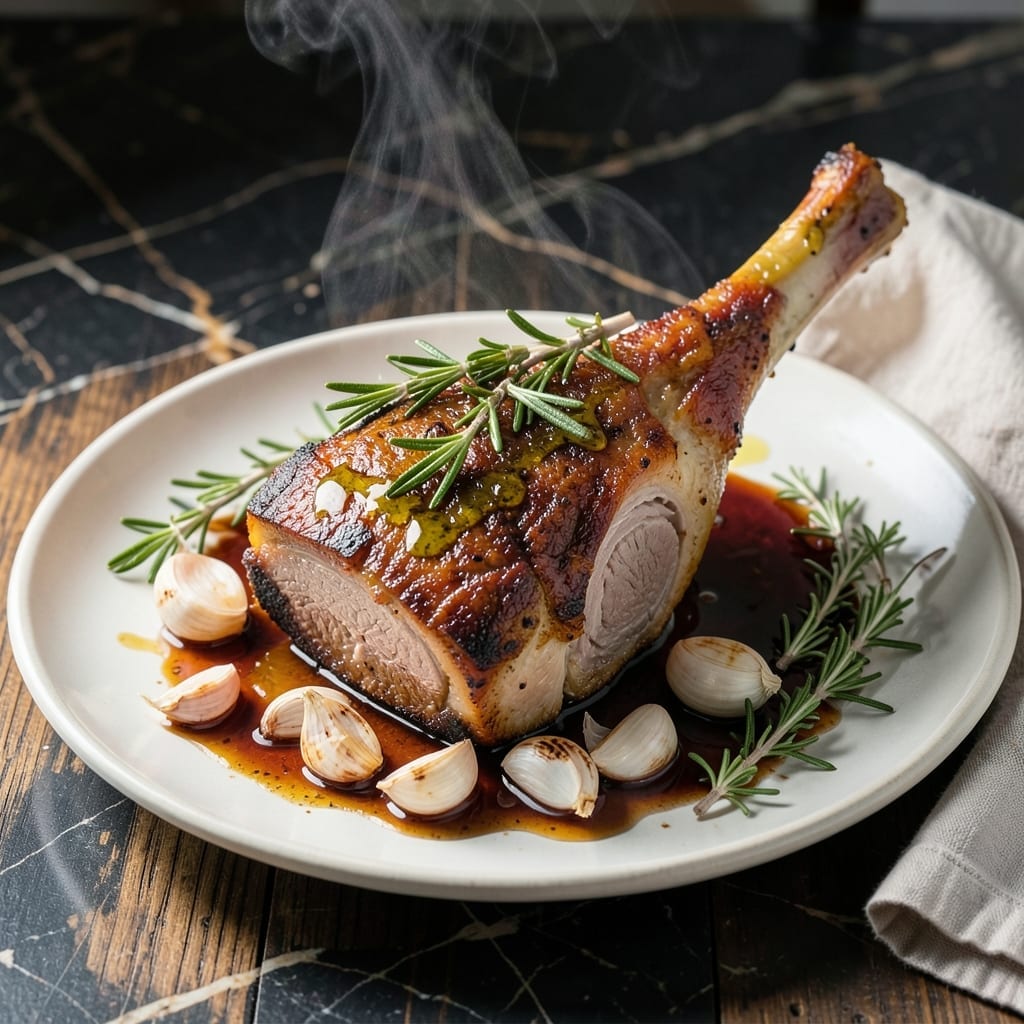
There’s something deeply satisfying about pulling apart tender pork shank that falls off the bone with the slightest touch. This slow roasting method transforms a humble cut into a showstopping centerpiece.
I’ve refined this technique over years of Sunday dinners, learning that patience and low heat are the keys to perfect texture. The meat becomes fork-tender while developing rich, caramelized flavors that fill your kitchen with irresistible aromas.
What emerges from the oven is meat so tender it nearly dissolves, with a golden brown exterior that gives way to juicy, flavorful flesh. The slow cooking process allows the collagen to melt into gelatin, creating that signature melt-in-your-mouth quality.
Serve this with simple sides that let the pork shine. The results speak for themselves.
Ingredients for Slow Roasted Pork Shank
Pantry staples meet a few fresh herbs for this transformative dish. Nothing too exotic here.
| Ingredient | Amount | Notes |
|---|---|---|
| Pork Shank 🍖 | 4 lb | Bone-in, skin-on preferred |
| Kosher Salt 🧂 | 2 tbsp | Diamond Crystal preferred |
| Black Pepper 🌶️ | 1 tbsp | Freshly ground coarse |
| Garlic Cloves 🧄 | 8 cloves | Peeled, smashed |
| Fresh Rosemary 🌿 | 3 whole | Sprigs, stems intact |
| Fresh Thyme 🍃 | 5 whole | Sprigs, stems intact |
| Olive Oil 🫒 | 3 tbsp | Extra-virgin for depth |
| Red Wine 🍷 | 1 cup | Dry variety like Cabernet |
| Chicken Stock 🥣 | 2 cups | Low-sodium preferred |
| Honey 🍯 | 2 tbsp | For glaze finish |
| Dijon Mustard 🟡 | 1 tbsp | Smooth, not whole grain |
| Yellow Onion 🧅 | 1 whole | Large, quartered |
| Carrots 🥕 | 3 whole | Peeled, cut into chunks |
| Celery Stalks 🌿 | 3 whole | Cut into large pieces |
The pork shank is non-negotiable here. Ask your butcher for hind shanks—they have more connective tissue, which breaks down beautifully. Costco sometimes carries them pre-packaged, but I prefer the control of picking my own. Look for pieces with good marbling (those white streaks of fat) and skin that’s intact, not dried out. The bone should feel heavy for its size—that’s a sign of quality meat.
No red wine? Substitute with apple cider vinegar plus beef broth (mix 2 tbsp vinegar with 1 cup broth). Fresh herbs not on hand? Dried work at one-third the amount, but add them later in cooking so they don’t burn. The honey glaze can be swapped for maple syrup or brown sugar dissolved in a splash of water. Don’t skip the Dijon—it cuts through the richness (any smooth mustard works in a pinch).
This tastes even better the next day once the flavors meld. Store leftovers in the fridge for up to 4 days or freeze for 3 months. Reheat gently in the oven with a splash of stock to keep it moist. The shanks freeze beautifully—just thaw overnight before reheating.
Why You’ll Love This Recipe
- Set It and Forget: I rub the pork shank with salt, pepper, garlic, and rosemary, then let the oven do all the work for hours.
- Fallback Garlic: The slow roast turns those whole cloves into sweet, buttery bites that melt into every forkful.
- Feeds a Crowd: One shank serves four generously, making it my go-to for Sunday suppers with leftovers for sandwiches.
- Pantry Staples: I always have salt, pepper, garlic, and rosemary on hand, so this feels like a no-shopping-needed win.
Step-by-Step Instructions for Slow Roasted Pork Shank
Here’s the method. Straightforward, tested, works every time.
Step 1: Season and Sear the Pork Shank
Pat the 4 lb pork shank dry with paper towels. This ensures a good sear. Rub it all over with the 2 tbsp kosher salt and 1 tbsp black pepper. I like to really work the seasoning into the skin and meat—don’t be shy.
Heat 2 tbsp olive oil in a large Dutch oven over medium-high heat. When it shimmers, add the pork shank and sear on all sides until deep golden brown, about 3-4 minutes per side. Remove the shank and set aside.
Step 2: Build the Aromatic Base
In the same pot, add the remaining 1 tbsp olive oil and reduce heat to medium. Toss in the 1 whole yellow onion, 3 whole carrots, and 3 whole celery stalks. Cook for 5 minutes until the vegetables start to soften and brown.
Add the 8 cloves garlic cloves, 3 whole fresh rosemary, and 5 whole fresh thyme. Stir for 1 minute until fragrant. This builds a flavor foundation that will infuse into the pork as it roasts.
Step 3: Deglaze and Braise
Pour in the 1 cup red wine to deglaze the pot, scraping up all those browned bits from the bottom. Let it simmer for 2-3 minutes until reduced by half. This step is crucial—those browned bits are packed with flavor.
Add the 2 cups chicken stock, 2 tbsp honey, and 1 tbsp Dijon mustard. Stir until the honey and mustard are fully dissolved. Return the pork shank to the pot, along with any juices that collected on the plate.
Step 4: Slow Roast to Perfection
Cover the pot and transfer it to a preheated 325°F oven. Roast for 3 to 3½ hours, turning the pork shank halfway through. The meat is done when it pulls away from the bone easily and reaches an internal temperature of 195-200°F.
Baste the pork shank with the braising liquid every 45 minutes to keep it moist and build layers of flavor. The liquid should be gently bubbling—if it’s boiling vigorously, reduce the oven temperature slightly.
Step 5: Rest and Serve
Remove the pork shank from the oven and let it rest in the braising liquid for 15-20 minutes. This allows the juices to redistribute and the meat to become even more tender.
Serve the pork shank hot, spooning the rich braising liquid over the top. The meat should be falling off the bone, with a deep, savory sauce that’s perfect for soaking up with crusty bread or mashed potatoes.
Pro Tips For Making Slow Roasted Pork Shank
- Start Low and Slow: Set your oven to 275°F—any higher and the tough collagen in the shank won’t have time to melt into that buttery texture. I learned this the hard way after pulling a dry, stringy shank out of a 325°F oven.
- Score the Skin: Cut 1/4-inch deep crosshatches into the skin before seasoning so the fat renders out and the salt, garlic, and rosary actually penetrate. Sounds tedious, but it’s the difference between chewy and crisp.
- Skip the Water Bath: Resist the urge to add liquid to the pan—pork shank releases plenty as it roasts, and a dry environment gives you that sticky, caramelized crust. My first attempt was basically pork soup.
- Use a Meat Thermometer: Pull it at 195°F internal temp, not when the timer dings. After burning three shanks by guessing, I finally bought a thermometer and nailed it every time since.
Perfect Pairings for This Dish
Side Dish Pairings
I love serving this with creamy polenta—the soft texture contrasts beautifully with the rich pork. Cook 1 cup polenta in 4 cups chicken stock for extra flavor. Alternatively, garlic mashed potatoes soak up the braising liquid perfectly.
Vegetable Companions
Roasted Brussels sprouts with a balsamic glaze add a nice bitter contrast. Toss 1 lb halved sprouts with 2 tbsp olive oil and roast at 400°F for 20-25 minutes. Simple steamed green beans also work well for a lighter option.
Bread Options
A crusty baguette is essential for soaking up the sauce. I warm slices in the oven for 5 minutes before serving. For a heartier option, rosemary focaccia complements the herb notes in the pork beautifully. 🥖
Wine Pairings
A bold Barbera from Piedmont cuts through the richness with its high acidity. Chianti Classico also works well, offering earthy notes that match the rosemary and thyme. For white wine lovers, try an oaked Chardonnay with enough body to stand up to the dish. 🍷
Fresh Finishes
Brighten the plate with gremolata—mix ¼ cup chopped parsley, 1 minced garlic clove, and 1 tbsp lemon zest. The citrus lifts the richness. A simple arugula salad with lemon dressing also adds a peppery freshness.
Nutrition Facts
Frequently Asked Questions
How long should I rest the meat before serving?
Let it rest in the braising liquid for 15-20 minutes. This lets juices redistribute for maximum tenderness and flavor.
Can I use a slow cooker instead of an oven?
Yes, but adjust the time. Cook on low for 8-10 hours or high for 5-6 hours for the same fall-off-the-bone result.
What if my pork isn’t tender after the recommended time?
Check the internal temperature—it needs to reach 195-200°F. If not, return to the oven for 30-45 minutes more.
Should I remove the skin before cooking?
Keep the skin on for extra flavor and texture. It becomes crispy during searing and adds depth to the final dish.

- 6 Egg Cake Recipe with Oil: Light as Air With Buttery Moisture - October 4, 2026
- 4 Bean Casserole Recipe: One-Pan Heartiness With Smoky Paprika Depth - October 4, 2026
- 3-Ingredient Keto Mug Cake Recipe: Microwave Magic in 2 Minutes - October 4, 2026